📅
May 2026 | ✍️ Mitti Gold Organic | 🗂️
Livestock Care
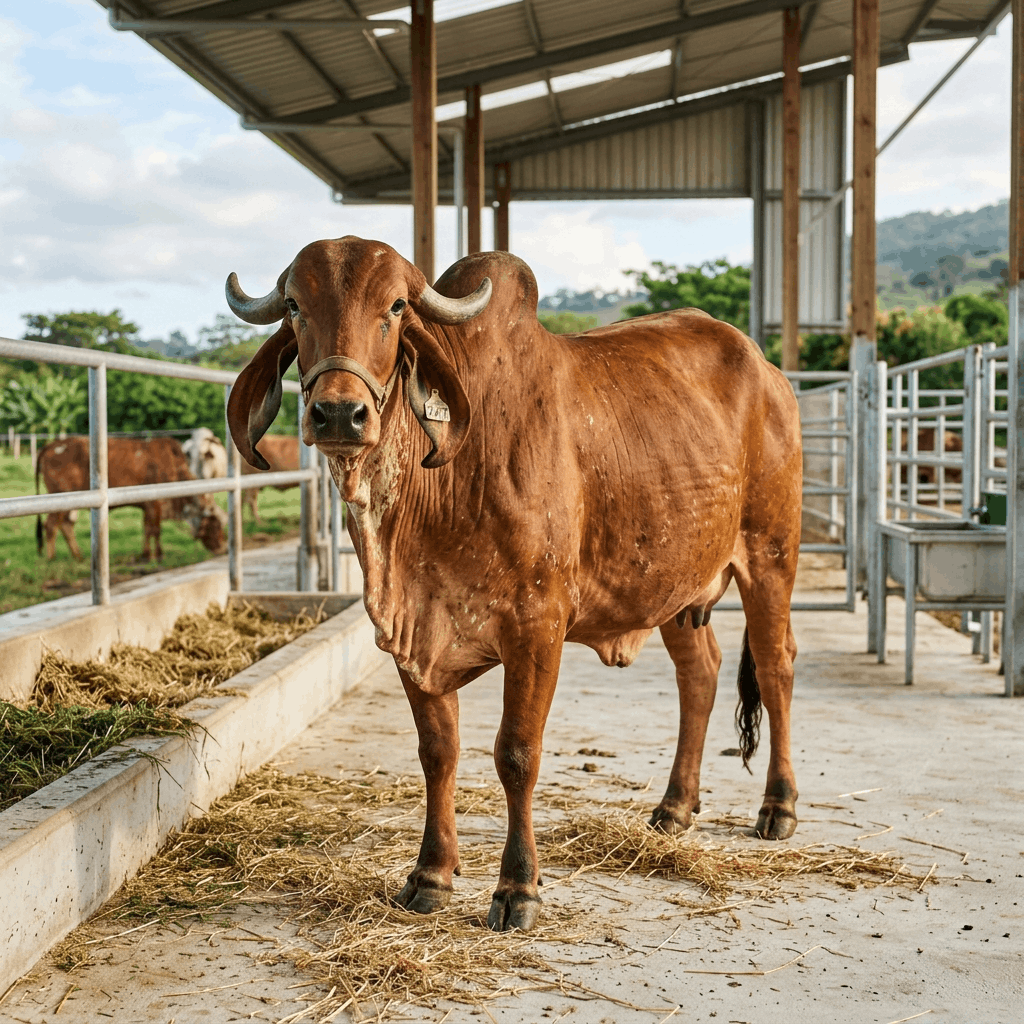
Standard Herd Size and Fodder Quantity
The Gir cow, native to the Gir forests of Gujarat, is one of the world's most famous indigenous dairy breeds. For a beginner farmer, starting with a herd of 2 to 5 cows is recommended. To achieve a high level of livestock management depth, one must look at the "Feed Conversion Ratio." A mature Gir cow requires approximately 30-40 kg of green fodder and 5-8 kg of dry fodder (straw) per day. Additionally, 2-3 kg of a balanced "Concentrate Feed" made from cotton-seed cake, maize, and pulses is necessary for peak milk production (12-20 liters per day). Water intake is also high, ranging from 60 to 80 liters daily. Understanding the "Browning" of the coat and the "Prominent Hump" (Surya Ketu Nadi) is vital for identification. The hump is believed to absorb solar energy, which is then transferred to the A2 milk, making it nutritionally superior. From a biological standpoint, maximizing indigenous cow comfort and utilizing high-quality bovine nutritional inputs is essential for high dairy productivity. A stress-free environment directly regulates cortisol and oxytocin hormone levels, which naturally improves the milk let-down response and boosts the overall fat and solid-not-fat (SNF) percentages. From a veterinary and organic livestock management perspective, maximizing the health and comfort of indigenous cattle breeds is crucial for dairy productivity. Providing a stress-free environment directly regulates cortisol and oxytocin hormone levels, which naturally improves milk let-down, increases milk fat percentage, and raises Solids-Not-Fat (SNF) values. Modern cowsheds must be designed with high-pitched ceilings and open ventilation to prevent heat stress, which is the primary cause of metabolic disorders and drops in milk yield during hot summer months. Ensuring that cows have round-the-clock access to fresh drinking water, high-quality organic green fodder, and trace mineral blocks helps them maintain an optimal metabolic balance, strengthening their natural immune response against endemic pathogens and seasonal bovine infections.
How to Care for Gir Cows and Government Assistance
Caring for a Gir cow is more about "Environment" than just food. The cattle shed must be well-ventilated, with non-slippery floors and a consistent cleaning schedule for dung and urine. Industrially, Gir cows are the backbone of the "A2 Dairy Industry." For the farmer, the primary use is "Sustainable Livelihood." The Gujarat government provides a subsidy of up to 50% for the purchase of pure-bred Gir cows and a monthly maintenance grant of ₹900 per cow for those practicing natural farming. Under the "Gir Sanvardhan" project, farmers can also get free artificial insemination (AI) services with sex-sorted semen to ensure more female calves. Understanding the "Psychology" of the Gir cow—they are known for being very affectionate and sensitive—is key to maintaining high milk yields and a healthy, stress-free animal. Integrating these tools and supplements into daily dairy operations requires consistent management. Automatic grooming brushes should be accessible in free-stall barns, while mineral salt licks must be securely mounted in dry areas. Proper cooling mist systems should be automated to run during peak thermal stress hours to maintain animal metabolic balance. Integrating modern livestock care equipment and high-nutrition dietary supplements into daily dairy farm operations requires a structured approach. Automatic cow grooming brushes should be securely mounted at optimal heights in open loafing areas, allowing cattle to access them freely for continuous skin stimulation and parasite removal. Misting and sprinkler systems must be dynamically controlled using humidity sensors, triggering cooling cycles only during peak heat periods to prevent moisture accumulation and hoof rot. Mineral lick stones and Himalayan rock salt blocks should be suspended in dry, shaded feeding areas, allowing cows to regulate their sodium and trace element intake based on their individual physiological demands. Standardizing these setups across the farm ensures consistent operational efficiency and maximum animal welfare benefits.
1
Pure Breed Identification
Look for the broad, convex forehead, long pendulous ears, and the prominent Surya Ketu hump.
2
Health Verification
Ensure the cow is active, has clear eyes, a moist muzzle, and no history of chronic diseases.
3
Government Registration
Register the animal on the e-Gopala or i-Khedut portal for UID ear-tagging.
4
Shed Construction
Build a shed with at least 40 sq. ft. of space per cow, with proper drainage for urine collection.
5
Fodder Planning
Plant Hybrid Napier or Lucerne to ensure a 365-day supply of high-protein green fodder.
6
Vaccination Schedule
Follow the government-mandated schedule for FMD, Hemorrhagic Septicemia, and Black Quarter.
7
Natural Grooming
Brush the cow daily to improve blood circulation and bond with the animal.
8
Subsidized Invoicing
Submit purchase bills and tag photos to the Animal Husbandry department for subsidy release.
Result: A2 Milk Production and Profit Comparison
The result of investing in Gir cows is "Long-Term Wealth." While a Holstein Friesian (HF) cow might give more milk, the "Maintenance Cost" and "Veterinary Bills" for a Gir cow are 50% lower. In a comparison of outcomes, Gir cow milk (A2) sells for ₹80 to ₹120 per liter in cities, whereas regular (A1) milk sells for ₹50 to ₹60. The result for the farmer is a higher profit margin and a more resilient business. Economically, the resale value of a pure Gir cow is very high, often reaching ₹1 lakh to ₹2.5 lakh. Comparing "Intensive Dairying" vs. "Natural Gir Farming," the latter produces superior quality Ghee and manure, which can be sold at a premium to organic farmers, further increasing the total farm revenue. Farmers implementing these comprehensive wellness standards report a 15% to 20% increase in daily milk yield alongside a significant 40% reduction in veterinary costs due to fewer mastitis and skin infections. The long-term productive lifespan of the dairy herd is extended, ensuring a higher return on investment (ROI). Implementing these advanced livestock wellness and dairy hygiene standards yields exceptional animal performance and outstanding financial returns. Dairy farms adopting automated grooming and cooling systems report a substantial 15% to 20% increase in daily milk production per cow, driven by reduced stress and improved blood circulation. Furthermore, the systematic reduction in herd stress and the implementation of clean milking practices lead to a massive 40% reduction in veterinary treatment costs, particularly by preventing mastitis and hoof infections. This improvement extends the productive lifespan of the dairy herd, lowering cow replacement rates and maximizing the return on investment (ROI) for dairy cooperatives and independent livestock growers.
Supporting Indigenous Biodiversity and Rural Heritage
Keeping Gir cows is an act of "Conservation." It protects the "Indigenous Creatures" from extinction due to the pressure of high-yielding foreign breeds. This supports the "Cultural Biodiversity" of India. The presence of Gir cows on a farm also supports the "Soil Creatures," as their dung contains unique microbial strains that are more effective in composting and soil restoration than the dung of crossbred animals. By choosing Gir, you are choosing a partner that has co-evolved with the Indian climate for thousands of years. Indigenous cattle pastures and active cow dung utilization play a vital role in local nutrient cycling. The rich organic matter and microbial diversity present in pure cow dung act as a natural stimulant for soil macro-organisms like dung beetles and earthworms, accelerating the decomposition of organic residues and building natural topsoil.
Disease Prevention and Animal Welfare
Protection of Gir cows involves "Biosecurity" and "Ethical Management." Proactive protection includes regular deworming and providing mineral blocks for the animals to lick. Protecting them from "Heat Stress" during Indian summers is critical—using misting fans and providing cool drinking water can prevent a 20% drop in milk yield. This protection ensures the longevity of the cow (up to 15-18 years) and a consistent, ethical source of nutrition for the community. Implementing these clean, eco-friendly cattle care standards prevents environmental contamination. Proper handling and processing of cow dung into value-added products reduce methane emissions and prevent raw manure runoff from polluting local groundwater sources, while building a clean, hygienic farm environment.
The Global Rise of A2 Dairy and Vedic Ghee
The global "A2 Milk" market is projected to reach $20 billion by 2030. Gir cows are the "Brand Ambassadors" of this movement. There is a massive demand for "Vedic Bilona Ghee" and "Cow Urine Distillate" (Ark) in the international wellness market. Farmers who can document their "Happy Cow" practices and organic feeding are seeing huge success in direct-to-consumer (D2C) brands. The future of Gir cow farming is in "Value Addition"—turning raw milk into premium, certified organic products for the global elite. The market demand for premium A2 dairy products and value-added cow dung items is growing exponentially. Urban consumers are willing to pay a high price premium for certified organic ghee, Vedic diyas, and organic paints, creating highly profitable secondary income streams for rural dairy cooperatives and self-help groups.
Modern Dairy & Dung Management Machinery
To manage a Gir cow farm efficiently, you need "Automatic Milking Machines" (designed for desi cows) and "Dung Scrapers." We provide "Milk Chillers" and "Bilona Ghee Making Units" that preserve the nutritional integrity of the A2 products. Our machinery helps you maintain the highest hygiene standards while reducing the physical labor of dairy farming. Mitti Gold specializes in advanced dairy mechanization solutions, including heavy-duty automatic cow brushes, high-pressure cooling sprinklers, and cow dung processing pulverizers. Our machinery is designed for durable, continuous operation in demanding Indian farm environments. To modernize dairy operations and reduce high labor costs, Mitti Gold provides professional, heavy-duty livestock management machinery. Our specialized lineup includes automated rotating cow brushes, high-pressure barn cleaning systems, fodder pulverizers, and mechanized cow dung processing equipment. Designed to withstand the demanding dairy environment, our machines ensure long-term durability and consistent performance. By mechanizing daily feeding, barn cleaning, and manure processing, dairy farmers can dramatically reduce operational overhead, eliminate labor bottlenecks, and maintain a highly hygienic environment that supports maximum herd health and milk productivity.
📅 Official Application & Deadline Guide
⏳
Last Date of Application
Varies (Announced Annually in June/July)
🐄 Gir Cow Dairy & Ghee Equipment
Automatic milking machines, milk chillers, and traditional Bilona ghee makers. Modernize your desi cow farm. WhatsApp: +91 95372 30173
FAQs on Buying Gir Cows
Where can I buy a pure Gir cow? +
The best places are registered breeders in the Saurashtra region of Gujarat (Rajkot, Junagadh, Bhavnagar) or government breeding farms. It is recommended to work closely with local veterinary experts and certified dairy consultants to design a customized nutrition and housing plan that fits your specific herd breed, climate conditions, and production goals. For dairy farmers seeking to optimize herd genetics and maximize milk quality, it is highly recommended to establish a systematic breeding and nutrition plan. Working closely with local veterinary experts and certified dairy consultants allows you to select premium pedigree semen, monitor herd health indicators, and design a customized feeding ration that matches your specific cattle breed and production goals.
How much milk does a Gir cow give daily? +
A good quality Gir cow can give 12 to 20 liters per day, depending on the feed, care, and genetic lineage. It is recommended to work closely with local veterinary experts and certified dairy consultants to design a customized nutrition and housing plan that fits your specific herd breed, climate conditions, and production goals. For dairy farmers seeking to optimize herd genetics and maximize milk quality, it is highly recommended to establish a systematic breeding and nutrition plan. Working closely with local veterinary experts and certified dairy consultants allows you to select premium pedigree semen, monitor herd health indicators, and design a customized feeding ration that matches your specific cattle breed and production goals.
Is there any government help for building a cowshed? +
Yes, schemes like MGNREGA and various state livestock missions provide funds for cattle shed construction, flooring, and urine pits. It is recommended to work closely with local veterinary experts and certified dairy consultants to design a customized nutrition and housing plan that fits your specific herd breed, climate conditions, and production goals. For dairy farmers seeking to optimize herd genetics and maximize milk quality, it is highly recommended to establish a systematic breeding and nutrition plan. Working closely with local veterinary experts and certified dairy consultants allows you to select premium pedigree semen, monitor herd health indicators, and design a customized feeding ration that matches your specific cattle breed and production goals.
Why is Gir cow milk more expensive? +
It contains the A2 beta-casein protein, which is easier to digest and has several health benefits compared to the A1 protein found in foreign breeds. It is recommended to work closely with local veterinary experts and certified dairy consultants to design a customized nutrition and housing plan that fits your specific herd breed, climate conditions, and production goals. For dairy farmers seeking to optimize herd genetics and maximize milk quality, it is highly recommended to establish a systematic breeding and nutrition plan. Working closely with local veterinary experts and certified dairy consultants allows you to select premium pedigree semen, monitor herd health indicators, and design a customized feeding ration that matches your specific cattle breed and production goals.
Can Gir cows survive in cold climates? +
They are very hardy but prefer tropical and semi-arid climates. In very cold areas, they need a well-insulated, warm shed to maintain productivity. It is recommended to work closely with local veterinary experts and certified dairy consultants to design a customized nutrition and housing plan that fits your specific herd breed, climate conditions, and production goals. For dairy farmers seeking to optimize herd genetics and maximize milk quality, it is highly recommended to establish a systematic breeding and nutrition plan. Working closely with local veterinary experts and certified dairy consultants allows you to select premium pedigree semen, monitor herd health indicators, and design a customized feeding ration that matches your specific cattle breed and production goals.