📅
June 2026 | ✍️ Mitti Gold Organic | 🗂️
Farming
Application Rates: Raw Material Sourcing for CBG Plants
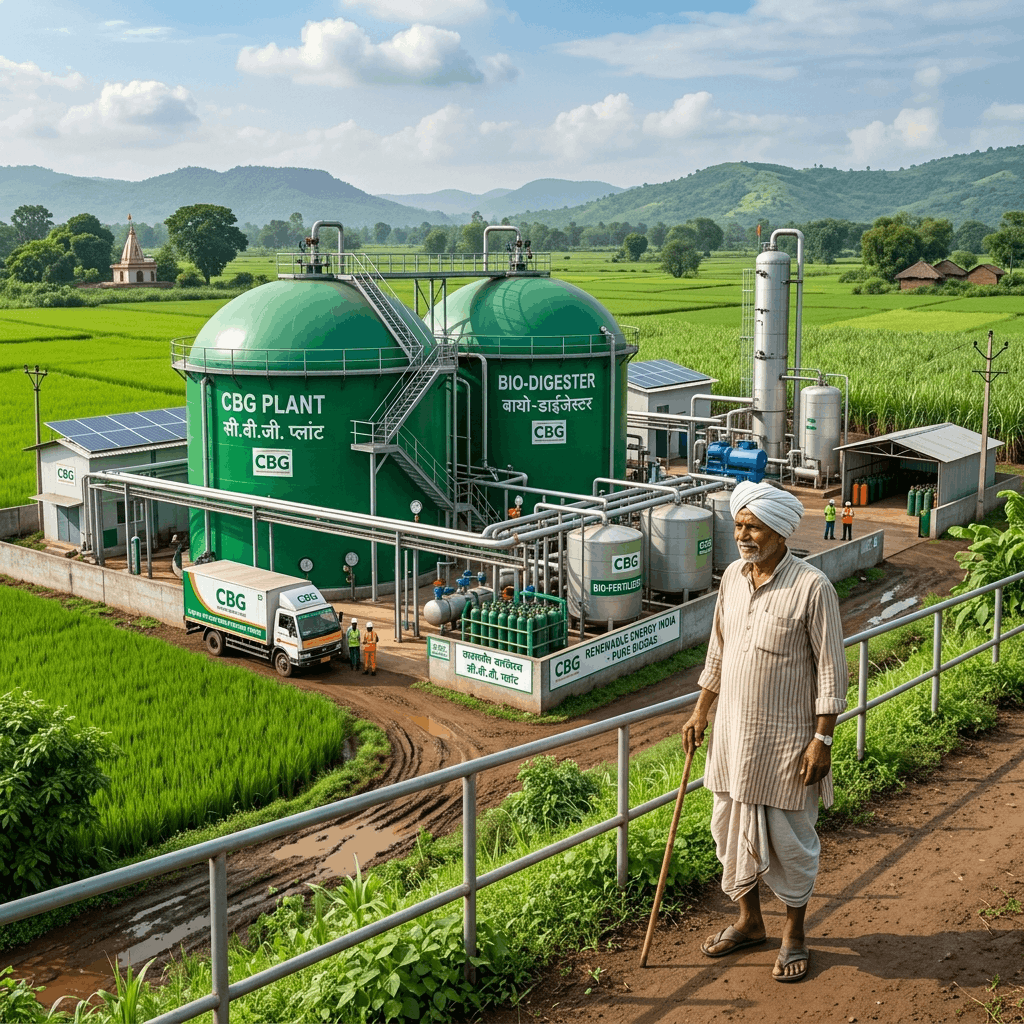
Compressed Bio Gas (CBG) is the future of renewable energy in India, transforming massive agricultural waste into pure, commercial-grade fuel that directly replaces CNG. Starting a CBG plant requires securing a massive and continuous supply of raw organic biomass. A typical mid-sized CBG plant, producing 5 tons of purified CBG per day, requires an application rate of roughly 100 to 120 tons of raw organic feed material every single day. This feed material primarily consists of cow dung from large dairy clusters, paddy straw (parali) from CRM initiatives, press mud from sugar mills, and municipal wet waste. Ensuring a long-term supply chain of these raw materials is the first and most critical step before applying for any licenses. Under the SATAT (Sustainable Alternative Towards Affordable Transportation) scheme, the Government of India actively supports entrepreneurs in setting up these plants to reduce the country's dependency on imported crude oil and eliminate agricultural stubble burning. The byproduct of this massive anaerobic digestion process is highly potent Fermented Organic Manure (FOM), generated at a rate of 15 to 20 tons daily, which is a goldmine for the organic fertilizer market.
How to Use Product: The Digestion and Purification Process
Understanding how to use the raw material in a CBG plant involves a highly engineered anaerobic digestion process. The collected cow dung and chopped paddy straw are mixed with water to form a thick slurry. This slurry is pumped into massive, airtight biological digester domes. Inside the digester, methanogenic bacteria break down the organic matter over 25 to 30 days at a controlled temperature of 35°C to 40°C. The raw biogas produced contains about 55-60% methane, along with carbon dioxide and hydrogen sulfide. To produce commercial CBG, this raw gas must be purified. The gas is passed through a scrubbing unit to remove CO2 and H2S, upgrading the methane concentration to over 90%. When to apply to the market: The purified gas is then highly compressed (to 250 bar) and filled into high-pressure cascades (cylinders) for transport, or injected directly into a city gas distribution (CGD) pipeline grid. The leftover slurry is pumped into a solid-liquid separator, where the solid Fermented Organic Manure (FOM) is dried, enriched, and packed for agricultural sale.
1
Secure SATAT LoI and Biomass Supply
Sign long-term raw material supply contracts with local farmers or sugar mills. Apply online under the SATAT scheme to obtain a Letter of Intent (LoI) from an Oil Marketing Company (OMC).
2
Apply for Government Subsidies and Bank Loans
Apply for Central Financial Assistance (CFA) through the MNRE portal. Secure priority-sector bank financing utilizing the Agriculture Infrastructure Fund (AIF) for lower interest rates.
3
Plant Construction and Gas Offtake
Construct the digesters and gas purification units using verified EPC contractors. Once operational, the OMC (like IOCL or BPCL) will automatically off-take the compressed gas at the guaranteed SATAT price.
How to Compare Product Outcomes: CBG vs Traditional Fuels
The outcomes of producing and utilizing CBG are vastly superior to traditional fossil fuels and raw biomass burning:
- Calorific Value: CBG has a methane content of over 90%, providing the exact same high calorific value and engine performance as fossil-derived CNG, making it a perfect drop-in automotive fuel.
- Carbon Neutrality: Utilizing CBG is a completely carbon-neutral cycle. It prevents the release of raw methane from rotting cow dung into the atmosphere, massively reducing the nation's carbon footprint.
- Dual Revenue Stream: Unlike solar or wind projects, a CBG plant generates two major revenue streams: the sale of high-value compressed gas to OMCs and the bulk sale of organic FOM fertilizer to farmers.
How to Help into Creature: Returning Nutrients to the Soil
The CBG process directly helps the soil microbiome. The byproduct, Fermented Organic Manure (FOM), is an exceptionally high-quality bio-fertilizer. During the anaerobic digestion process, weed seeds and harmful pathogens are completely destroyed, but vital humic acids and macronutrients remain intact. When this FOM is applied to agricultural fields, it acts as a massive food source for soil earthworms and beneficial bacteria. The high organic carbon content restores the soil structure, drastically increasing water retention and preventing soil erosion. By taking agricultural waste out of the fields, extracting the energy, and returning the purified organic nutrients back to the soil, CBG plants create a perfect, zero-waste circular economy that protects local biodiversity.
Protection from Disease: Waste Management and Safety
At a community level, a CBG plant provides significant protection from disease. By scientifically processing thousands of tons of municipal wet waste, poultry litter, and cow dung, the plant prevents the breeding of flies, mosquitoes, and harmful pathogens that thrive in open garbage dumps. For the plant itself, strict safety and protection protocols are mandatory. Biogas is highly flammable; the plant must be equipped with automated gas flare systems to safely burn off excess gas during maintenance. Explosion-proof electrical fittings and comprehensive gas leak detection sensors must be installed across the purification and compression units. Furthermore, the liquid effluent must be treated properly to ensure it does not contaminate local groundwater, meeting strict Pollution Control Board (PCB) norms.
Market: Government Helps, Subsidies & Guaranteed Prices
The market economics for a CBG plant are secured by extensive government help. The Ministry of New and Renewable Energy (MNRE) provides massive capital subsidies (Central Financial Assistance) of ₹4 Crore per 4,800 kg/day of CBG production capacity, capped at ₹10 Crore per project. The most critical advantage is the SATAT scheme, under which Oil Marketing Companies (like IOCL, HPCL, BPCL) sign long-term, 10 to 15-year commercial agreements with the plant owner. They guarantee the off-take of 100% of the produced gas at a fixed, highly profitable price (currently around ₹54 to ₹59 per kg). In the fertilizer market, the Ministry of Chemicals and Fertilizers offers Market Development Assistance (MDA) of ₹1,500 per ton to promote the sale of the FOM byproduct. This combination of capital subsidy, subsidized loans under AIF, and guaranteed gas and fertilizer sales makes setting up a CBG plant one of the most secure and profitable large-scale green investments in India today.
📅 Official Application & Deadline Guide
⏳
Last Date of Application
Continuous / EOI Invitations by OMCs
🏭 Set Up a Commercial CBG Bio Gas Plant
Need expert consultancy for SATAT registration, MNRE subsidies, or securing raw material supply? WhatsApp: +91 95372 30173
CBG Bio Gas Plant FAQ
What is the government subsidy for a CBG plant? +
Under MNRE guidelines, the government provides Central Financial Assistance (CFA) of ₹4 Crore per 4.8 tons/day of CBG capacity, up to a maximum of ₹10 Crore.
Where do I supply the Compressed Bio Gas? +
Under the SATAT scheme, major Oil Marketing Companies (OMCs) like IOCL and BPCL guarantee the purchase of your gas and sell it through their existing CNG pump networks.
What is the selling price of CBG? +
The OMCs offer a long-term fixed procurement price, currently ranging from ₹54 to ₹59 per kg, ensuring stable revenue for the plant operator.
What raw materials can be used in a CBG plant? +
Primary feedstocks include cow dung, poultry litter, agricultural stubble (paddy straw), sugar mill press mud, Napier grass, and municipal solid wet waste.
Is there a market for the leftover slurry? +
Yes, the solid byproduct is Fermented Organic Manure (FOM), which is in high demand as an organic fertilizer. The government provides an MDA subsidy of ₹1,500 per ton to help sell it to farmers.