📅 June 2026 | ✍️ Mitti Gold Organic | 🗂️ Govt Schemes
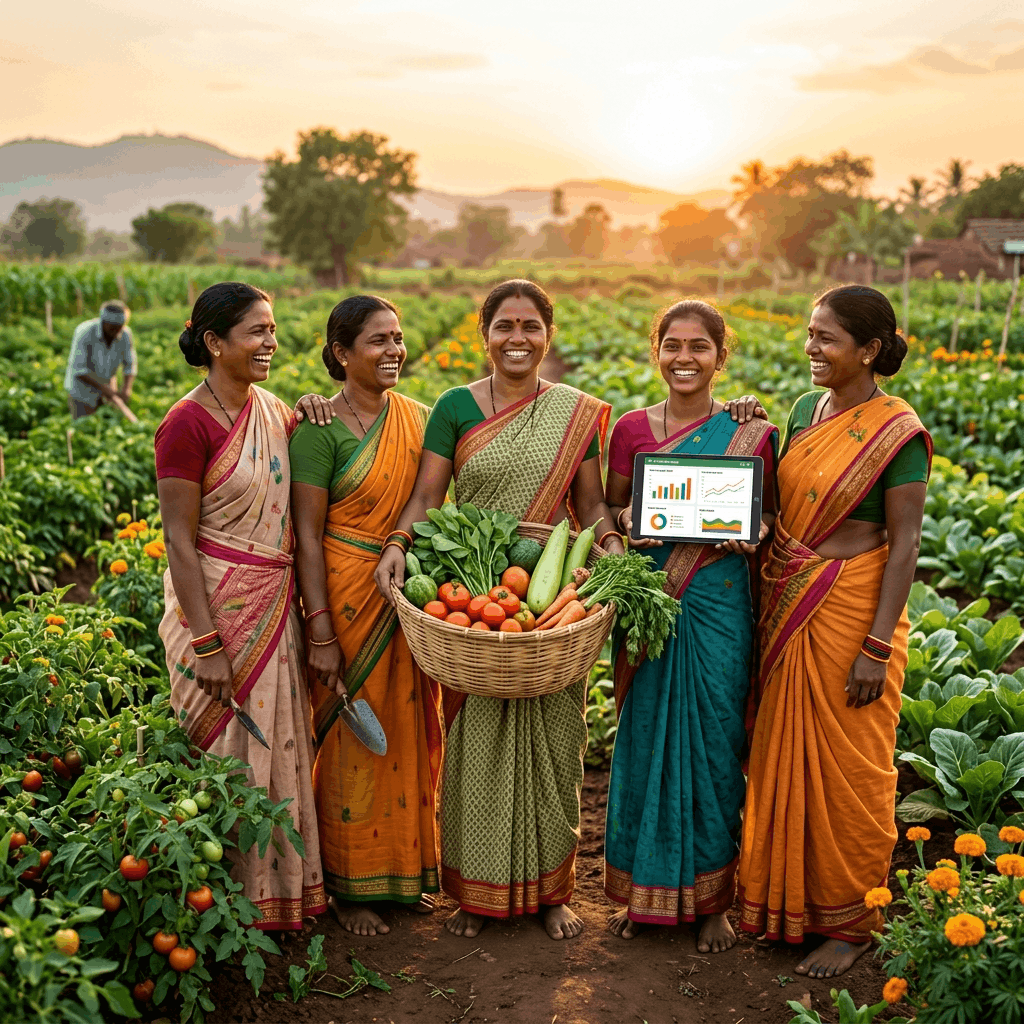
Promoting Women's Leadership in Agriculture
Preferential Subsidies and Financial Benefits for Women Farmers
1. Namo Drone Didi Scheme
Launched with the vision of modernizing Indian agriculture while placing technology in the hands of rural women, the Namo Drone Didi Scheme aims to train 15,000 women Self-Help Groups (SHGs) under the DAY-NRLM banner to operate agricultural drones.- Financial Subsidy: The central government provides a massive 80% financial subsidy up to a maximum cap of ₹8 Lakhs for purchasing an agricultural drone, spraying kits, and essential accessories. The remaining 20% can be secured through highly subsidized bank loans under interest subvention.
- Training & Benefits: Selected women receive a fully funded 15-day certified drone pilot training course (covering flight dynamics, pesticide safety, and navigation) along with a monthly training stipend of ₹15,000.
- Economic Impact: Certified Drone Didis can charge local farmers commercial service fees (₹300 to ₹500 per acre) to spray liquid nano urea, nano DAP, and organic biopesticides. This helps them earn a steady secondary income of ₹15,000 to ₹25,000 per month while reducing chemical exposure for the community.
2. Mahila Kisan Sashaktikaran Pariyojana (MKSP)
As a sub-component of the National Rural Livelihoods Mission (DAY-NRLM), the MKSP is a dedicated national program aimed at empowering women in agriculture by making systematic investments to enhance their participation, productivity, and sustainable crop cultivation.- Organic Focus: MKSP specifically promotes climate-resilient, sustainable, and residue-free organic farming practices. Women farmers receive comprehensive, hands-on field training in biological soil health management, multi-cropping, and multi-tier orchard management.
- Group Empowerment: Funding is directly provided to women groups to establish local Bio-Input Resource Centers (BRCs) for making liquid jivamrita, neem oil spray, and trichoderma formulations, as well as community-managed custom seed banks to preserve indigenous crop varieties.
3. Sub-Mission on Agricultural Mechanization (SMAM)
To ease the intensive manual physical strain of traditional farming and improve overall labor efficiency, the SMAM Scheme offers significantly higher subsidies for female farmers compared to their male counterparts.- Substantial Subsidies: While general male farmers receive a standard 40% subsidy, registered women farmers (across marginal, small, and large categories) are entitled to a premium 50% to 60% direct subsidy on the purchase of all approved agricultural implements.
- Eligible Equipment: This higher subsidy covers tractors, power tillers, rotavators, multi-crop seed drills, weeders, power sprayers, brush cutters, and organic manure spreaders. Applications are easily processed through the central DBT portal (agrimachinery.nic.in) or state portals.
4. PM-KUSUM Scheme (Solar Water Pump Subsidy)
The Pradhan Mantri Kisan Urja Suraksha evam Utthaan Mahabhiyan (PM-KUSUM) has revolutionized rural irrigation by helping farmers install solar water pumps, eliminating dependency on erratic grid electricity and expensive diesel.- Enhanced Women Benefits: Component B of PM-KUSUM offers up to a 60% combined subsidy (central + state) on stand-alone off-grid solar pumps ranging from 3 HP to 7.5 HP. In several progressive states, additional state-level top-up subsidies are offered exclusively to women farmers belonging to backward or marginal classes, pushing the effective subsidy rate to an astonishing 90%.
- Impact: This grants women farmers independent irrigation control during safe daylight hours, enabling them to expand their cultivable land and implement high-efficiency drip irrigation system setups.
5. DAY-NRLM (Deendayal Antyodaya Yojana - Livelihood Loans)
The DAY-NRLM program organizes rural women into structured Self-Help Groups (SHGs), Village Organizations (VOs), and Cluster Level Federations (CLFs) to build sustainable livelihood portfolios.- Financial Assets: Each registered SHG receives a Revolving Fund (RF) of ₹10,000 to ₹15,000 and a Community Investment Fund (CIF) of ₹1.10 Lakhs to kickstart agricultural micro-enterprises.
- Interest Subvention: Women SHGs can access collateral-free bank loans up to ₹3 Lakhs at a highly subsidized interest rate of just 3% to 4% per annum, enabling them to purchase high-quality inputs, set up vermiculture units, or buy farm machinery collectively.
6. PM Kisan Samman Nidhi (PM-KISAN) Joint Holding Benefits
The PM-KISAN scheme provides direct income support of ₹6,000 per year in three equal quarterly installments of ₹2,000 directly to the bank accounts of land-holding farmers.- Gender Incentive: When land is registered jointly in the name of a husband and wife, or solely owned by a female member of the family, she becomes directly eligible for this direct cash transfer. This provides women with independent financial agency to buy seasonal seeds, bio-fertilizers, and organic soil inputs without relying on external family funds.
7. Agri-Clinics and Agri-Business Centers (ACABC) Scheme
Developed by the Ministry of Agriculture and managed by MANAGE, the ACABC Scheme motivates agricultural graduates to set up private commercial ventures in rural areas to provide professional advisory services.- Higher Subsidy Cap: While general male candidates receive a 36% capital subsidy on bank-backed project loans, women agricultural graduates receive a highly lucrative 44% capital subsidy.
- Commercial Scope: The individual loan limit is ₹20 Lakhs, and the group limit (for five graduates) is up to ₹1 Crore. Women use this to set up large-scale commercial vermicompost manufacturing yards, soil testing labs, organic grain processing mills, and custom hiring hubs.
8. Mission for Integrated Development of Horticulture (MIDH)
Horticulture offers significantly higher income margins per acre than traditional cereal crops. The MIDH Scheme actively incentivizes women to diversify their crops.- Higher Subsidy for Women: Women farmers receive 50% to 60% financial assistance (10-15% higher than general male farmers) to build protected cultivation structures like shade net houses, polyhouses, high-tech nurseries, and drip-irrigated organic vegetable orchards.
- Value Addition: The scheme also provides specialized post-harvest grants to help women set up solar dehydrators, dry herb processing chambers (for making ginger powder, moringa powder, or dry spinach leaf powder), and high-quality packaging machines.
9. PM Formalisation of Micro Food Processing Enterprises (PMFME)
The PMFME Scheme, under the Ministry of Food Processing Industries, supports the formalization, upgradation, and branding of micro food enterprises under the 'One District One Product' (ODOP) framework.- Seed Capital: The scheme provides a direct Seed Capital of ₹40,000 per member to registered women SHG members involved in food processing, packaging, and sorting. This is used for working capital and purchasing small toolkits.
- Credit Subsidy: For upgrading or establishing a micro-processing unit (e.g., flour milling, spice grinding, packaging), a 35% credit-linked capital subsidy is available up to a maximum cap of ₹10 Lakhs.
10. State-Specific Women Farmer Support Programs
Various progressive states implement custom, localized direct benefit programs to assist women:- Gujarat: Under Gujarat's state DBT schemes, registered women farmers receive a 75% subsidy to purchase agricultural hand-tool kits and heavy-duty farm wheelbarrows to reduce manual labor in the fields.
- Maharashtra: Under the Dr. Punjabrao Deshmukh Concession Scheme, registered women farmers are eligible for 100% interest-free crop loans up to ₹3 Lakhs from cooperative banks.
- Livestock Subsidies: Multiple states offer 75% financial subsidy to rural women for purchasing indigenous Gir/Sahiwal milch cows, goat rearing units, and backyard poultry setups to establish dual-income streams.
Establish Female Land Rights or Joint Ownership
Ensure the land record (7/12, RoR, or Khatauni) lists the woman's name, either as a sole owner or co-owner. Register on the state farmer portal (like DBT Gujarat or MahaDBT) to unlock women-specific benefits.
Form or Join a Registered Women Self-Help Group (SHG)
Gather 10-15 rural women farmers to form a registered SHG under the DAY-NRLM scheme. This enables you to apply for high-value collective subsidies, revolving funds, and custom hiring center loans.
Apply Online through Government DBT Portals
Submit detailed applications for schemes like PM-KUSUM (solar pumps) or SMAM (machinery) during active window periods, uploading land records, bank details, and identity proofs.
Comparing Outcomes: Women-Led Organic Cooperatives vs. Individual Farms
- 100% Increase in Secondary Income: Women-led organic SHGs processing dry spinach, aloe vera gel, or triphala powder generate a steady monthly income, reducing dependence on seasonal rain-fed crops.
- Faster Machinery Adoption: Custom hiring centers run by women SHGs provide affordable seed drills and pulverizers to small-scale regional farmers, boosting community farm efficiency.
- Adoption of Sustainable Farming: Program data indicates that women farmers are 30% more likely to adopt residue-free organic composting practices than conventional farms.
Encouraging Biological Composting in Women-Led Farms
Hygienic Organic Processing Guidelines
Direct Marketing and Direct-to-Consumer Sales
📅 Official Application & Deadline Guide
👩🌾 Empowering Women Farmers: Special Subsidy Portal
Apply for women-specific agricultural machinery subsidies, vermicompost beds, and organic training. WhatsApp: +91 95372 30173