📅 June 2026 | ✍️ Mitti Gold Organic | 🗂️ Vermicompost
Quantity Required per Bigha
Seasonal Application Calendar for Vineyard Maintenance
To maximize bunch weight and brix accumulation, strict timing is required:
- Post-Harvest Rest Phase (October-November): Apply 1.5 tons per bigha during the foundational foundation/forward pruning phase. Building up soil microbial life during the off-season prepares the root system to violently flush active shoots in the spring.
- Pre-Bud Break (January): Apply 1 ton per bigha. The massive surge in bio-available Phosphorus acts as an energy battery for the emerging buds, drastically increasing the percentage of fruitful shoots over barren ones.
- Berry Setting Phase (Post-Flowering): Apply 0.5 tons via localized root placement. The trace organic Boron and Calcium structurally stabilize the berries, directly preventing the disastrous "Berry-Dropping" that plagues chemical vineyards during sudden temperature spikes.
The Microbiome Science: Pathogen Suppression
The "Slow-Release" Nitrogen Science
How to Use Product in Grapes
To ensure the maximum biological transfer from the Vermicompost into the vine's sap stream, application methodology must be precise. Below is the advanced protocol for vineyard integration:
Step-by-Step Application Guide
Canopy & Root Zone Clearing
Carefully clear away all dead debris, chemical residues, and competing weeds from the immediate active root zone surrounding the vine trunk (approximately a 2-3 foot radius). Exposing bare soil ensures the compost has direct contact with the white feeder roots.
Ring-Trench Application Method
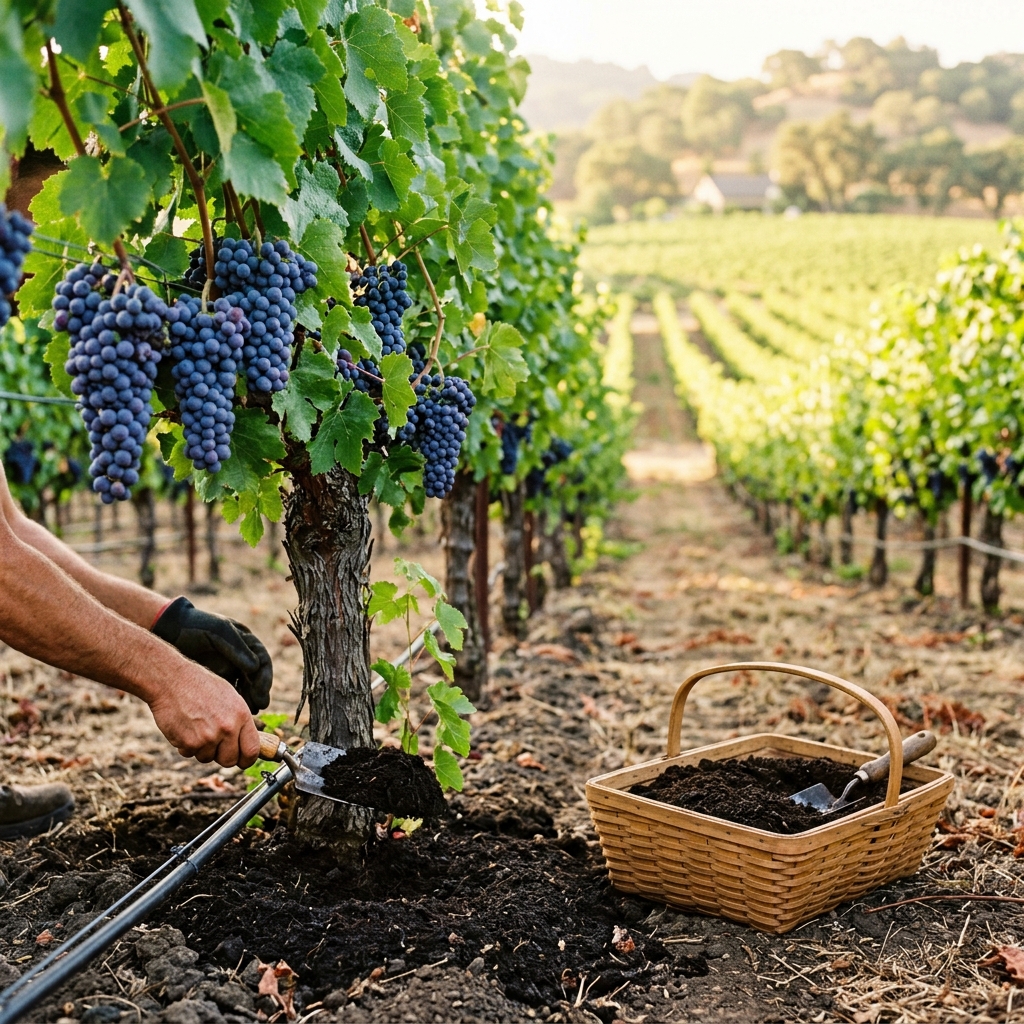
Instead of surface-applying, dig a shallow circular trench (2-3 inches deep) along the dripline of the vine canopy — where the most active feeder roots are located. This "Ring-Trench Method" delivers compost directly to the highest-density root zone.
Even Biological Distribution
Spread Mitti Gold Vermicompost evenly within the shallow ring. For mature vines, divide the required tonnage per bigha by your vine count. Do not pile heavily against the main bark — the trunk itself does not absorb nutrients.
Micro-Incorporation & Mulching
Using a hand rake, lightly turn the Vermicompost into the top 2 inches of soil. Shield the biology from direct harsh sunlight. Cover the ring with a light layer of organic mulch (dried grass or pruned leaves) to lock in the microbial activity.
Activation Irrigation
Irrigate the field immediately and deeply after application. Water carries the solubilized Humic Acids, free amino chains, and billions of active microbes directly down into the deep root colony. This immediate activation starts the feeding process within hours of application.
Climate Resilience: Fighting Vineyard Heat and Drought
Monsoon Drainage Advantage
Intercropping Synergy: Grapes and Ground Cover
The Legume-Nitrogen Bridge
Benefits of Vermicompost in Grapes
2. Better Berry Size: Promotes uniform cell division for larger bunches.
3. Improved Color: Micronutrients like Boron and Magnesium ensure vibrant cluster color.
4. Soil Aeration: Breaks down hard clay soils, allowing roots to breathe.
Real-Life Case Study: Export-Grade Resurgence in Nashik
A premier export-focused vineyard in Nashik, Maharashtra, was facing a crisis of high MRLs (Maximum Residue Limits) and declining berry size. Years of heavy chemical fertigation had led to salt accumulation in the soil, "locking up" crucial micronutrients. The vines were showing acute signs of magnesium and iron deficiency, and the resulting grapes possessed thin, easily cracked skins that repeatedly failed the rigorous EU export inspections.
The estate management completely shifted their basal nutrition protocol to Mitti Gold Vermicompost, applying 3 tons per bigha. Within a single growing season, the high electrical conductivity (salt stress) of the soil dissolved as the organic humic acids chelated the locked salts. The deep-soil aeration initiated by a returning earthworm population allowed the stressed roots to finally breathe and expand.
The difference at harvest was absolute. The organic calcium built incredibly resilient, thick-skinned berries that withstood sudden rain showers without cracking. The biological potassium drove the sugar levels to a massive 20+ Brix. The entire 40-acre harvest passed the EU's zero-residue testing protocols flawlessly, securing elite wholesale pricing and restoring the vineyard's reputation as a premium global exporter.
Helping the Ecosystem (Creatures)
Protection from Disease
Economic Cost/Benefit Analysis (ROI)
Vineyards represent generational investments. Protecting and maximizing their output via Mitti Gold Vermicompost provides unparalleled financial security.
- Eradicating Chemical Fertilizer Costs: The price of synthetic DAP, Urea, and specialized micronutrient blends continues to soar globally. By transitioning to a robust organic Vermicompost foundation, vineyard owners routinely slash their synthetic fertilizer expenditures by 60-80%, dramatically lowering the high operating capital required each season.
- Preventing Crop-Loss from "Cracking": Late-season rain can cause chemical-fed grapes to swell and violently split open, destroying an entire year's profit in 24 hours. The organic Calcium and Silica in Vermicompost physically build tougher "elastic" cellular walls in the fruit skin, drastically reducing splitting losses and securing the crop's final market value.
- Unlocking Premium Market Multipliers: Domestically and internationally, the "Residue-Free" and "Certified Organic" labels command a massive premium. Because Vermicompost enhances the berry's natural waxy "bloom" and sweetness, farmers bypass the low-paying local Mandis entirely, locking into highly lucrative contracts with elite urban supermarkets and international exporters.
Month-by-Month Grapes Organic Care Calendar
Pre-Flowering (December): As the microscopic flower clusters develop, apply a light top-dressing (500 kg/bigha) or spray Vermi-wash. The readily available Boron and Zinc prevent devastating flower-drop (coulure) and ensure maximum fruit set.
Berry Expansion Phase (January/February): During the "pea-size" berry stage, the vines require immense water and Potassium to stretch the cell walls. The humic acids in the Vermicompost hold crucial moisture in the root zone, while the organic Potassium drives sugar (Brix) accumulation and water into the increasing berries.
Pre-Harvest & Rest (March/April): Two weeks before harvest, cut back watering but rely on the compost's native moisture retention to prevent totally dehydrating the vines. After harvest, apply 500 kg/bigha to help the exhausted vine recover and store carbohydrates in its trunk before summer dormancy.
🌿 Bulk Vermicompost Orders
Mitti Gold Organic: For bulk supply of premium Vermicompost Fertilizer — Ideal for Farmers, Nurseries, and Export. WhatsApp: +91 95372 30173
Frequently Asked Questions (Grapes Vermicompost)
The Definitive Vineyard Troubleshooting & Extended FAQ Masterclass
Managing a commercial vineyard requires constant vigilance. The integration of Mitti Gold Organic Vermicompost acts as your primary insurance policy against environmental and pathogenic threats. Below is our expanded masterclass answering the most complex challenges faced by modern grape growers.
1. How does Vermicompost specifically combat "Vine Decline" syndrome?
Vine Decline is typically a catastrophic failure of the root system caused by soil compaction, nematode attacks, and a complete lack of organic carbon. Chemical fertilizers only feed the top foliage, completely ignoring the structural integrity of the soil profile. Mitti Gold Vermicompost actively reverses this syndrome. By reintroducing massive amounts of organic carbon (humus), it physically separates tight clay particles, allowing oxygen to reach the suffocating deeper roots. Simultaneously, the predatory microbes within the compost actively hunt and suppress parasitic nematodes, arresting the decline and forcing the vine to push out vigorous new white feeder roots.
2. Can it rescue vines damaged by unprecedented heat domes?
Yes. During extreme, prolonged heat domes exceeding 42°C, vines rapidly transpire water, leading to stomatal closure, halted photosynthesis, and severely burned grape clusters. Standard soils dry out instantly. However, soil amended with our Vermicompost behaves like a sponge. The humic substances hold thousands of microscopic water droplets, keeping the root zone functionally cooler and actively hydrated. This "Thermal Buffering" allows the vine to keep its stomata open, saving the crop from catastrophic sunburn and weight loss.
3. What is the impact on specific wine-grape varietals vs. table grapes?
For table grapes (like Thompson Seedless), the organic Potassium drive massive berry elongation and firm, crisp skin texture—the exact criteria for premium export pricing. For wine varietals (like Shiraz or Cabernet), the focus shifts to tannin structure and intensely concentrated aromatics. The bio-available Sulfur and complex micronutrient matrix in Vermicompost uniquely heighten the volatile flavor compounds in the grape skin, significantly improving the depth, color, and aging potential of the resulting wine.
4. How does it interact with existing drip-irrigation fertigation systems?
Flawlessly. While the solid Vermicompost is applied to the soil surface, it forms a synergistic relationship with fertigation. The compost acts as an organic "Catcher's Mitt," intercepting any liquid nutrients applied through the drip lines, preventing them from leaching away into groundwater. Instead, it holds these nutrients in the active root zone, biologically converting them into highly available forms that the vine can absorb with zero physical strain.
5. How do we quantify the exact ROI of transitioning an entire 50-acre estate?
When modeling a 50-acre transition from chemical to Mitti Gold organic, the financial impact is tri-fold. First, input costs drop radically; you completely eliminate the need for synthetic DAP and significantly reduce systemic fungicide purchases. Second, yield reliability skyrockets; you no longer lose 15% of your crop to late-season berry cracking or heat stress. Third, the ultimate valuation at the weighbridge jumps; organic certification and superior, export-grade brix levels routinely command a 30-40% price premium over standard chemical harvests. The average commercial estate sees a full return on the organic transition investment within the very first 18 months, followed by decades of compounded profitability.