📅
June 2026 | ✍️ Mitti Gold Organic | 🗂️
Farming
Application Rates: The Abundance of Cow Dung in Rituals
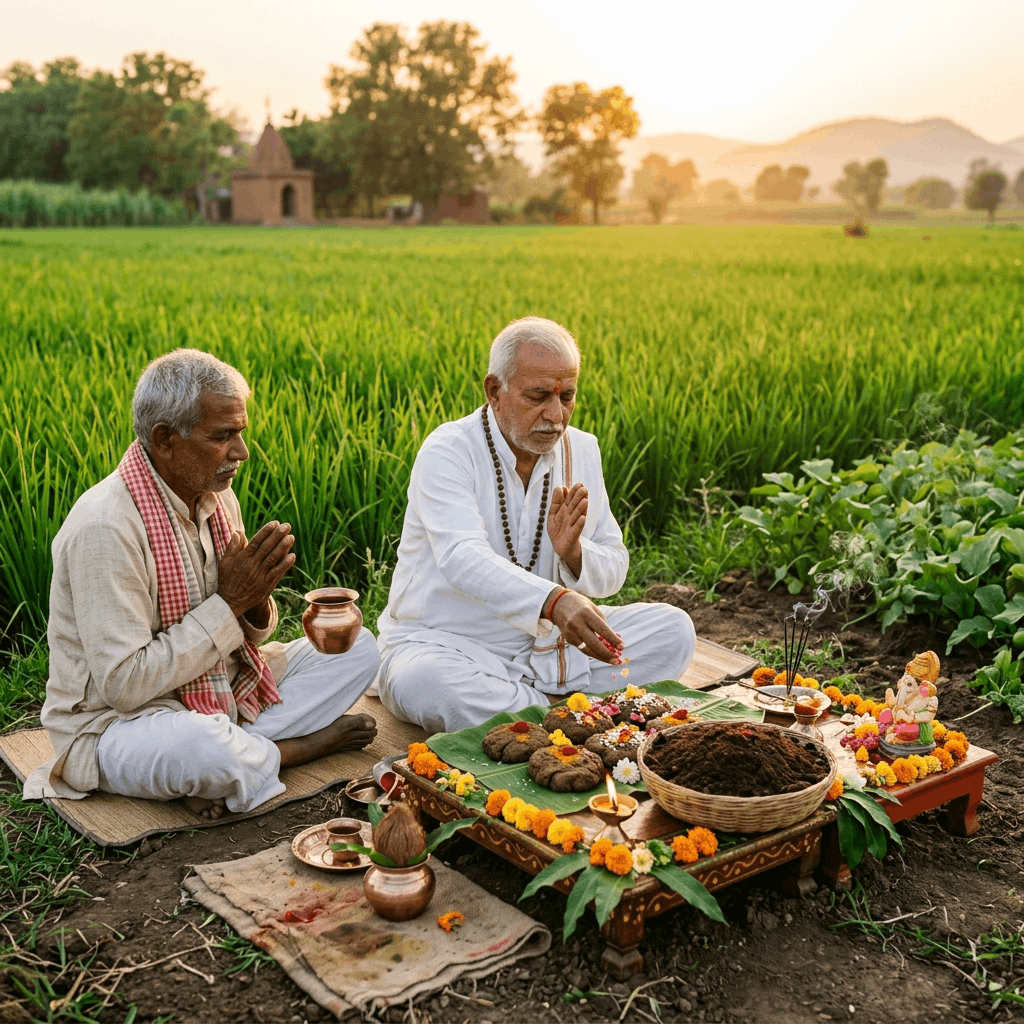
In Indian culture, cow dung (Gomaya) is considered supremely pure and highly auspicious. Its use in daily worship, Yagyas (fire sacrifices), and festival rituals is extensive and deeply rooted in both Vedic tradition and practical science. The "Application Rates" of cow dung in these spiritual contexts are remarkably high. During major festivals, rural households apply fresh cow dung mixed with yellow clay to coat their entire courtyards and home floors—a process that can consume 20 to 50 kilograms of dung per household. For fire rituals (Homas and Agnihotra), hundreds of thousands of dried cow dung cakes are utilized daily across temples and homes in India. This massive, continuous demand ensures that cow dung is never treated as waste but as a highly valued commodity. From an agricultural perspective, the ashes (Bhasma) generated from these rituals are collected and returned to the earth. An application rate of 50 to 100 kg of this mineral-rich, carbonized ash per bigha provides an instant boost of potash and micronutrients to the soil, bridging the gap between spiritual practice and agronomic science.
How to Use Product: Preparation for Pooja and Fields
Understanding how to use this sacred product maximizes its spiritual and agricultural efficacy. Fresh cow dung used for purification must be collected from healthy, grazing indigenous (Desi) cows. It is mixed with water and sometimes a pinch of turmeric to create a purifying wash for altars and doorsteps. For fire rituals, the dung is molded into flat cakes and dried under the sun for 5 to 7 days until all moisture evaporates, ensuring a clean, smoke-free burn. When to apply: The resulting ash should be applied to crop fields during the land preparation stage or mixed into compost bins. Additionally, in rituals like Govardhan Puja, large mounds of fresh dung are shaped into deities, worshipped with grains and flowers, and subsequently transferred directly to the farm's compost trench. This process acts as a massive microbial inoculation for the compost, accelerating decomposition and resulting in premium-grade organic manure that revitalizes depleted soils.
1
Collection and Purification
Collect fresh, uncontaminated dung from indigenous cows. Use it immediately to coat the prayer area (Mandir) or home entrance to establish a spiritually pure and sanitarily clean environment.
2
Sun-Drying for Agnihotra
Shape the dung into round cakes or specific pyramid shapes and dry them completely in direct sunlight. Use these dry cakes as the primary fuel for daily Homas and Agnihotra rituals.
3
Recycling Ash to Agriculture
Collect the sacred ash left over from the fire rituals. Mix this potassium and calcium-rich ash with your vermicompost or broadcast it directly over your vegetable beds to boost plant immunity.
How to Compare Product Outcomes: Sacred Ash vs Chemical Potash
Farmers who integrate ritual ash and cow dung into their farming can clearly compare the outcomes against synthetic chemical fertilizers:
- Potassium Availability: Ritual cow dung ash is a fantastic source of highly soluble organic potassium. Unlike chemical Muriate of Potash (MOP) which can harden the soil, organic ash keeps the soil friable and improves fruit size and sweetness.
- Pest Repellency: Dusting fine cow dung ash over young vegetable crops acts as a physical barrier against chewing insects and flea beetles, completely replacing toxic chemical dusts.
- Zero Cost Input: Utilizing the byproducts of daily worship provides essential macronutrients at absolutely zero cost, significantly improving the farmer's net profit margin.
How to Help into Creature: Fostering Micro-Life
The use of cow dung in worship ultimately leads to its return to nature, directly helping soil creatures. When fresh or composted dung from rituals is added to the soil, it provides massive quantities of organic carbon. This carbon is the fundamental building block for all soil life. It feeds the beneficial bacteria that fix atmospheric nitrogen and the fungi that break down complex minerals. Earthworms are strongly attracted to areas treated with cow dung, where they feed, multiply, and excrete nutrient-dense castings (vermicompost). By maintaining the cycle of Gomaya from the cowshed to the altar, and finally to the field, we ensure the continuous survival and flourishing of these microscopic creatures, which are the true biological engines of soil fertility.
Protection from Disease: Antiseptic Properties
Science has validated the ancient belief in the protective power of cow dung. Fresh cow dung is rich in beneficial microbes (like Bacillus subtilis) that possess strong antibacterial and antifungal properties. Plastering walls and floors with cow dung provides natural thermal insulation and acts as an antiseptic shield, offering protection from disease-causing pathogens in rural homes. When to apply for crops: A liquid extract made by soaking dry cow dung cakes in water for 48 hours can be sprayed on crops. This extract contains rich microbial antagonists that suppress soil-borne diseases like root rot, damping-off, and fusarium wilt. Furthermore, the burning of cow dung cakes with pure ghee produces formaldehyde and other volatile compounds in trace amounts, which scientifically purify the air and eliminate airborne bacteria.
Market: Farmer, Nursery, Gardener, Export
The market for worship-grade cow dung products has transformed into a massive, organized industry. For the Farmer, selling dried cow dung cakes, pure Bhasma (ash), and Agnihotra kits provides a lucrative secondary income, often fetching ₹10 to ₹20 per dry cake in urban centers. The Nursery and Gardener market heavily consumes premium
cow dung manure and liquid extracts for maintaining organic home kitchen gardens and ornamental plants. In the Export sector, there is a massive demand from the Indian diaspora across the USA, UK, and Middle East for certified, vacuum-packed cow dung cakes and organic Dhoop (incense) sticks for religious purposes. This global demand ensures that cow shelters (Gaushalas) remain financially self-sustaining, turning a sacred byproduct into a high-value commercial asset that drives the rural economy.
🌿 Sacred Cow Dung Products & Organic Inputs
Source high-quality organic cow dung compost, vermicompost, and agricultural inputs for your farm or garden. WhatsApp: +91 95372 30173
Cow Dung in Worship FAQ
Why is cow dung used to purify homes in India? +
Cow dung contains natural antibacterial and antifungal properties. Plastering it on floors and walls acts as a natural antiseptic, repels insects, and provides thermal insulation.
How can we use the ash from cow dung fire rituals in farming? +
The ash (Bhasma) is rich in potassium and calcium. It can be mixed into compost, applied to the soil at 50-100 kg per bigha, or dusted on plant leaves to repel pests.
Is there a market for dried cow dung cakes? +
Yes, there is a massive domestic and export market. Dried cakes are sold extensively online and in urban markets for use in Homas, Agnihotra, and daily religious rituals.
How does cow dung protect crops from diseases? +
A liquid extract made by soaking cow dung contains beneficial microbes (like Bacillus) that, when sprayed on crops, naturally suppress pathogenic fungi and root rot diseases.
What is the benefit of Govardhan Puja to agriculture? +
During Govardhan Puja, massive quantities of fresh dung are collected and worshipped. Post-festival, this highly concentrated, microbe-rich organic matter is used to fertilize fields, boosting crop yields.