📅 June 2026 | ✍️ Mitti Gold Organic | 🗂️ Farming
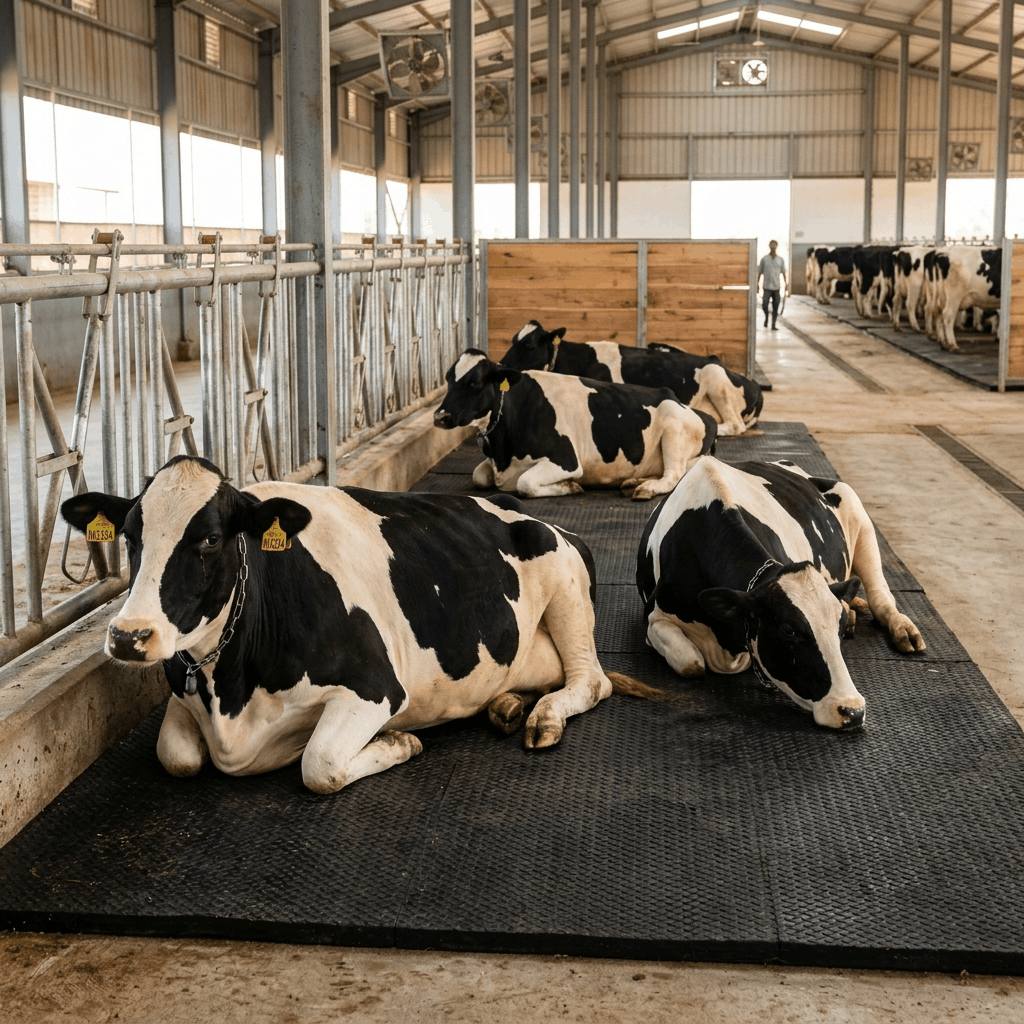
What is a Cow Mattress and Why Do Indian Dairy Farmers Need It?
A cow mattress (also called a cattle mattress or dairy cow mat) is a thick, specially designed rubber or foam pad placed on the floor of a cow's stall or resting area in a dairy farm. Just as a human sleeps better and is more productive after a good night's rest, a dairy cow produces significantly more milk and stays healthier when she has a comfortable, clean, and dry surface to lie down on.
In traditional Indian dairy farming, cattle are typically kept on concrete floors, mud floors, or bare compacted earth. While these surfaces are low-cost, they cause significant health problems for the animals over time — including knee and hock injuries, mastitis from lying in wet conditions, and severe joint stress. These health issues reduce milk production, increase veterinary costs, and shorten the productive life of your cattle.
The global dairy industry, including leading Indian dairy cooperatives like Amul, has recognised that cow comfort directly translates to milk yield. Scientific research from NDDB (National Dairy Development Board) and multiple agricultural universities in India consistently shows that cows with access to comfortable resting surfaces produce 10–15% more milk and have significantly better reproductive health.
🔧 Types of Cow Mattresses Available in India
Indian dairy farmers can choose from several types of cow mattresses depending on their budget, barn type, and herd size:
1. Solid Rubber Mattress (Most Popular): Made from recycled rubber, 25–50mm thick. Extremely durable (8–12 years lifespan). Easy to clean and disinfect. Provides excellent cushioning and drainage. Available in grooved or smooth surfaces. Best for tied-stall and free-stall barn systems. Price range: ₹450–₹1,200 per sq. metre.
2. Rubber Crumb-Filled Mattress: A rubber outer shell filled with recycled rubber crumbs. Provides the softest feel closest to natural ground. Ideal for high-production HF cows. Slightly more expensive but significantly reduces hock and knee injuries. Price range: ₹800–₹1,800 per sq. metre.
3. EVA Foam Mattress: Lightweight, easy to install, lower cost. However, degrades faster than rubber (3–5 year lifespan), absorbs liquids over time, and loses cushioning properties. Best suited for small farms on a limited budget.
4. Waterbed Mattress: High-end system used in modern large-scale dairy operations. Provides exceptional comfort but requires significant investment (₹5,000–₹12,000 per stall) and regular maintenance.
📐 Sizing Guide: How Much Mattress for Your Herd?
Choosing the right size and quantity of cow mattresses for your dairy farm depends on the size of your animals and the number of stalls. Here are the standard guidelines:
- Mattress Size per Cow: For standard Indian dairy breeds (HF, Jersey, Gir cross), a stall mattress of 180 cm × 120 cm (6 feet × 4 feet) is the minimum recommended size. For large HF or Murrah buffalo cows, 200 cm × 120 cm is preferred.
- Thickness: Minimum 25 mm (1 inch) rubber mattress for basic comfort. 40–50 mm thickness provides superior cushioning and longer life (8–12 years). Foam mattresses are cheaper but degrade faster (3–5 years life).
- Small dairy (10–25 animals): Budget ₹400–₹800 per mattress for 25mm rubber, ₹700–₹1,500 per mattress for 40mm rubber. Total investment: ₹4,000–₹37,500 for 10–25 animals.
- Large dairy (50–200 animals): Bulk purchase discounts available. Contact direct manufacturers in Rajkot, Pune, or Kolkata for wholesale pricing.
- Buffalo and cattle beds: Murrah buffalo require slightly wider (130 cm) mattresses due to their broader body structure.
💡 Important for Indian Farmers: Ensure any cow mattress you purchase has a grooved or textured surface to prevent slipping. Smooth rubber becomes dangerously slippery when wet with urine or water, which can cause falls and leg injuries in your cattle.
📋 Step-by-Step: How to Install Cow Mattresses in Your Dairy
Prepare the Stall Floor
Ensure the concrete floor is clean, level, and free of major cracks or protrusions. Any raised edges or uneven surfaces will cause the mattress to rock and degrade faster. Clean the floor thoroughly with water and a disinfectant solution (such as sodium hypochlorite) before installation.
Measure and Cut
Measure each stall carefully. Most mattresses come in standard sizes, but may need to be trimmed with a heavy-duty knife or angle grinder to fit your stall dimensions exactly. Ensure a snug fit so the mattress does not slide or bunch up.
Install with Anchor Bolts or Adhesive
For tied-stall systems, anchor the front edge of the mattress to the floor using anchor bolts and rubber washers. For free-stall systems, mattresses are typically held in place by the stall's curb or kick board at the rear. Heavy-duty rubber floor adhesive can be used for extra security in loose-housing systems.
Allow Animals to Acclimatise
Introduce animals to the new mattresses gradually. Initially, some cows may be hesitant about the new surface. Sprinkle a thin layer of sand or sawdust on top for the first week to give the animals more grip and confidence while they adjust.
Establish a Cleaning Routine
Clean mattresses twice daily — remove manure before it accumulates, and flush with water. A clean, dry surface is essential to prevent mastitis. Once weekly, disinfect with a diluted sodium hypochlorite solution and allow to air dry completely before animals return.
📊 Impact on Milk Yield and Farm Economics
The return on investment (ROI) of cow mattresses in an Indian dairy farm is consistently positive and measurable. Research conducted across dairy farms in Gujarat, Punjab, and Haryana by the National Dairy Research Institute (NDRI) and state animal husbandry departments shows clear economic benefits.
Cows on rubber mattresses spend an average of 3–4 hours more lying down per day compared to cows on concrete floors. This additional resting time is directly correlated with increased milk production, as cows secrete more milk during rest when blood flow to the udder increases. On average, farms report a 10–15% increase in daily milk yield after installing mattresses — for a cow producing 15 litres per day, this represents an additional 1.5–2.25 litres daily, worth ₹45–₹90 per day at ₹30/litre milk price. Over a 300-day lactation, this is ₹13,500–₹27,000 extra income per cow annually — far exceeding the ₹1,500–₹3,000 cost of one mattress.
Additionally, veterinary costs drop significantly. Hock lesions (injuries to the back of the leg joint) are reduced by 75–85%. Mastitis incidence (the most costly disease in dairy farming) drops by 30–40% due to cleaner, drier lying conditions. Lameness cases requiring treatment drop by 60–70%.
🌿 How Cow Comfort Improves Animal Health and Welfare
Cow mattresses improve not just productivity but the fundamental health and wellbeing of your animals. A cow that experiences chronic discomfort from lying on hard concrete floors develops long-term health problems that shorten her productive life by 2–3 years.
Joint health: Hard floors cause progressive damage to carpal joints (knees), hock joints, and fetlock joints. The impact of a 500 kg cow repeatedly rising and lying down on concrete eventually causes arthritis and chronic lameness. Rubber mattresses absorb this impact, protecting joint cartilage and significantly reducing the incidence of joint disease in your herd.
Reproductive health: Comfortable cows show stronger and more regular heat (oestrus) signs, making them much easier to detect for breeding. Research shows that cows on mattresses have conception rates 8–12% higher than cows on concrete floors. This improvement in reproductive efficiency is one of the most financially significant benefits of cow mattresses for dairy farmers who maintain their own bull or use AI (artificial insemination) programs.
🛡️ Protection from Diseases
The single most important disease-prevention benefit of cow mattresses is the dramatic reduction in mastitis incidence. Mastitis — inflammation of the udder — is the most economically devastating disease in dairy farming globally, and India is no exception. It is primarily caused by bacteria that enter the udder through the teat canal. These bacteria thrive in wet, manure-contaminated lying areas.
Cow mattresses, when kept clean and dry, provide a surface that is far less hospitable to mastitis-causing pathogens (Streptococcus, Staphylococcus, E. coli) compared to wet concrete or mud floors. The reduction in mastitis not only saves the direct cost of treatment (₹1,500–₹5,000 per case including antibiotics, milk discarding, and veterinary fees) but also prevents the chronic, subclinical mastitis that silently reduces milk yield by 10–20% for extended periods without obvious clinical signs.
🏪 Market: Where to Buy Cow Mattresses in India
The cow mattress market in India has grown significantly over the last decade, driven by the expansion of organised dairy farming and cooperative dairies. Here are the key market channels for Indian dairy farmers:
Farmer Direct: Small and medium dairy farmers can purchase cow mattresses from local agricultural equipment dealers and veterinary supply shops. Quality and price vary significantly — always request a sample to check rubber quality before purchasing large quantities.
Online Marketplaces: Major platforms like IndiaMart (indiamart.com) and TradeIndia list hundreds of rubber cow mattress manufacturers across India. Compare prices and MOQ (minimum order quantities). Most manufacturers offer free samples for bulk orders.
Direct from Manufacturers: Key manufacturing centres in India include Rajkot (Gujarat), Pune (Maharashtra), and Kolkata (West Bengal). Rajkot in particular has several rubber product manufacturers who produce agricultural-grade rubber flooring and mattresses. Buying direct from manufacturers at wholesale prices can save 30–50% compared to retail prices.
Export Market: Indian-made rubber cow mattresses are exported to South-East Asia, Middle East, and Africa due to cost advantages. Manufacturers in Rajkot and Pune regularly supply large-format dairy operations in these regions. This export market provides stable large-volume orders for Indian rubber mattress manufacturers.
🔗 Related Articles: 🌾 Use of Ash (Rakh) in Farming: How, When & Benefits for Indian Farmers | 💧 How to Recharge Water in Your Farm and Increase Crop Yield | 🌱 How to Start a Nursery Business: Complete Guide with Profit, Market & Where to Sell | 🚜 Tractor Hydraulic System: All Parts and Their Functions Explained
📦 Bulk Orders & Export
Mitti Gold Organic: For bulk orders of all organic fertilizers — Farmers, Nurseries, and Export. WhatsApp: +91 95372 30173
❓ Frequently Asked Questions: Cow Mattresses
Yes, earthen floors are actually worse than concrete for cow health because they become waterlogged and muddy during monsoon, creating a perfect breeding ground for mastitis bacteria and footrot pathogens. Rubber mattresses placed over well-compacted, well-drained earthen floors provide a significant improvement in animal comfort and hygiene. Alternatively, raising the earthen floor level and applying a lime powder treatment regularly is a low-cost way to improve hygiene.
Good-quality solid rubber cow mattresses (40–50mm thick) from reputable manufacturers last 8–12 years under normal dairy farm conditions. The key factors affecting lifespan are: (1) thickness — thicker mattresses last longer, (2) rubber quality — pure recycled rubber lasts longer than low-grade blends, (3) cleaning — harsh chemical cleaning agents damage rubber faster, use mild diluted disinfectants.
Yes. Rubber cow mattresses are equally suitable for buffalo (Murrah, Surti, Jaffarabadi breeds). Buffalo are typically heavier than crossbred dairy cattle, so a thicker mattress (40–50mm minimum) is recommended. Ensure the mattress width is at least 130 cm for Murrah buffalo, which are broader-bodied than most dairy cattle breeds.
Prices vary by type, thickness, and quality: Basic EVA foam mattress (3–5 year life): ₹300–₹600 per mattress. Standard 25mm rubber mattress: ₹500–₹900 per mattress. Premium 40mm rubber mattress: ₹900–₹1,800 per mattress. Rubber crumb-filled mattress: ₹1,500–₹3,000 per mattress. For a 20-animal dairy farm, expect a total mattress investment of ₹10,000–₹60,000 depending on type chosen.
Direct subsidies specifically for cow mattresses are not yet widely available at the national level, but they may be covered under state animal husbandry department infrastructure support schemes. Gujarat's Khedut Sahay Yojana and the National Livestock Mission (NLM) scheme provide general infrastructure subsidies for dairy farm improvement that may cover flooring and resting area improvements. Check with your district animal husbandry officer for the latest applicable schemes.