📅 June 2026 | ✍️ Mitti Gold Organic | 🗂️ Farming
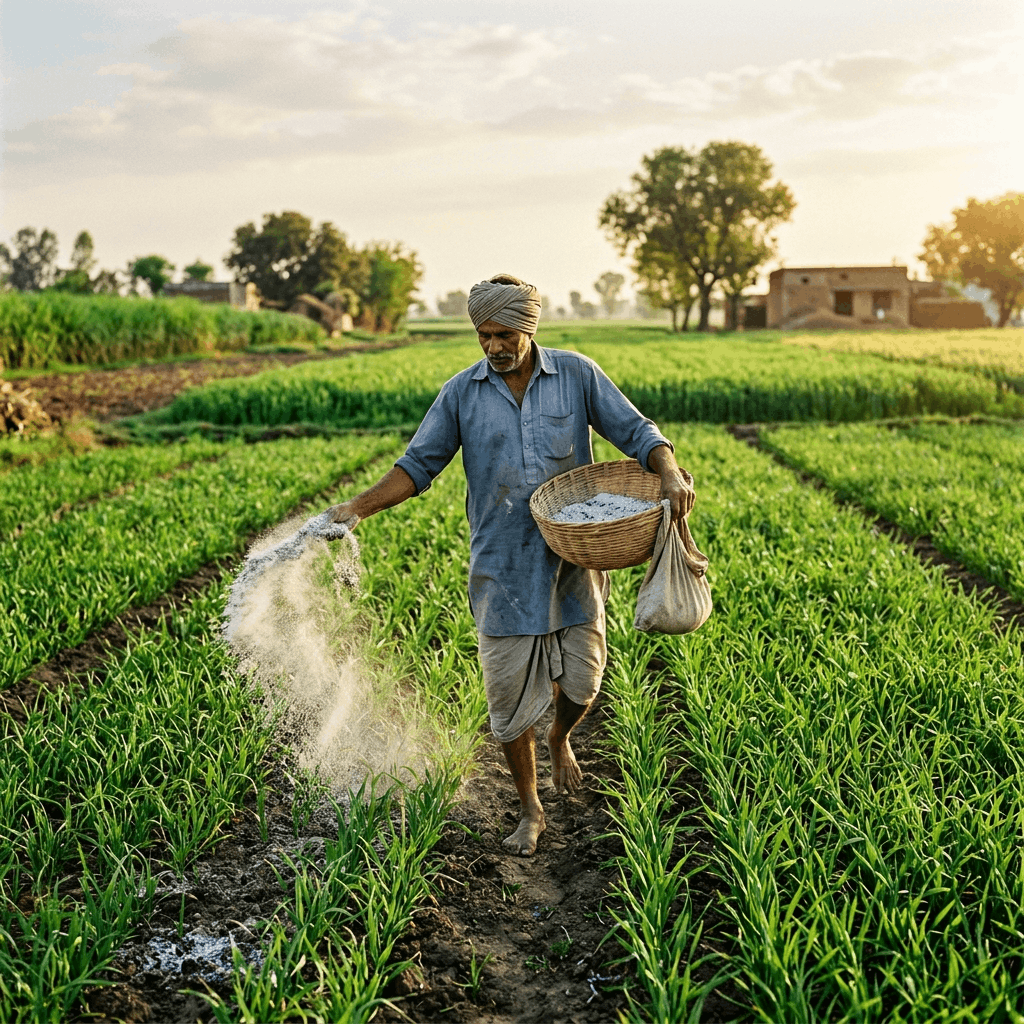
Why Every Indian Farmer Should Use Ash (Rakh) in Their Farm
For generations, Indian farmers have known that the ash left over after burning wood, crop residue, or dung is not waste — it is a treasure. Ash (known as Rakh in Gujarati and Hindi) is one of nature's most powerful and completely free organic soil amendments. It is rich in potassium (K), calcium (Ca), magnesium (Mg), phosphorus (P), and over 70 trace minerals that are essential for healthy crop growth.
Unlike synthetic chemical fertilizers that acidify the soil over time, ash is naturally alkaline and helps to balance soil pH. It acts as an instant liming agent, neutralising acidic soils that are common in many parts of Gujarat, Rajasthan, Maharashtra, and Uttar Pradesh. Scientific studies have confirmed that crops grown in ash-amended soil show significantly better root development, stronger stems, improved resistance to fungal diseases, and higher yields.
The best part? Every farm already has a supply of ash. Whether from your kitchen chulha, the burning of crop stubble, or wood fires used for cooking and warming — this organic gold costs you nothing. This complete guide will tell you exactly how to use it, when to apply it, how much per bigha, and what results to expect.
📏 Application Rates: How Much Ash Per Bigha?
Getting the dosage right is important. Too little ash provides insufficient nutrients, while excess ash can over-alkalinise your soil and cause micronutrient lockout. Here are the recommended application rates for Indian farmers:
- Field crops (wheat, bajra, jowar, cotton, groundnut): 80–120 kg of sieved ash per bigha (approximately 200–300 kg per acre)
- Vegetable crops (tomato, chilli, brinjal, okra, capsicum): 40–60 kg per bigha, applied in furrows near the root zone
- Fruit orchards (mango, lemon, pomegranate, guava): 2–5 kg per tree per year, applied as a ring around the trunk
- Nursery beds and seedling trays: Mix 5–10% sieved ash by volume into the potting medium
- Pest-repellent dusting: Apply a thin dusting (approx. 5–10 kg per bigha) directly onto leaves in the early morning when dew is still present
- Seed treatment: Coat seeds in ash before sowing to protect against soil-borne fungal infections
For a standard Indian bigha of approximately 1,600 sq. meters, a general soil amendment dose of 100 kg of wood ash applied before sowing is the most widely recommended rate by Krishi Vigyan Kendras (KVKs) across India.
🔧 How to Use Ash in Your Farm: Practical Methods
Ash can be used in several ways depending on your crop type, soil condition, and the specific benefit you are seeking. The most common and effective methods used by Indian farmers are:
1. Soil Incorporation (Broadcast Method): Spread sieved ash evenly across the ploughed field before sowing. Use a trolley or basket to spread it uniformly. Then plough or harrow the field once more to mix the ash into the top 6–8 inches of soil. This is the best method for correcting soil acidity and providing long-term potassium nutrition.
2. Furrow Application: Place ash directly into the planting furrows before placing seeds or transplants. This ensures immediate contact between ash nutrients and germinating roots.
3. Foliar Dusting: Sieve fine ash and dust it lightly over plants in the early morning when leaves are wet with dew. This method physically deters soft-bodied insects like aphids, white flies, and mealy bugs by clogging their breathing pores.
4. Seed Treatment: Before sowing, roll your seeds in dry wood ash for 5–10 minutes. This protects seeds against fungal damping-off during germination. Particularly effective for groundnut, soybean, and vegetable seeds.
5. Compost Enrichment: Add ash in layers to your compost heap. Ash accelerates decomposition and significantly increases the potassium and calcium content of the finished compost.
💡 Farmer's Tip: Always sieve ash before applying it to your field. Remove unburnt charcoal pieces and large debris. Sieved ash is more uniform, easier to spread, and acts faster on the soil.
📅 When to Apply Ash in the Farm
- Pre-sowing (Best Time): 2–3 weeks before sowing, incorporated during last tillage. Ash has time to integrate with soil and adjust pH before seeds germinate.
- During transplanting: Place a small handful of ash in each planting hole before inserting seedlings. Particularly effective for vegetables like tomato, chilli, and capsicum.
- At flowering stage: A light top-dressing of ash (20–30 kg per bigha) around plant stems at the start of flowering provides a potassium boost that directly improves fruit and grain setting.
- After heavy rains: Apply foliar dusting after rains to prevent fungal disease spread, especially for groundnut and cotton.
- Avoid during rainy days: Do not apply ash during or immediately before heavy rain as it will wash away. Best applied during dry spells.
Collect and Store Ash
Collect ash from your wood-burning chulha, crop residue burning, or coconut shell burning. Store in a dry, covered container. Ash from hardwoods (teak, acacia, mango wood) is richer in nutrients than ash from crop straw.
Sieve the Ash
Pass ash through a fine mesh sieve to remove unburnt charcoal, stones, or debris. This ensures uniform application and prevents localised hot spots that could harm seeds.
Measure Your Dose
Using the recommended rate for your crop (see Application Rates above), measure the required quantity for your field area. One standard 50-litre bucket of sieved ash weighs approximately 15–20 kg.
Apply to Prepared Field
For broadcast application: spread ash evenly by hand or by tying a bag to a stick and walking across the field. For furrow application: place a thin line of ash in each planting groove before seeding.
Incorporate and Irrigate
After broadcast application, plough or rake the field to incorporate ash into the soil. Then irrigate lightly. This activates the minerals and helps them begin moving into the soil profile. Do not irrigate heavily as this may cause ash to wash off.
📊 Comparing Crop Outcomes: With Ash vs Without Ash
Farmers who have consistently used wood ash as part of their soil management report remarkable differences in crop performance compared to fields that do not receive any ash treatment. The following outcomes have been documented across multiple seasons by agricultural research stations and progressive farmers in Gujarat, Maharashtra, and Rajasthan.
Fields treated with wood ash at the recommended rate typically show 15–25% improvement in grain fill for crops like wheat, bajra, and maize. This is directly attributed to the increased potassium availability which drives sugar transport from leaves to grains. Vegetable crops like tomato and capsicum show marked improvement in fruit firmness, colour, and shelf life — a critical advantage for farmers selling in wholesale mandis where appearance determines price.
Perhaps most dramatically, cotton fields treated with ash at flowering stage report significantly fewer incidences of boll shedding and improved boll weight. Groundnut crops treated with ash show better pod development and higher oil content. Over a period of 3 consecutive seasons of ash application, many farmers report that they are able to reduce their chemical potash (MOP) fertilizer use by 30–40%, leading to substantial cost savings.
🌿 How Ash Benefits Soil Life and Farm Creatures
A thriving farm is more than just its crops — it is an entire living ecosystem. Wood ash plays a surprisingly important role in supporting beneficial creatures that are essential for healthy, productive farming.
Earthworms: Earthworms are perhaps the most important creature on any farm. They thrive in near-neutral to slightly alkaline soils. In acidic soils (pH below 5.5), earthworm populations crash dramatically. Regular ash application, by raising soil pH towards a more neutral range, directly creates a habitat where earthworms flourish. More earthworms means more natural aeration, better drainage, and more nutrient-rich castings deposited throughout your soil.
Beneficial soil bacteria and fungi: The alkaline environment created by ash suppresses acid-loving harmful pathogens while encouraging the growth of beneficial soil bacteria like Rhizobium (nitrogen fixers) and Bacillus strains that produce natural antibiotics against disease-causing organisms.
Natural pest deterrence: Ash acts as a physical barrier and desiccant against crawling pests including snails, slugs, cutworms, and various beetles. When dusted around the base of plants, it deters these creatures from crossing over to feed on your crops. Unlike chemical pesticides, ash does not kill beneficial insects like bees and ladybirds.
🛡️ Protection from Crop Diseases
One of the most powerful but least understood benefits of wood ash in farming is its role in protecting crops from a wide range of fungal and bacterial diseases. The alkaline nature of ash (pH 9–11) creates a hostile environment on the soil surface and plant tissues where many common crop pathogens cannot survive or reproduce.
Fungal diseases controlled by ash: Powdery mildew on cucurbits, grapes, and vegetables is significantly reduced when ash is dusted on affected leaves. The alkaline ash disrupts the fungal cell membrane and prevents spore germination. Damping-off disease in seedling nurseries — caused by Pythium, Fusarium, and Rhizoctonia — is dramatically reduced when seed beds are treated with ash. Root rot in heavy clay soils is also suppressed, as ash improves soil drainage and aeration while killing harmful pathogens.
Bacterial diseases: Ash has mild bacteriostatic properties that help control bacterial leaf spots and blight. While it should not be relied upon as a primary treatment for severe bacterial infections, regular preventive ash dusting significantly reduces disease incidence season after season.
Practical application for disease protection: For preventive disease management, dust sieved fine ash lightly across all crop leaves early in the morning on a weekly or bi-weekly basis, particularly during monsoon season when humidity encourages fungal growth. After every rain event, reapply once leaves have dried.
🏪 Market: Who Uses Ash and Who Buys It?
While ash is primarily a farm input used directly by the farmer who generates it, there is a growing market for quality agricultural ash products in several segments.
Farmer Market: Progressive farmers who understand soil science purchase wood ash in bulk from charcoal manufacturers, sawmills, and biomass energy plants. These industrial sources produce consistent, high-quality ash free of contamination. Cost-conscious farmers blend industrial ash with their own farm-generated ash for a reliable supply.
Nursery Market: Plant nurseries use ash as a key ingredient in propagation mixes and seedling beds. The antifungal properties of ash are particularly valued in nurseries where damping-off disease can decimate entire batches of young seedlings. Nurseries typically purchase sieved fine ash in 50-kg bags.
Gardener Market: The home and kitchen garden segment is one of the fastest-growing markets for clean wood ash. Urban gardeners who maintain terrace gardens, balcony pots, and kitchen gardens are increasingly aware of ash's benefits and actively seek clean, sieved ash for use as an organic fertilizer and pest repellent.
Export Market: In certain traditional handicraft sectors, fine white ash is used in the production of incense sticks (agarbatti), pottery glazes, soap making, and paper manufacturing. While not a direct agricultural export, ash-based products like biochar and activated carbon are significant export commodities from India to Europe and East Asia.
📦 Bulk Orders & Export
Mitti Gold Organic: For bulk orders of all organic fertilizers — Farmers, Nurseries, and Export. WhatsApp: +91 95372 30173
❓ Frequently Asked Questions: Ash in Farming
No. Only use ash from the burning of natural materials — wood, agricultural crop residue, coconut shells, and cow dung. Ash from plastic, rubber, or mixed garbage contains toxic heavy metals and dioxins that will contaminate your soil and harm crops, and may end up in the food you grow. Always use clean, natural ash.
For wheat cultivation, the recommended rate is 80–120 kg of well-sieved wood ash per standard bigha (approximately 1,600 sq. meters). Apply as a pre-sowing soil incorporation 2–3 weeks before planting, and optionally supplement with a 20–30 kg top-dressing at the tillering stage for additional potassium benefit.
Ash is a rich source of potassium but in a different, slower-release form than synthetic MOP. With consistent seasonal ash application over 2–3 years, you can typically reduce your chemical potash requirement by 30–40%. However, for high-demand crops like cotton and potato, a partial application of MOP in combination with ash is recommended during the transition phase. Full replacement is achievable after soil potassium levels stabilise.
Yes! Mixing ash with vermicompost or cow dung manure before application is an excellent practice. The combination provides a complete range of macro and micronutrients, and the ash also helps to reduce nitrogen loss (volatilization) from the compost. A mixture of 80% vermicompost + 20% ash by volume is a powerful organic soil amendment.
Yes, over-application of ash can push soil pH too high (above 8.0), causing micronutrient deficiencies in iron, manganese, zinc, and boron, which are essential for crop growth. Always test your soil pH before applying ash. If your soil is already neutral or slightly alkaline (pH above 7.0), use ash cautiously and at lower rates. Acid soils (pH below 6.5) benefit most from ash applications.