📅 June 2026 | ✍️ Mitti Gold Organic | 🗂️ Machinery & Markets
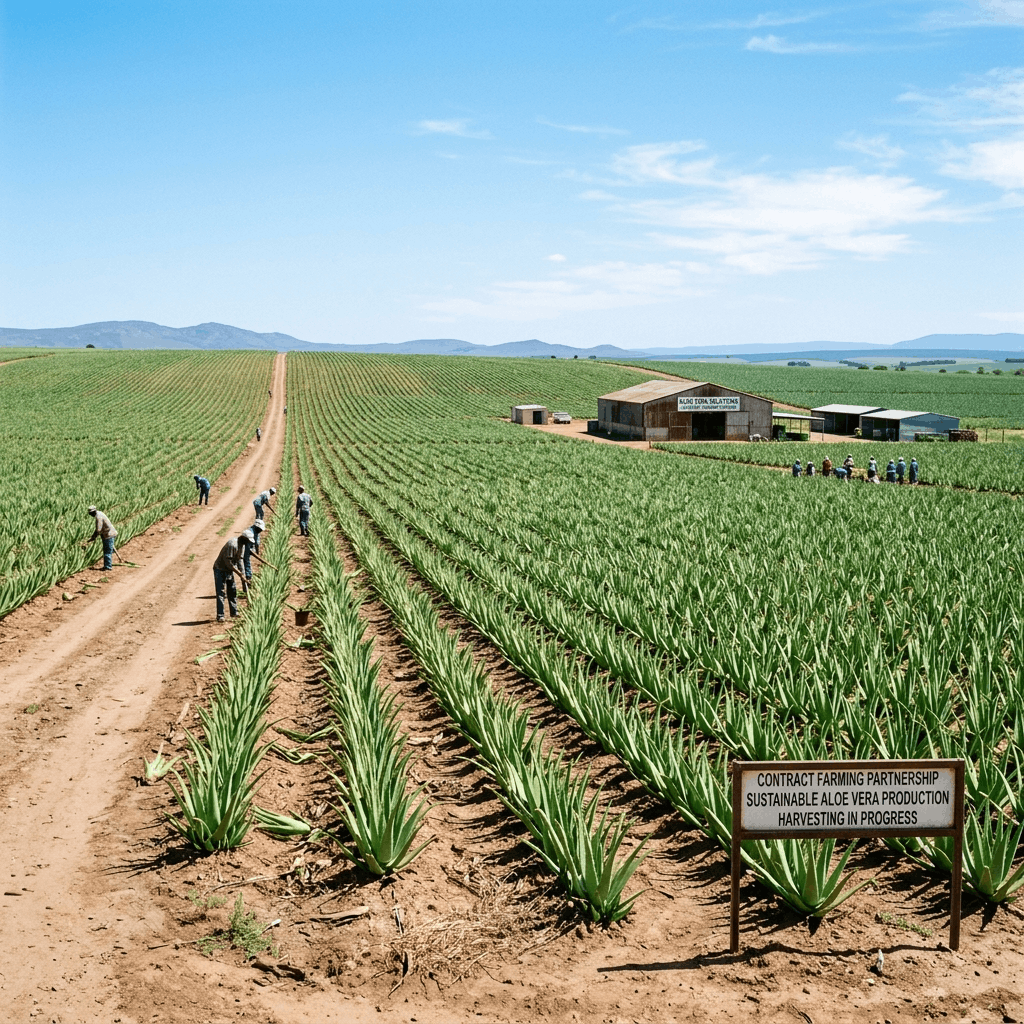
Land and Yield Scaling for Aloe Vera
Aloe vera farming has gained immense popularity in India due to the plant's extensive use in pharmaceuticals, cosmetics, and the food industry. One of the primary advantages of cultivating Aloe vera is its adaptability to arid and semi-arid conditions, making it an ideal crop for regions with limited water resources such as Rajasthan, Gujarat, and parts of Maharashtra.
For optimal yield, a minimum land area of 1 acre is recommended to start commercial farming. An acre can typically accommodate around 10,000 to 11,000 Aloe vera plants when spaced correctly (usually 60 cm x 60 cm). With proper care, irrigation, and organic fertilizers, farmers can expect a yield of 15 to 20 tonnes of fresh Aloe vera leaves per acre annually. The crop matures in 18-24 months, and subsequent harvests can be done every 3-4 months for up to 5 years, providing a steady and scalable income stream.
Step-by-Step Contract Farming Process
Contract farming mitigates market risks by providing a guaranteed buyback arrangement between the farmer and the company. Here is the standard procedure to engage with Aloe vera contract farming companies in India:
Identifying the Right Company
Research and select reputed companies that offer fair contract terms, technical support, and transparent buyback policies. Key players include Patanjali Ayurved, Dabur, and local agro-processing firms.
Signing the Agreement
Enter into a legal agreement specifying the quality standards, pricing mechanisms, supply volumes, and duration of the contract. Ensure all terms are clearly understood before signing.
Procuring Planting Material
Companies often provide high-quality "baby plants" or suckers of superior varieties like Aloe Barbadensis Miller, ensuring uniformity and high medicinal value in the final produce.
Cultivation and Monitoring
Follow the agricultural practices advised by the company’s agronomists. Regular inspections may be conducted to ensure organic compliance and optimal plant health.
Harvesting and Buyback
Harvest mature leaves according to the company’s schedule. The company collects the produce directly from the farm or designated collection centers at the pre-agreed price.
Profit Outcomes and Economic Viability
The economic viability of Aloe vera farming is highly attractive. The initial investment per acre ranges from ₹40,000 to ₹60,000, covering land preparation, planting material, irrigation setup, and labor. Under a contract farming model, companies generally offer buyback prices ranging from ₹3 to ₹6 per kilogram of fresh leaves.
With an average yield of 20 tonnes per acre, the gross income can reach ₹60,000 to ₹1,20,000 per year. After deducting maintenance and harvesting costs, a net profit of ₹40,000 to ₹80,000 per acre is easily achievable. Processing the leaves into pulp or gel on-site can further multiply the profit margins, although it requires additional capital investment.
Integrating with Organic Farming Ecosystems
Aloe vera thrives in organic farming ecosystems. It requires minimal chemical intervention; in fact, the demand for organically grown Aloe vera is significantly higher in international and premium domestic markets. Integrating vermicompost, neem cake, and cow dung manure not only enriches the soil but also enhances the gel quality and shelf life of the leaves.
Furthermore, Aloe vera acts as an excellent intercrop in orchards (like Amla, Lemon, or Pomegranate) and helps in soil conservation by preventing erosion due to its fibrous root system. Its natural resilience to pests reduces the need for toxic pesticides, promoting a healthier farm ecosystem.
Financial Security and Risk Mitigation
One of the biggest hurdles in traditional farming is market price fluctuation. Contract farming provides robust financial security by locking in a minimum support price for the produce. Even if the market price drops, the farmer is protected by the agreement.
Additionally, Aloe vera is a hardy crop resistant to mild droughts and grazing animals, reducing crop failure risks. Insurance schemes provided by some state governments and contract companies further insulate farmers against natural calamities.
Top Companies and Market Opportunities
The market for Aloe vera products is expanding exponentially. Several reputed companies actively seek contract farmers to meet their raw material needs. Prominent names include:
- Patanjali Ayurved: One of the largest buyers for their extensive range of juices and cosmetics.
- Dabur India: Procures high-quality Aloe vera for herbal and personal care products.
- Baidyanath: Focuses on Ayurvedic formulations requiring pure Aloe extracts.
- Himalaya Wellness: Requires premium, organically grown Aloe for skincare lines.
Farmers can also explore opportunities with regional processing units that extract gel and export it to European and North American markets, where demand for organic cosmetics is skyrocketing.
📦 Bulk Orders & Export
Mitti Gold Organic: For bulk orders of all organic fertilizers — Farmers, Nurseries, and Export. WhatsApp: +91 95372 30173
Frequently Asked Questions about Aloe Vera Contract Farming
Aloe Barbadensis Miller is the most preferred and commercially viable variety due to its high gel content and superior medicinal properties.
Aloe vera requires very little water. Drip irrigation is highly recommended, requiring watering only once every 15-20 days, making it perfect for dry regions.
Most companies require a minimum of 1 to 5 acres of land to enter into a contract farming agreement to ensure a substantial supply volume.
Yes, the National Medicinal Plants Board (NMPB) and various state agriculture departments offer subsidies ranging from 30% to 50% on the cost of cultivation for medicinal plants like Aloe vera.
A standard contract usually lasts for 3 to 5 years, which aligns with the productive lifespan of the Aloe vera plant after its first harvest.