📅
June 2026 | ✍️ Mitti Gold Organic | 🗂️
General Guides
How Much Can You Produce Per Day?
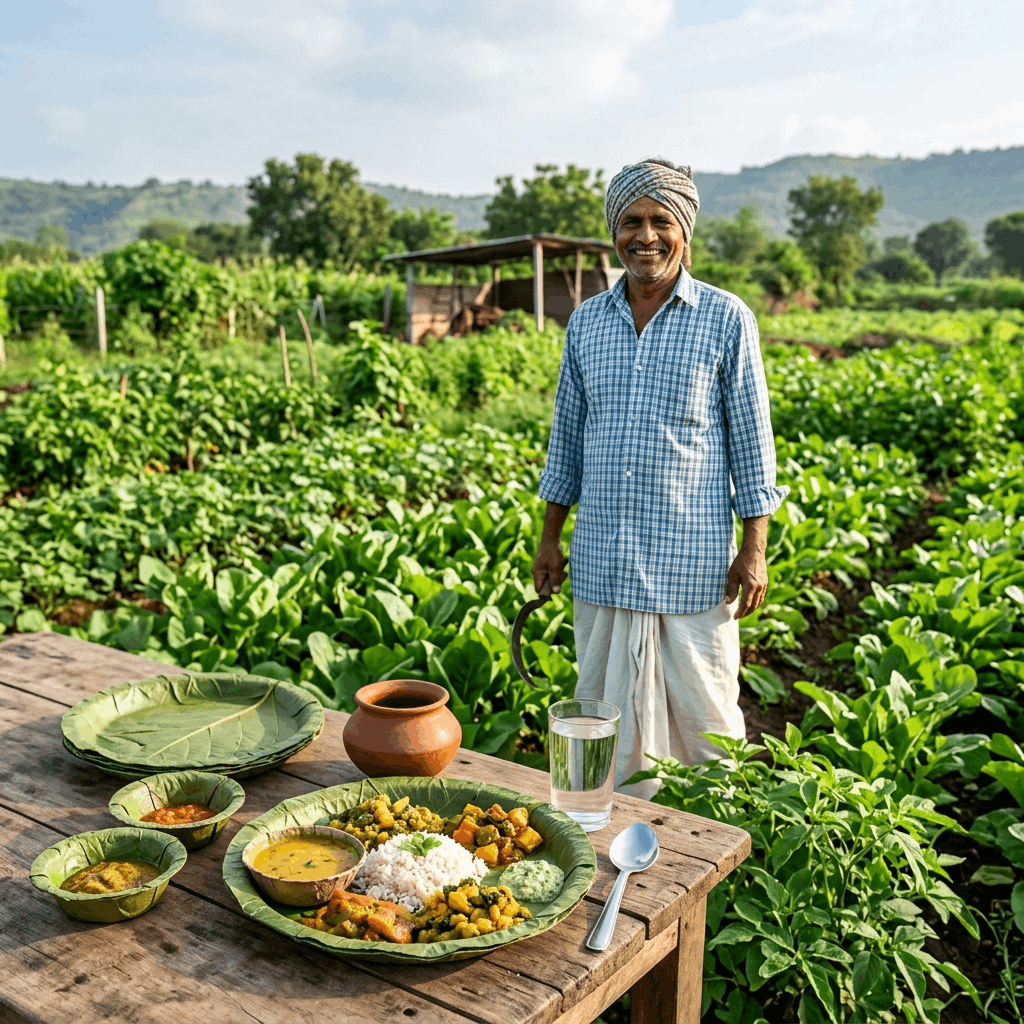
A single semi-automatic leaf plate making machine can produce between 1,500 to 2,500 plates per hour, depending on the plate size and leaf quality. For a small home-based unit running 8 hours a day, you can expect to produce around 10,000 to 15,000 plates daily. A medium-scale factory with 5–10 machines can produce over 1 lakh (100,000) plates per day. The production capacity directly determines your revenue potential. With a selling price of ₹1–₹3 per plate in bulk, a small unit can earn ₹10,000–₹45,000 daily just from plate sales. Sal (Shorea robusta) leaves and areca palm sheaths are the two most commonly used raw materials. Sal leaves are collected from forests in Odisha, Jharkhand, Chhattisgarh, and Madhya Pradesh, while areca palm sheaths are abundantly available in coastal Karnataka, Kerala, Andhra Pradesh, and Assam. Setting up a basic unit requires an investment of ₹50,000–₹2,00,000 for machinery and an additional amount for raw materials and a working space. The good news is that the raw material cost is very low — sal leaves are often freely available in forest areas, making this an extremely profitable venture for rural entrepreneurs.
Uses and Applications of Leaf Plates
Leaf plates have a wide range of applications across India and globally. They are used as eco-friendly disposable plates for weddings, religious ceremonies, street food stalls, railways, temples, and corporate events. With the growing ban on single-use plastics across Indian states, the demand for biodegradable alternatives like leaf plates has skyrocketed. Hotels and resorts that promote eco-tourism specifically use leaf plates to enhance their green credentials. Leaf plates are also exported to countries like Germany, the USA, the UK, and Japan, where consumers are willing to pay a premium price for natural, compostable tableware. In the agricultural sector, used leaf plates are composted directly back into the soil, completing a beautiful zero-waste cycle. Unlike plastic plates that take 400+ years to decompose, a leaf plate breaks down completely within 30–60 days in the soil. Many state governments now mandate the use of biodegradable tableware at government events, creating a large and guaranteed institutional demand. Tribal and forest communities that collect leaves for raw material also benefit from direct income, making this industry a true engine of rural employment and forest conservation.
1
Step 1: Collecting & Sorting Leaves
Collect fresh, large, undamaged sal or areca palm leaves. Sort them by size and remove any leaves that are torn, discolored, or too dry. Fresh leaves must be used within 24–48 hours for best results. Store collected leaves in a shaded, well-ventilated area.
2
Step 2: Cleaning & Soaking
Clean the leaves thoroughly with water to remove dust, insects, and debris. Slightly dampen the leaves so they become pliable and do not crack during pressing. Do not over-soak — the leaves should be moist but not dripping wet.
3
Step 3: Machine Pressing (Plate Formation)
Place 2–4 leaves (overlapping for strength) into the heated die of the leaf plate machine. Apply pressure for 30–60 seconds at a temperature of 150–200°C. The heat and pressure bond the leaves together and give the plate its final shape. For areca plates, the natural sheath is pressed as a single piece.
4
Step 4: Trimming & Quality Check
Once pressed, trim any excess leaf material sticking out around the edges using scissors or an automatic trimmer. Inspect each plate for cracks, holes, or uneven surfaces. Reject any defective plates and compost them. Consistent quality is essential for institutional buyers.
5
Step 5: Drying, Packaging & Storage
Sun-dry or air-dry the finished plates for 30–60 minutes to remove any remaining moisture. Stack the dried plates and pack them in bundles of 25 or 50, wrapped in paper or jute packaging. Store in a dry, cool place away from moisture. Properly stored leaf plates have a shelf life of 6–12 months.
Income & Profit Potential
Leaf plate manufacturing is one of the most financially rewarding cottage industries in rural India today. A small unit with 1–2 machines can generate a net monthly profit of ₹20,000–₹60,000 after all costs. A medium unit with 5 machines can earn ₹1.5–₹4 lakh per month. The selling price per plate ranges from ₹0.75 for basic 6-inch plates to ₹5 for premium areca bowls and compartment plates. The raw material cost for sal leaves is virtually zero in forest areas, meaning the profit margins are exceptionally high — often 60–70%. Government schemes like the Prime Minister Employment Generation Programme (PMEGP) and NABARD loans actively support leaf plate units with subsidies of up to 35% of project cost. Self-Help Groups (SHGs) of women in tribal areas have transformed their livelihoods through this industry with minimal capital investment. With proper marketing through local markets, government canteens, online portals, and export agents, a leaf plate unit can generate consistent year-round income for families and communities.
Environmental Benefits & Biodiversity
Leaf plates are one of the most environmentally benign products ever created. Since they are made from naturally shed leaves or agricultural by-products (areca palm sheaths), their production involves virtually no deforestation or chemical processing. Unlike paper plates that require cutting trees and bleaching with toxic chemicals, or plastic plates made from petroleum, leaf plates use the forest's natural abundance without harming it. After use, a leaf plate can be composted in any garden or farm within 30–60 days, returning nutrients to the soil. This creates a perfect circular economy loop. The industry also incentivizes the conservation of sal forests and areca plantations, because the leaves have direct economic value. Communities that depend on forests for raw material are motivated to protect and nurture those forests, promoting biodiversity and preventing illegal logging. In coastal areas, areca palm sheath collection provides a dignified income alternative to fishing during off-seasons, reducing pressure on marine ecosystems.
Plastic Ban & Government Support
India banned single-use plastics under 100 microns in July 2022, and is progressively expanding this ban to cover disposable plastic plates, cups, and cutlery. This massive policy shift has created an enormous and legally mandated market for leaf plate manufacturers. State governments in Odisha, Karnataka, Chhattisgarh, and Assam have actively promoted tribal leaf plate industries through dedicated procurement policies, giving assured buyers to small producers. The Ministry of Forest, Environment and Climate Change (MoEFCC) has designated leaf plate production as a "green enterprise" eligible for special subsidies. Gram Panchayats and municipalities in several states have banned plastic tableware at all public events, replacing them exclusively with leaf plates. For entrepreneurs looking for a low-risk, high-reward business with strong government backing, leaf plate manufacturing is one of the most secure choices available.
Market Demand & Selling Channels
The market for eco-friendly leaf plates is both large and rapidly growing. Domestically, the biggest buyers include wedding caterers, temple trusts, railway catering contractors, airline catering suppliers, and institutional canteens. Online platforms like Amazon, Flipkart, and IndiaMART have enabled even small producers in remote areas to reach pan-India buyers. Export demand is particularly strong from Europe, North America, and Japan. A single export shipment of areca leaf plates can fetch ₹5–₹10 per piece — 5 times the domestic price. NGOs working with tribal communities help connect producers with fair-trade buyers who pay premium prices. To scale your market access, register on the Government e-Marketplace (GeM) portal to supply to government offices and institutions, which provides stable and guaranteed bulk orders.
Machinery & Equipment Required
The primary machine required is a hydraulic or pneumatic leaf plate press, available in manual, semi-automatic, and fully automatic variants. Manual machines cost ₹8,000–₹20,000 and produce 300–500 plates/hour. Semi-automatic machines cost ₹25,000–₹75,000 and produce 1,000–2,000 plates/hour. Fully automatic machines cost ₹1,50,000–₹5,00,000 and can produce 3,000–5,000 plates/hour. For areca plates, the press comes with specialized areca-shaped dies. Additional equipment includes a leaf cleaning trough, trimming tools, a weighing scale, packaging material, and storage racks. The machines run on standard 220V–440V electricity and consume 1–3 kW of power per hour. Machinery manufacturers are concentrated in cities like Coimbatore, Hyderabad, Jaipur, and Kolkata. Always purchase machines with at least a 1-year warranty and ensure spare dies in various sizes (6", 8", 10", 12") are included with the purchase.
🚀 Start Your Leaf Plate Business Today
Want to set up a leaf plate unit or need machine guidance? Contact Mitti Gold Organic via WhatsApp: +91 95372 30173
Frequently Asked Questions about Leaf Plates
What is the difference between sal leaf plates and areca leaf plates? +
Sal (Shorea robusta) leaf plates are made by pressing multiple sal leaves together using heat. They are lighter, thinner, and best for dry food. Areca palm plates are made from the naturally shed sheath of the areca palm tree. They are thicker, sturdier, and can hold liquids for short periods. Areca plates command a higher market price — especially in export markets — due to their premium appearance and strength.
Can leaf plates hold liquid food or curries? +
Sal leaf plates are not ideal for watery curries as they can soften. However, areca palm plates are naturally waterproof and can hold liquid foods like dal, curries, and curd for 30–45 minutes without leaking. For extended wet food service, you can also apply a thin layer of natural beeswax coating on sal plates to improve liquid resistance without compromising biodegradability.
How long does it take to set up a leaf plate unit? +
A basic home-based unit with 1–2 manual machines can be set up within 1–2 weeks after purchasing machinery and sourcing raw material. A medium-scale unit with 5–10 machines, a shed, and workers may take 4–6 weeks to become operational. Government schemes like PMEGP have streamlined the loan approval process, making it possible to complete the entire setup within 30–45 days of submitting documents.
Is training required to operate leaf plate machines? +
Basic machine operation can be learned within 1–2 days of hands-on practice. Most machinery manufacturers provide free on-site training during installation. KVIC (Khadi and Village Industries Commission) and state skill development centers also run formal 5-day training programs for leaf plate manufacturing, covering machine operation, quality control, and business management — often free of cost.
Where can I sell leaf plates in bulk? +
Major sales channels include: (1) Local wholesale markets and mandi traders, (2) Wedding and event caterers in your city or district, (3) Railway station food stalls and IRCTC contractors, (4) Temple trusts and religious event organizers, (5) Online: Amazon, Flipkart, IndiaMART, TradeIndia, (6) Export agents handling organic tableware exports to Europe and USA, (7) Government e-Marketplace (GeM) for institutional supply.