📅 June 2026 | ✍️ Mitti Gold Organic | 🗂️ Spices
Nutrient Management and Application Rates for Gondal Chilies
Gondal in Saurashtra is world-famous for its dry red chilies, particularly the Guntur and Resham Patto varieties. Growing high-quality, pungent red chilies requires a robust soil nutrition plan. During initial land preparation, spread 4 to 5 tons of composted cow dung manure and 1.5 tons of Mitti Gold vermicompost per acre. Incorporating 250 kg of agricultural charcoal helps retain moisture and essential soil nutrients during hot dry spells. During the vegetative stage, apply 300 kg of pure cow dung powder as a top dressing to provide a steady supply of nitrogen, which stimulates lush leaf growth and branching. To further enhance flowering and fruit retention, farmers should apply a foliar spray of vermiwash diluted at 1:10 every two weeks from the flower initiation stage. In sandy-loam soils, which are typical in parts of Rajkot district, the agricultural charcoal dosage should be adjusted to 300 kg per acre to stabilize moisture availability. Pure cow dung powder can also be mixed with vermicompost to create a highly localized root zone treatment during the first weeding cycle. For modern farms using drip irrigation, the addition of a monthly soil drench of vermiwash helps maintain high enzymatic activity in the rhizosphere, which makes essential micronutrients like boron and zinc easily available to the plants. This is crucial for preventing flower drop and improving the uniformity of chili pod size. Proper spacing must be maintained, and if the soil exhibits signs of compaction, increasing the quantity of composted cow dung manure to 6 tons per acre will help restore structural porosity. This structured fertilization schedule, using premium organic inputs, ensures that the chili crop has all the nutrients it needs to produce a heavy yield of thick-skinned, highly pungent red pods. Furthermore, for commercial plantations where multiple pickings are planned, applying a side dressing of 200 kg of vermicompost and 50 kg of pure cow dung powder after each harvest cycle helps the plants recover quickly and initiates a strong secondary flowering phase. This continuous feeding prevents the plants from exhausting their nutrient reserves, ensuring that the final pickings of the season are just as high in quality, weight, and color value as the first harvest, maximizing the farmer's seasonal returns.
How to Transplant and Care for Chili Seedlings Organically
To achieve high yields of dry red chilies, farmers must follow systematic organic cultivation practices. Prepare raised nursery beds to grow chili seedlings, and treat the seeds with vermiwash and bio-fungicides to ensure healthy germination. Transplant the seedlings after 35 to 40 days when they are about 15 cm tall. When to apply: Sowing is usually done in June-July for the monsoon crop and September-October for the winter crop. Keep a row-to-row spacing of 60 cm and plant-to-plant spacing of 45 cm. Apply the organic fertilizer blend of Mitti Gold vermicompost and pure cow dung powder near the root zones during weeding, and follow up with regular irrigation. To optimize seedling health, farmers should incorporate agricultural charcoal and composted cow dung manure into the nursery bed soil mix, creating a porous substrate that supports strong, fibrous root growth and prevents damping-off. When transplanting into the main field, place 50 grams of vermicompost and 10 grams of agricultural charcoal directly into each planting pit to give the young roots an immediate boost. During the active growth stages, apply a top dressing of 100 grams of pure cow dung powder per plant every 3 weeks, working it gently into the soil. For the liquid fertigation program, prepare an organic nutrient solution by soaking 5 kg of composted cow dung manure and 1 kg of agricultural charcoal in 100 liters of water for 3 days, filter it, mix it with 10 liters of vermiwash, and apply it through the drip system. This natural liquid fertilizer provides a rapid release of plant-available nutrients, enhancing foliar development and stem strength, while keeping the irrigation lines clear of chemical salts. Additionally, when the crop enters the fruit maturation stage, reduce irrigation frequency to encourage the accumulation of capsaicin and color pigments in the chili pods. A final foliar spray of vermiwash at a 1:5 dilution 15 days before the first harvest helps improve the glossiness and thickness of the chili skins, which prevents cracking during the post-harvest drying process on open yards. Following this comprehensive organic protocol ensures that farmers produce a premium quality crop that meets the strict demands of spice exporters.
1
Nursery and Soil Prep
Prepare nutrient-rich nursery beds and incorporate composted cow dung manure and charcoal into the main field.
2
Seedling Transplantation
Transplant sturdy seedlings on raised beds with proper spacing and irrigate immediately.
3
Mulching and Split Feeding
Apply organic mulch to retain moisture and provide split doses of vermicompost during flowering and fruiting.
Outcome Comparison: Organic Gondal Chilies vs. Chemical Cultivation
Comparing Gondal chili crops grown organically using a combination of Mitti Gold vermicompost, agricultural charcoal, and natural inputs against those grown with synthetic chemical fertilizers like Urea and Single Super Phosphate (SSP) highlights key quality, structural, and environmental differences:
- Deep Red Color and High ASTA Value Retention: Organically grown chilies have a richer, longer-lasting deep red color (high ASTA color value) due to natural micronutrients and organic acids. Chemical fertilization can cause the color to fade faster during storage, reducing market grade. The incorporation of agricultural charcoal helps retain these vital trace elements in the soil, allowing the plants to absorb them continuously during the pod-filling stage. This ensures a uniform, brilliant red color that is highly demanded by spice exporters.
- Intense Pungency and Capsaicin Content: The capsaicin content, which gives chilies their heat, is higher and more balanced in organic crops, whereas chemical nitrogen can result in watery pods with lower pungency and lesser market appeal. Using composted cow dung manure and pure cow dung powder provides a balanced release of nitrogen, potassium, and sulfur, which are essential for capsaicin synthesis, resulting in premium quality spices. This natural balance gives Gondal chilies their characteristic sharp flavor.
- Longer Shelf Life and Storage Resilience: Organic red chilies have thicker skins and lower moisture content, making them highly resistant to storage pests, fungal mold, and discoloration, which is crucial for export trade. Chemically grown chilies are prone to rot and pest infestation during warehousing. By drenching the crop with vermiwash, farmers enhance the plant's structural strength and skin integrity, ensuring that the harvested chilies maintain their premium quality during long-distance transportation and storage.
Promoting Biological Activity in Chili Fields
Chili plants thrive when the soil is alive with beneficial microorganisms. Integrating Mitti Gold vermicompost and agricultural charcoal creates a fertile, spongy soil structure that allows soil microbes to multiply rapidly. The agricultural charcoal acts as a bio-filter and shelter for nitrogen-fixing Azotobacter and phosphate-solubilizing bacteria. This microbial activity boosts root development and assists the chili plants in absorbing trace elements like zinc and iron, which are vital for flower formation and high-quality pod development. Adding composted cow dung manure and pure cow dung powder provides a steady supply of carbon and organic nitrogen, which feeds these beneficial microbes and prevents nutrient depletion in the soil. Applying vermiwash helps maintain this biological balance by introducing active enzymes and growth hormones that stimulate microbial growth. As these microorganisms break down the organic inputs, they produce substances that improve soil structure and water-holding capacity, preventing root rot. This active soil food web protects the plant roots from pests, ensuring a healthy, high-yielding chili crop that can withstand environmental stress and produce premium quality pods for the commercial market. Furthermore, the presence of mycorrhizal fungi, which are supported by this organic substrate, extends the root system's reach, allowing the chili plants to absorb water and nutrients from a larger volume of soil. This is particularly beneficial in Saurashtra's semi-arid climate, as it helps the crop stay healthy and productive during dry spells. The biological activity also increases the availability of native soil minerals, reducing the farmer's dependency on synthetic fertilizers and building a sustainable, long-term soil ecosystem that continues to yield high-quality red chilies year after year.
Natural Prevention of Leaf Curl and Sucking Pests
Chili crops are highly susceptible to sucking pests like thrips, mites, and whiteflies, which transmit the devastating leaf curl virus. Organic farmers manage these pests by spraying a mixture of neem oil and vermiwash on the crop leaves every 15 days. When to apply: Sucking pest control is critical during the early vegetative and flowering stages. Furthermore, incorporating pure cow dung powder and composted cow dung manure into the soil boosts the plants' natural defense mechanisms, helping them resist diseases like damping-off and fruit rot. To strengthen this protective barrier, farmers can use Mitti Gold vermicompost and agricultural charcoal in the soil mix, which introduces beneficial microbes like Bacillus subtilis and Trichoderma. These microbes colonize the root zone and prevent pathogenic fungi from establishing. Drenching the soil with vermiwash provides a quick boost of plant-available nutrients and enzymes, which help the plant recover from pest damage and build systemic resistance. Incorporating agricultural charcoal helps adsorb and hold the defensive compounds in the soil, preventing them from leaching. For foliar protection, spraying a strained liquid extract of garlic and neem oil onto the leaves acts as a natural deterrent against chewing insects. This integrated natural pest and disease control strategy allows farmers to grow healthy, high-yielding chili crops without using expensive and hazardous chemical pesticides, ensuring a clean and safe harvest that meets export quality standards. Additionally, the silica and calcium present in composted manure and pure cow dung powder help strengthen the cell walls of the chili leaves, making them physically tougher and less susceptible to the feeding activities of thrips and mites. This double action of physical and biological defense keeps the crop healthy and productive.
Gondal APMC Red Chili Mandi and Export Trade Value
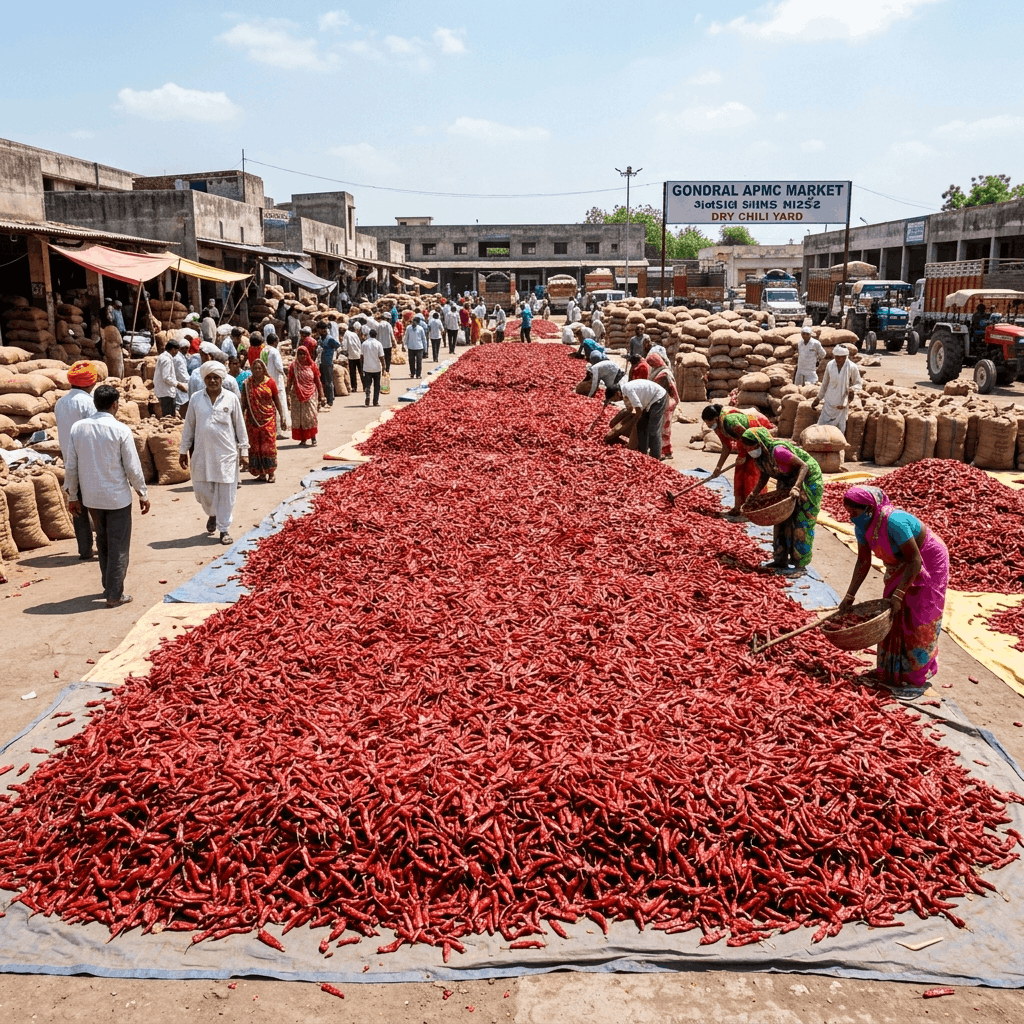
Gondal APMC is the primary trade hub for dry red chilies in Western India, attracting buyers from across the country and international export houses. High ASTA color value and low pesticide residue are the two key quality parameters that drive high prices in this market. Organically grown Gondal red chilies easily meet these standards, fetching premium prices that are 30% to 40% higher than chemically grown varieties. Farmers utilizing high-grade inputs like Mitti Gold vermicompost can secure direct supply contracts with leading spice brands and masala manufacturers, ensuring maximum profitability. Blending these chili amendments with agricultural charcoal and composted cow dung manure has allowed farmers to produce premium red chilies that meet global market standards. Adding pure cow dung powder and using vermiwash sprays help lower production costs and increase the overall profit margins of spice growers. International buyers from Europe and North America enforce strict pesticide residue levels, making organic chilies highly valuable. This commercial interest has led to the creation of organic farming clusters in Saurashtra, where FPOs organize farmers to grow and process organic chilies collectively. By establishing direct export linkages and using sustainable farming practices, chili growers can secure long-term financial stability, while protecting the region's environment and promoting the global reputation of Indian organic spices. Furthermore, the rising domestic demand for premium, residue-free red chili powder in major urban centers has enabled FPOs to establish their own processing and packaging units, allowing them to sell value-added organic products directly to retail consumers, which increases their earnings and builds a strong brand identity for Gondal's organic produce.
📦 Bulk Orders & Export
Mitti Gold Organic: For bulk orders of all organic fertilizers — Farmers, Nurseries, and Export. WhatsApp: +91 95372 30173
Gondal Red Chili Farming FAQ
What is the ideal transplanting season for Gondal chilies?
Seedlings are typically transplanted from June to August for the kharif crop, and from October to November for the rabi crop.
How can I prevent the leaf curl virus in chilies organically?
Prevent sucking pests (thrips and whiteflies) by installing yellow sticky traps, spraying neem-oil and cow urine mixtures, and maintaining crop vigor with organic vermicompost.
What causes the deep red color in Gondal chilies?
The red color is due to carotenoid pigments, which are boosted by balanced organic nutrition, particularly potassium and trace minerals present in organic manure and vermicompost.
Is agricultural charcoal beneficial for chili crops?
Yes, it improves soil structure, aeration, and moisture retention in the root zone, which is crucial for preventing root rot and water stress.
How long can Gondal red chilies be stored?
Dry red chilies can be stored in cool, dry warehouses for 6 to 9 months. Placing agricultural charcoal packets in the storage area helps absorb humidity and prevent mold growth.