📅 June 2026 | ✍️ Mitti Gold Organic | 🗂️ Machinery & Markets
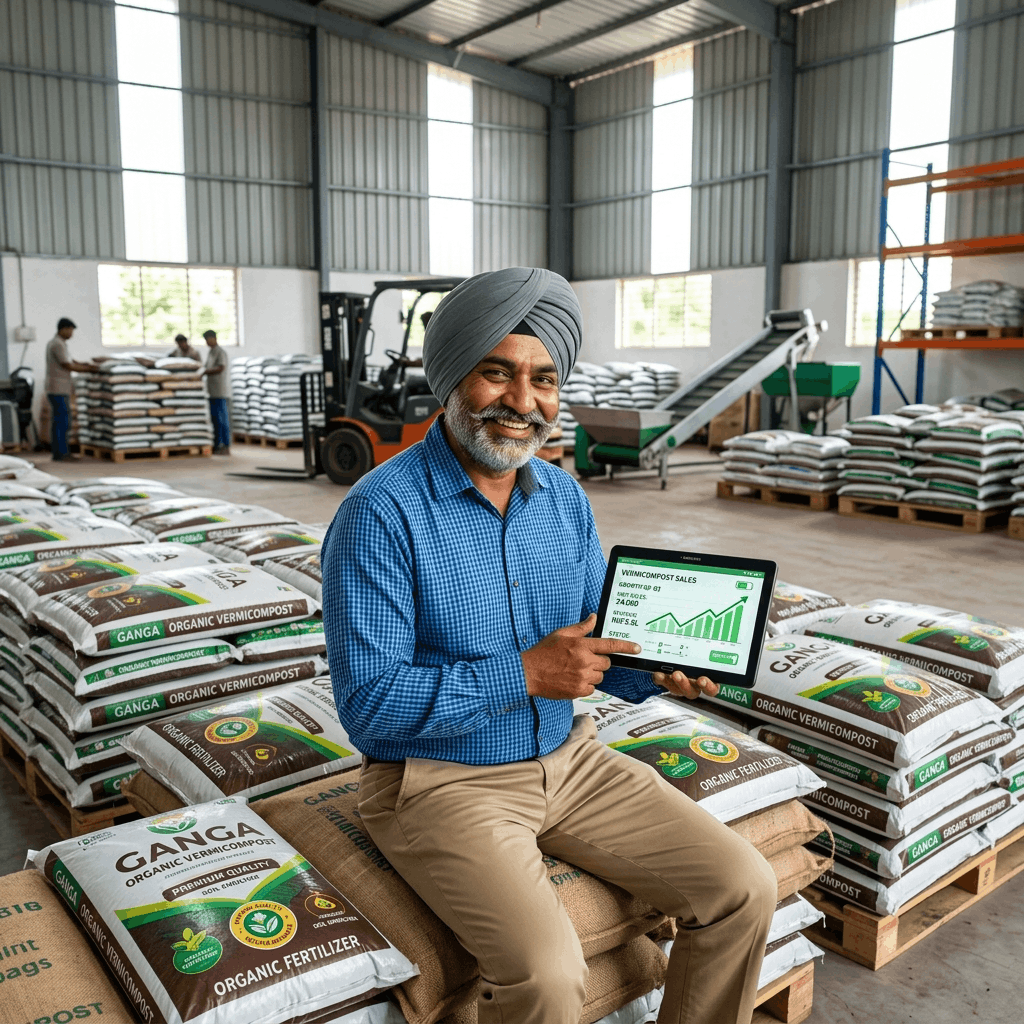
Surging Market Trends: Demand and Application Rates
The agricultural landscape of 2026 is undergoing a massive transformation, with organic and regenerative farming practices leading the charge. At the center of this revolution is vermicompost. As chemical fertilizers become increasingly expensive and their long-term detrimental effects on soil health become undeniable, farmers and policymakers worldwide are shifting their focus to sustainable alternatives. Vermicompost, often referred to as "black gold," is no longer just a niche product for backyard gardeners; it is a critical component of large-scale commercial agriculture.
The demand is driven by a combination of factors: severe soil degradation from decades of chemical abuse, heightened consumer awareness regarding organic food, and aggressive government subsidies promoting natural farming. Consequently, the market for vermicompost has expanded exponentially. But what does this mean for the average farmer on the ground? For standard agricultural fields, experts recommend applying 1.5 to 2 tons of high-quality vermicompost per bigha (roughly 5 to 8 tons per hectare). This application rate is considered the "sweet spot" for reviving dead soil, replenishing essential macro and micronutrients, and restoring the microbial balance necessary for robust crop growth.
In high-value crops such as commercial horticulture (orchards, vineyards, and polyhouse farming), the recommended application can go even higher, often exceeding 3 tons per bigha, depending on the specific nutrient depletion levels of the soil. This massive volume requirement across millions of acres of farmland is precisely why the demand has skyrocketed. Suppliers are struggling to keep up with the orders, presenting a golden opportunity for rural entrepreneurs and farmers to set up their own commercial vermicomposting units. By understanding these application metrics, farmers can accurately forecast their annual requirements and transition smoothly to organic models without compromising on yield.
How to Apply Vermicompost Effectively in 2026
Having the right quality and quantity of vermicompost is only half the battle; the timing and method of application dictate the ultimate success of the crop. In 2026, agronomic science has provided us with highly optimized protocols for organic fertilizer application. Unlike chemical fertilizers, which offer a quick but volatile nutrient spike, vermicompost provides a slow, steady release of nutrients synchronized with the plant's growth cycle. Therefore, strategic application is crucial for maximizing the return on investment. The process begins long before the seeds are sown and continues throughout the critical growth stages of the plant.
Pre-Sowing Soil Preparation
Incorporate about 50-60% of your total required vermicompost directly into the soil during the final plowing or tilling stage. This ensures that the organic matter and beneficial microbes are well integrated into the root zone before planting, creating a fertile bed that enhances seed germination rates and early root establishment.
Seedling and Transplanting Stage
For transplanted crops (like paddy, tomatoes, or chilies), apply a handful of vermicompost directly into the planting hole or furrow along with the seedling. This localized application acts as an immediate nutrient reserve, reducing transplant shock and accelerating the establishment of a robust root system.
Top Dressing During Vegetative Growth
About 30 to 45 days after sowing, during the active vegetative growth phase, apply the remaining 40% of the vermicompost as a top dressing. Ring placement around the base of the plants, slightly away from the main stem, followed by light irrigation, ensures that the nutrients are carried directly to the active feeder roots.
Integration with Liquid Bio-Fertilizers
In modern 2026 farming practices, combining solid vermicompost with liquid vermiwash or other bio-stimulants maximizes efficacy. Using vermiwash as a foliar spray complements the soil-applied vermicompost, providing an instant boost of enzymes, hormones, and soluble nutrients directly through the leaves during the flowering and fruiting stages.
Comparing Outcomes: Vermicompost vs. Chemical Synthetics
The shift towards organic farming is not merely an ideological movement; it is deeply rooted in measurable, superior agricultural outcomes. When comparing fields treated exclusively with high-grade vermicompost against those reliant on urea and DAP (Di-ammonium Phosphate), the differences are stark and undeniable. In the short term, chemical fertilizers might produce rapid vegetative growth, but they do so at the expense of soil structure and long-term viability. Vermicompost, conversely, builds a resilient agricultural ecosystem.
Firstly, consider water retention. Soil enriched with vermicompost can hold up to 30-40% more moisture compared to chemically treated soil. This is a critical advantage in 2026, as climate change leads to erratic rainfall and extended dry spells. Farmers using vermicompost report significantly lower irrigation costs and better drought resistance in their crops. Secondly, the physical quality of the produce is vastly superior. Fruits, vegetables, and grains grown organically exhibit better color, uniform size, extended shelf life, and significantly higher nutritional density (Brix levels). These quality traits translate directly into premium prices at the market.
Furthermore, the long-term economic comparison strongly favors vermicompost. While the initial bulk cost of organic compost might seem comparable to subsidized chemicals, the cumulative benefits—reduced need for chemical pesticides, lower irrigation requirements, and the prevention of soil sterilization—result in a much higher net profit margin over a 3 to 5-year horizon. The soil becomes an appreciating asset rather than a degrading resource.
Reviving the Soil Microbiome and Earthworms
One of the most profound, yet often overlooked, benefits of vermicompost is its role in resurrecting the soil food web. Decades of heavy chemical farming have effectively sterilized millions of acres, wiping out the native populations of earthworms, beneficial fungi, and nitrogen-fixing bacteria. Vermicompost is teeming with billions of beneficial microbes per gram. When introduced into dead soil, it acts as a probiotic, kickstarting the biological engines of the earth.
The organic matter in vermicompost serves as the perfect food source for native earthworms. Within a single season of consistent vermicompost application, farmers witness a massive resurgence of native earthworm populations. These "nature's plowmen" tirelessly tunnel through the earth, aerating the soil, improving drainage, and continuously producing their own nutrient-rich castings. This creates a self-sustaining cycle of fertility. Additionally, the proliferation of mycorrhizal fungi facilitated by vermicompost vastly expands the root network's reach, allowing plants to access water and phosphorus deep within the soil profile.
Natural Disease Resistance and Pest Protection
In 2026, pest resistance to synthetic chemicals is a major crisis for conventional farmers. Vermicompost offers a powerful, natural solution to this escalating problem. It is not a pesticide in the traditional sense, but it acts as a powerful systemic booster for the plant's innate immune system. Vermicompost contains high levels of humic acids, fulvic acids, and vital enzymes like chitinase. Chitinase is particularly important as it breaks down chitin, the primary component of the exoskeletons of many insect pests and the cell walls of pathogenic fungi.
When plants are grown in vermicompost-rich soil, they absorb these complex organic compounds, strengthening their cellular walls and making them significantly less susceptible to piercing and sucking insects like aphids and whiteflies. Furthermore, the robust microbial community introduced by the compost aggressively outcompetes soil-borne pathogens for resources. Beneficial microbes colonize the rhizosphere (the area immediately surrounding the roots), creating a biological shield that prevents pathogens causing root rot and wilt from taking hold. The result is a drastic reduction in the need for expensive, toxic chemical interventions.
The Booming Market: A Golden Opportunity
The economic landscape for vermicompost in 2026 is unprecedented. The demand is not restricted to a single demographic; it spans across multiple lucrative sectors. First and foremost are the commercial farmers transitioning to organic practices to secure government subsidies and access premium export markets. Their requirement is in the thousands of tons. Secondly, the rapid urbanization and rise of the "urban jungle" have created a massive market among home gardeners, terrace farmers, and housing societies who demand neatly packaged, premium, odorless compost for their domestic plants.
Commercial nurseries and landscaping companies also represent huge bulk buyers, requiring consistent, high-quality organic matter for potting mixes and turf management. Furthermore, the export market for certified organic inputs is booming. Countries with stringent chemical residue limits are increasingly sourcing organic inputs from nations with large-scale vermicomposting infrastructure. For a farmer or entrepreneur, producing vermicompost is no longer just a way to save money on fertilizer; it is a highly profitable standalone business with an insatiable market.
🌿 Bulk Vermicompost Orders
Mitti Gold Organic: For bulk supply of premium Vermicompost Fertilizer — Ideal for Farmers, Nurseries, and Export. WhatsApp: +91 95372 30173