📅 June 2026 | ✍️ Mitti Gold Organic | 🗂️ Soil Health
Application Rates per Bigha to Combat Heavy Metals
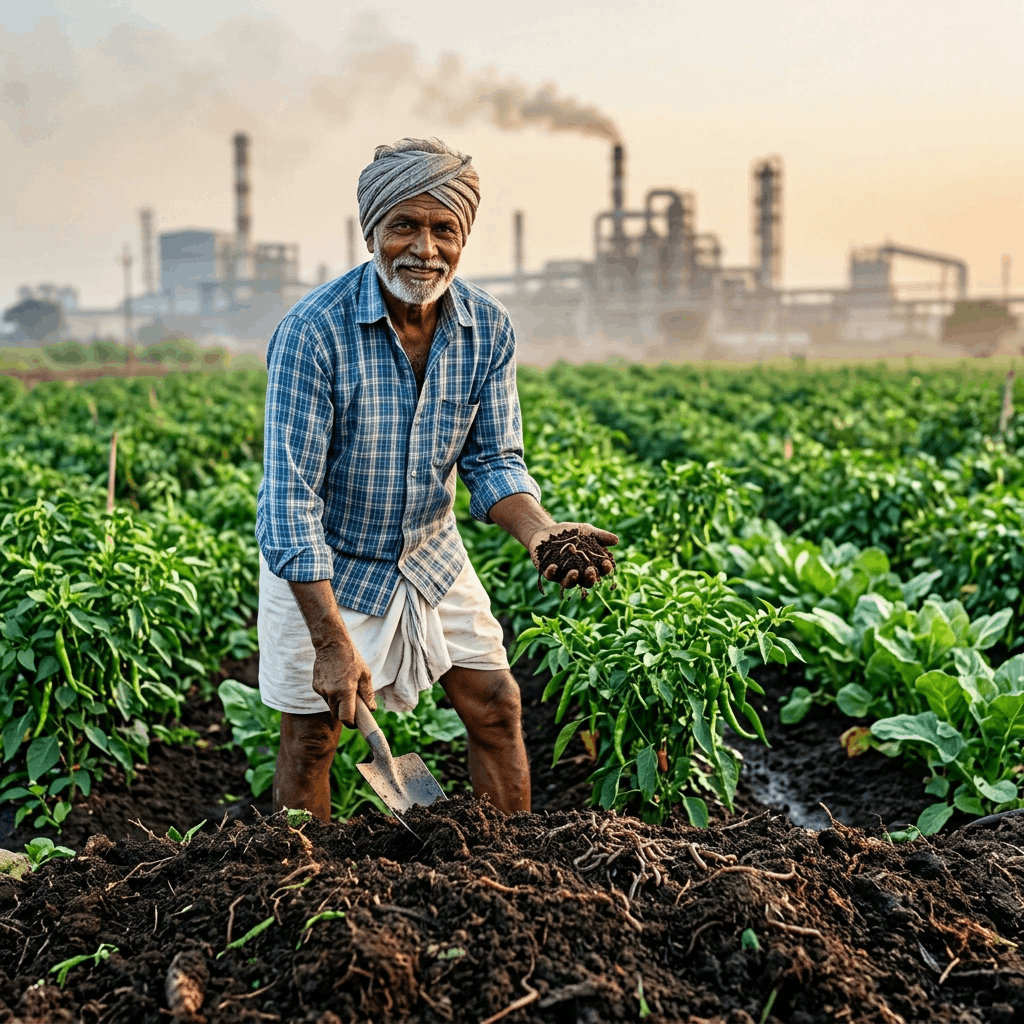
When dealing with soils contaminated by heavy metals—such as lead, cadmium, or arsenic—the application rate of vermicompost must be carefully adjusted. For a standard bigha (approx. 0.25 hectares), we recommend applying 800 to 1,200 kg of premium vermicompost during soil preparation. The exact quantity depends on the severity of the toxicity, which can be determined via a comprehensive soil test. This robust application ensures sufficient humic substances are present in the soil to bind with the toxic ions, preventing them from being absorbed by crop roots. Consistent application over several seasons progressively detoxifies the land, restoring its natural vigor.
Step-by-Step Application Guide for Remediation
Remediating heavy metal-contaminated soil with vermicompost requires a strategic approach to maximize the chelation process (where organic molecules bind to metal ions). Follow these steps to ensure optimal results and protect your crops.
Step 1: Deep Soil Incorporation
Spread the vermicompost evenly across the field before the final plowing. Ensure it is mixed deeply (at least 6-8 inches) into the root zone where the heavy metal concentration typically affects young plants.
Step 2: Maintain Adequate Moisture
The microbial activity and humic acids in vermicompost need moisture to bind with heavy metals effectively. Irrigate the field lightly immediately after application to activate the beneficial microbes.
Step 3: Combine with Mulching
Cover the topsoil with organic mulch. This prevents moisture evaporation and creates a favorable microenvironment for earthworms and microbes to break down contaminants over the season.
Step 4: Post-Harvest Assessment
After the harvest, conduct a soil test to evaluate the reduction in bioavailable heavy metals. Adjust the vermicompost dosage for the next season based on these scientific results.
How to Compare Product Outcomes: Vermicompost vs. Chemical Remediation
Unlike harsh chemical chelators that can strip the soil of essential nutrients along with the toxic metals, vermicompost offers a balanced biological solution. When comparing outcomes, fields treated with vermicompost show lower heavy metal uptake in the edible parts of the crop, while simultaneously exhibiting enhanced soil structure, better water retention, and increased beneficial microbial counts. Chemical methods often leave the soil sterile, requiring further inputs to restore fertility. Vermicompost naturally immobilizes the toxic elements, turning them into insoluble compounds that wash away safely or remain locked in the soil matrix, completely inaccessible to plant roots.
How It Helps Soil Creatures Survive Toxicity
Heavy metals are devastating to the delicate soil food web, often killing earthworms, beneficial nematodes, and essential bacteria. The rich organic matter in vermicompost acts as a protective buffer. By binding the toxic metals, the humic and fulvic acids reduce the direct exposure of these organisms to lethal concentrations. Furthermore, the introduction of robust, metal-tolerant microbes found in high-quality vermicompost helps jump-start the biological recovery of the soil. As the soil biome recovers, earthworms return, aerating the soil and naturally accelerating the detoxification process.
Protection from Secondary Diseases
Plants stressed by heavy metal toxicity are highly susceptible to secondary infections from soil-borne pathogens like Fusarium and Pythium. Vermicompost not only shields the roots from the metals but also fortifies the plant's natural immune system. It introduces a massive population of antagonistic fungi and bacteria (such as Trichoderma and Pseudomonas) that outcompete pathogens for resources. This dual-action protection ensures that even if trace amounts of metals are present, the crop remains resilient, healthy, and capable of producing a high yield without succumbing to opportunistic diseases.
Market Benefits: For Farmers, Nurseries, and Exporters
Addressing heavy metal toxicity has massive economic implications across the agricultural spectrum. For Farmers: It prevents crop failure, increases yield, and ensures the produce is safe for human consumption. For Nurseries: Potting mixes infused with vermicompost guarantee that saplings grow vigorously without the stunting effects of trace soil contaminants. For Exporters: International markets have stringent limits on heavy metal residues in food (e.g., EU regulations). By using vermicompost to immobilize these metals, farmers can confidently meet global export standards, commanding premium prices for certified organic, clean produce on the international stage.
📦 Bulk Orders & Export
Mitti Gold Organic: For bulk orders of all organic fertilizers — Farmers, Nurseries, and Export. WhatsApp: +91 95372 30173
Frequently Asked Questions About Heavy Metal Remediation
Vermicompost doesn't magically 'remove' the metals, but it does immobilize them. The humic acids bind to the metals, converting them into a form that plants cannot absorb, thus effectively neutralizing the toxicity.
It is particularly effective against lead (Pb), cadmium (Cd), copper (Cu), zinc (Zn), and nickel (Ni). The organic matter chelates these ions, significantly reducing their bioavailability.
Improvements can be seen in the very first crop cycle. However, for heavily contaminated soils, repeated applications over 2 to 3 years are recommended for complete biological restoration.
Yes, provided the vermicompost has effectively immobilized the metals. We highly recommend conducting a tissue analysis of the harvested crop to ensure heavy metal levels are well below safety limits.
For most agricultural soils, vermicompost alone is a powerful remediator. However, in extreme cases, combining it with biochar or specific phytoremediating cover crops can accelerate the detox process.