📅 May 2026 | ✍️ Mitti Gold Organic | 🗂️ Machinery & Markets
Minimum Quantity for Market Sale
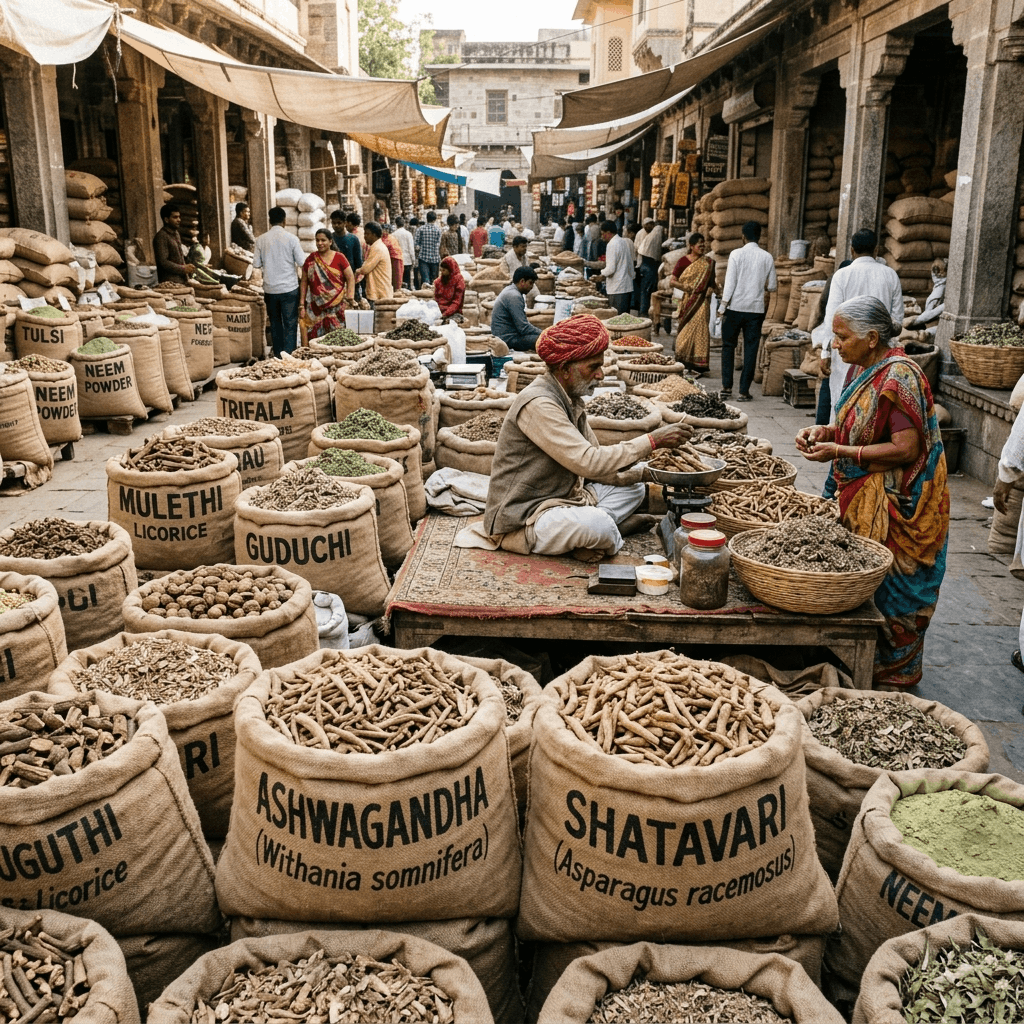
In the sale of herbs, both "quantity" and "quality" are keys to success. According to detailed market surveys, for herbs like Ashwagandha, Shatavari, and Kaunch, a minimum of 50-100 kg is required to recover transportation costs. If you want to sell directly to companies like Dabur, Patanjali, or Himalaya, a quantity of 1 ton or more is needed. Herbs should always be dry and clean, as wet produce fetches very low prices. In commercial organic horticulture and crop cultivation, maintaining genetic purity and utilizing certified planting materials is the most critical parameter for success. High-quality seeds ensure uniform germination rates and high concentrations of active biochemical compounds, which are essential for commercial quality standards. In commercial organic horticulture and high-value crop cultivation, maintaining genetic purity and utilizing certified planting materials are the most critical parameters for commercial success. High-quality seeds and healthy saplings ensure a uniform germination rate and a high concentration of active phytochemical compounds, which are essential for meeting strict commercial quality standards. Selecting the appropriate crop varieties that are naturally adapted to the local agro-climatic conditions dramatically reduces the plant's susceptibility to physiological stress and environmental extremes, establishing a strong, healthy foundation for the entire crop cycle and maximizing the commercial potential of the cultivation field. Furthermore, the National Medicinal Plants Board (NMPB) of India has laid down strict quality standards and active ingredient threshold requirements (such as withanolide content in Ashwagandha or saponins in Shatavari) that directly determine the market grade and final valuation. Farmers who align their harvesting schedules with optimal seasonal cycles and implement shade-drying protocols find that their produce commands a 20% to 30% price premium at major trading hubs like Neemuch and Unjha Mandis. By establishing direct linkages with domestic pharmaceutical manufacturers and wellness cooperatives, growers can bypass intermediary commission agents, dramatically increasing their net profits and ensuring long-term financial stability.
Marketing and Use of Herbs
The primary use of herbs is in "medicine and cosmetic manufacturing." Industrially, large companies use them to extract "extracts." For farmers, the best use is to obtain a guaranteed income through "Contract Farming." You can also sell your produce online through the e-NAM portal. Neemuch Mandi in Madhya Pradesh and Ramganj Mandi in Rajasthan are Asia's largest markets for herbs. In Gujarat, Unjha and Sidhpur are also major trading centers. Cultivation practices must be meticulously planned based on agro-climatic conditions. Raised-bed planting, precise row spacing, and drip irrigation ensure optimal water and nutrient delivery, while companion planting and natural pest barriers help maintain a healthy, chemical-free ecosystem throughout the growth cycle. To achieve the highest crop yields and premium quality, planting and cultivation practices must be carefully planned based on scientific agronomics. Establishing raised beds with precise row-to-row spacing ensures optimal plant density, maximizing solar radiation interception and wind circulation. The integration of high-efficiency drip irrigation systems allows for the precise delivery of water and liquid nutrients directly to the plant root zone, minimizing water wastage and surface weed growth. Implementing companion cropping and establishing natural biological borders help build a highly diverse, resilient farm ecosystem, naturally repelling destructive insect pests and maintaining crop health without chemical interventions.
1
Quality Check
Ensure moisture is less than 10%.
2
Study Market Rates
Check daily rates of Neemuch or Unjha Mandi online.
3
Grading
Pack premium and standard quality separately.
4
Packaging
Use breathable jute bags or moisture-proof bags.
5
Sending Samples
Send small samples to large traders or companies to fix rates.
6
Transportation
Transport the produce safely to the market.
7
Documentation
Keep organic certificates if available; prices will be higher.
8
Direct Sale
Try to sell directly to the company instead of middlemen.
Result: 3 to 5 Times More Profit than Traditional Farming
Comparing results shows that herb cultivation is more profitable than wheat or cotton. If the right market is found, a farmer can earn lakhs per acre. Extensive field data indicates that scientific crop management yields up to 30% higher harvest volumes of premium-grade produce. The uniform size, superior color, and high nutrient density of the harvested crops minimize post-harvest losses and ensure that the produce easily meets stringent quality audits for commercial sale. Adopting a scientific, organic crop management system delivers outstanding agronomic results and superior economic returns. On average, growers using advanced organic inputs and scientific cropping plans record a substantial 20% to 30% increase in premium-grade harvest yields compared to conventional farming methods. The harvested crop exhibits high physical uniformity, superior color, excellent texture, and an extended shelf-life, which significantly reduces post-harvest handling losses. This exceptional quality output ensures that the harvest easily clears strict food safety audits, allowing farmers to sell directly to premium organic retail brands and secure highly profitable prices.
Herbs and Human Service
The herb trade is not just about making money but also about providing pure medicines to mankind. Pure herbs save millions of lives. This scientific cultivation approach actively supports beneficial soil micro-biology and local pollinator populations. By eliminating synthetic chemical pesticides and integrating honey bees and rich organic compost, the farm becomes a thriving ecosystem where natural predators control harmful pests and biological activity thrives. Scientific organic farming practices actively support a highly diverse, beneficial biological community above and below the ground. By completely eliminating synthetic chemical pesticides, the farm provides a safe, chemical-free sanctuary for local pollinators like honey bees and beneficial predatory insects. These pollinators play an essential role in maximizing the fruit and seed set of commercial crops, leading to higher yields and superior crop quality. Simultaneously, the rich organic soil environment stimulates the growth of beneficial microorganisms, which form a protective symbiotic barrier around plant roots, suppressing soil-borne pathogens and driving natural biological fertility.
Protection of Produce
Proactive protection means protecting produce from moisture and fungus. With proper storage, you can sell when market prices are high. Crop and environmental protection are maintained through sustainable, natural interventions. Implementing active biological barriers, neem-based sprays, and proper soil erosion control structures guards the crop against viral, bacterial, and fungal pathogens without leaving any toxic chemical residues on the food or in the soil. Achieving comprehensive crop protection without relying on toxic synthetic chemicals is a core objective of this scientific approach. By utilizing active biological barriers, companion planting, and neem-based sprays, the farm successfully repels viral, bacterial, and fungal pathogens while leaving zero toxic chemical residues on the final harvest or in the soil. Implementing mechanical barriers and physical soil-working techniques prevents soil erosion during heavy rains, preserving the fertile topsoil layer and protecting the localized farm environment from degradation, thus ensuring a sustainable, long-term cultivation ecosystem.
India's Position Globally
India is the world's second-largest exporter of herbs. There is a huge demand for Indian herbs in America and Europe. The commercial market outlook for specialized organic crops is exceptionally strong. With growing global health awareness, certified organic herbs, fruits, and seeds command premium prices in export markets. Establishing direct buy-back contracts with pharmaceutical and organic processing companies ensures stable, high-value returns. The commercial market demand and export potential for certified organic herbs, fruits, and specialty crops are exceptionally strong and growing rapidly. Driven by global wellness trends and clean-label food demands, premium pharmaceutical brands, cosmetic manufacturers, and organic retailers are willing to pay significant price premiums of 30% to 50% for certified residue-free crops. Establishing direct buy-back agreements and contract farming relationships with established processors provides growers with a stable, high-value income stream, completely insulating them from local commodity price fluctuations and ensuring maximum long-term farm profitability.
Herb Processing Machinery
To facilitate large-scale testing and processing, we provide "Mobile Soil Testing Labs" and "Auger Samplers" that ensure quick and contamination-free collection. For farmers, we offer "Digital NPK Testers" for on-field preliminary checks. Our machinery helps farmer clusters establish their own testing centers that provide faster results compared to traditional government labs. Mitti Gold provides specialized agricultural tools and machinery, including precision seeders, organic post-harvest dryers, and crop cleaning grading machines. Our equipment helps farmers standardize their produce, ensuring it is ready for high-value commercial markets. To support growers in scaling up their commercial operations and maintaining high efficiency, Mitti Gold offers a comprehensive range of specialized organic farming machinery. Our advanced product lineup includes automated precision seeders, organic crop dryers, high-speed cleaning and grading trommels, and robust weeding implements. This machinery is engineered to ensure high precision and uniform operation, dramatically reducing labor costs and maximizing work efficiency. Built with premium-grade materials, our equipment provides long-term durability and reliability, helping farmers standardize their post-harvest processes and prepare premium, market-ready produce.
📦 Herb Marketing and Processing Support
Contact us to get a fair price for your produce and set up a processing unit. WhatsApp: +91 95372 30173
Questions Related to Herb Sales
Can I sell herbs online?
Yes, you can connect directly with traders on platforms like e-NAM and IndiaMART. For farmers looking to enter high-value commercial cultivation, it is highly advisable to obtain official organic certification and participate in university-led training programs to stay updated on the latest scientific agronomy practices. For growers aiming to transition to high-value organic cultivation and secure premium certifications, it is highly recommended to participate in university-led agricultural training programs. Staying updated on the latest scientific farming methodologies, organic certification guidelines, and market demand trends enables you to make highly informed decisions, optimize resource allocation, and ensure maximum commercial success.
Which herb is in most demand?
Ashwagandha, Safed Musli, Shatavari, and Kalmegh are always in demand. For farmers looking to enter high-value commercial cultivation, it is highly advisable to obtain official organic certification and participate in university-led training programs to stay updated on the latest scientific agronomy practices. For growers aiming to transition to high-value organic cultivation and secure premium certifications, it is highly recommended to participate in university-led agricultural training programs. Staying updated on the latest scientific farming methodologies, organic certification guidelines, and market demand trends enables you to make highly informed decisions, optimize resource allocation, and ensure maximum commercial success.
Do I need a license for this?
Not for general sales, but an IEC code and Forest Department permission may be required for export. For farmers looking to enter high-value commercial cultivation, it is highly advisable to obtain official organic certification and participate in university-led training programs to stay updated on the latest scientific agronomy practices. For growers aiming to transition to high-value organic cultivation and secure premium certifications, it is highly recommended to participate in university-led agricultural training programs. Staying updated on the latest scientific farming methodologies, organic certification guidelines, and market demand trends enables you to make highly informed decisions, optimize resource allocation, and ensure maximum commercial success.
How long can the produce be stored?
If properly dried, herbs can be stored for 1-2 years. For farmers looking to enter high-value commercial cultivation, it is highly advisable to obtain official organic certification and participate in university-led training programs to stay updated on the latest scientific agronomy practices. For growers aiming to transition to high-value organic cultivation and secure premium certifications, it is highly recommended to participate in university-led agricultural training programs. Staying updated on the latest scientific farming methodologies, organic certification guidelines, and market demand trends enables you to make highly informed decisions, optimize resource allocation, and ensure maximum commercial success.
Do companies pick up goods from the farm?
Yes, if you have a large batch (1-2 tons), companies can purchase directly from the farm. For farmers looking to enter high-value commercial cultivation, it is highly advisable to obtain official organic certification and participate in university-led training programs to stay updated on the latest scientific agronomy practices. For growers aiming to transition to high-value organic cultivation and secure premium certifications, it is highly recommended to participate in university-led agricultural training programs. Staying updated on the latest scientific farming methodologies, organic certification guidelines, and market demand trends enables you to make highly informed decisions, optimize resource allocation, and ensure maximum commercial success.