📅 June 2026 | ✍️ Mitti Gold Organic | 🗂️ Farming
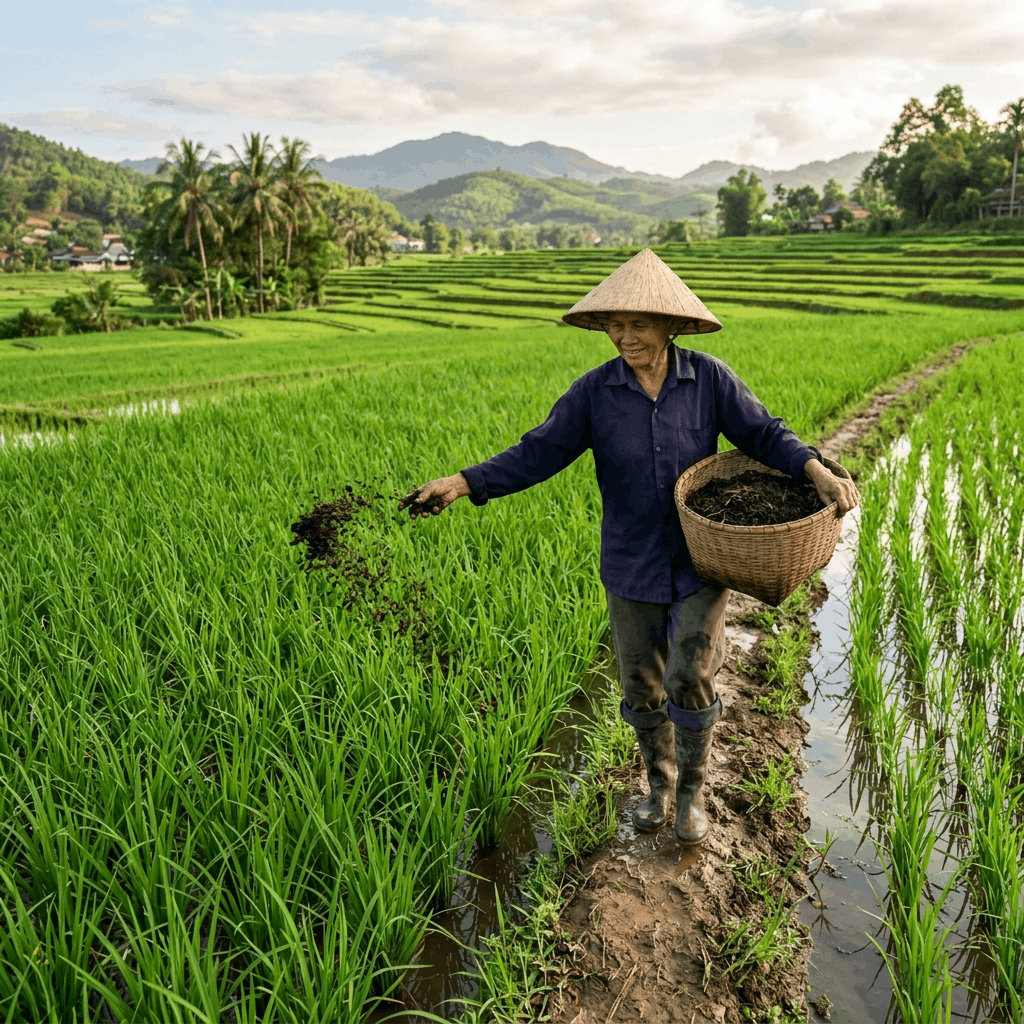
Why Rice Farmers Need Urea Alternatives and Application Rates per Bigha
Rice farming is traditionally heavily reliant on synthetic nitrogen fertilizers, specifically urea. While urea provides an immediate nitrogen boost to the crop, its long-term use leads to severe soil degradation, increased acidity, and declining natural soil fertility. Transitioning to organic substitutes not only restores the natural ecosystem but also ensures a sustainable and chemical-free harvest. Depending on your soil health, replacing urea can be done gradually or completely using alternatives like Azolla, Farmyard Manure (FYM), Vermicompost, and Green Manure crops like Sesbania (Dhaincha).
For a standard bigha (approx. 0.25 hectares or 0.6 acres), the required application rates vary based on the substitute chosen. If using Vermicompost, you will need about 200 to 300 kg per bigha as a basal dose. For Green Manuring with Dhaincha, you need around 6-8 kg of seeds per bigha, grown for 45 days and then ploughed back into the soil before transplanting paddy. Azolla can be applied at a rate of 100 kg per bigha in the standing water, where it multiplies rapidly and fixes atmospheric nitrogen equivalent to 10-15 kg of synthetic urea per bigha.
By accurately calculating these quantities and applying them at the right vegetative stages of the rice crop, farmers can completely offset their dependence on chemical urea without compromising on the nutritional requirements of the plant.
Step-by-Step Guide: How to Apply Urea Substitutes in Paddy Fields
Substituting urea is not just about changing the product; it involves a holistic shift in farm management practices. Here is a detailed, step-by-step approach to seamlessly integrate organic nitrogen sources into your rice farming cycle.
Step 1: Pre-sowing Green Manure Cultivation
About 45 to 50 days before paddy transplantation, sow seeds of a leguminous green manure crop like Sesbania (Dhaincha) or Sunhemp in the empty field. These plants naturally fix atmospheric nitrogen into the soil through their root nodules. Just before paddy transplantation, when the green manure crop starts flowering, plough it directly into the soil and flood the field. This biomass decomposes rapidly, releasing rich, organic nitrogen and improving soil texture.
Step 2: Basal Application of Organic Manure
During the final land preparation (puddling), incorporate well-decomposed Farmyard Manure (FYM) or high-quality Vermicompost into the soil. Apply it evenly across the field. This acts as a slow-release nitrogen source that nourishes the rice seedlings during their initial establishment phase and provides essential micronutrients that synthetic urea lacks.
Step 3: Introducing Azolla in Standing Water
Approximately 7 to 10 days after transplanting the rice seedlings, introduce the aquatic fern Azolla into the flooded field. Azolla forms a symbiotic relationship with blue-green algae (Anabaena azollae), which actively fixes atmospheric nitrogen. As the Azolla fern forms a thick green mat over the water surface, it suppresses weed growth and eventually decomposes, releasing continuous nitrogen for the rice plants throughout their growing phase.
Step 4: Application of Liquid Biofertilizers
During the tillering and panicle initiation stages, you can spray liquid biofertilizers like Azospirillum and Phosphorus Solubilizing Bacteria (PSB), or organic liquid formulations like Jeevamrutha. These liquid solutions stimulate microbial activity in the root zone, enhancing nutrient uptake and providing a mid-season boost comparable to urea top-dressing.
Comparing Crop Yields: Organic Substitutes vs. Synthetic Urea
One of the primary concerns for farmers transitioning away from urea is the potential drop in crop yield. In the first transition year, yields might be slightly lower as the soil ecosystem takes time to recover from chemical dependency. However, from the second year onwards, the yield stabilizes and often surpasses conventional farming outputs due to improved soil health and better nutrient retention.
Rice grains grown using organic nitrogen sources tend to have higher density, better aroma, and improved cooking quality. The plants also develop stronger root systems and thicker stems, significantly reducing the risk of lodging (falling over) during heavy rains or winds. In the long run, the cost of cultivation drops significantly because farmers no longer need to purchase expensive synthetic fertilizers, making organic rice farming far more profitable.
Reviving Soil Microbes and Field Ecology
The continuous use of chemical urea is highly toxic to beneficial soil microorganisms and earthworms. By switching to organic substitutes, you actively encourage the proliferation of a healthy soil microbiome. Earthworms return to the fields, naturally aerating the soil and converting organic matter into nutrient-rich castings.
Furthermore, alternatives like Azolla and blue-green algae enrich the soil's carbon content. The standing water in paddy fields becomes a thriving ecosystem for natural predators like frogs, dragonflies, and beneficial spiders, which play a crucial role in controlling pest populations naturally.
Enhanced Disease Resistance in Rice Plants
An over-application of synthetic urea results in rapid, succulent, and weak vegetative growth. This makes the rice plants highly susceptible to pests like the brown plant hopper and stem borer, as well as fungal diseases like blast and sheath blight. Organic nitrogen sources, on the other hand, provide a balanced and slow release of nutrients.
Because the plants grow at a steady, natural pace, their cell walls become thicker and more heavily lignified, fortified further by silica uptake, which is often enhanced by organic matter. This creates a physical barrier against sap-sucking insects and fungal spores, naturally protecting the crop without the need for harmful chemical pesticides.
Market Demand: Higher Returns for Organic Rice
Today, conscious consumers are actively seeking chemical-free and organically grown rice, willing to pay a premium price for the health benefits it offers. By replacing urea with natural alternatives and obtaining organic certification, farmers can tap into lucrative domestic and international export markets.
Residue-free rice has a massive export potential, especially in European and North American markets where stringent food safety standards limit the entry of conventionally grown crops. Ultimately, growing rice organically ensures not just ecological sustainability but also robust economic empowerment for the farming community.
📦 Bulk Orders & Export
Mitti Gold Organic: For bulk orders of all organic fertilizers — Farmers, Nurseries, and Export. WhatsApp: +91 95372 30173
Frequently Asked Questions about Replacing Urea in Paddy
Yes, but it works best when combined with other organic practices like green manuring and vermicompost. While Azolla alone can fix significant amounts of nitrogen (equivalent to a basal dose of urea), a combined approach ensures all nutritional needs of the rice crop are met throughout its growth cycle.
If urea is stopped abruptly without proper organic soil conditioning, a temporary drop in yield might occur in the first season. However, if substituted scientifically with green manure, FYM, and biofertilizers, the yield drop is minimal, and the harvest quality improves drastically.
Dhaincha (Sesbania) is a leguminous plant grown before paddy. Its roots contain nodules with nitrogen-fixing bacteria. When ploughed into the soil, it acts as a green manure, adding substantial organic nitrogen and biomass to the field, serving as a powerful natural alternative to synthetic urea.
For a standard bigha, approximately 200 to 300 kg of high-quality vermicompost is recommended as a basal application during land preparation. This can be supplemented with liquid biofertilizers during the tillering stage.
Yes, while the yield might be similar or slightly lower initially, the input costs drop significantly because organic inputs are cheaper or can be produced on-farm. Additionally, organic rice commands a premium market price, leading to overall higher profitability for the farmer.