📅 June 2026 | ✍️ Mitti Gold Organic | 🗂️ Machinery & Markets
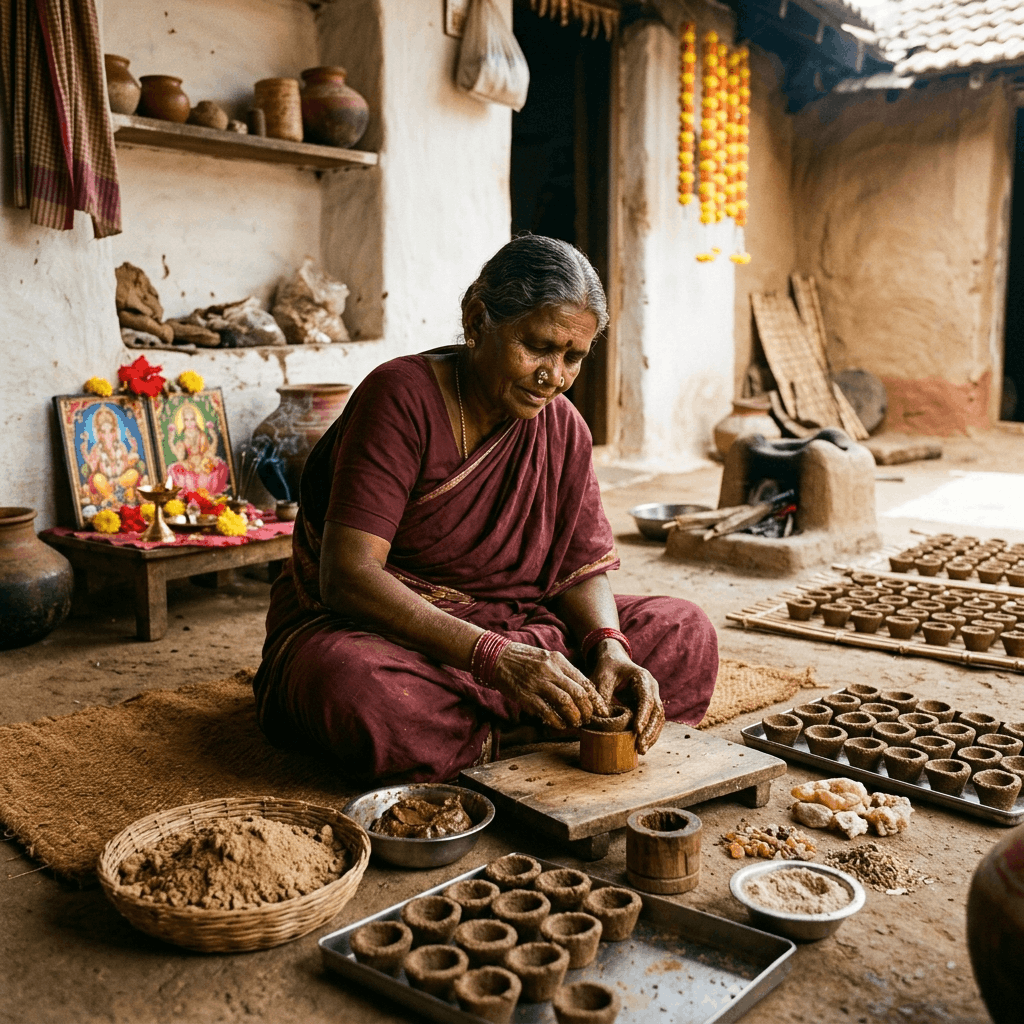
Required Quantities and Application Rates per Batch
Manufacturing organic Sambrani and Agarbatti requires a precise blend of raw materials to ensure perfect binding, steady burning, and a lasting natural aroma. When replacing charcoal, premium cow dung powder makes up the bulk of the combustible material. For a standard 10 kg batch of Sambrani cups or Dhoop cones, the recommended formulation includes approximately 6 to 7 kg of fine cow dung powder. This acts as the primary slow-burning base. You will also need 1.5 to 2 kg of a natural binder, such as Jigat powder, to hold the shape, especially during extrusion or molding. The remaining 1 to 2 kg is reserved for aromatic ingredients like Loban (benzoin resin), Guggul, powdered camphor, dried floral powders (like rose or marigold), and sandalwood dust.
For Agarbatti (incense sticks), where a lighter and more pliable dough is needed to adhere to the bamboo stick, the ratio shifts slightly. A 10 kg mix might use 5 kg of ultra-fine cow dung powder, 2.5 kg of wood powder or sawdust (for structural integrity on the stick), 1.5 kg of Jigat powder, and 1 kg of aromatics. The exact water content varies based on the ambient humidity and the specific binding agents used, but typically ranges from 4 to 6 liters per 10 kg of dry mix. Achieving the right consistency is crucial; the dough should be pliable like modeling clay—neither too crumbly nor too sticky.
Step-by-Step Guide to Using Cow Dung Powder in Incense Production
Processing raw cow dung into a viable base for incense requires expertise. Premium cow dung powder simplifies this by providing a ready-to-use, ultra-fine material. Here is a professional guide to crafting premium organic Sambrani and Agarbatti.
Sourcing and Sifting
Begin with high-quality, sun-dried premium desi cow dung powder. Even if purchased as a premium product, it is best practice to pass the powder through a fine mesh sieve (60-80 mesh) to ensure there are no larger fibrous particles. A consistent, ultra-fine texture is vital for a smooth finish on Agarbatti and dense packing for Sambrani cups.
Blending the Dry Mix
In a large industrial mixer or a clean mixing basin, combine the sifted cow dung powder with your chosen natural binding agents (like Jigat or Guar gum). Mix thoroughly until homogeneous. Next, blend in your dry aromatics—loban, guggul, sandalwood powder, and dried flower dust. Even distribution of the aromatics ensures a consistent fragrance from the first light to the end.
Creating the Dough
Slowly add water or natural floral hydrosols (like rose water or kewra water) to the dry mix while continuously kneading. The addition of hydrosols instead of plain water can significantly elevate the final aroma profile. Knead until the dough achieves a smooth, elastic consistency that holds its shape without cracking when pressed.
Molding and Extrusion
For Sambrani cups: Press the dough firmly into specialized metal or wooden cup molds, ensuring the center cavity is well-defined. For Agarbatti: Feed the dough into an automatic or manual agarbatti making machine, which extrudes the paste evenly around bamboo sticks. Ensure the pressure is calibrated to prevent the paste from flaking off.
Sun-Drying and Curing
Carefully remove the formed products from their molds and place them on bamboo or wire-mesh trays. Dry them under natural, indirect sunlight for 2 to 4 days, depending on weather conditions. Direct, scorching sunlight can cause cracking, while insufficient drying leads to fungal growth. Once completely dry, they are ready for packaging or dipping in natural essential oils.
Comparing Product Outcomes: Cow Dung vs. Charcoal Base
The shift from traditional charcoal or sawdust bases to cow dung powder brings profound differences in the final product's quality and consumer experience. Charcoal-based incense is often favored by mass manufacturers because it is cheap, ignites quickly, and provides a neutral burning base. However, burning charcoal releases carbon monoxide and black smoke, which can cause respiratory irritation and indoor air pollution. Furthermore, charcoal requires chemical dipping to carry a scent, often resulting in an artificial, overpowering synthetic fragrance.
In contrast, Sambrani and Agarbatti made from premium cow dung powder offer a significantly superior experience. Cow dung burns slower and more evenly, creating a gentle, sustained heat that warms the embedded resins (like loban) rather than incinerating them. This results in a cleaner, more authentic aromatic profile. The smoke produced is lighter, white or grey, and carries a subtle, earthy undertone that enhances, rather than masks, the natural botanical ingredients. From a consumer standpoint, products labeled as "100% Charcoal-Free" and "Made with Desi Cow Dung" command a premium price and foster strong brand loyalty among health-conscious and spiritually inclined buyers.
Environmental Impact and Sustainability
Embracing cow dung powder for incense manufacturing is a highly sustainable choice that actively contributes to a circular economy. The traditional incense industry relies heavily on charcoal, which often drives deforestation and illegal logging. Sawdust, another common base, can sometimes be sourced from chemically treated wood, releasing toxic fumes when burned. By utilizing cow dung, manufacturers are upcycling a readily available, renewable agricultural byproduct.
This practice not only prevents agricultural waste from accumulating in landfills or water sources but also provides an additional revenue stream for rural farmers and gaushalas (cow shelters). The production of cow dung powder requires minimal energy compared to the carbon-intensive process of creating industrial charcoal. When burned, cow dung incense produces organic ash that is rich in minerals like phosphorus and potassium. Unlike the toxic ash left behind by chemical incense, the residue from cow dung Sambrani can be safely sprinkled into garden soil as a natural fertilizer, completing a zero-waste lifecycle.
Protection, Safety, and Spiritual Significance
In Indian traditions and Ayurveda, the desi cow (Bos indicus) is revered as sacred, and its dung is believed to possess natural purifying and anti-microbial properties. For centuries, dried cow dung cakes have been used in Havan (fire rituals) to cleanse the atmosphere and ward off negative energies. When processed into premium powder for Sambrani and Agarbatti, it retains these revered qualities, making it the preferred choice for religious ceremonies, meditation, and daily home purification.
From a safety perspective, cow dung powder eliminates the need for the harsh chemical binders and synthetic combustion agents (like potassium nitrate) often found in cheap incense. This makes the manufacturing process safer for factory workers, who are no longer exposed to toxic dust and chemical fumes. For the end consumer, it guarantees a product that is safe to use indoors, significantly reducing the risk of headaches, allergic reactions, and respiratory distress associated with synthetic incense smoke. It provides true peace of mind, aligning the physical safety of the product with its spiritual purpose.
Market Demand, Industrial Use, and Export Potential
The global market for natural, organic, and holistic wellness products is experiencing unprecedented growth. Consumers are increasingly scrutinizing the ingredients in their home fragrances, leading to a massive surge in demand for charcoal-free, cow dung-based incense. In the domestic market, large-scale manufacturers are pivoting their product lines to include "Premium Organic" ranges to capture this lucrative segment. Premium cow dung powder is now a critical industrial raw material, required in bulk quantities of hundreds of tons annually to meet this shifting demand.
Internationally, the export potential is immense. Countries in Europe, North America, and the Middle East have stringent regulations on indoor air quality and a high consumer preference for sustainable, non-toxic products. Sambrani cups and Agarbatti marketed as eco-friendly, vegan, and chemical-free are highly sought after in international yoga studios, spas, and wellness boutiques. For businesses, sourcing high-quality, standardized premium cow dung powder ensures consistency in their export-grade products, helping them build a strong, reputable brand on the global stage.
📦 Bulk Orders & Export
Mitti Gold Organic: For bulk orders of all organic fertilizers — Farmers, Nurseries, and Export. WhatsApp: +91 95372 30173
Frequently Asked Questions about Cow Dung Sambrani & Agarbatti
Not at all! When processed correctly into premium powder, it loses its raw odor. It acts as an earthy base that perfectly complements and enhances the natural fragrances of the resins, camphor, and floral powders mixed into it.
Yes, premium cow dung powder acts as an excellent, completely natural combustible base. While the formulation ratios (binders and water) may need slight adjustments compared to charcoal, the manufacturing process—whether manual or machine extrusion—remains largely the same.
When stored in a cool, dry place away from direct moisture, cow dung-based Agarbatti and Sambrani can easily last for 1 to 2 years without losing their structural integrity or aromatic properties.
No, fresh cow dung contains high moisture and varying textures, which can cause molding issues, uneven burning, and fungal growth. Premium dry powder ensures consistency, long shelf life, and perfect burning characteristics.
Absolutely. The international market is actively seeking organic, charcoal-free alternatives for home fragrances. Eco-friendly, chemical-free Sambrani and Agarbatti command premium prices in wellness and yoga markets globally.