?? June 2026 | ?? Mitti Gold Organic | ??? Farming
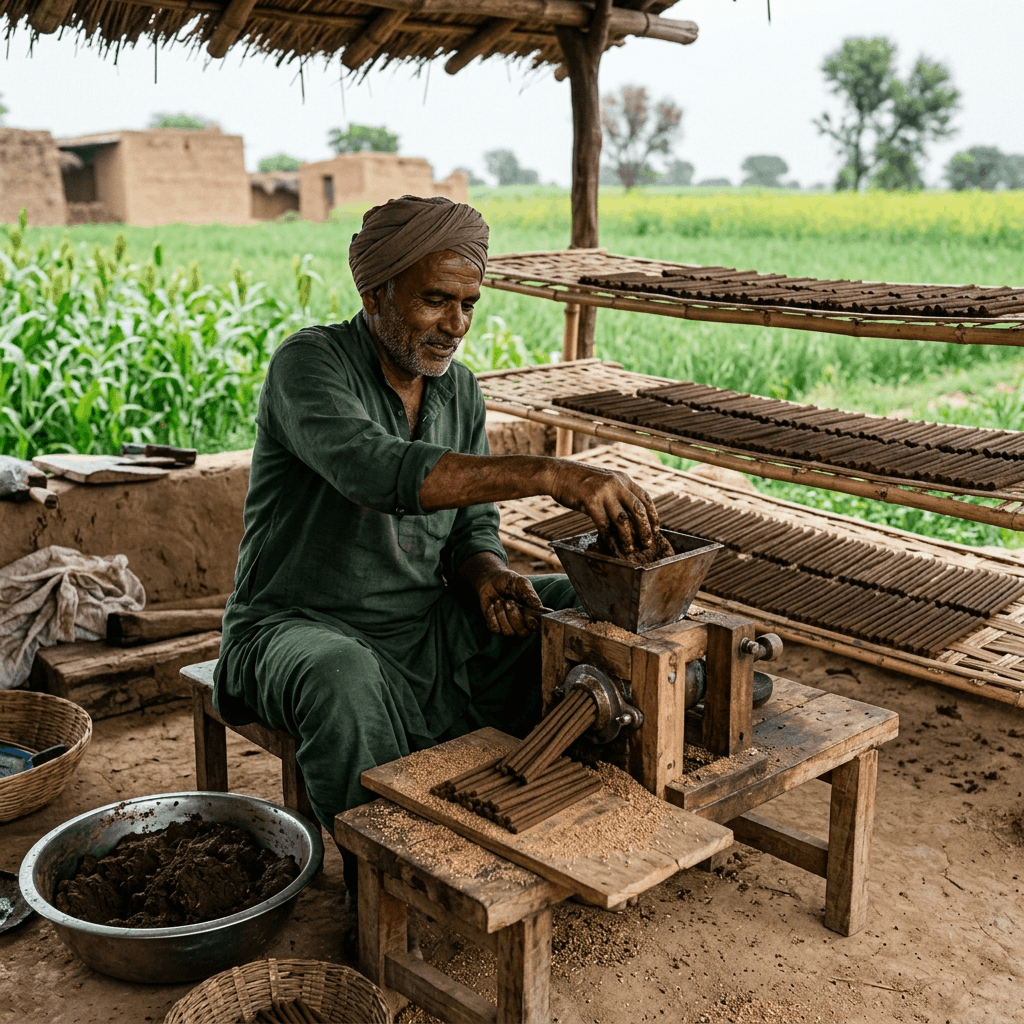
Input Ratios and Commercial Scaling
In 2026, the demand for chemical-free, Charcoal-less incense is at an all-time high. Cow dung sticks, commonly known as Dhoop sticks, are preferred for their air-purifying properties and spiritual significance. To start a small-scale production, you need to understand the "Resource Input." For every 100 kg of fresh cow dung, you can produce approximately 6,000 to 8,000 standard-sized dhoop sticks. The moisture loss during drying is about 70%, so the final weight of the sticks will be around 30 kg.
From a commercial perspective, if a farmer owns 5-10 cows, they can generate enough raw material to produce incense worth ₹15,000 to ₹25,000 per month. The cost of additional ingredients like binders and herbs is minimal. For a 1-bigha farm setup (as a processing unit), the investment in a manual extrusion machine is less than ₹10,000, making it a highly accessible "Cottage Industry" for rural families.
Standard Raw Material Composition (Per 10 kg Mix)
- Pure Cow Dung Powder: 7 kg (The base material for combustion and aroma).
- Jigat (Natural Binder): 1.5 kg (Ensures the stick maintains its shape).
- Guggul & Loban: 500 grams (For air purification and traditional fragrance).
- Wood Charcoal Powder: Optional 500g for slower burn rates.
The Science of Extrusion and Usage
The manufacturing process begins with "Slurry Preparation." The cow dung must be sun-dried, pulverized into a fine 100-mesh powder, and then mixed with binders. In 2026, the use of "Vacuum Extruders" is recommended for high-volume production, as it removes air bubbles and prevents the sticks from breaking during the drying phase. The dough should have a consistency similar to clay—firm yet pliable.
Application of these sticks in a household or temple setting is straightforward. However, the 2026 consumer guide emphasizes the use of a ceramic or stone holder to catch the ash, which can then be used as a high-potency mineral fertilizer for indoor plants. Each stick should burn for 30-45 minutes, providing a steady release of "Microbial Purifiers" into the air.
Raw Material Processing
Collect fresh dung, sun-dry it to 10% moisture, and grind into a fine powder.
Sieving and Cleaning
Pass the powder through a fine mesh to remove any grit, straw, or impurities.
Mixing Binders
Add Guar gum or Jigat powder in the correct ratio to ensure the stick stays "sticky" and firm.
Fragrance Infusion
Incorporate natural resins like Guggul, Loban, or essential oils into the dough.
Extrusion
Push the dough through a manual or automatic die to create uniform cylindrical sticks.
Controlled Drying
Shade-dry for 72 hours. Avoid direct sunlight to prevent "cracking" of the sticks.
Comparison: Chemical Charcoal vs. Cow Dung Dhoop
When comparing the outcomes, chemical Charcoal sticks produce high levels of carbon monoxide and particulate matter (PM2.5). In contrast, Cow Dung Sticks produce white smoke that is rich in "Volatile Organic Compounds" (VOCs) that actually have antibacterial properties. You can compare the results by looking at the residue; while Charcoal sticks leave black soot on walls, cow dung sticks leave no staining and provide a "Mountain-Air" freshness to the room.
Supporting the Micro-Ecosystem
This industry helps "creatures" by promoting the preservation of indigenous cow breeds (A2 cows). By making the dung valuable, we ensure that even elderly cows are well-fed and housed, preventing them from wandering onto roads or into forests where they might disrupt local wildlife habitats. It creates a "Cycle of Compassion" between the farmer, the cow, and the environment.
Respiratory Health and Protection
Cow dung sticks offer protection from modern respiratory irritants. The burning of dried dung with medicinal herbs has been used for centuries to treat asthma and congestion in traditional systems. In 2026, scientific studies have validated that the smoke from natural dhoop acts as a "Natural Shield" against airborne pathogens, making it a safe choice for homes with children and pets.
Market Focus: Global Exports and Yoga Retreats
The target market for cow dung sticks has expanded beyond local temples. There is a huge demand in European and North American "Wellness Centers" for authentic, sustainable incense. For exporters, the key is packaging—using biodegradable materials and providing laboratory reports that prove the sticks are 100% natural. Local nurseries also purchase these to sell as "Fragrant Garden Accessories."
Machinery for Cow Dung Stick Production
🪵 Cow Dung Stick Making Machines
Start your eco-friendly fuel business today. We provide professional Stick Making machines and complete production training. WhatsApp: +91 95372 30173