📅 June 2026 | ✍️ Mitti Gold Organic | 🗂️ Farming
Scaling Your Production: Per Bigha Requirements
The bed method of vermicomposting is one of the most scalable and efficient ways to produce high-quality organic fertilizer. When planning for a standard unit, you need to consider the dimensions of the beds and the raw materials required. Typically, for one bigha of agricultural land, you need an adequate supply of nutrient-rich compost to ensure optimal soil health.
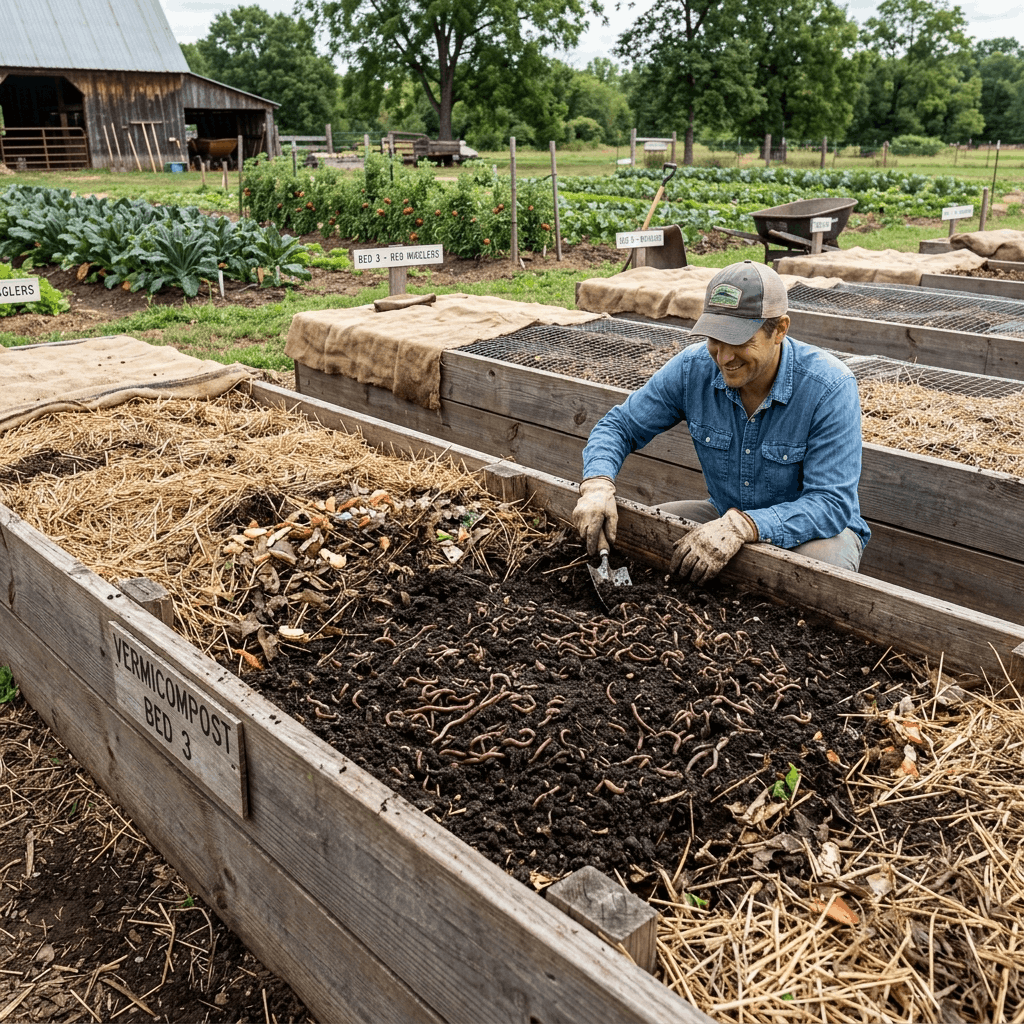
A standard vermicompost bed measures roughly 30 feet in length, 3 feet in width, and 1.5 to 2 feet in height. Setting up 10 to 15 such beds is usually sufficient for large-scale production intended to cover several bighas. Each bed can consume approximately 1500 to 2000 kg of raw cow dung and farm waste, yielding about 800 to 1000 kg of pure, dark, granular vermicompost per cycle (which lasts 60 to 75 days).
To apply it per bigha, standard recommendations range from 500 kg to 1000 kg depending on the existing soil quality and the type of crop. Thus, a well-managed single bed can comfortably fertilize one to two bighas per cycle. By multiplying this setup, farmers can completely replace chemical fertilizers, saving thousands of rupees annually.
Step-by-Step Guide to the Bed Method
Creating a vermicompost bed requires careful preparation to ensure the earthworms thrive and the decomposition process is efficient. Here is a detailed, step-by-step guide to setting up your vermicompost beds.
Selecting the Site and Preparing the Base
Choose a shaded, elevated area to prevent waterlogging. Construct a sturdy base using bricks, polythene sheets, or a cemented floor to prevent the earthworms from escaping into the soil and to protect them from ground predators.
Layering the Raw Materials
Start with a 2-3 inch layer of agricultural waste (dry leaves, straw, or coconut coir) at the bottom for aeration. Above this, add 15-20 days old, partially decomposed cow dung. Fresh dung is too hot and produces methane, which can kill the worms.
Introducing the Earthworms
Once the bed is prepared and moistened, gently release the earthworms (preferably Eisenia fetida) on top of the dung layer. You will need about 1 kg to 2 kg of earthworms for a standard 30-foot bed. They will naturally burrow into the dung.
Covering and Moisture Maintenance
Cover the beds with gunny bags or dry straw/leaves to maintain darkness and retain moisture. Sprinkle water daily or every alternate day to maintain a moisture level of around 40-50%.
Harvesting the Compost
After 60-75 days, the top layer will turn into dark, tea-leaf-like granules. Stop watering for 2-3 days so the worms move to the bottom. Gently scrape the top layers of finished vermicompost, sieve it, and pack it for use.
Outcomes and Comparison with Traditional Methods
The bed method vastly outperforms traditional pit composting in several key areas. First, aeration is significantly better in the bed method because the material is above ground, accelerating the aerobic breakdown process. Traditional pits often suffer from poor ventilation, leading to anaerobic decomposition which produces bad odors and inferior compost.
Second, harvesting is incredibly straightforward with beds. Since earthworms naturally move downwards when the top layer dries, you can scrape off the finished compost layer by layer without harming the worms. In pit methods, extracting the compost and separating the worms is a labor-intensive and messy process.
Moreover, the quality of vermicompost produced via the bed method is structurally superior. It boasts higher porosity, better water-holding capacity, and a richer concentration of macro and micronutrients. Farmers who have switched to this method report a 20-30% increase in crop yield and a significant improvement in soil structure and immunity against soil-borne diseases.
Earthworm Health and Multiplication
The success of the bed method heavily relies on the health and population of your earthworms. The ideal temperature for Eisenia fetida is between 15°C and 25°C. By providing shade (using a thatch roof or agro-shade net) and regular watering, you ensure a micro-climate conducive to their activity and reproduction.
Under optimal conditions, the earthworm population doubles every 60 to 90 days. This means your initial investment in earthworms will rapidly multiply, allowing you to set up more beds or sell the surplus worms to other farmers, creating an additional stream of income.
Avoid adding highly acidic materials like citrus peels, spicy food waste, or any materials contaminated with chemical pesticides, as these can be fatal to the earthworms. Regularly check the pH of your beds; it should ideally be neutral (around 6.5 to 7.5).
Protection from Pests and Predators
Earthworms have natural enemies that can decimate your vermicompost beds if left unprotected. Ants, centipedes, rats, toads, and birds are common predators.
To prevent ants, you can draw a boundary line with turmeric powder or neem oil around the beds. Ensure the bed edges are smooth or construct water channels around the beds (in case of cemented setups) to physically block ants and crawling insects.
For birds and rodents, covering the beds properly with gunny bags or wire mesh is essential. Maintaining the right moisture level also discourages pests that prefer dry environments, like certain types of ants. Regular monitoring and maintaining cleanliness around the vermicompost unit are your best defenses against infestations.
Market Potential: Farmers and Nurseries
The demand for high-quality vermicompost is skyrocketing as more farmers shift towards organic farming. The bed method allows for commercial-scale production, turning farm waste into a highly profitable commodity.
Target markets include local vegetable growers, orchards, floriculturists, and urban garden centers. Nurseries are particularly lucrative buyers, as they require large quantities of premium potting mix. Vermicompost is an essential component of these mixes due to its excellent moisture retention and rich nutrient profile.
Additionally, you can bottle and sell "vermiwash," the liquid extract collected from the beds, which is a potent organic foliar spray. Proper packaging, branding (like Mitti Gold), and certification can significantly increase your profit margins, making vermicomposting a highly sustainable and profitable agribusiness.
🌿 Bulk Vermicompost Orders
Mitti Gold Organic: For bulk supply of premium Vermicompost Fertilizer — Ideal for Farmers, Nurseries, and Export. WhatsApp: +91 95372 30173