📅 June 2026 | ✍️ Mitti Gold Organic | 🗂️ Machinery & Markets
Nutrient Requirements and Organic Application Rates for Telangana Soils
Telangana's agricultural economy relies heavily on red sandy loams (known locally as chalka soils) and heavy black cotton soils, which require distinct soil management approaches to maintain productivity. Key regional crops like cotton, red chillies, maize, paddy, turmeric, and groundnut demand high concentrations of organic matter to prevent nutrient depletion, soil hardening, and crusting. For heavy feeders like cotton and maize, the recommended basal application rate is 4 tons of Mitti Gold composted cow dung manure per acre. This application builds up soil humus and improves soil structure. For high-value cash crops like red chillies and turmeric, which require steady nutrient absorption throughout their growth cycles, farmers should apply 2 tons of Mitti Gold vermicompost per acre during field preparation. Chalka soils naturally have very poor water-holding capacity and are prone to drought stress; incorporating 300 to 400 kg of Mitti Gold agricultural charcoal per acre improves soil porosity, captures irrigation water, and prevents fertilizer run-off. Top-dressing with 200 to 250 kg of Mitti Gold pure cow dung powder during the vegetative stage provides the necessary nitrogen and trace minerals that improve root vigor, leaf area, and plant growth. Additionally, applying 8 to 10 liters of liquid vermiwash per acre through drip lines or as soil drenching during early vegetative and pre-flowering stages provides quick micronutrients, preventing nutrient deficiencies and supporting strong plant metabolism. By integrating composted cow dung manure, Mitti Gold vermicompost, agricultural charcoal, and vermiwash, Telangana's farmers can revitalize their soil health. This comprehensive nutrient management plan leads to robust plants with bold pods, dense cotton bolls, and rich red chillies, ensuring the crop quality required to fetch premium prices in national APMC markets and online platforms, turning farming into a highly sustainable business. Specifically, in the heavy black cotton soils of regions like Adilabad and Warangal, which are prone to waterlogging and compaction, the combination of agricultural charcoal and composted cow dung manure plays a crucial role in creating macro-pores. This increases oxygen diffusion to the roots, preventing root rot and supporting nitrification. Conversely, in the chalka soils of Nalgonda and Mahabubnagar, these organic amendments act as a moisture buffer, holding water molecules tightly against gravity and slowly releasing them during dry spells. Fulfilling these precise requirements is key to preventing flower drop in chillies and boll shedding in cotton. To further enhance soil structure, farmers can apply an additional 500 kg of composted cow dung manure mixed with 50 kg of pure cow dung powder as a mid-season soil recharge. This is particularly beneficial for long-duration crops like turmeric and cotton, which experience intense nutrient demand during the peak reproductive phase. The application of Mitti Gold vermicompost and vermiwash creates a synergistic effect, as the soluble humic compounds in the vermiwash help bind the granular nutrients of the vermicompost, facilitating slow and steady release. In the arid tracts of Rangareddy and Medak, where rainfall is highly erratic, agricultural charcoal serves as an invaluable permanent soil conditioner. By locking in moisture and preventing nutrient volatilization under the hot sun, it ensures that every gram of applied composted cow dung manure is utilized by the crop roots. This scientific approach to soil management translates to higher yields, uniform crop maturity, and superior produce quality, allowing farmers to dominate the bidding at major trading hubs.
How to Apply Organic Amendments in Telangana's Agriculture
The application of organic amendments in Telangana must be carefully tailored to the crop cycle, soil types, and regional watering methods. In red chilli and turmeric fields, broadcast Mitti Gold composted cow dung manure and agricultural charcoal during primary tillage before the onset of the southwest monsoon. This allows the organic material to integrate with the soil during the early rains. For red chilli transplanting, mix Mitti Gold vermicompost with pure cow dung powder in the planting furrows to provide an immediate nutrient boost for the young roots and stimulate early branching. When to apply: Sowing and transplanting are typically carried out in July-August, immediately after the monsoon rains have sufficiently moistened the soil. For cotton, apply a split dose of vermicompost near the plant basins before the flowering stage, followed by light irrigation. Drenching the crop with vermiwash during dry spells helps prevent moisture stress, triggers cell division, and improves the absorption of macronutrients. For paddy, composted cow dung manure and agricultural charcoal should be incorporated during the final puddling stage to reduce soil compaction and support healthy root aeration. Vermiwash can also be applied as a foliar spray at a 10% dilution every 15 days during the vegetative stage of maize and turmeric, promoting photosynthesis and leaf expansion. Incorporating agricultural charcoal during land preparation in chalka soils prevents nutrient leaching, ensuring the applied Mitti Gold vermicompost remains in the root zone throughout the season. By following these precise application instructions, farmers can maximize fertilizer efficiency, reduce costs, and ensure a bountiful harvest of premium quality commodities ready for auction at major state mandis like Warangal and Khammam. For best results in turmeric cultivation, farmers should practice the broad bed furrow (BBF) method. Here, the beds are prepared by incorporating agricultural charcoal and composted cow dung manure. When the rhizomes begin to form (around 90 to 120 days after planting), applying a top dressing of pure cow dung powder followed by earthing up protects the developing rhizomes from direct sunlight and pests. This practice also creates a nutrient-rich zone that promotes rhizome expansion and curcumin synthesis. In drip-irrigated chilli fields, applying liquid vermiwash in weekly micro-doses through the fertigation tank ensures a continuous supply of humic acids and growth co-factors, which keeps the plants in a continuous vegetative-to-reproductive transition without stress.
1
Basal Soil Building
Broadcast composted cow dung manure and agricultural charcoal during land preparation to improve the structure of chalka and black soils.
2
Root Zone Fertilization
Apply vermicompost and cow dung powder in splits near the crop roots during transplanting and before flowering.
3
Crop Drying and Grading
Clean and dry red chillies or turmeric thoroughly, packing them in dry bags with charcoal packets to prevent color loss and mold before auction.
Outcome Comparison: Organic Farming vs. Chemical Cultivation in Telangana
Comparing crop yields and soil quality under organic management using Mitti Gold vermicompost against conventional chemical-intensive cultivation in Telangana reveals significant advantages. Chemical farming in Telangana has led to rising pesticide resistance, soil hardening, and high debt due to escalating chemical costs. Organic farming, conversely, reduces input costs and improves soil structure and crop quality. Organically grown red chillies have a deeper red color, higher capsaicin content, and longer shelf life, preventing rotting during storage and transport, which commands top bids at the APMC. Similarly, organic cotton fibers display superior length, strength, and color. Organic soils amended with Mitti Gold agricultural charcoal and composted cow dung manure retain moisture longer, protecting crops from sudden dry spells that often affect rain-fed farms in Vidarbha and Telangana border regions. Additionally, applying pure cow dung powder and vermiwash results in completely residue-free produce, satisfying exporters and premium food processors. The long-term economic comparison shows that while chemical farming depletes the soil and requires ever-increasing fertilizer dosages, organic farming builds soil health over time, leading to input cost reductions of up to 40% in subsequent years. Organic cotton, for example, is highly sought after by textile exporters who offer premium contracts, bypassing middlemen. Paddy grown organically displays higher grain density and less breakage during milling, improving market value. Ultimately, the transition to organic cultivation using Mitti Gold vermicompost ensures soil sustainability, crop resilience, and higher profit margins for Telangana's farmers trading in the state's competitive agricultural markets.
Revitalizing Micro-Life in Chalka and Black Soils
The application of composted cow dung manure provides the essential organic carbon needed to feed beneficial soil microorganisms. Incorporating highly porous Mitti Gold agricultural charcoal creates a stable habitat for nitrogen-fixing bacteria (like Azotobacter and Rhizobium) and mycorrhizal fungi, protecting them from the high soil temperatures typical of Telangana's summers. These microbes break down organic matter and make locked-up phosphorus and potassium available to the plants, promoting healthy root development. This biological activity increases the population of native earthworms, which aerate the soil and improve its drainage. The humic acids in Mitti Gold vermicompost and vermiwash stimulate microbial enzymes, speeding up the decomposition of crop residues and converting them into plant-absorbed organic compounds. Earthworms, attracted to the organic matter of pure cow dung powder, create channels that assist in root penetration and water absorption, reducing soil compaction. As mycorrhizal fungi colonize the root systems, they release glomalin, which binds soil particles into stable aggregates, reducing soil erosion during heavy rains. This biological revitalization is crucial for reversing the degradation of chalka soils, transforming them into a fertile, self-sustaining growing medium. A healthy, living soil results in crop yields that are not only larger but also richer in minerals and nutrients, satisfying the premium quality requirements of e-NAM buyers and international exporters, while ensuring long-term agricultural sustainability.
Natural Pest Resistance and Wilt Prevention in Chillies
Red chillies in Telangana are highly vulnerable to sucking pests like thrips and mites, which transmit the chili leaf curl virus, and fungal pathogens causing wilt. Chemical pesticides leave toxic residues, leading to mandi rejections and health hazards. Organic farmers prevent these issues by mixing Trichoderma and Pseudomonas-enriched Mitti Gold vermicompost and composted cow dung manure into the soil. When to apply: Apply during land preparation and transplanting to establish a protective barrier around the developing root system. Weekly sprays of neem oil mixed with fermented cow urine and vermiwash act as a powerful natural insect repellent, keeping crops healthy and pesticide-free. The plant nutrients supplied by organic inputs help build thicker cell walls and cuticles, making it difficult for sucking pests to pierce the leaves and transmit viruses. The addition of agricultural charcoal to the soil helps absorb harmful pathogens and soil toxins, preventing root rot and damping-off. Pure cow dung powder, when mixed with bio-pesticides like Bacillus thuringiensis, acts as a carrier that keeps the beneficial microbes active on the soil surface, providing long-lasting protection. This organic crop protection strategy ensures a completely residue-free harvest, qualifying the produce for strict international export and premium domestic markets. By using these natural methods, farmers protect beneficial insects like ladybirds and hoverflies, which act as natural predators, establishing an ecological balance in the field and reducing crop losses without chemical dependency.
e-NAM Trading and Premium Organic Spice Sales at Telangana APMCs
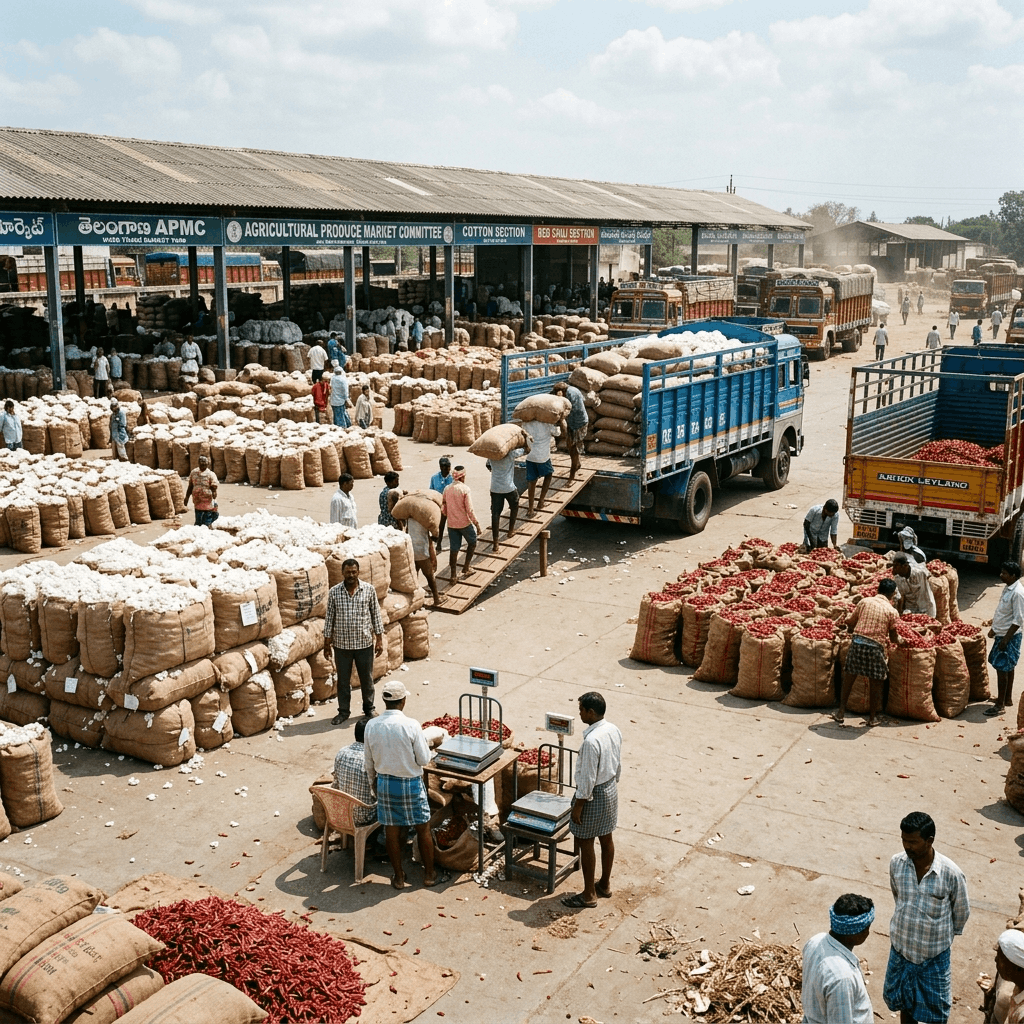
Warangal, Khammam, and Nizamabad APMCs are major trading hubs for cotton, chillies, and turmeric. Telangana's integration with the e-NAM platform enables digital auctions where buyers from across India bid on certified organic crops. Guntur and Khammam red chillies grown organically command a 30% to 50% price premium. Exporters and organic spice brands bid actively on crops cultivated with natural inputs like Mitti Gold vermicompost and composted cow dung manure, as they easily pass pesticide residue tests. The assaying process at these mandis evaluates quality parameters such as curcumin content in turmeric and fiber strength in cotton. Incorporating Mitti Gold agricultural charcoal, pure cow dung powder, and vermiwash ensures a residue-free, high-grade harvest that consistently clears these tests. Direct trading via e-NAM ensures transparent transactions, eliminating local middlemen cartels and commission agents who reduce the farmer's profits. Furthermore, the digital bidding process ensures immediate electronic payment directly into the farmer's bank account within 24 hours. This financial security allows farmers to invest in sustainable farming and high-quality inputs, transforming agriculture into a highly profitable enterprise. By producing certified organic, high-grade commodities, farmers can negotiate direct buy-back agreements with exporters and premium retailers, securing long-term financial stability and bypassing local market uncertainties, making organic agriculture a highly viable economic option.
📅 Official Application & Deadline Guide
⏳
Last Date of Application
Ongoing / Seasonal registration
🌐
Official Portal to Apply
Telangana Agricultural Marketing Department
Apply Online Here ↗
📦 Bulk Orders & Export
Mitti Gold Organic: For bulk orders of all organic fertilizers — Farmers, Nurseries, and Export. WhatsApp: +91 95372 30173
Telangana APMC and Organic Farming FAQ
Which is the largest APMC for red chillies in Telangana?
The Khammam and Warangal APMCs are the largest markets for trading high-quality red chillies in the state.
How can I control chili leaf curl virus organically?
Repel sucking pests using yellow sticky traps and spraying neem oil and cow urine mixtures, while maintaining plant health with organic vermicompost.
Is agricultural charcoal beneficial for chalka soils?
Yes, it is highly recommended for red sandy loam (chalka) soils as it improves water retention and prevents nutrient leaching.
What is the best organic fertilizer for turmeric?
A combination of Mitti Gold composted cow dung manure and organic vermicompost fertilizer provides the balanced nutrients needed for high curcumin levels.
Can I trade organic cotton on e-NAM in Telangana?
Yes, registered farmers can auction certified organic cotton on the e-NAM platform, attracting premium national buyers.