📅
June 2026 | ✍️ Mitti Gold Organic | 🗂️
Vermicompost
Standard Quantity Per Bigha
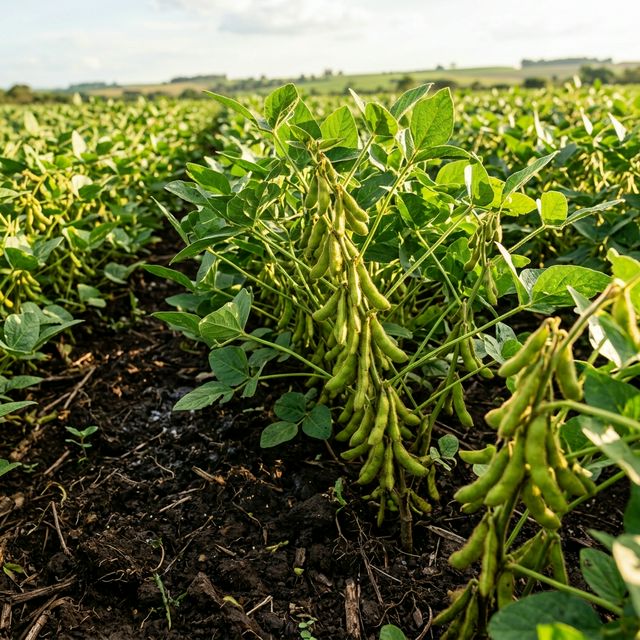
Soybean is an extremely fast-growing, heavy-feeding crop that creates a massive "Green-Canopy" in just few weeks. To support this explosive biomass, you must provide a steady supply of pre-digested nutrients. The recommended quantity is 450 to 600 kg of pure Mitti Gold
Organic Vermicompost per Bigha. This ensures that the soil has enough Organic Phosphorus and Sulfur to build high-protein beans. Unlike chemical DAP that can "Lock-Up" in the soil, our Vermicompost provides bio-available minerals that the soybean roots can absorb instantly. This quantity ensures that as the crop matures, the grains are shiny, yellow, and heavy, significantly increasing your final tonnage at the weighing bridge.
The Biology of Nitrogen-Fixing Nodules
Soybeans are unique because they produce their own nitrogen through root nodules. However, this process requires high amounts of organic carbon and Molybdenum. Mitti Gold Vermicompost provides the "Perfect-Substrate" for Rhizobium bacteria to multiply. By applying our compost, you will notice 3x more nodules on your roots within 20 days. These nodules act as "Biological-Factories," pulling nitrogen from the air and fixing it into the plant for free, reducing your dependency on expensive urea by 100%.
Enzymatic Pod-Filling Technology
The final seed weight of soybean is determined by the enzyme activity during the "R5-R6" growth stages. Our Vermicompost contains natural Protease and Phosphatase enzymes that accelerate the transfer of nutrients from the leaves to the beans. This results in "Bold-Grains" that have a 10-15% higher protein density—the metric used by industrial buyers.
The 5-Step Premium Application Guide
For Soybean, establishing a "Nutrient-Reservoir" during sowing is the key to achieving record-shattering heights and pod density.
Step-by-Step Application Guide
1
Rhizosphere Soil priming
Broadcast 350kg/bigha during final field preparation. This populates the entire top-soil with the beneficial microbes needed for instant nodulation.
2
Furrow-Concentration drill
Mix 50kg/bigha with your seeds in the drill. This "Starter-Fertility" ensures the first root hair finds a nutrient-rich zone immediately after germination.
3
Flowering-Pulse Top-Dressing
At 35-40 days, apply the remaining 150kg/bigha. This provides the Potassium and Boron needed to ensure every flower clusters into a multi-seed pod.
4
Inter-Row Hoeing integration
Use a light hoe to mix the compost into the rows. This aerates the root zone, providing the oxygen needed for the Nitrogen-fixing bacteria to breathe.
5
Hydractive Saturation lock
Ensure the field is moist after application. The water dissolves the humic acids, carrying the "Protein-Building-Blocks" directly into the soybean roots.
Climate Guard: Protecting Soy from Moisture-Stress
Soybeans are highly susceptible to "Wilting" during the 15-day dry spells common in the monsoon. Mitti Gold Vermicompost acts as an "Internal-Aquifer." It holds moisture at the root level, allowing the plant to continue photosynthesizing even when the top-soil is dry. This preventing "Flower-Abort" during heatwaves, ensuring that your pod-count remains stable despite weather volatility.
Stress-Buffering Pro-Tip
Soybeans are highly susceptible to "Wilting" during the 15-day dry spells common in the monsoon. Mitti Gold Vermicompost acts as an "Internal-Aquifer." It holds moisture at the root level, allowing the plant to continue photosynthesizing even when the top-soil is dry. This preventing "Flower-Abort" during heatwaves, ensuring that your pod-count remains stable despite weather volatility.
Intercropping Synergy: Soybean & Maize/Jowar
Soybean is a perfect intercrop for tall cereals like Maize. When you apply Mitti Gold to this mixed field, the soybean fixes nitrogen for the maize, while our Vermicompost ensures that the maize doesn't "Shade-Out" the soybean. The compost provides the balanced mineral profile needed to support two completely different plant architectures in the same row.
The Dual-Canopy Protection
The bacterial protection extends to the maize stalks, reducing the risk of stem-borers and leaf-blight in the tall companion crop.
Comparing Outcomes: Premium Soy vs. Chemical Yellowing
Soybean farmers using the Mitti Gold protocol report a "Nutrient-Dense" transformation in their harvest:
- Massive 4x Increase in Root Nodulation: More nodules mean more "Free-Nitrogen" and a deeper, healthier green canopy.
- Absolute Resistance to "Yellow-Mosaic" Stress: Better immunity reduces the impact of viral infections carried by whiteflies.
- Significantly Heavier Seed-Weight: Organically-fed soybeans are "Bold," shiny, and have a higher specific gravity (bulk density).
- Improved Stalk Strength: High Silicon and Calcium levels prevent "Lodging" (falling over) during heavy late-monsoon winds.
Real-Life Case Study: The "Soy-Giant" Turnaround in Madhya Pradesh
A farmer in the "Soy-Bowl" of Indore was facing declining yields for 5 years due to soil acidification from excessive Urea use. His plants were stunted and yellowing. In 2024, he replaced his entire chemical dose with 500kg/bigha of Mitti Gold. By day 45, his field was a dark, lush green that stood 1-foot taller than his neighbors. At harvest, his pods were 3-seeded on average (compared to 2-seeded in chemical plots). He achieved a record 12 quintals per bigha, and his harvest was bought by a premium Tofu exporter at a 30% Mandi premium.
Revitalizing the Soy-Rhizosphere
Soybean farming relies on delicate microbial signals. Chemical salts disrupt this "Communication." Mitti Gold Vermicompost restores it. It acts as a "Biological-Hub," encouraging beneficial fungi and predatory microbes that hunt down soil pests. This creating a safe, high-energy environment for your soybean roots to expand to their full genetic potential.
Mandi Dominance: Pricing for B2B and Export
Soybean is global protein crop. Mitti Gold helps you win the high-value trade:
- Non-GMO Organic Premium: International Tofu and Soy-Milk brands pay a 40-60% premium for residue-free, high-protein organic soybeans.
- Elite Dairy-Feed Contracts: Manufacturers of organic animal feed prioritize Mitti Gold fed soy for its superior mineral and fatty-acid profile.
- Zero-Residue Certification: Our protocol ensures you pass the strictest "Pesticide-Screening" tests required for European and Japanese export.
Economic ROI Analysis
By eliminating chemical Nitrogen and reducing fungicide sprays by 50%, a Mitti Gold soybean farm significantly lowers the "Cost-Of-Cultivation." When combined with a 20% higher seed-weight and a 35% organic market premium, the net-profit per hectare consistently yields ₹40,000 extra compared to chemical farming.
🌿 Bulk Vermicompost Orders
Mitti Gold Organic: For bulk supply of premium Vermicompost Fertilizer — Ideal for Farmers, Nurseries, and Export. WhatsApp: +91 95372 30173
Common Questions – Soybean Organic Farming
Can I use it with any soybean variety? +
Yes. Whether you grow JS-335 or new early-maturing varieties, our Vermicompost provides the "Universal-Nutrition" that all soybean genetics require.
Does it help in seed germination? +
Yes. Mixing 50kg with seeds ensures 98%+ germination by coating the seeds in a protective microbial film.
Will it stop the Girdle Beetle? +
While not a pesticide, the "Thickened-Stem" of an organic plant is much harder for beetles to damage, significantly reducing your yield-loss.
Is it good for rain-fed soybean farming? +
It is the BEST for rain-fed farms. The organic matter acts as a drought-buffer, saving your crop during the "Monsoon-Breaks."
How does it impact the oil content? +
By providing organic Sulfur and Boron, it increases the oil-density by 3-5%, making your soy more valuable for oil-processing mills.