📅
June 2026 | ✍️ Mitti Gold Organic | 🗂️
Vermicompost
Required Dosage Per Bigha
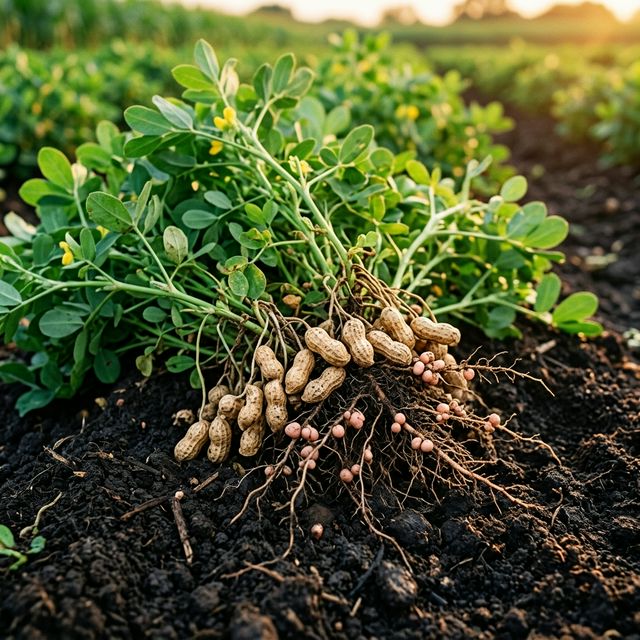
Groundnuts are "Soil-Builders" that require a very specific physical environment to succeed. The single most important factor for groundnut profit is "Soil Friability"—the softness of the earth. The recommended quantity is 450 to 600 kg of Mitti Gold
Organic Vermicompost per Bigha. This ensures that the top 6 inches of your soil remain porous and aerated. Unlike chemical fertilizers that create a "Hard-Crust," our Vermicompost provides the organic humics needed to keep the soil "Spongy." This quantity provides the critical Organic Calcium and Phosphorus required for kernel development, ensuring that your pods are "Bold" and heavy rather than empty or half-filled.
The Science of Pegging and Pod-Set
Groundnut biology is unique: the flower is above ground, but the fruit grows below. For a successful harvest, the "Peg" (the stem from the flower) must physically penetrate the soil. Mitti Gold Vermicompost contains natural wetting agents and organic acids that break the surface tension of the soil. This allows for "Zero-Resistance Pegging," ensuring that 95% of your flowers successfully turn into underground pods. The enzymes in our compost act as a biological signal, telling the plant to prioritize sending energy to its roots and pods rather than just growing tall leaves.
The Calcium-Boron Bridge for Oil Density
Oil formation in groundnuts is a complex biological process that requires Boron and Magnesium. Our Vermicompost provides these in a pre-digested, soluble form. Calcium prevents the "Apro-Rot" of pods, while Boron ensures that the kernels are plump and uniform. This results in groundnuts with a significantly higher "Oil-Recovery" percentage, making your crop the first choice for oil-millers.
The 5-Step Premium Application Protocol
For Groundnut, soil preparation is the foundation of success. We focus on creating a nutrient-dense "Soft-Bed" before the seeds even touch the ground.
Step-by-Step Application Guide
1
Soft-Bed Soil Inoculation
Broadcast 400kg/bigha during final harrowing. This ensures the organic humics are thoroughly mixed into the top-soil where pod-filling happens.
2
Starter-Pack Seed drilling
Mix 50kg/bigha with your seeds in the drill. This provides an immediate biological shield, preventing "Damping-Off" fungus from attacking young sprouts.
3
Pegging-Window Top-Dressing
At 30-35 days, apply a light dressing of 100kg/bigha directly over the plant rows. This provides a fresh Calcium boost exactly as the pegs enter the soil.
4
Lateral Hoeing integration
Use a light hoe to mix the top-dressing into the first 2 inches. Avoid deep hoeing to protect the delicate developing pods.
5
Post-App Soil hydration
Always maintain slight soil moisture after application to keep the "Living-Microbes" active and moving nutrients into the developing kernels.
Climate Shield: Protecting Pods from Soil-Heat
Groundnuts are highly sensitive to "Soil-Temp" fluctuations. During unseasonal heatwaves, the pods in chemical-fed fields can "Cook" inside the dry soil. Mitti Gold Vermicompost acts as a "Thermal-Blanket." Its high organic matter content regulates the underground temperature, keeping it 3-4 degrees cooler than the ambient air. This prevents "Kernel-Shrinkage" and ensures that the plant continues to fill its pods even during a 40°C afternoon.
Drought-Buffering Technology
Groundnuts are highly sensitive to "Soil-Temp" fluctuations. During unseasonal heatwaves, the pods in chemical-fed fields can "Cook" inside the dry soil. Mitti Gold Vermicompost acts as a "Thermal-Blanket." Its high organic matter content regulates the underground temperature, keeping it 3-4 degrees cooler than the ambient air. This prevents "Kernel-Shrinkage" and ensures that the plant continues to fill its pods even during a 40°C afternoon.
Intercropping Synergy: Groundnut & Castor/Sunflower
Groundnuts are excellent companions for deep-rooted crops like Castor. When you apply Mitti Gold to an intercropped field, the groundnut acts as a "Living-Mulch," while our Vermicompost facilitates the transfer of fixed nitrogen from the groundnut nodules to the deeper-rooted companion crop. This creates a vertical "Double-Profit" zone where both crops thrive without competing for nutrients.
The Lateral Root Stimulant
The coelomic fluids that run off the leaves to the ground act as a powerful root-growth signal, helping groundnut nodes fix more nitrogen for the entire field.
Comparing Outcomes: Bold Pods vs. Half-Empty Shells
Groundnut farmers using the Mitti Gold protocol report a "Kernel-Grade" transformation in their harvest:
- Absolute Elimination of Empty Pods (Pops): Balanced Calcium and Boron ensure every pod is filled with heavy, mature kernels.
- Significantly Higher Pod-to-Weight Ratio: Organically-fed pods are denser and heavier, leading to higher rates at the Mandi scale.
- Lustrous, Shiny Shell Quality: Naturally-fed groundnuts have a clean, golden-ivory shell that is preferred by confectionery manufacturers.
- Tikka Disease Control: Higher plant immunity and the presence of Trichoderma in the soil reduce the spread of Leaf Spot and Rust by up to 60%.
Real-Life Case Study: The "Bold-Nut" Success in Saurashtra
A farmer in Junagadh was struggling with "Hard-Soil" and poor pegging, despite using heavy DAP loads. After switching to the Mitti Gold protocol (500kg/bigha), his soil became noticeably softer within 2 months. At harvest, he recorded a 28% increase in pod weight. More importantly, his "Shelling-Percentage" jumped from 68% to 75%. He sold his entire harvest as "Organic Confectionery Grade" to a premium snack brand, earning ₹22,000 extra per bigha compared to his chemical-farming years.
Feeding the Underground Workforce
Groundnuts produce massive amounts of high-protein root residue. Mitti Gold Vermicompost provides the "Kick-Starter" for the soil microbiome to digest this residue. This creates a playground for Mycorrhizal fungi and Earthworms, who work together to keep the soil aerated and fertile for the following rotation crop (usually Wheat or Garlic).
Mandi Dominance: Pricing for Export & Confectionery
Exporting groundnuts requires meeting strict safety standards. Mitti Gold makes your crop an "Export-Star":
- Aflatoxin-Free Export Status: Healthy organic soil naturally suppresses the Aspergillus fungus that causes Aflatoxin, ensuring your crop passes international tests.
- Confectionery-Grade Premiums: Premium nut-butter brands pay 30% more for "Bold" organic groundnuts with high protein and low chemical residue.
- Zero-Residue Bio-Oil Market: Cold-pressed oil processors favor organic-fed groundnuts for their superior shelf-life and "True-Nut" aroma.
Economic Cost/Benefit Analysis (ROI)
Switching to Mitti Gold reduces your dependency on expensive fungicides and chemical DAP. When combined with a 20% higher market price for "certified organic grade" kernels, the total net revenue per hectare consistently outperforms chemical farming by ₹35,000 to ₹45,000 per year.
🌿 Bulk Vermicompost Orders
Mitti Gold Organic: For bulk supply of premium Vermicompost Fertilizer — Ideal for Farmers, Nurseries, and Export. WhatsApp: +91 95372 30173
Common Questions – Groundnut Organic Farming
Will it make my soil too soft for harvesting? +
Soft soil is actually the goal! It makes harvesting (pulling) much easier, reduces "pod-loss" in the ground, and ensures almost 100% of the beans come out with the plant.
Can it replace Gypsum application? +
Yes. Mitti Gold contains organic, bio-available Calcium and Sulfur which are 5x more effective than crude Gypsum in protecting pod-integrity.
Does it protect against wild-boars or pests? +
Healthy organic plants produce stronger skin and cell walls, making them "Less-Tasty" to many soil-pests. While not a repellent, it reduces the overall "Lure" for animals.
When should I apply it for summer groundnuts? +
Apply 100% as a basal dose during Feb-March sowing. The organic matter will protect the developing nuts from the intense May heat.
How does it help the kernel taste? +
By providing a full spectrum of 16 trace minerals, our Vermicompost enhances the "Nutty" sweetness of the kernels, making them preferred for eating raw or roasted.