📅 June 2026 | ✍️ Mitti Gold Organic | 🗂️ Farming
Introduction: The Unsung Avian Heroes of Agriculture
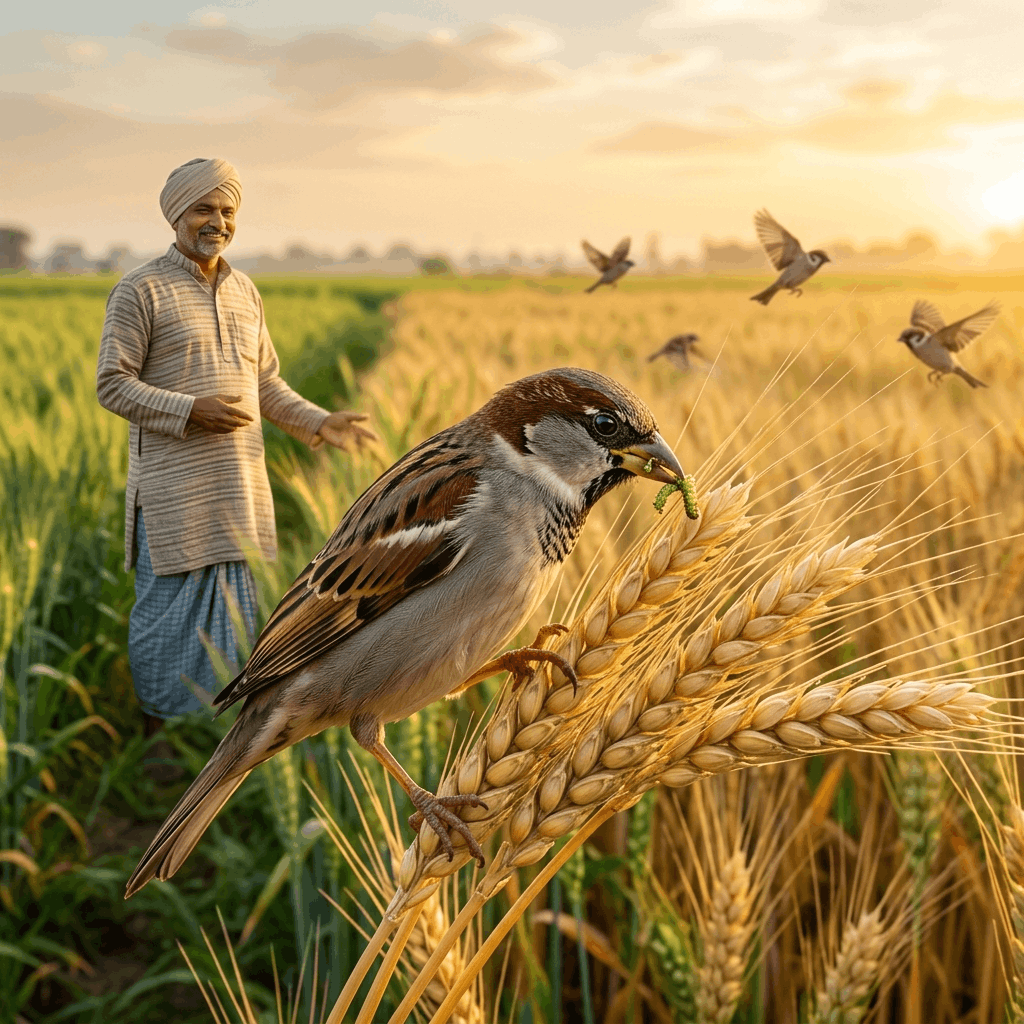
For decades, the narrative in modern, industrialized agriculture has focused heavily on chemical interventions, machinery, and genetic modifications to secure crop yields. In this relentless pursuit of efficiency, farmers have often overlooked, or even inadvertently driven away, one of their most powerful, ancient, and entirely free allies: the humble sparrow. Often viewed as commonplace or even as a nuisance by those who misunderstand their ecology, sparrows—particularly the House Sparrow (Passer domesticus] and the Eurasian Tree Sparrow—play an incredibly vital role in maintaining the delicate balance of an agricultural ecosystem. Before the advent of synthetic pesticides, these small birds were recognized as the primary defense line against devastating insect plagues. Today, as the agricultural industry faces a crisis of pesticide resistance and environmental degradation, understanding and restoring the role of the sparrow is not just an act of conservation; it is a highly pragmatic strategy for achieving sustainable, high-yield farming.
The Historical Relationship Between Sparrows and Farming Communities
The relationship between humans, agriculture, and sparrows is thousands of years old. Sparrows are synanthropic, meaning they have evolved to live in close association with human habitats, particularly agricultural settlements. Historically, wherever humans went and planted grain, the sparrow followed. Early farmers deeply understood this symbiotic relationship. While sparrows would undoubtedly consume a small portion of the grain harvest, the farmers observed that these birds spent the vast majority of the growing season aggressively hunting the insects that would otherwise decimate the crops entirely. This balance was famously, and tragically, demonstrated during China's \"Four Pests Campaign\" in the late 1950s. The government ordered the mass extermination of sparrows, believing they were stealing grain. The result was catastrophic: without the sparrows to control them, locust and caterpillar populations exploded, leading to massive crop failures and one of the deadliest famines in human history. This stark historical lesson underscores the sparrow's critical role as an ecological keystone in farming.
Understanding the House Sparrow: Ecology and Behavior on the Farm
To harness the benefits of sparrows, a farmer must understand their basic ecology and behavior. Sparrows are highly social flocking birds that prefer to nest in cavities—traditionally in the eaves of barns, holes in old trees, or dense, thorny hedgerows. They have a relatively small foraging radius, typically hunting within a few hundred meters of their nesting site. This localized behavior is a massive advantage for the farmer; if you provide a habitat on your land, the sparrows will focus their pest-control efforts almost exclusively on your crops. While adult sparrows are omnivorous, relying heavily on seeds and grains during the winter months, their diet undergoes a dramatic shift during the crucial spring and summer breeding seasons. This behavioral shift from seed-eater to aggressive insect-hunter perfectly aligns with the most vulnerable stages of crop growth, making them the ultimate on-demand pest control force.
Insect Control: The Sparrow's Role as a Natural Pest Manager
The sheer volume of insects consumed by a flock of sparrows is staggering and consistently underestimated. During the agricultural growing season, adult sparrows spend dawn to dusk patrolling fields, orchards, and vegetable plots. They have keen eyesight and are incredibly agile, capable of plucking aphids off delicate leaves, digging grubs out of the topsoil, and even catching flying insects mid-air. A single sparrow can consume hundreds of insects per day. When you multiply this by a flock of fifty or a hundred birds living on the farm, the impact is immense. They act as a continuous, biological vacuum cleaner, constantly suppressing insect populations before they can reach the critical threshold where they cause economic damage to the crops. This constant predatory pressure prevents pest outbreaks from taking hold, acting as an ecological insurance policy that protects the farmer's bottom line day in and day out.
The Voracious Appetite of Sparrow Chicks: A Drain on Crop Pests
The true pest-control power of the sparrow lies in its reproductive cycle. Sparrows are prolific breeders, often raising two to three broods of four to five chicks per season. While adult sparrows can digest seeds, the rapidly growing chicks require a massive, constant supply of high-protein food to develop muscles and feathers. Therefore, for the first few weeks of their lives, sparrow nestlings are fed a diet consisting almost 100% of soft-bodied insects. To sustain a nest of screaming chicks, the parent sparrows must hunt continuously, capturing thousands of caterpillars, aphids, grubs, and moths every single week. A single pair of sparrows rearing a brood can easily remove up to 10,000 insects from the surrounding fields in just a few weeks. Because this peak breeding and feeding period coincides perfectly with the peak growth and vulnerability period of spring and summer crops, the sparrows provide maximum protection exactly when the farmer needs it most.
Specific Agricultural Pests Targeted by Sparrows
Sparrows are not picky eaters; they are opportunistic hunters that target a wide array of some of the most notorious agricultural pests. They are particularly fond of soft-bodied caterpillars, which are the larval stage of moths and butterflies that chew through the leaves of brassicas, corn, and fruit trees, devastating the plant's ability to photosynthesize. They also aggressively hunt aphids, tiny sap-sucking insects that stunt plant growth and transmit deadly viral diseases between crops. Ground-foraging sparrows will pull up cutworms and wireworms that destroy the roots of young seedlings. In orchards, they scour the bark for scale insects, mites, and overwintering pest eggs. Furthermore, they frequently hunt flying pests such as locusts, grasshoppers, and adult moths before these insects have a chance to lay eggs and start a new cycle of destruction. Their broad-spectrum hunting strategy makes them effective across almost all types of agriculture, from grain fields to vegetable market gardens.
The Economic Value of Avian Pest Control for Crop Yields
The ecological service provided by sparrows translates directly into tangible, quantifiable economic value for the farmer. By keeping pest populations below the economic injury level, sparrows prevent the direct loss of crop biomass and quality. For example, by consuming aphids, they prevent the spread of plant viruses that can render an entire tomato or potato crop unmarketable. Furthermore, their presence significantly reduces the need for expensive chemical interventions. Every time a flock of sparrows cleans a field of caterpillars, that is one less tractor pass required to spray insecticide, saving the farmer massive amounts of money on chemical inputs, diesel fuel, and labor. Studies in agroecology have consistently shown that farms with healthy, active bird populations enjoy more stable, resilient yields year over year, proving that integrating sparrows into farm management is not just a feel-good environmental initiative, but a highly profitable agricultural strategy.
Sparrows vs. Chemical Pesticides: A Sustainable Approach
The contrast between utilizing sparrows and relying solely on synthetic chemical pesticides is stark. Chemical pesticides are a blunt instrument; broad-spectrum insecticides kill the target pests, but they also exterminate beneficial insects like bees, ladybugs, and parasitic wasps, completely shattering the local ecosystem. Worse still, insects rapidly develop genetic resistance to these chemicals, forcing the farmer to buy increasingly toxic and expensive sprays in a never-ending \"pesticide treadmill.\" Sparrows, on the other hand, represent a sustainable, self-replicating, and intelligent pest control system. Insects cannot develop a genetic resistance to being eaten by a bird. The sparrows actively seek out the densest pockets of pests, applying pressure precisely where it is needed. By shifting reliance away from toxic chemicals and toward biological control provided by birds, farmers can protect their soil microbiology, safeguard their local water sources from chemical runoff, and produce a cleaner, safer crop for the consumer.
The Decline of Sparrow Populations: Causes and Consequences
Despite their immense value, sparrow populations have plummeted dramatically across the globe over the last few decades, particularly in intensively farmed rural areas. This alarming decline is a massive loss for agriculture. The causes are multifaceted but are almost entirely driven by modern, industrialized farming practices. The relentless drive to maximize every square inch of arable land has led to the systematic removal of hedgerows, old barns, and scrubland, effectively destroying the sparrow's natural nesting sites and protective cover. Furthermore, the shift towards massive monoculture farming has eliminated the diverse weed seeds that adult sparrows rely on to survive the harsh winter months. Most devastatingly, the ubiquitous use of powerful insecticides has eradicated the insect biomass that sparrows absolutely require to feed their young. As sparrow populations crash, farmers are ironically forced to use even more chemicals to manage the pests the birds once controlled, creating a vicious cycle of ecological degradation.
Habitat Loss: How Modern Farming Practices Impact Sparrows
To reverse the decline of sparrows, we must address the severe habitat loss caused by modern agriculture. Traditional farming featured a patchwork of small fields bordered by thick, thorny hedgerows, interspersed with native trees and scrub. These features provided impenetrable fortresses where sparrows could build their nests safe from predators like hawks and feral cats. Today's landscape of massive, fenceless mega-fields offers zero shelter. When a tractor plows right up to the edge of the asphalt road, the sparrow has nowhere to live. Additionally, modern agricultural buildings—sealed metal sheds and concrete silos—lack the nooks, crannies, and eaves of traditional wooden barns where sparrows historically nested. The pursuit of \"clean farming,\" where every weed is eradicated with herbicides, starves the adult birds in the winter, as they depend on the seeds of wild grasses and weeds when agricultural grain is unavailable. Restoring the sparrow requires restoring a degree of wildness to the farm edges.
The Impact of Agrochemicals on Avian Health and Reproduction
The indirect impact of agrochemicals on sparrows is just as devastating as the loss of habitat. The widespread use of systemic insecticides, particularly neonicotinoids, has sterilized the agricultural landscape of insect life. When adult sparrows cannot find enough caterpillars and aphids to feed their nestlings, the chicks starve to death in the nest, leading to total reproductive failure for the colony. Furthermore, birds that consume insects tainted with sublethal doses of pesticides suffer severe neurological damage. This impairs their ability to navigate, forage efficiently, and evade predators. Herbicides also play a destructive role; by indiscriminately killing all non-crop plants, they eradicate the host plants that many insects require to breed, further collapsing the food web from the bottom up. A farm saturated in chemicals is a toxic desert for birds, and the loss of the sparrow is the loudest alarm bell signaling a deeply unbalanced agricultural environment.
Creating a Sparrow-Friendly Farm Environment
Recognizing the economic and ecological value of sparrows, progressive farmers are actively managing their land to invite these birds back. Creating a sparrow-friendly environment does not require sacrificing productive crop land; it involves managing the margins and unproductive areas of the farm intelligently. The core strategy is to provide the three essentials of life: food, water, and shelter. Farmers can achieve this by leaving a small buffer zone of wild grasses and native weeds around the perimeter of fields, which acts as an insect incubator and a source of winter seeds. Planting native thorny shrubs and hedgerows, such as hawthorn or blackthorn, provides vital protective cover from predators and excellent nesting sites. Transitioning to organic or Integrated Pest Management (IPM] practices, which drastically reduce the use of broad-spectrum insecticides, ensures that when the sparrows arrive, there is an abundant food source for them to feed their young and thrive.
Nesting Sites: Providing Safe Havens for Breeding Sparrows
Because modern farm buildings lack natural nesting cavities, the most immediate and effective action a farmer can take is to provide artificial nesting sites. Sparrows are communal nesters, preferring to live in colonies. Therefore, installing \"sparrow terraces\"—which are basically large birdhouses divided into three or four separate nesting compartments—is highly effective. These should be mounted high up on the walls of farm buildings, sheds, or on sturdy poles, ideally facing away from prevailing cold winds and intense midday sun. It is crucial to place them out of the reach of climbing predators like cats or snakes. The entrance holes should be specifically sized (around 32mm] to allow sparrows in while keeping larger, aggressive birds out. Once a colony establishes itself in these boxes, they will return generation after generation, providing a permanent, reliable, and localized pest control force centered right in the heart of your agricultural operation.
Winter Feeding and Shelter: Supporting Sparrows Year-Round
The true test of survival for a sparrow is not the summer breeding season, but the harsh, freezing months of winter. If a farmer wants a robust population of sparrows ready to hunt insects in the spring, they must ensure the birds survive the winter on their farm. This requires leaving food sources available. Practices like \"conservation headlands\"—where the outer edges of a crop field are left unharvested—provide a vital lifeline of grain and weed seeds. Stubble fields should be left unplowed until late winter, as the spilled grain is essential winter forage. In severe weather, actively supplementing their diet by maintaining bird feeders filled with mixed seeds, cracked corn, and suet near farm buildings can prevent the colony from starving or migrating away. Furthermore, dense evergreen bushes or thick ivy growing on walls provide essential thermal roosting cover where the flock can huddle together to survive freezing winter nights.
Water Sources: The Importance of Clean Water on the Farm
While providing food and shelter is often discussed, access to clean, fresh water is frequently overlooked, yet it is equally critical for a thriving sparrow population. Sparrows require water not only for drinking to maintain hydration in the hot summer months, but also for bathing. Regular bathing is essential for maintaining the condition of their feathers, which provides insulation and allows for agile flight when escaping predators. On a modern farm, natural shallow puddles often dry up quickly, and deep livestock water troughs can be a drowning hazard for small birds. Providing shallow bird baths, small farm ponds with gently sloping, muddy edges, or modifying livestock troughs with floating wooden ramps allows sparrows to safely drink and bathe. Ensuring these water sources are kept clean and free from agricultural chemical runoff is vital for the health of the flock.
📦 Bulk Orders & Export
Mitti Gold Organic: For bulk orders of all organic fertilizers — Farmers, Nurseries, and Export. WhatsApp: +91 95372 30173
Frequently Asked Questions (FAQs]
Don't sparrows eat the farmers' grain and seeds?
While adult sparrows do eat seeds and grain, the amount they consume is vastly outweighed by the massive quantity of destructive insects they eat. More importantly, during the crucial spring and summer months when crops are growing, they feed their chicks almost entirely on agricultural pests like caterpillars and aphids. They save far more crops than they consume.
How many insects can a sparrow eat in a day?
An adult sparrow can consume hundreds of insects a day. However, a pair of sparrows feeding a nest of 4-5 chicks must hunt relentlessly, often capturing and delivering over a thousand insects to the nest every single day. Over a breeding season, a single family can eliminate tens of thousands of pests.
Why have sparrow populations declined so much in rural areas?
The decline is primarily due to intensive modern farming. The removal of hedgerows destroyed their nesting sites. Sealed modern barns prevent them from nesting in eaves. Most severely, the heavy use of chemical pesticides has eradicated the insects they rely on to feed their chicks, leading to mass starvation of the young.
What is the best way to attract sparrows to my farm?
Provide the three essentials: shelter, food, and water. Plant thick, thorny hedgerows for safe roosting. Install sparrow terrace nesting boxes high on farm buildings. Reduce pesticide use so there are insects for them to eat, and leave some stubble or weed seeds in the winter for them to forage.
What kind of nesting box do sparrows prefer?
Sparrows are highly social and prefer to nest in colonies. A \"sparrow terrace\"—which is a long box divided into three or four individual compartments with 32mm entrance holes—is ideal. Mount it high up under the eaves of a barn, out of the midday sun and away from predators like cats.