📅 June 2026 | ✍️ Mitti Gold Organic | 🗂️ Farming
Introduction: The Growing Demand for High-Quality Plant Nurseries
The agricultural sector is undergoing a massive transformation, driven by an increasing global population, the need for food security, and a booming interest in horticulture, landscaping, and afforestation. At the very root of all these industries lies the plant nursery. A commercial nursery is a managed facility where plants are propagated, nurtured, and grown to a usable size before being sold to farmers, commercial growers, landscapers, or retail consumers. Starting a farmer nursery business is one of the most lucrative and rewarding ventures within the agricultural domain, offering a much higher return on investment per square foot of land compared to traditional broadacre crop farming. Whether you are producing high-yielding vegetable seedlings for local farmers, grafting exotic fruit trees, or cultivating ornamental plants for urban landscaping, the demand for robust, disease-free, and genetically superior planting material has never been higher. This comprehensive guide will provide you with the blueprint required to plan, launch, and scale a highly successful nursery business from the ground up.
Market Research and Feasibility: Finding Your Niche in the Nursery Industry
Before purchasing a single seed or laying the foundation for a greenhouse, rigorous market research is mandatory. The nursery industry is incredibly broad, and attempting to \"grow everything for everyone\" is a guaranteed path to failure for a new business. You must identify a specific, profitable niche based on local demand and your regional climate. Are the local farmers struggling to find high-quality, disease-resistant tomato and chili seedlings? Is there a booming real estate market driving demand for ornamental landscaping shrubs? Perhaps there is a government push for planting timber species or fruit orchards in your region. Talk to local farmers, visit existing nurseries to identify gaps in their inventory, and consult with agricultural extension officers. Analyze your competitors to understand their pricing, quality, and customer service shortfalls. Once you have identified a high-demand niche where you can offer superior quality or better pricing, you can confidently proceed to the business planning phase.
Crafting a Comprehensive Nursery Business Plan
A well-structured business plan is the roadmap for your nursery's success and is absolutely essential if you intend to seek funding from banks or investors. Your business plan should begin with an executive summary outlining your niche, target market, and overall business goals. It must include a detailed operational plan detailing the types of plants you will grow, your propagation methods (seeds, cuttings, tissue culture], and your estimated production cycles. Financial projections are the heart of the plan; you need meticulously calculated estimates for capital expenditure (land, greenhouses, irrigation systems, machinery] and operational expenses (seeds, growing media, labor, electricity, fertilizers]. Calculate your projected cash flow, keeping in mind that the nursery business can be highly seasonal. Many plants require months or even years of care before they generate a single dollar of revenue, so ensuring you have adequate working capital to survive these growing phases is critical for long-term viability.
Choosing the Right Location: Land, Water, and Climate Considerations
The physical location of your nursery will permanently dictate your operational costs and ultimate success. The first and most critical factor is the availability of an abundant, reliable, and high-quality water source. Nurseries consume massive amounts of water daily; borewell or surface water must be tested for salinity, pH, and heavy metals, as young seedlings are extremely sensitive to poor water quality. Secondly, the land topography should be relatively flat to facilitate the construction of greenhouses and to prevent waterlogging, with good natural drainage being essential to prevent root rot diseases. Accessibility is also paramount. Your nursery must be easily accessible by large trucks for the delivery of raw materials (soil, pots] and the dispatch of large plant orders. Finally, consider the microclimate of the site. While greenhouses provide environmental control, locating your nursery in an area with extreme temperatures, high winds, or heavy frost pockets will drastically increase your heating, cooling, and structural maintenance costs.
Legalities, Licenses, and Certifications for Plant Nurseries
Operating a commercial plant nursery involves navigating a web of local and federal agricultural regulations designed to prevent the spread of plant diseases and invasive species. Before commencing operations, you must register your business with the appropriate local government and agricultural authorities. In most jurisdictions, you will need a specialized nursery license or permit, which often requires your facility to undergo regular inspections by state agricultural departments to ensure your stock is free from quarantine pests and diseases. If you plan to sell plants across state or national borders, you will require phytosanitary certificates for every shipment. Additionally, if you are propagating patented plant varieties (which is common in commercial fruit and ornamental markets], you must secure the legal rights or pay royalties to the patent holders; propagating these illegally can result in massive lawsuits. Ensuring total compliance from day one protects your investment and builds trust with large commercial clients.
Designing the Nursery Layout: Space Optimization and Workflow
An efficient nursery layout drastically reduces labor costs and minimizes the stress placed on plants during handling. The site should be logically divided into distinct functional zones. The \"dirty\" operations—such as soil mixing, pot filling, and raw material storage—should be located near the entrance for easy delivery access and kept separate from the clean growing areas to prevent disease contamination. The propagation zone (where seeds are germinated and delicate cuttings are rooted] requires the most controlled environment and should be central. From there, plants should move progressively to hardening-off zones and finally to the dispatch/sales area. Aisles between plant beds must be wide enough to accommodate wheelbarrows or small tractors. Implementing a simple, one-way workflow where raw materials enter one side and finished plants exit the other prevents bottlenecks and confusion during peak seasonal rushes. Proper gravel or concrete flooring in high-traffic areas is essential to prevent the nursery from turning into a mud pit during watering or rainfall.
Greenhouse vs. Shade Net House: Choosing the Right Infrastructure
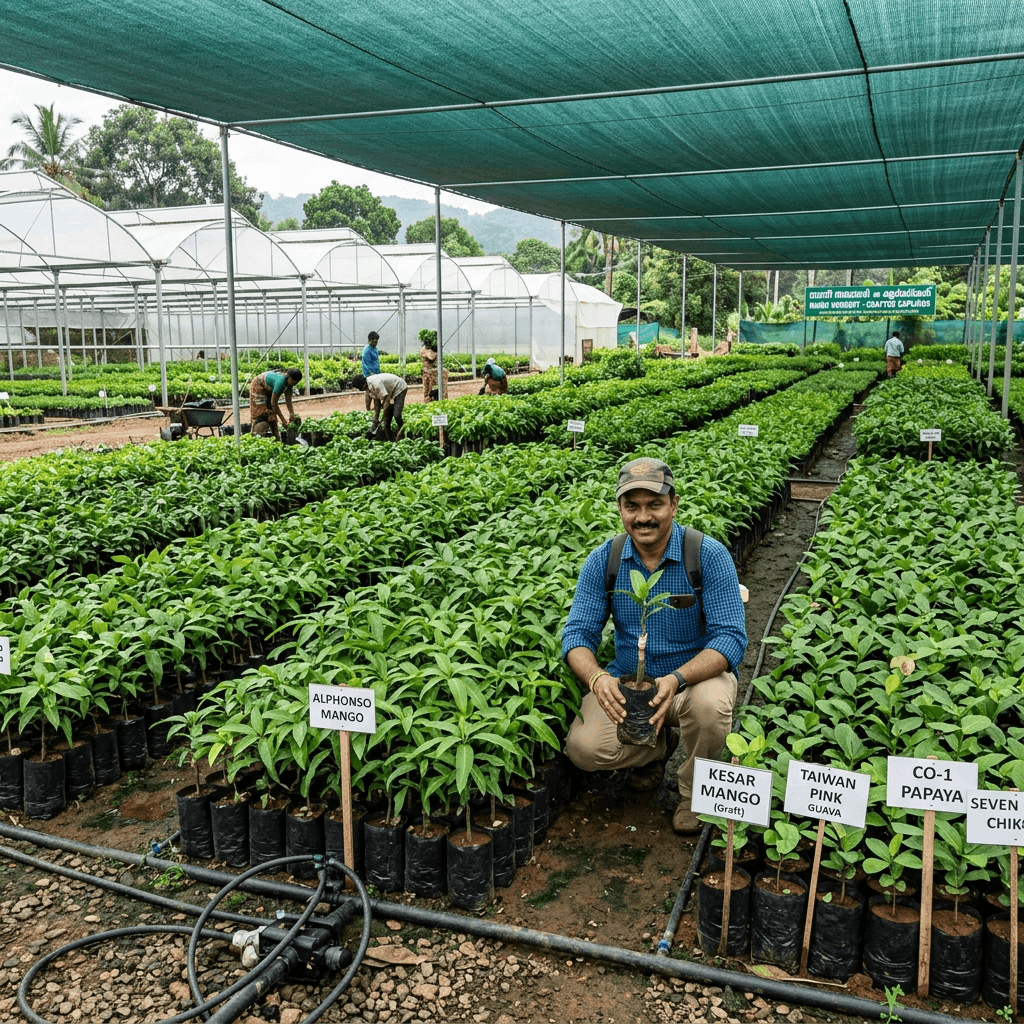
Protecting young plants from extreme weather is mandatory, but the type of structure you need depends entirely on your climate and the plants you are growing. Polyhouses or Greenhouses covered in clear UV-stabilized polyethylene film are essential in colder climates to trap heat, allowing for year-round production and early seed germination. They protect delicate seedlings from heavy rain, frost, and wind, and allow for precise control of temperature and humidity. Conversely, in hot, tropical climates, a fully enclosed greenhouse can easily overheat and kill plants. In these regions, Shade Net Houses are the preferred infrastructure. These structures use woven nets (available in varying shade percentages, like 50% or 75%] to block intense sunlight, reduce temperatures, and protect against large hail, while allowing for maximum natural airflow. Many successful nurseries utilize a combination of both: heavily controlled polyhouses for initial propagation, followed by transfer to shade houses for growing out and acclimatization.
Irrigation Systems: Mastering Water Management for Young Plants
Hand-watering a commercial nursery with a hose is incredibly inefficient, labor-intensive, and often leads to uneven watering that stunts plant growth or encourages fungal diseases. Implementing an automated, highly efficient irrigation system is one of the best investments you can make. Overhead micro-sprinklers or foggers are ideal for seed propagation trays and small seedlings, providing a gentle mist that won't dislodge tiny seeds. As plants are potted up into larger containers, drip irrigation systems equipped with individual emitter pegs placed in each pot become the gold standard. Drip systems deliver water directly to the root zone, minimizing evaporation, keeping the foliage dry (which drastically reduces fungal issues like powdery mildew], and allowing for precise \"fertigation\"—the injection of liquid fertilizers directly through the water lines. An automated system controlled by a digital timer ensures plants receive the exact amount of water they need, precisely when they need it, freeing your staff to focus on more complex tasks.
Soil and Growing Media Selection: The Foundation of Plant Health
The biggest mistake novice nursery owners make is attempting to grow seedlings in heavy, unsterilized field soil. Field soil is dense, prone to compaction in pots, drains poorly, and is inevitably loaded with weed seeds and soil-borne pathogens like Pythium and Rhizoctonia, which cause devastating \"damping-off\" disease. Commercial nurseries rely on sterile, highly engineered soilless growing media. The ideal mix must strike a perfect balance: it needs to hold adequate moisture and nutrients while remaining porous enough to provide oxygen to the roots and drain excess water instantly. Common ingredients include coco peat (coir] or peat moss for moisture retention, perlite or vermiculite for aeration and drainage, and high-quality compost or vermicompost for baseline nutrition. You can either purchase pre-mixed commercial seedling substrates or, to save money at scale, mix your own on-site using a cement mixer or specialized soil mixing machine, ensuring the pH and electrical conductivity (EC] are balanced for your specific crops.
Sourcing Seeds, Cuttings, and Mother Plants
A nursery is only as good as the genetics it propagates. Sourcing superior starting material is paramount. If growing from seed, never compromise on quality. Purchase certified, high-germination-rate seeds from reputable commercial breeders. For commercial vegetable seedlings, F1 hybrid seeds are highly sought after by farmers for their vigor, disease resistance, and uniform yields. If your business focuses on fruit trees, ornamental shrubs, or timber, you will heavily rely on vegetative propagation using cuttings or grafting. This requires establishing your own \"mother blocks\"—orchards or gardens of rigorously verified, exceptionally healthy, and high-yielding mature plants from which you harvest your scion wood or cuttings. Maintaining the absolute health and genetic purity of your mother plants is vital; if a mother plant is infected with a virus, every single clone you propagate from it will also carry that virus, potentially destroying your nursery's reputation.
Propagation Techniques: Seeds, Grafting, Layering, and Tissue Culture
Mastering multiple propagation techniques allows a nursery to diversify its product offerings. Seed propagation is the most common and cost-effective method for vegetables, annual flowers, and forestry trees, requiring precise control of heat and moisture for optimal germination. However, many fruit trees (like mangoes or apples] do not grow true to seed; a seed from a sweet mango might produce a tree with sour fruit. To ensure identical clones of a superior variety, vegetative methods are used. Grafting involves splicing the shoot (scion] of a desired variety onto the hardy, disease-resistant root system (rootstock] of another plant. Air layering involves inducing roots to form on a branch while it is still attached to the parent plant. For mass production of disease-free, identical clones (especially for bananas, orchids, and potatoes], advanced nurseries utilize Tissue Culture, a high-tech laboratory process where entire plants are generated from a few microscopic cells in a sterile agar medium.
Pest and Disease Management in the Nursery: A Proactive Approach
The densely packed, warm, and humid environment of a greenhouse is a paradise for pests and fungal diseases. Once an outbreak occurs, it can decimate thousands of seedlings in a matter of days. Therefore, pest management in a nursery must be relentlessly proactive, not reactive. Implement strict hygiene protocols: sanitize pruning tools between cuts with alcohol, wash propagation trays with bleach solutions before reuse, and require staff to utilize footbaths before entering sensitive propagation zones. Implement an Integrated Pest Management (IPM] strategy. This involves daily visual scouting to catch issues early. Use yellow and blue sticky traps to monitor and catch flying insects like aphids, thrips, and whiteflies. Introduce beneficial predator insects, like ladybugs or predatory mites, to control pest populations naturally. When chemical intervention is absolutely necessary, prioritize targeted, organic options like neem oil or insecticidal soaps, rotating your treatments to prevent the pests from developing chemical resistance.
Nutrition and Fertilization: Feeding Seedlings for Vigor
Because commercial soilless growing media contains very few natural nutrients, young plants rely entirely on you for their feeding regime. Proper nutrition is crucial for developing strong stems and dense root systems that can survive the shock of transplantation. Seedlings have delicate roots that can be easily burned by harsh granular fertilizers. The most effective method is fertigation—delivering a dilute, perfectly balanced liquid fertilizer solution every time you water. In the early stages, seedlings require a balanced N-P-K (Nitrogen, Phosphorus, Potassium] ratio to encourage balanced growth. As they mature and prepare for planting out, shifting to a formula with higher phosphorus encourages explosive root development, while increased potassium hardens the cell walls, making the plant more robust and disease-resistant. Micronutrients such as iron, magnesium, and calcium must also be closely monitored and supplemented, as deficiencies will quickly manifest as yellowing or deformed leaves, rendering the plants unsalable.
Hardening Off: Preparing Plants for the Transition to the Field
Plants grown inside a climate-controlled greenhouse are essentially pampered; they are unaccustomed to harsh winds, intense direct UV sunlight, and fluctuating temperatures. If a farmer takes these soft seedlings and plants them directly into an open field, the resulting \"transplant shock\" will likely stunt or kill a significant percentage of them. To prevent this, nurseries must execute a crucial phase called \"hardening off.\" About one to two weeks before the dispatch date, the plants must be gradually acclimatized to the outside world. This involves moving them from the protected greenhouse to a shade house, and eventually out into open sunlight. During this period, watering is slightly reduced, and fertilization is cut back. This mild, controlled stress forces the plant to thicken its cuticle (the waxy outer layer of the leaves], strengthen its stem structure, and build up carbohydrate reserves in the roots, ensuring they hit the ground running when planted by the customer.
Staffing and Labor Management: Building a Skilled Nursery Team
A nursery business is highly labor-intensive, and your staff will be your most valuable asset and your largest operational expense. While you will need general laborers for heavy lifting, moving pots, and filling soil bags, the core of your operation relies on skilled workers. You need individuals with a keen eye for detail who can quickly spot the first signs of a pest infestation, precisely execute delicate grafting techniques, and understand the nuances of watering—knowing that overwatering kills far more plants than underwatering. Investing in training is crucial. Teach your staff the basic botany of the plants you grow, hygiene protocols, and safe pesticide handling. Because nursery work is highly seasonal, you must master labor scheduling, maintaining a reliable core team of experts year-round while having access to a pool of temporary workers to handle the intense workload during the spring planting rush or major dispatch periods.
Best Practices for Nursery Success
Maintain strict hygiene, use quality seeds, and manage irrigation carefully to ensure high sapling survival rates.
Conclusion: A Profitable Venture for the Future
Starting a nursery business not only provides a steady income but also contributes to greening our environment.
Step-by-Step Application Guide
Follow these essential steps to establish your commercial nursery:
Climate Control and Protection
Use shade nets and polyhouses to protect young saplings from harsh sunlight, heavy rain, and extreme temperatures.
📦 Bulk Orders & Export
Mitti Gold Organic: For bulk orders of all organic fertilizers — Farmers, Nurseries, and Export. WhatsApp: +91 95372 30173
Frequently Asked Questions (FAQs]
How much land do I need to start a commercial plant nursery?
You can start a highly profitable, specialized nursery (like rare orchids or high-density vegetable plugs] on as little as half an acre if utilizing advanced greenhouse tech. However, a standard commercial nursery focusing on a mix of vegetables, shrubs, and trees typically requires 2 to 5 acres to accommodate greenhouses, hardening-off zones, and dispatch areas.
What are the most profitable plants to grow in a nursery?
Profitability depends on your local market. High-yield hybrid vegetable seedlings offer fast turnover (30-45 days] and high volume. Grafted exotic fruit trees take longer (1-2 years] but sell for a massive premium. Landscaping ornamentals offer excellent margins if you are located near a booming real estate development area.
Do I need a formal degree in horticulture to succeed?
No, a formal degree is not strictly required, though it is incredibly helpful. Hands-on experience, an obsessive willingness to research, and strong business acumen are far more important. Many successful owners learn the horticulture side through experience and agricultural extension courses, focusing their energy on the business management side.
How do I prevent damping-off disease in my seedlings?
Prevention is the only cure. You must use absolutely sterile, soil-less growing media (like coco coir and perlite]. Never reuse old potting soil without sterilizing it. Ensure your greenhouse is well-ventilated, do not overwater, and utilize clean, treated water. Preventive applications of beneficial bio-fungicides like Trichoderma can also protect young roots.
What is the biggest hidden cost in running a nursery?
Labor is generally the highest visible cost, but the biggest hidden cost is plant mortality and culling (shrinkage]. Throwing away 15% of your crop because of a pest outbreak, poor germination, or failure to sell them before they become overgrown directly destroys your profit margins. Efficient inventory and health management are critical.