📅 June 2026 | ✍️ Mitti Gold Organic | 🗂️ Soil Health
Precision Application Rates: Achieving the Perfect Balance per Bigha and Acre
When embarking on the transition to organic farming or optimizing an existing sustainable agriculture system, understanding the precise application rates of both solid vermicompost and vermiwash is absolutely paramount. Historically, early adopters of vermiculture often engaged in guesswork, leading to under-nourished crops or inefficient use of resources. Today, rigorous scientific trials have established optimal dosage protocols that maximize yield while minimizing waste.
For solid vermicompost, the goal is profound structural and biological soil conditioning. For a standard bigha of land (approximately 0.25 hectares or 0.62 acres, depending on regional variations), the scientifically recommended basal application rate is between 400 to 600 kilograms. This translates to roughly 1.6 to 2.4 metric tons per acre. This substantial volume is necessary because solid vermicompost acts as the foundational physical matrix. It introduces critical organic carbon, humic substances, and a vast physical sanctuary for the soil microbiome. Applying less than the recommended amount in degraded soils fails to reach the critical threshold required to alter the soil's bulk density and water-holding capacity.
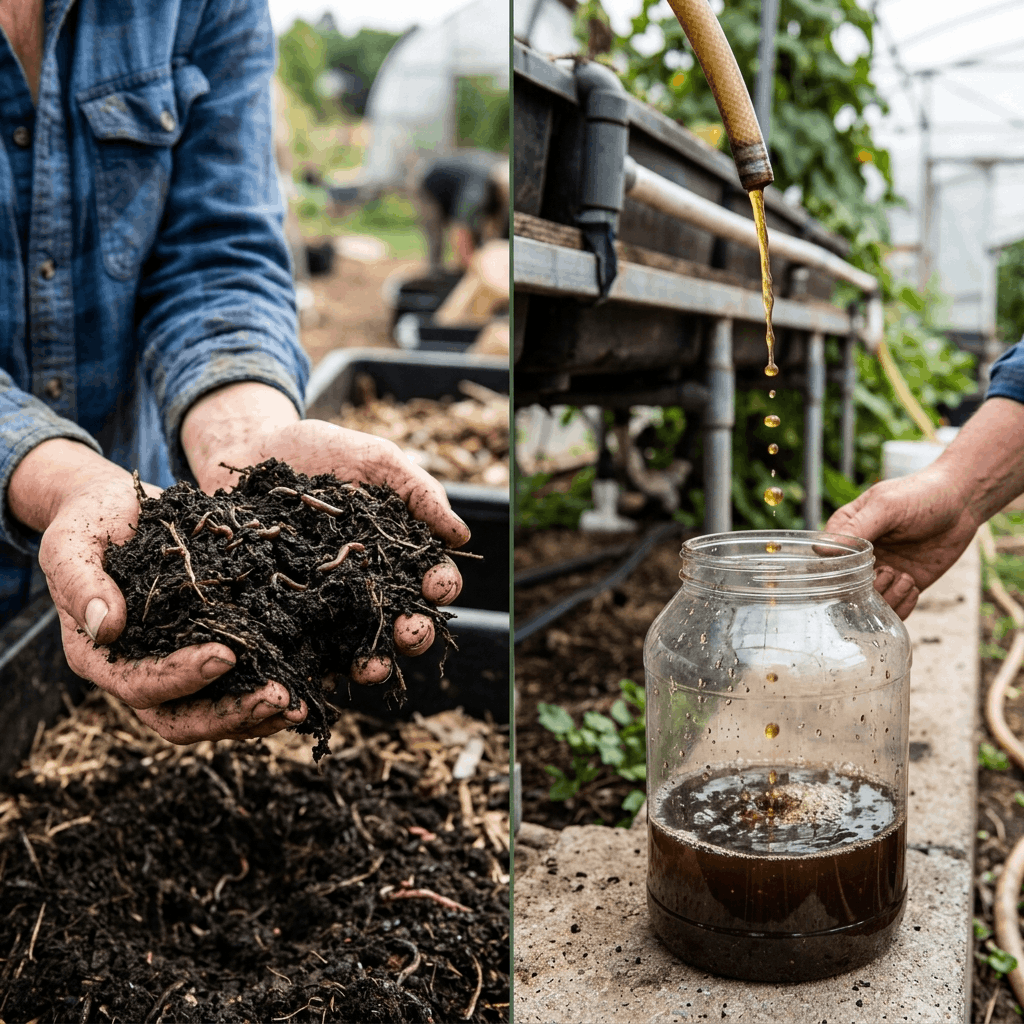
Conversely, vermiwash is a highly concentrated, biologically active liquid extract. It is not designed to alter the physical structure of the soil, but rather to act as an acute biological catalyst and foliar feed. The recommended application rate for vermiwash is remarkably lower in physical volume but equally profound in its impact. For one bigha, apply 3 to 5 liters of pure vermiwash, meticulously diluted in 150 to 200 liters of non-chlorinated water. This equates to 12 to 20 liters of pure vermiwash per acre. The massive dilution is crucial; it ensures an even, mist-like coverage across the entire foliar canopy or a gentle percolation through the soil profile when applied via drip irrigation, preventing the localized saturation of active enzymes while stimulating uniform growth.
The Strategic Implementation: When, How, and Why to Apply Each Amendment
The fundamental dichotomy between solid vermicompost and vermiwash lies not just in their physical states (solid versus liquid), but in their respective roles within the phenological cycle of the plant. Solid vermicompost is a long-term investment. It is the architectural blueprint of soil fertility, designed to slowly release macro and micronutrients over the entirety of the growing season. Vermiwash, on the other hand, is a rapid-response physiological stimulant. It delivers an immediate payload of plant growth regulators (PGRs) such as auxins, gibberellins, and cytokinins directly to the plant's vascular system. Understanding this distinction is the key to mastering organic cultivation. Applying solid compost at the height of a nutrient deficiency will not yield results fast enough to save a failing crop, just as relying solely on vermiwash will eventually leave the soil structurally bankrupt. A strategic, phased approach is required to harness the full potential of both amendments.
Phase 1: Basal Conditioning with Solid Vermicompost
The optimal window for applying solid vermicompost is during the intensive soil preparation phase, typically 10 to 15 days prior to sowing seeds or transplanting saplings. The compost should be broadcast evenly across the field and immediately incorporated into the top 15 to 20 centimeters (6 to 8 inches) of the topsoil using a rotavator or harrow. This specific depth is critical; it places the nutrient-rich humus directly into the future rhizosphere (root zone) while protecting the sensitive, live aerobic bacteria and fungal spores from the sterilizing effects of direct ultraviolet (UV) solar radiation. Over the following weeks, as the soil is irrigated, the solid vermicompost begins to break down further, slowly releasing fulvic and humic acids that chelate locked-up soil minerals, transforming them into bio-available forms ready for the young roots to absorb the moment they emerge.
Phase 2: Targeted Foliar Feeding with Vermiwash
Vermiwash applications should commence once the plant has established a healthy vegetative canopy, typically 3 to 4 weeks post-germination. The physiological mechanism here relies on stomatal uptake. Stomata are microscopic pores located primarily on the underside of leaves. To maximize absorption, the diluted vermiwash must be sprayed as a fine mist during the early morning hours (before 9 AM) or late evening (after 5 PM) when the ambient temperatures are cooler, humidity is higher, and the stomata are fully dilated. Spraying during the intense midday heat causes rapid evaporation of the water, leaving a dried residue on the leaf surface that the plant cannot absorb, and potentially denaturing the delicate enzymes and beneficial bacteria present in the wash. Repeated foliar applications every 14 to 21 days provide a continuous supply of highly mobile micronutrients (like zinc, iron, and boron) directly to the growing tips, bypassing potential soil lock-out issues entirely.
Phase 3: Seamless Integration into Advanced Drip Irrigation
In modern, high-efficiency agricultural systems, integrating vermiwash into drip irrigation (fertigation) represents the pinnacle of precision organic farming. To do this successfully, the pure vermiwash must first be thoroughly filtered through a fine micro-mesh (such as a 100-micron screen or several layers of muslin cloth) to remove any suspended organic particulates, suspended worm castings, or organic mucilage that could otherwise clog the delicate emitters of the drip lines. Once properly filtered and diluted into the main fertigation tank, the vermiwash is delivered drop-by-drop directly into the active root zone. This method maintains a constant, micro-dosed presence of beneficial microbes, coelomic fluid, and soluble nutrients around the roots. It perfectly mimics the continuous, natural weeping of nutrient-rich exudates found in undisturbed forest floor ecosystems, fostering a highly active and symbiotic rhizosphere that drives explosive, sustained plant growth.
Comprehensive Product Outcomes: Biochemical Changes and Yield Improvements
The empirical evidence surrounding the dual application of solid vermicompost and vermiwash demonstrates profound biochemical transformations within the crop. When relying exclusively on synthetic NPK fertilizers, crops often experience forced, watery cellular expansion, resulting in massive but structurally weak plants that are highly susceptible to lodging, pests, and rapid post-harvest degradation. In stark contrast, solid vermicompost provides a balanced, slow-release nutritional profile that encourages the synthesis of robust structural carbohydrates, specifically cellulose and lignin. This results in thicker stems, increased drought tolerance, and profound mechanical resistance to physical stressors.
The introduction of vermiwash fundamentally elevates the internal biochemistry of the plant. The natural growth hormones present in the wash trigger accelerated cellular division and drastically improve photosynthetic efficiency. One of the most critical measurable outcomes is the significant elevation of Brix levels (the concentration of dissolved sugars and minerals within the plant sap). Higher Brix levels directly correlate with richer, more complex flavor profiles in fruits and vegetables, deeper and more vibrant coloration, and a massive increase in nutritional density. Furthermore, the enhanced cellular integrity and higher internal mineral content dramatically extend the post-harvest shelf life of the produce, reducing rot during transport. Agronomic studies consistently show that fields treated with this dual organic protocol exhibit yield increases of 25% to 40% over time, while simultaneously regenerating, rather than depleting, the foundational health of the soil matrix.
Synergistic Amplification of the Soil Microbiome
To truly understand the power of these amendments, one must view the soil not as inert dirt, but as a complex, living super-organism. Solid vermicompost and vermiwash play vastly different, yet perfectly complementary, roles in orchestrating the soil microbiome. Solid vermicompost acts as the permanent infrastructure—the housing and long-term food bank for the microbial world. It introduces billions of beneficial microbes (including nitrogen-fixing Azotobacter, phosphate-solubilizing bacteria, and complex Actinomycetes) securely encased in a carbon-rich matrix of humus. This solid structure provides the necessary physical anchor and slow-release energy source required for these colonies to establish themselves permanently and begin physically altering the soil aggregation.
Vermiwash, conversely, acts as a high-voltage biological stimulant—a shockwave of vitality. It is densely packed with free-floating enzymes, soluble amino acids, and the highly potent coelomic fluid secreted by earthworms. When this liquid matrix hits the soil, it acts as an immediate catalyst, triggering dormant spores into action and causing rapid, explosive blooms in microbial populations. The enzymes in the wash facilitate the instantaneous breakdown of complex organic matter that the solid compost bacteria might otherwise struggle to process quickly. This synergistic amplification means the solid compost provides the sustained environment, while the vermiwash periodically accelerates the metabolic rate of the entire soil food web, leading to hyper-active nutrient cycling and profound earthworm proliferation, turning depleted soils into thriving biological engines.
Advanced Pathogen Suppression and Induced Systemic Resistance (ISR)
The most revolutionary aspect of combining solid vermicompost and vermiwash lies in their unparalleled ability to manage agricultural pests and devastating plant diseases without the reliance on toxic synthetic chemicals. The mechanism of action is multifaceted. Solid vermicompost achieves disease suppression primarily through the principle of competitive exclusion within the root zone. By saturating the rhizosphere with aggressive, beneficial microbes (such as Trichoderma viride and various Pseudomonas species), pathogenic root-rot fungi like Fusarium and Pythium are physically starved of space and nutrients, rendering them incapable of establishing an infection.
Vermiwash elevates this defense mechanism to the systemic level. When applied as a foliar spray, it coats the leaves in a dynamic bio-film of beneficial microbes and highly specialized defensive enzymes, most notably chitinase. Chitinase actively dissolves chitin, which is the primary structural component of both fungal cell walls and the exoskeletons of soft-bodied insects like aphids, mites, and whiteflies. Thus, the spray acts as a direct, biological contact fungicide and insecticide. Furthermore, the absorption of specific elicitor molecules present in the vermiwash triggers the plant's own internal immune response, a phenomenon known as Induced Systemic Resistance (ISR). The plant naturally upregulates its production of defensive phytoalexins and thickens its epidermal layers, creating a fortress-like resilience against both biotic (pathogen) and abiotic (drought, frost) stressors. This dual-layered, proactive defense strategy fundamentally redefines crop protection.
Economic Viability and Global Market Dynamics
The transition to a vermiculture-based agronomic model is not merely an ecological crusade; it is a highly calculated, immensely profitable economic strategy. For the traditional commercial farmer, the initial capitalization required to implement solid vermicompost may seem substantial when compared to heavily subsidized chemical fertilizers. However, the Return on Investment (ROI) over a 36 to 60-month horizon is undeniable. As the soil structure is repaired by the solid compost, the need for deep tillage and massive irrigation plummets—water retention often improves by up to 40%, drastically reducing pumping costs. Simultaneously, the natural disease suppression provided by the vermiwash eliminates the need for exorbitantly expensive and hazardous chemical fungicides and pesticides, completely altering the farm's operating expenditure (OpEx) profile.
In the broader global market, the demand for certified organic, zero-residue produce is experiencing exponential, double-digit growth annually. Strict international Maximum Residue Limits (MRLs) imposed by regions like the European Union and North America frequently lead to the outright rejection of chemically grown export consignments. By utilizing solid vermicompost and vermiwash, farmers guarantee absolute compliance with the most stringent global organic standards. This unlocks access to premium international markets where organic commodities command price premiums ranging from 30% to over 100% above conventional equivalents. From high-tech urban hydroponic setups utilizing ultra-filtered vermiwash to vast, broadacre farms deploying thousands of tons of solid compost, the scalability and profound economic viability of these natural amendments are driving the next great agricultural revolution.
💦 Bulk Vermi Wash Orders
Mitti Gold Organic: For bulk supply of concentrated Vermi Wash — liquid organic fertilizer for all crops. WhatsApp: +91 95372 30173
Comprehensive Frequently Asked Questions: Expert Troubleshooting
No, you absolutely cannot. While vermiwash is incredibly potent, they are not mutually exclusive or interchangeable; they are fundamentally complementary. Vermiwash is a physiological catalyst and foliar feed; it contains almost zero organic carbon and cannot alter the physical structure, porosity, or long-term water-holding capacity of the soil. Solid vermicompost is the essential structural substrate and long-term biological housing. Attempting to farm with only vermiwash in degraded soil is akin to taking high-potency vitamin supplements while refusing to eat solid food. For true, sustainable efficiency, you must build the foundation with solid compost and accelerate the growth with the liquid wash.
Synthetic chemical fertilizers deliver nutrients in the form of highly concentrated, water-soluble salts (like ammonium nitrate or potassium chloride). When applied heavily, these salts create a massive osmotic imbalance, physically drawing water out of the plant's root cells, resulting in rapid dehydration and tissue death, commonly known as "nutrient burn." Vermiwash and vermicompost, however, contain nutrients that are biologically chelated—bound within complex organic molecules like humic and fulvic acids. The plant must actively release enzymes to detach and absorb these nutrients as needed. Because there are no harsh synthetic salts and the uptake is biologically regulated by the plant itself, osmotic shock and nutrient burn are scientifically impossible, regardless of application concentration.
The storage dynamics differ drastically. Solid vermicompost, if kept in a cool, shaded environment with a maintained moisture level of 20-30%, can remain biologically viable for 12 to 18 months. The microorganisms simply enter a state of dormancy until introduced to the soil. Vermiwash, however, is an active liquid culture. If stored in a sealed container without aeration, the dissolved oxygen is quickly depleted, causing the beneficial aerobic bacteria to die and harmful anaerobic bacteria to proliferate, turning the liquid putrid within days. Fresh vermiwash should ideally be used within 48 hours. If long-term storage is necessary, it must be kept in a breathable container in a dark, cool place, and its biological efficacy will steadily decline over 2 to 3 months.
While universally beneficial, foliar application of vermiwash is less effective on plants with exceptionally thick, waxy cuticles (like certain species of succulents, brassicas like cabbage, or mature citrus leaves) because the wax repels water, preventing the liquid from reaching the stomata. In these cases, an organic, non-ionic surfactant (like a highly diluted natural soap-nut extract) must be mixed with the wash to break the surface tension and ensure adhesion. Furthermore, foliar spraying should be strictly avoided during the peak blooming phase of heavy-flowering crops, as the moisture can interfere with pollen viability, disrupt natural pollinator activity (like bees), and potentially encourage blossom rot. During flowering, switch exclusively to soil drenching.
Vermiwash undeniably provides the fastest, most visible short-term Return on Investment. Because it is absorbed rapidly through the foliage and immediately stimulates metabolic pathways, a farmer can witness visible greening, increased vigor, and pest suppression within 48 to 72 hours of application. It acts as an emergency rescue for stressed crops. However, this is a short-term economic fix. Solid vermicompost represents the compounding long-term capital improvement of the farm. While it may take a full growing season to witness the structural changes in the soil, the solid compost permanently reduces the necessity for future inputs, permanently lowers irrigation costs, and permanently raises the baseline yield of the land. True economic stability is achieved by using the fast ROI of the wash to subsidize the long-term capitalization of the solid compost.