📅 June 2026 | ✍️ Mitti Gold Organic | 🗂️ Legal
📥 Download Sample Format
Get the sample document format in English, Hindi, Gujarati, or Urdu.
Introduction to Water Rights and Agricultural Land Ownership
Water is the absolute lifeblood of agriculture, and securing a reliable, consistent, and legally sanctioned source of irrigation is often the most critical factor in determining the success and profitability of any farming enterprise. For agricultural landowners, the ability to tap into natural water sources—whether drawing directly from an adjacent river or excavating a borewell or open well on their own property—is not merely a matter of physical capability, but one governed by a complex web of legal rights, administrative permissions, and environmental regulations. Understanding your fundamental rights as a landowner is the first indispensable step. Generally, land ownership comes with certain riparian or groundwater rights, but these are rarely absolute. They are heavily regulated by state and local governments to prevent over-extraction, ensure equitable distribution among all stakeholders, and maintain the delicate ecological balance of the region. This comprehensive guide will walk you through the intricate process of applying for and legally securing the right to utilize river water or construct a well on your agricultural land, ensuring that your farming operations remain both productive and fully compliant with the law.
Understanding the Legal Framework for Water Usage
The legal framework governing water usage for agricultural purposes is multi-layered, involving federal guidelines, strict state-level legislation, and specific local bylaws that can vary dramatically from one district to another. In many jurisdictions, surface water (like rivers and streams) and groundwater (accessed via wells) are treated differently under the law. Surface water is often considered a public good managed by the state irrigation or water resources department in trust for the public. Consequently, drawing water from a river typically requires a formal permit, license, or \"No Objection Certificate\" (NOC) that specifies the volume of water you are allowed to extract and the specific periods during which extraction is permitted. Groundwater regulations have also become increasingly stringent due to rapidly depleting water tables worldwide. Establishing a new well often requires clearance from local groundwater authorities who will assess the current water table level and the potential impact of your new well on neighboring properties and the broader aquifer. Navigating this legal labyrinth requires a thorough understanding of the specific Water Acts applicable in your state, which dictate everything from the distance required between wells to the permissible horsepower of the extraction pumps.
The Importance of Securing Official Permissions
It is a common but dangerous misconception among some landowners that possessing the land grants them unfettered rights to the water beneath or adjacent to it. Proceeding to draw river water or dig a well without the requisite official permissions is a severe legal violation that can lead to devastating consequences. Unauthorized water extraction can result in the immediate confiscation of your expensive pumping equipment, the enforced sealing or destruction of the well at your own expense, and the imposition of crippling financial penalties. Furthermore, in areas facing severe water scarcity, illegal extraction can even lead to criminal prosecution. Beyond avoiding penalties, securing official permission provides legal security and peace of mind. It formalizes your water rights, protecting you against future disputes with neighbors or government interventions. Additionally, holding a valid water extraction permit is frequently a mandatory prerequisite for accessing government agricultural subsidies, applying for subsidized agricultural electricity connections, and securing comprehensive crop insurance. In essence, formal permission transforms a precarious, unofficial arrangement into a recognized, valuable asset tied to your agricultural land.
Types of Water Sources: River vs. Ground Well
Before initiating the application process, it is vital to strategically evaluate and decide between utilizing surface water from a river or accessing groundwater via a well, as the application procedures and long-term implications differ significantly. River Water Access: If your land is riparian (adjacent to a river), this might seem like the most logical choice. However, river water availability fluctuates wildly with the seasons, and drawing it requires permission from the Irrigation Department. You must often justify your extraction volume based on your crop type and acreage, and you may be subject to extraction bans during drought periods. The application will involve demonstrating how you will physically draw and transport the water without damaging the riverbank. Groundwater Wells: Digging a borewell or an open well provides a more localized and potentially reliable year-round water source, insulated from immediate seasonal surface variations. However, the application process heavily involves the Central Ground Water Board (CGWB) or its state equivalent. They will scrutinize the \"dark,\" \"grey,\" or \"white\" categorization of your zone—terms denoting the level of groundwater depletion. In over-exploited \"dark zones,\" getting permission for a new well is exceptionally difficult and often impossible without demonstrating significant artificial groundwater recharge measures.
Preliminary Assessments and Feasibility Studies
A successful application is built upon a foundation of thorough preliminary assessment and technical feasibility studies; government departments rarely approve vague or poorly planned requests. For a well, this typically involves hiring a certified hydrogeologist or water dowser to conduct a groundwater survey on your property. This survey utilizes geological data and geophysical techniques (like electrical resistivity surveys) to identify the most promising locations for water, estimate the expected depth, and predict the potential yield. This scientific report is often a mandatory inclusion in your application to the groundwater authority. For river water extraction, the feasibility study must address the engineering aspects of your proposed intake structure. Where will the pump be located? How will the pipeline traverse the land from the river to your fields? What is the gradient, and what horsepower pump is required to overcome the head loss? You must also calculate your precise water requirement. This is not a guess; it must be a calculated figure based on the total area of your cultivable land, the specific types of crops you intend to grow, their known evapotranspiration rates, and the proposed irrigation method (drip, sprinkler, or flood). Providing this rigorous technical data demonstrates to the authorities that your request is serious, calculated, and necessary.
Gathering the Essential Documentation
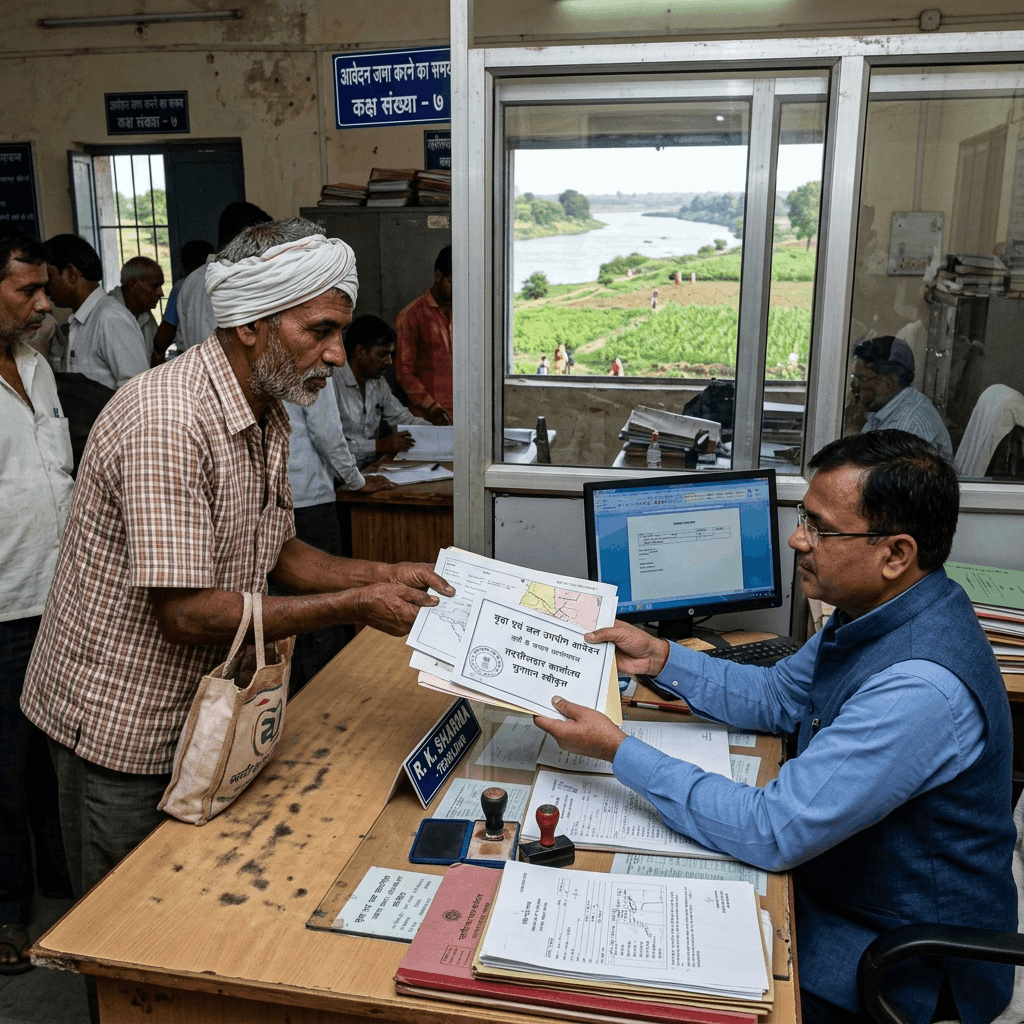
The bureaucratic machinery runs entirely on documentation. Failing to submit a complete and accurate dossier is the primary reason for application rejection or severe delays. The exact list varies by jurisdiction, but you must meticulously compile a standard set of documents. Firstly, absolute proof of land ownership is non-negotiable. In India, for example, this means providing the latest, digitally signed 7/12 extract (Record of Rights) and the 8-A extract (holding account), which prove you are the legal owner and cultivator. You will need clear, legally valid property maps (Gat Naksha or Cadastral maps) showing the exact boundaries of your land and the proposed location for the well or the river water intake point. Personal identification is mandatory; submit copies of your Aadhaar card, PAN card, and voter ID. If the land is jointly owned, you must obtain and submit legally binding \"No Objection Certificates\" (NOCs) from all co-owners, accompanied by their signatures and identification. You will also need passport-sized photographs, the completed application forms specific to the department you are applying to, and the technical feasibility reports discussed earlier. Ensure every single photocopy is clear, legible, and ideally attested by a gazetted officer or self-attested as required by the specific guidelines.
The Role of the Gram Panchayat and Local Bodies
While the final authority to grant water rights usually rests with higher-level state departments, the application process almost invariably begins at the grassroots level with your local village council or Gram Panchayat. The Gram Panchayat acts as the initial vetting authority. Their primary role is to ensure that your proposed water extraction does not immediately conflict with existing local uses, such as village drinking water supplies or communal resources. You must typically submit your initial application, along with all supporting documents, to the Sarpanch or the Gram Sevak. They will convene a meeting or conduct a preliminary site visit. If they find no immediate grounds for objection, they will issue a formal resolution (Tharav) or a No Objection Certificate (NOC) on the official Gram Panchayat letterhead. This local NOC is a critical, mandatory prerequisite; without it, the higher authorities (like the Tehsildar, Irrigation Department, or Groundwater Board) will outright refuse to accept your application. Maintaining a transparent and cooperative relationship with your local Panchayat members and addressing any concerns they might have about your water usage plans is crucial for overcoming this initial but vital hurdle.
Applying to the Irrigation Department or Ground Water Board
Once you have secured the local NOC, the application path diverges depending on your chosen water source. For River Water: You must submit your comprehensive dossier to the regional office of the State Irrigation Department or Water Resources Department. This application formally requests a specific allocation of water—often measured in millions of cubic feet (TMC) or liters per day—and permission to install pumping machinery on the riverbank. They will evaluate your request against the total water availability in the river basin and the competing demands of other farmers, industries, and municipalities. For Groundwater Wells: Your application must be directed to the regional groundwater authority (e.g., the State Groundwater Department or the Central Ground Water Authority, CGWA). Their evaluation is intensely focused on the sustainability of the aquifer. They will cross-reference your proposed location with their hydrogeological maps and assess the current state of groundwater depletion in your specific block or taluka. If you are in a safe zone, approval may be relatively straightforward. If you are in a semi-critical or critical zone, the application will be subjected to rigorous scrutiny, and approval is never guaranteed.
Technical Details Required in the Application
The authorities need precise technical specifications to assess the impact of your extraction and ensure you are not over-capitalizing or intending to draw more water than permitted. Your application must meticulously detail the proposed machinery and infrastructure. For a well, you must specify the exact type (borewell, tube well, dug well), the proposed depth (e.g., 200 feet, 500 feet), and the diameter of the casing. Crucially, you must declare the horsepower (HP) of the submersible or surface pump you intend to install. The HP is a direct indicator of your extraction capacity, and authorities strictly regulate it; they may restrict you to a 5 HP or 7.5 HP pump to prevent rapid aquifer depletion. Similarly, for river extraction, you must specify the pump HP, the diameter of the intake pipe, and the total length of the pipeline from the river to your farm. Furthermore, many modern agricultural policies require applicants to demonstrate water use efficiency. You may be required to submit a detailed plan showing that you will utilize micro-irrigation systems, such as drip or sprinkler irrigation, rather than wasteful traditional flood irrigation methods. Committing to micro-irrigation can significantly increase the chances of your application being approved quickly.
Environmental Clearances and NOCs
In recent years, the intersection of agriculture and environmental conservation has become heavily regulated. Depending on the scale of your operation and the ecological sensitivity of your location, your application may trigger the need for formal environmental clearances. If your agricultural land borders a designated forest reserve, a national park, or an ecologically sensitive zone (ESZ), digging a well or drawing river water may require an explicit No Objection Certificate from the State Forest Department or the Ministry of Environment, Forest and Climate Change (MoEFCC). They will assess whether your activities might disrupt local wildlife habitats or affect protected flora. Furthermore, if you are applying to extract a massive volume of water (more typical for large-scale corporate farming than individual landowners), you might be mandated to conduct a preliminary Environmental Impact Assessment (EIA). Even for standard applications, the authorities are increasingly demanding that landowners implement mandatory rainwater harvesting and artificial groundwater recharge structures—such as percolation pits or recharge trenches—on their land as a strict precondition for granting permission to dig a new well. You must factor the cost and design of these environmental mitigations into your overall project planning.
Understanding the Fee Structure and Application Costs
The process of applying for water rights is not free; it involves several layers of formal administrative fees and associated costs that you must budget for. Firstly, there is the standard application processing fee required by the Irrigation Department or the Groundwater Authority, which must usually be paid via a formal bank challan or online payment gateway. This fee varies significantly by state and the proposed volume of water extraction. Secondly, if you are applying for river water access, you will be subject to ongoing water usage charges, often referred to as water tax or irrigation cess. These are calculated based on the area irrigated and the type of crop grown (cash crops typically incur higher charges than staple food crops). If you require an official hydrogeological survey for a well, you must pay the certified professional's consulting fees. Additionally, there are costs associated with obtaining the necessary legal documents, revenue maps, and notarized affidavits. It is crucial to obtain an official schedule of fees from the relevant department at the very beginning of the process. Avoid paying any unofficial \"expedition fees\" to intermediaries, as this constitutes bribery and can jeopardize your entire application and legal standing.
The Inspection and Verification Process
Submission of the application is merely the beginning of the administrative review; it is invariably followed by a rigorous physical inspection and verification process. Once your dossier is accepted, the relevant department will assign a junior engineer, surveyor, or field officer to visit your agricultural land. This is not a mere formality. The inspecting officer will physically verify every detail you provided in your application. They will confirm the land boundaries against the cadastral maps. For a river water application, they will inspect the proposed intake site, assess the stability of the riverbank, and verify that your pipeline route does not illegally cross other farmers' land without documented permission. For a well application, they will verify the proposed location, checking its distance from existing wells, public water sources, and septic systems to ensure compliance with statutory spacing regulations (e.g., maintaining a minimum distance of 200 meters from a public drinking water well). The officer will compile a detailed field report, which includes their observations, photographs of the site, and a definitive recommendation for approval or rejection. It is highly advisable that the landowner or a knowledgeable representative be present during this inspection to answer questions and provide clarifications.
Addressing Common Objections and Queries
It is exceedingly rare for an application to sail through the bureaucratic process without encountering some objections or formal queries from the reviewing authorities. You must be prepared to respond to these promptly and comprehensively. Common objections include discrepancies in land records (e.g., the name on the application does not perfectly match the name on the 7/12 extract), failure to provide NOCs from all co-owners, or technical objections from the field officer regarding the proposed pump horsepower or well location. If the groundwater authority determines your area is water-stressed, they may issue a query demanding to know your specific plans for groundwater recharge. When you receive a formal query letter, do not ignore it or delay your response. Consult with a legal advisor or an agricultural consultant if the objection is complex. Draft a formal, polite reply addressing every point raised, attaching any additional documentation or revised technical plans required to satisfy the authorities. Successfully navigating this \"query and compliance\" phase is often the most critical part of securing your final approval, demonstrating your commitment to adhering to all regulations.
Renewal of Licenses and Long-term Compliance
A crucial fact that many landowners overlook is that water extraction permissions are rarely granted in perpetuity; they are almost always issued as temporary licenses that require periodic renewal. Permissions from the Irrigation Department to draw river water are typically granted for a specific period (e.g., one year, three years, or five years). Even groundwater NOCs often come with a validity period. As the expiration date approaches, you must proactively initiate the renewal process. This usually involves submitting a renewal application, paying the required renewal fees, and, importantly, proving that you have maintained compliance with all the conditions stipulated in the original license. The authorities may conduct a fresh inspection to ensure you have not secretly upgraded your pump to a higher horsepower, expanded your irrigated area beyond the permitted limit, or failed to maintain the mandatory rainwater harvesting structures. Maintaining meticulous records of your water tax payments and ensuring strict adherence to the licensed parameters is the only way to guarantee the smooth, hassle-free renewal of your vital water rights year after year, safeguarding the long-term viability of your farm.
Conclusion and Final Tips for a Smooth Application
Securing official permission to access river water or dig a well is a demanding, bureaucratic, and time-consuming process, but it is an absolutely essential investment in the legal security and productive capacity of your agricultural land. Attempting to bypass this system is a high-risk gamble that can lead to severe legal and financial ruin. To navigate this process smoothly, start by organizing your land records meticulously. Ensure that your 7/12 and 8-A extracts are completely up-to-date and free of any disputes or encumbrances. Build a cooperative relationship with your local Gram Panchayat early in the process. When dealing with state departments, maintain copies of every single application, letter, and receipt, and politely but firmly follow up on your application's status. Consider hiring a specialized agricultural consultant or a liaison expert who understands the intricacies of the local water resources department; their expertise can often save you months of frustration. By approaching the application process with patience, rigorous preparation, and a commitment to total legal compliance, you can secure the reliable water access necessary to transform your agricultural land into a thriving, highly productive enterprise.
📦 Bulk Orders & Export
Mitti Gold Organic: For bulk orders of all organic fertilizers — Farmers, Nurseries, and Export. WhatsApp: +91 95372 30173
Frequently Asked Questions (FAQs)
Can I dig a well on my agricultural land without any government permission?
No, in almost all jurisdictions today, digging a new borewell or open well requires explicit prior permission or a No Objection Certificate (NOC) from the local Gram Panchayat and the relevant state Groundwater Authority to prevent aquifer depletion.
What is the most critical document needed for a water permission application?
The absolute most critical documents are your verified land ownership records, typically the latest 7/12 extract and the 8-A holding account in India, which prove you possess the legal right to cultivate the land in question.
My land is right next to a river. Can I just put a pipe in and start pumping?
Absolutely not. Even riparian landowners must obtain a formal license from the State Irrigation or Water Resources Department to extract river water. Unauthorized pumping is illegal and can lead to the confiscation of your equipment.
What happens if my land is jointly owned with my siblings?
If the land is jointly owned, you cannot apply individually without the consent of the others. You must obtain formally signed and notarized No Objection Certificates (NOCs) from all co-owners listed on the land records.
How long does the application process typically take?
The timeline varies drastically depending on the state and the specific department. It can take anywhere from a few weeks in highly digitized states to several months if field inspections and multiple committee approvals are required.