📅 June 2026 | ✍️ Mitti Gold Organic | 🗂️ Machinery & Markets
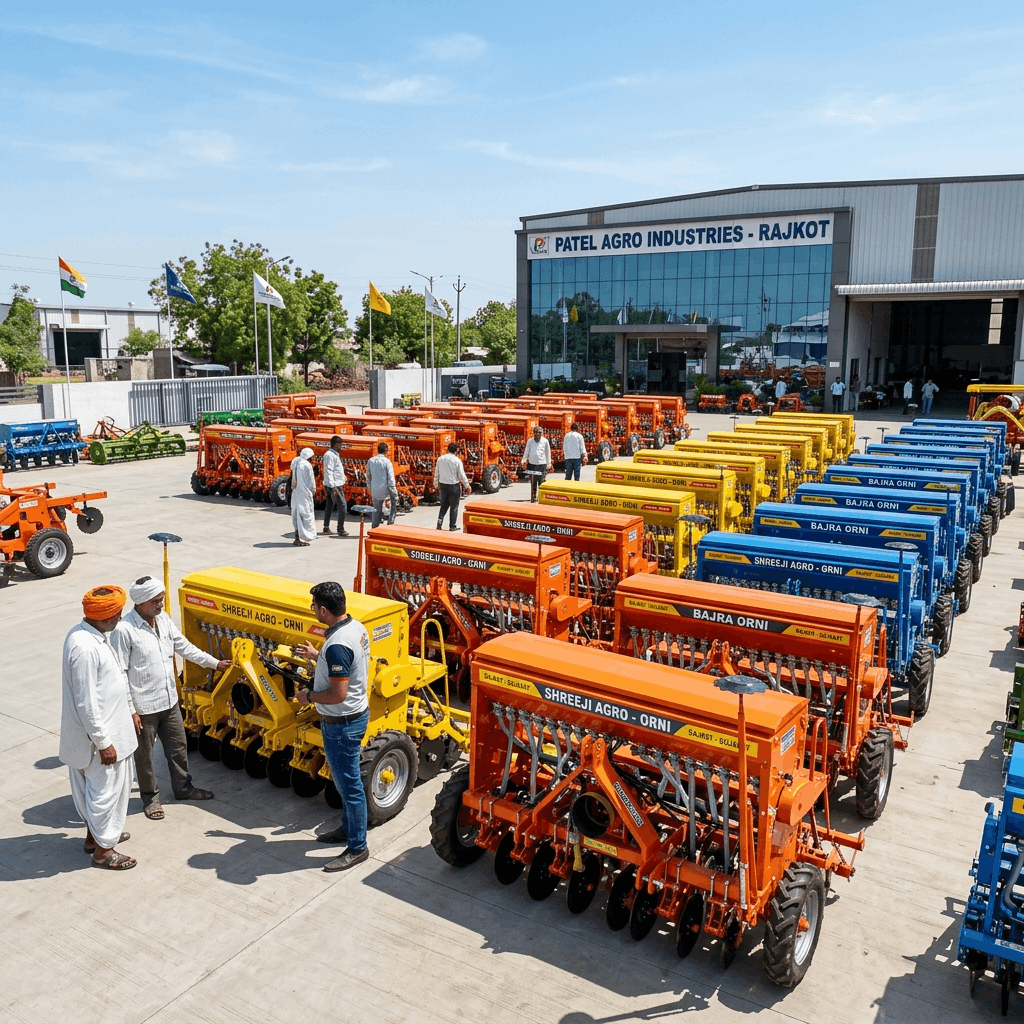
Why Rajkot is the Sowing Implement Hub
For optimal agricultural output, understanding the precise dosage and application rate of organic fertilizers like Mitti Gold vermicompost or liquid vermiwash is essential. Scientific research indicates that the quantity of compost applied must be directly aligned with the soil's organic carbon deficit and the nutrient demands of the specific crop. In general field crops, a basal application of 400 to 600 kg per Bigha is recommended, whereas horticultural crops, including orchards and high-value vegetables, require up to 1000 kg per Bigha to support active fruit development. When using vermiwash, dilution ratios must be strictly maintained at 1:10 with water for foliar sprays, ensuring that the stomatal openings of the leaves absorb the dissolved nutrients without experiencing physiological shock or leaf burn. Applying these organic inputs in correct quantities maintains the soil's ionic balance and avoids nitrogen leaching.
Furthermore, regional microclimates and soil taxonomy dictate adjustments in these standard application rates. For instance, coarse-textured sandy soils with high percolation rates require smaller, more frequent applications of organic inputs to prevent nutrient runoff, whereas heavy clay soils require a single, deep application during tillage to improve aeration. Agricultural extension officers recommend that farmers conduct periodic soil testing to monitor changes in organic matter percentage. If the soil organic carbon is below 0.5%, the application of vermicompost should be increased by 20% to accelerate soil biology recovery. Applying liquid formulations during high humidity levels also ensures optimal absorption through the leaf surface.
Selecting the Right Orni for Your Crops
To maximize the efficacy of these biological amendments, application timing and soil integration methods play a decisive role. Incorporating vermicompost during the final tillage stage ensures that the organic carbon is thoroughly mixed into the root zone, typically the top 4 to 6 inches of the soil where feeder roots are most active. For seasonal cropping patterns, application should be scheduled either during land preparation before the monsoon rains (for kharif crops) or prior to winter sowing (for rabi crops). When liquid formulations like vermiwash are applied, spraying during early morning or late evening hours is recommended to minimize evaporation loss and prevent sun scorching, allowing the canopy to fully assimilate the bio-active molecules.
When integrating organic inputs into high-density planting systems, localized root placement is preferred over broadcast application. Placing the compost directly in the planting trenches or basins focuses the nutrients in the immediate rhizosphere, reducing weed growth in inter-row spaces. For perennial orchards, applying vermicompost along the drip line where active feeder roots are located ensures rapid nutrient uptake. Furthermore, combining compost with light mulching helps retain the moisture necessary for beneficial soil microflora to thrive, preventing dry conditions from rendering the biological inputs inactive.
Select Row Spacing and Tynes
Choose an Orni with adjustable row spacing (from 9 inches to 36 inches) to accommodate diverse crops like cotton, groundnuts, castor, and wheat on the same machine.
Inspect Sowing Cups and Discs
Ensure the seed metering cups are made of durable plastic or brass, designed specifically for your seed size to prevent seed crushing or uneven drops.
Opt for Seed-cum-Fertilizer Models
Select a dual-chamber Orni that places seeds and organic manure at the same time, positioning the nutrients exactly 2 inches below the seed for maximum uptake.
Outcome Comparison: Rajkot Seed Drills vs. Traditional Hand Broadcasting
- 98% Germination Rate: Seeds are placed at uniform depth, preventing bird feeding and drying, compared to just 60% germination with hand broadcasting.
- 30% Seed Savings: Precise metering systems prevent over-sowing, saving thousands of rupees on expensive certified organic seeds.
- Perfect Line Sowing: Straight rows enable easy mechanical weeding, reducing labor costs by up to 50% during the crop cycle.
When comparing chemical-intensive agriculture with biological farming, the difference in soil structure and long-term yield stability becomes clear. Chemical fertilizers supply synthetic salts that temporarily boost plant height but degrade the soil's physical crumb structure over time, leading to soil compaction and acidity. Conversely, vermicompost builds a sponge-like soil structure that retains moisture and nutrients, reducing irrigation requirements by up to 30%. Crops grown with biological amendments show higher sugar content, better flavor profiles, and extended storage life, which are essential for securing organic certification and fetching premium prices in domestic and export food markets.
Additionally, the economic sustainability of biological farming is demonstrated by the steady reduction in input costs over successive cropping seasons. While chemical farming requires increasing amounts of synthetic fertilizers each year to maintain the same yield due to soil exhaustion, organic biological systems build self-sustaining soil fertility. Over a three-year transition period, soil microflora populations stabilize, allowing farmers to reduce external nutrient inputs. This decrease in input costs, combined with the premium prices received for certified organic produce, significantly improves the net profit margins for family farms.
Preserving Soil Organisms During Sowing
From an ecological standpoint, the biological restoration of soil relies on rebuilding the microbial carbon pump. When high-quality organic amendments like Mitti Gold vermicompost or vermiwash are introduced, they serve as both a source of soil organic carbon (SOC) and a delivery system for beneficial mycorrhizal fungi and plant growth-promoting rhizobacteria (PGPR). These microscopic organisms establish a symbiotic relationship with plant roots, secreting glomalin to bind micro-aggregates into a stable soil crumb structure. This structural improvement increases water infiltration rates and prevents compaction, allowing roots to explore deeper soil layers for moisture and minerals. In the long term, this biological activity enhances the cation exchange capacity (CEC) of the soil, ensuring that essential plant nutrients like nitrogen, phosphorus, and potassium remain chelated in the root zone rather than leaching into groundwater. This makes the soil highly resilient against drought and climate shocks.
Furthermore, active earthworm populations serve as natural soil engineers. Their burrowing action creates channels that improve aeration and allow rainwater to reach the deeper layers of the soil, preventing water runoff. As earthworms consume organic matter, they pass it through their digestive tract, enriching it with beneficial microbes and converting it into highly stable plant-available nutrients. This process increases the soil's overall water retention capacity, making crops more resilient to dry weather. Regular application of organic matter maintains this beneficial cycle, helping to restore degraded farmlands.
Post-Sowing Machinery Maintenance
Biosecurity and systemic resistance represent the second pillar of organic soil health. Synthetic fertilizers provide a temporary spike in soluble ions, but they leave crops highly vulnerable to pest infestations and physiological disorders by thinning cell walls. In contrast, biological nutrition initiates a process known as systemic acquired resistance (SAR) in plants. The diverse microbial consortia present in Vermicompost stimulate the production of phytoalexins, chitinases, and other defensive enzymes within the plant tissue. These natural biochemical compounds act as a protective barrier, preventing fungal spores from germinating and inhibiting larval development of root-borne pests. Furthermore, the presence of beneficial antagonistic microbes actively outcompetes pathogens for space and iron, reducing the soil load of destructive diseases such as damping-off and root rot. By adopting biological pest management, farmers can completely avoid the pesticide treadmill and produce crops that meet strict chemical residue limits.
Applying beneficial microbes like Trichoderma and Pseudomonas strengthens the plant's natural defense systems. These helpful fungi and bacteria settle around the root zone, creating a protective shield that keeps disease-causing pathogens away. They release natural enzymes that break down the cell walls of harmful fungi, stopping root-rot diseases before they can damage the plant. This biological protection reduces the need for expensive chemical fungicides, keeping the soil ecosystem healthy and supporting sustainable crop growth.
Market Demand and Export Potential
From a commercial perspective, the market dynamics for residue-free organic produce have witnessed exponential growth. Consumer preference has shifted decisively toward clean-label foods, creating a premium valuation segment in both domestic retail and export markets. Agronomic practices centered on soil biological health allow farmers to register for Participatory Guarantee System (PGS) or National Programme for Organic Production (NPOP) certifications. This certification acts as a gateway to high-value retail chains and international B2B agreements, where price premiums of 30% to 50% above conventional commodities are standard. Furthermore, utilizing standardized carbon-rich inputs like vermicompost increases the storage life and post-harvest durability of perishable crops, reducing shipping losses. By aligning production with ecological standards, local agricultural cooperatives can build direct market linkages with organic processors, assuring long-term financial stability.
Furthermore, developing local value-addition centers helps organic farming groups sell directly to consumers. By processing raw agricultural products into packaged organic goods like premium vermicompost or specialty crops, farmers can earn much higher profits. Working together in agricultural cooperatives allows small farmers to share the costs of testing and packaging, making it easier to meet export quality standards. These steps help local agricultural communities access profitable retail markets and improve their long-term income.
🌱 High-Precision Sowing Machinery & Implements
Increase your crop germination with top-rated Rajkot seed drills and Orni implements. Custom specifications available. WhatsApp: +91 95372 30173