📅 July 2026 | ✍️ Mitti Gold Organic | 🗂️ Farming
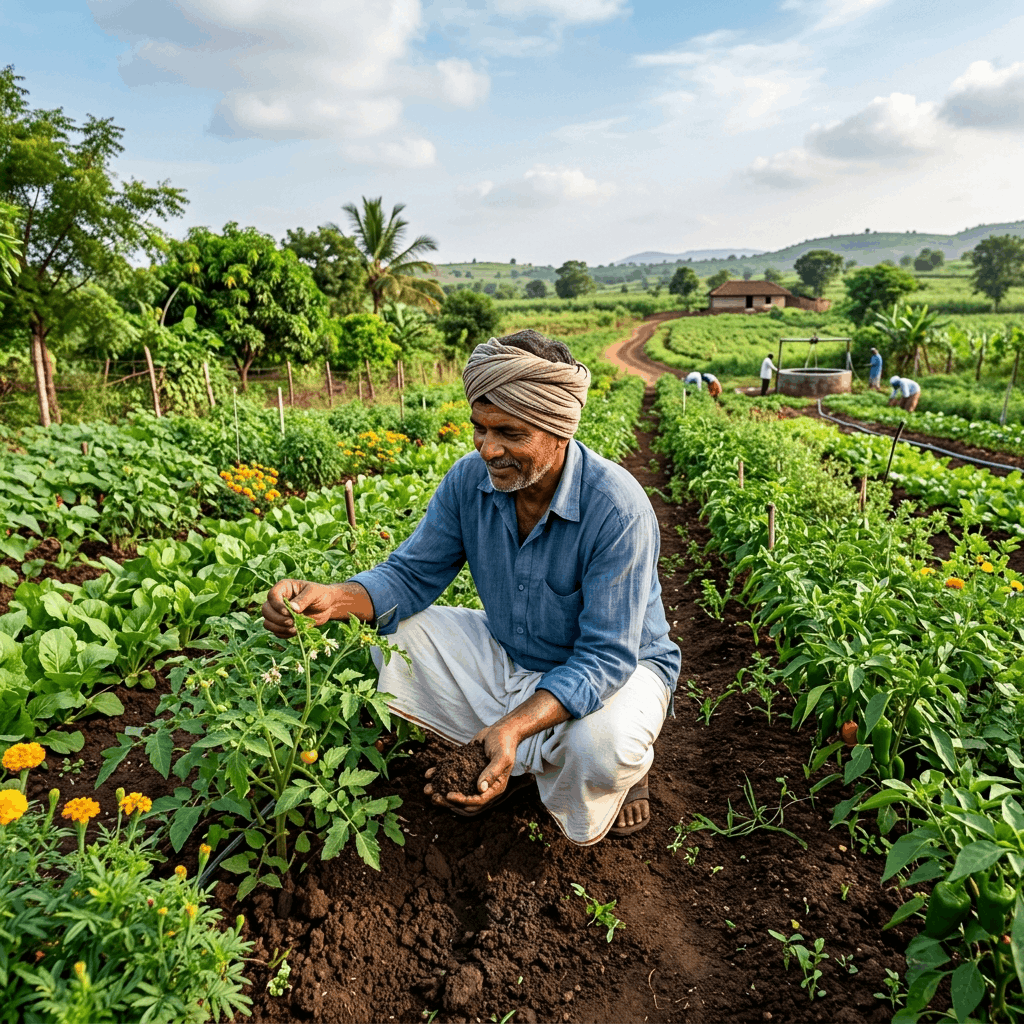
A Lifelong Commitment to Organic Care
Organic farming is profoundly misunderstood by many as simply \"farming without chemicals.\" In reality, true organic farming is a highly active, holistic, and deeply involved approach to agriculture that requires meticulous, regular, and observant care. Transitioning from conventional chemical farming to organic farming represents a fundamental paradigm shift: moving away from reactively treating symptoms (like aggressively spraying toxic pesticides only when pests visibly appear) towards proactively preventing problems by building incredibly robust soil health and fostering a balanced, biodiverse farm ecosystem.
This transition requires patience and a strict adherence to a regular care routine. When you stop using synthetic fertilizers, the plants must rely entirely on the natural fertility of the soil. A structured, consistent routine of applying organic matter, monitoring for early signs of stress, and preemptively managing pests ensures that your soil remains highly fertile, your plants develop strong natural immunities, and your ultimate yields remain highly profitable without ever relying on expensive, harmful synthetic inputs.
Precise Application Rates for Organic Inputs
In organic agriculture, the fundamental rule is that you do not feed the plant; you feed the soil, and the soil, in turn, feeds the plant. Therefore, the regular, calculated application of organic matter is absolutely vital. For a standard bigha of land, farmers must prepare the soil before sowing by incorporating 2 to 3 tons of thoroughly decomposed farmyard manure (FYM) or high-quality vermicompost. This heavy basal application builds the essential humus structure and provides long-term, slow-release nutrition.
However, solid compost alone is not enough during rapid growth phases. During the active vegetative and flowering stages, liquid bio-fertilizers must be applied regularly to provide an immediate nutritional boost. Liquid inputs like Jeevamrutha, Panchagavya, or Vermiwash should be sprayed directly onto the foliage or applied through the irrigation water at a rate of roughly 200 liters per bigha, every 15 to 20 days. This relentless, scheduled application ensures a continuous, rich supply of rapidly absorbable micronutrients and billions of beneficial microbes that keep the soil biology highly active.
Establishing Regular Farm Management Practices
Successful organic farming demands the farmer's physical presence and sharp observation. Daily care involves intensive field scouting. A farmer must walk their fields every single morning, meticulously inspecting the undersides of leaves and the base of stems to check for the very earliest signs of pest attacks, specific nutrient deficiencies (like yellowing leaves), or subtle signs of water stress. Catching a problem on day one is exponentially easier to manage organically than catching it on day ten.
The weekly routine must include rigorous weed management. Because devastating chemical herbicides like Glyphosate are strictly prohibited, weeds must be managed manually, mechanically (using rotavators or hand hoes), or through heavy mulching before they go to seed and compete with the crop. The monthly routine is focused on preparation. A proactive organic farmer spends time every month brewing massive batches of organic inputs—fermenting cow dung manure, preparing Neemastra (neem-based pest repellent), or extracting Dashparni Ark (a ten-leaf botanical pesticide). This ensures that powerful, natural remedies are always cured, ready, and available for immediate deployment the moment an issue is scouted.
The Long-Term Results and Rewards of Regular Care
Farmers who meticulously adhere to a disciplined organic care routine witness a miraculous, physical transformation of their land over time. It is important to set realistic expectations: during the first year of transition, as the soil detoxifies from years of chemical abuse, crop yields may experience a slight, temporary dip. However, by the third year of relentless organic care, the transformation is undeniable. The previously hard, compacted earth becomes soft, spongy, incredibly dark, and immensely rich in humus.
This revitalized soil structure dramatically improves water retention, meaning the farm requires significantly less irrigation and can effortlessly survive longer dry spells. By the third or fourth year, crop yields fully stabilize, often matching or even exceeding the yields of neighboring conventional farms. The ultimate, highly rewarding result is the production of premium-priced, perfectly healthy, chemical-free food, achieved with absolute zero expenditure on exorbitant synthetic fertilizers and toxic pesticides, leading to unparalleled long-term profitability and personal satisfaction.
In addition to these structural improvements, the farm becomes a highly resilient sanctuary. The deep, rich soil acts as a massive sponge during unprecedented heavy rains, preventing the devastating flooding and topsoil runoff that frequently destroys neighboring conventional farms. Furthermore, the robust, naturally developed immune systems of organically grown plants allow them to withstand sudden temperature fluctuations—both extreme heat waves and unseasonal cold snaps—far better than chemically dependent crops, ensuring a stable, guaranteed harvest year after year regardless of climatic volatility.
Fostering and Protecting Farm Biodiversity
A cornerstone of regular organic care is the active, intentional promotion of farm biodiversity to attract \"farmer-friendly\" creatures. Organic farms do not operate as sterile monocultures. Farmers actively plant border crops like bright Marigolds or Sunflowers around the perimeter of the field. These flowers serve a dual purpose: they act as a trap crop for certain pests, but more importantly, their pollen heavily attracts predatory insects like Ladybugs and Lacewings, which possess an insatiable appetite for crop-destroying aphids.
Furthermore, intentionally leaving small, uncultivated patches of wild grass or hedges provides a crucial habitat for predatory wasps, beneficial spiders, and ground beetles. Below the surface, the continuous, heavy addition of organic matter triggers a massive population explosion of earthworms. These earthworms act as tireless, free farm laborers—naturally tilling the soil, creating deep aeration channels, and digesting organic matter to leave behind nutrient-dense worm castings that supercharge crop growth.
Natural Disease and Pest Defense Mechanisms
In an organic system devoid of instant-kill chemical fungicides and insecticides, absolute prevention is the only viable strategy. Regular care inherently includes strict crop rotation and multi-cropping (growing different crops together). By constantly changing the crop family grown in a specific field, farmers break the lifecycle of specialized pests and soil-borne diseases that rely on a single host plant year after year.
If a fungal issue, such as powdery mildew, is scouted early, the organic response is immediate but natural. Spraying a mixture of heavily fermented sour buttermilk diluted in water has been scientifically proven to be a highly effective, natural anti-fungal treatment that changes the pH of the leaf surface, killing the spores. For pest management, regular, preventative spraying of cold-pressed Neem oil (Azadirachtin) is crucial. Neem oil does not act as an instant poison; instead, it severely disrupts the pest's feeding behavior and reproductive cycle, effectively keeping the pest population well below the threshold where they can cause economic damage to the harvest.
The Monthly Organic Care Calendar
Week 1: Deep Soil Nourishment and Aeration
Begin the month by focusing on the foundation: the soil. Apply solid, fully mature organic fertilizers, such as high-grade vermicompost or enriched compost, directly to the base of the growing plants. Follow this application with a light, shallow hoeing. This essential action mixes the compost into the vital topsoil layer, aerates the roots, and effectively uproots any newly germinated weeds before they establish deep roots.
Week 2: Liquid Boosting and Intensive Scouting
Provide a rapid nutritional boost by applying liquid bio-stimulants. Inject filtered Vermiwash or potent Jeevamrutha directly through your drip irrigation system, or apply it as a foliar spray early in the morning. Dedicate this week to intensive scouting. Walk every row, carefully examining the undersides of leaves for microscopic pest eggs or the very first signs of fungal discoloration.
Week 3: Preventative Pest Control Deployment
Regardless of whether pests are heavily visible, deploy your preventative botanical sprays. Thoroughly spray Neemastra or a potent homemade Garlic-Chili-Tobacco extract across the entire crop. This is especially critical if the local weather forecast predicts cloudy, humid, or unseasonal rainy conditions, which are the exact environmental triggers that heavily favor massive pest and fungal outbreaks.
Selling in the Premium Organic Market
The global and domestic demand for certified, authentically grown organic produce is skyrocketing, driven by an increasingly health-conscious consumer base. Maintaining a strict, documented regular care routine is not just about growing the crop; it is the fundamental requirement for ensuring your produce meets the rigorous, unforgiving standards required to obtain and keep official Organic Certification (such as NPOP in India).
Whether you are selling directly to health-conscious urban consumers via a subscription model, supplying high-end organic grocery retail chains, or targeting lucrative international export markets, certified high-quality organic produce commands a massive premium. Organic farmers routinely secure prices that are 30% to 50%—and sometimes even 100%—higher than conventionally grown, chemically treated crops, drastically improving the economic livelihood of the farming family.
📦 Bulk Orders & Export
Mitti Gold Organic: For bulk orders of all organic fertilizers — Farmers, Nurseries, and Export. WhatsApp: +91 95372 30173