📅 June 2026 | ✍️ Mitti Gold Organic | 🗂️ Farming
Understanding Application Rates & Government Support
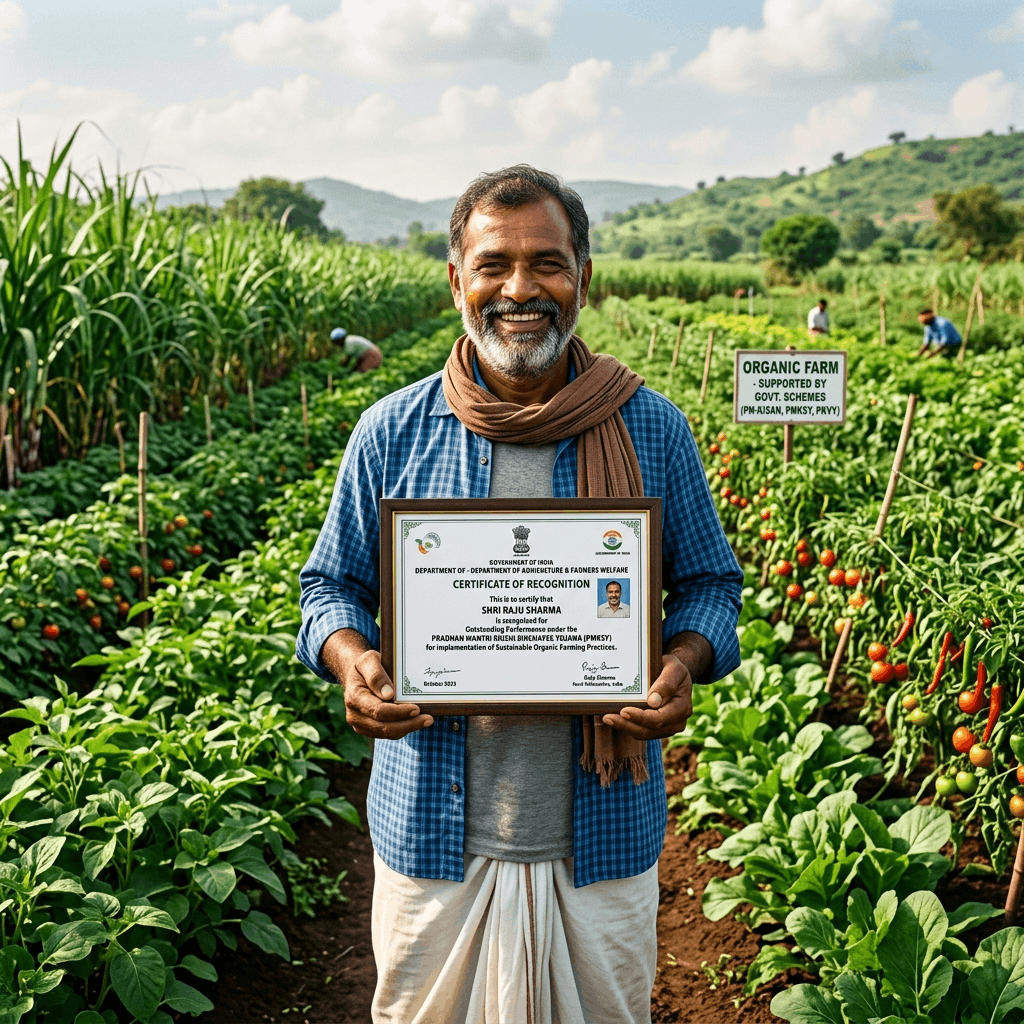
Maximizing organic yields begins with understanding the precise requirements of your soil and crops. Under schemes like the Paramparagat Krishi Vikas Yojana (PKVY) and the National Mission on Natural Farming (NMNF), farmers are provided with guidelines and financial assistance to adopt optimal application rates for organic inputs. Typically, a baseline application of high-quality compost or vermicompost should be around 1 to 2 tonnes per bigha (approximately 4 to 8 tonnes per acre), depending on initial soil carbon levels. The government provides subsidies for setting up on-farm input production units, reducing the cost of acquiring these essential nutrients. Additionally, specialized bio-fertilizers and organic growth promoters can be applied at rates prescribed by local Krishi Vigyan Kendras (KVKs), ensuring that you don't over-apply or under-nourish your crops. These schemes not only subsidize the cost of inputs but also provide technical support to calculate exact application rates per bigha based on free soil health cards.
Step-by-Step Guide to Applying Organic Inputs with Scheme Benefits
Transitioning to organic farming and maximizing yields requires a systematic approach. By aligning your practices with government schemes like PM-PRANAM, which incentivizes states to promote alternative fertilizers, you can effectively plan your crop cycle. Here is a step-by-step guide to applying organic inputs for maximum benefit:
Step 1: Obtain a Soil Health Card
Before applying any organic matter, get your soil tested through the Soil Health Card Scheme. This government initiative provides crop-wise recommendations of nutrients and fertilizers required, helping you understand the exact deficiency in your soil. Apply organic manures based on these customized recommendations to ensure targeted nourishment.
Step 2: Procure Subsidized Organic Inputs
Register under the PKVY or local state organic farming schemes to access subsidized or free organic inputs. These include vermicompost, bio-fertilizers (like Rhizobium, Azotobacter), and botanical extracts. Utilizing these schemes significantly lowers your initial input costs while ensuring you use certified organic products.
Step 3: Basal Application During Land Preparation
Apply the bulk of your solid organic fertilizers, such as farmyard manure or vermicompost, during the final ploughing. This ensures the organic matter is well-incorporated into the soil, improving its structure and water-holding capacity before the seeds are sown or seedlings transplanted.
Step 4: Seed Treatment and Root Dipping
Treat seeds with bio-fertilizers like Trichoderma or Pseudomonas, often distributed through government agricultural departments. This step protects seeds from soil-borne diseases and promotes vigorous early root growth, establishing a strong foundation for high yields.
Step 5: Timely Foliar Sprays
Apply liquid organic fertilizers, such as Jeevamrutha or seaweed extracts, as foliar sprays during critical growth stages (vegetative growth, pre-flowering, and pod formation). Government schemes often provide training on preparing these solutions on-farm, ensuring plants receive quick nutrient boosts when they need them most.
Comparing Product Outcomes: Chemical vs. Supported Organic
One of the main hesitations farmers have when switching to organic farming is the fear of reduced yields. However, data from the National Centre of Organic and Natural Farming (NCONF) shows that while there might be a slight dip in the first year, yields stabilize and often surpass conventional farming by the third year. Comparing outcomes, chemically grown crops may have a quick initial growth spurt, but they deplete soil fertility over time, leading to diminishing returns. On the other hand, crops grown using organic inputs supported by government schemes develop stronger root systems, greater resilience to climate stress, and superior nutritional profiles. Furthermore, organic produce commands a premium price in the market. By utilizing schemes that subsidize organic certification (like PGS-India), the economic outcome heavily favors the organic farmer, combining lower long-term input costs with higher market realization.
Revitalizing Soil Creatures for Long-Term Fertility
A core objective of government initiatives like the National Mission on Sustainable Agriculture (NMSA) is to restore soil biodiversity. Chemical fertilizers destroy the delicate ecosystem of the soil, killing beneficial microbes, earthworms, and fungi. Organic farming practices reverse this damage. When you apply government-subsidized composts and bio-fertilizers, you are essentially feeding the soil web. Earthworms return to aerate the soil and create nutrient-rich castings. Mycorrhizal fungi form symbiotic relationships with plant roots, extending their reach to access water and phosphorus deep within the soil. Nitrogen-fixing bacteria multiply, converting atmospheric nitrogen into a form plants can use. This thriving underground ecosystem continuously cycles nutrients, creating a self-sustaining environment that naturally maximizes crop yields year after year without the need for synthetic intervention.
Natural Disease Protection and Resilience
Protecting your crop from pests and diseases is crucial for high yields. Instead of relying on expensive and harmful chemical pesticides, government schemes promote the use of bio-pesticides and bio-control agents. Subsidies are available for purchasing neem-based products, Trichoderma, and pheromone traps. Organic farming inherently builds stronger, healthier plants with robust immune systems, making them less susceptible to attacks. Furthermore, practices encouraged by the government, such as crop rotation, multi-cropping, and maintaining trap crops, create a diverse ecosystem that naturally keeps pest populations in check. In the event of an outbreak, government extension workers can guide you on the precise application of bio-pesticides, ensuring your crop is protected while maintaining its organic integrity.
Expanding Your Market: From Local Nurseries to Export
Maximizing yields is only half the equation; getting the best price for your produce is equally important. Government schemes play a vital role in market linkage. The Participatory Guarantee System (PGS) provided under PKVY makes organic certification accessible and affordable for small and marginal farmers. With this certification, you are no longer limited to local mandis. You can tap into lucrative markets, including premium organic stores, supermarkets, and health-conscious consumers. For those looking to scale, schemes under the Agricultural and Processed Food Products Export Development Authority (APEDA) provide assistance for obtaining the National Programme for Organic Production (NPOP) certification, opening doors to highly profitable international export markets. Whether you are a small farmer, a specialized nursery owner, or aiming for global export, aligning with government initiatives maximizes your profitability alongside your yields.
📦 Bulk Orders & Export
Mitti Gold Organic: For bulk orders of all organic fertilizers — Farmers, Nurseries, and Export. WhatsApp: +91 95372 30173
Frequently Asked Questions
The Paramparagat Krishi Vikas Yojana (PKVY) is a scheme that promotes organic farming through a cluster approach. It provides financial assistance to farmers for organic inputs, certification, and capacity building, helping reduce costs and increase yields.
You can get your soil tested under the Soil Health Card Scheme. Contact your local Krishi Vigyan Kendra (KVK) or agriculture department office to submit your soil samples and receive a detailed report with fertilizer recommendations.
Yes, certified organic produce typically commands a premium of 20% to 50% over conventionally grown crops, due to increasing consumer demand for healthy, chemical-free food.
It can be, but government schemes like PGS-India (under PKVY) make certification virtually free for small farmers by forming local groups that guarantee each other's organic practices.
While the first 1-2 years may see a slight adjustment period as the soil recovers, yields typically stabilize and often increase by the third year as soil health and biodiversity are fully restored.