📅 June 2026 | ✍️ Mitti Gold Organic | 🗂️ Govt Schemes
Water Security for Karnataka Farmers
Applying for state agricultural subsidy benefits requires understanding the boundary conditions and specific eligibility criteria defined in government circulars. Most agrarian programs prioritize small and marginal farmers, defined as those possessing less than two hectares of cultivable land. Land ownership must be verified through updated land registry documents, such as 7/12 and 8-A records in Gujarat or equivalent land revenue certificates in other states. The maximum subsidized area is often capped between one to two hectares per beneficiary to ensure equitable distribution of state funds. Furthermore, the land must be free from legal disputes, and the applicant must prove active cultivation by submitting crop cultivation certificates signed by the local village administrative officer.
In addition, applicants must provide active bank accounts linked to Aadhaar to receive subsidy payments directly. Verification officers require checking that the bank details match the name on the land registry documents. For community projects or cooperative farming groups, the subsidy application must include a signed resolution from all members specifying how the funds will be distributed and utilized. Gathering these documents beforehand prevents delays in processing and ensures that the financial benefits are distributed fairly among all qualified farmers.
Technical Dimensions and Site Selection
From an administrative perspective, accessing state agricultural subsidies requires strict compliance with registration and documentation protocols. The primary interface for these benefits is the centralized Direct Benefit Transfer (DBT) portal of the state government. Cultivators must verify their land ownership registry records, upload updated bank accounts linked with Aadhaar, and obtain a soil health card. For high-value equipment like solar fence energizers (Zatka machines), polyhouses, or micro-irrigation systems, pre-installation approval is mandatory. Farmers should submit detailed project reports (DPR) prepared by certified agronomists and execute purchase contracts only through government-empanelled manufacturers. After installation, a verification committee consisting of local block development officers and agricultural extension officers will conduct physical verification and geotag the assets. This systematic process ensures transparency and prevents duplication of benefits.
Furthermore, keeping detailed installation records helps farmers verify that they meet program guidelines. When setting up subsidized equipment like drip irrigation or solar systems, keeping copies of invoices, technical diagrams, and manufacturer warranty certificates is necessary. These records must be shown to inspection officers during their visit to verify the setup. Properly organizing these files helps prevent delays in payment and makes it easier for farmers to access technical support from authorized service providers.
Acquire FRUITS FID Number
Ensure you are registered on the FRUITS Karnataka portal and have a unique 10-digit FID number. This is mandatory for claiming agricultural benefits in Karnataka.
Submit Application to RSK (Raitha Samparka Kendra)
Apply online through the FRUITS portal or visit your local RSK center. Upload your land documents (Pahani/RTC) and bank details.
Pre-Verification and Excavation
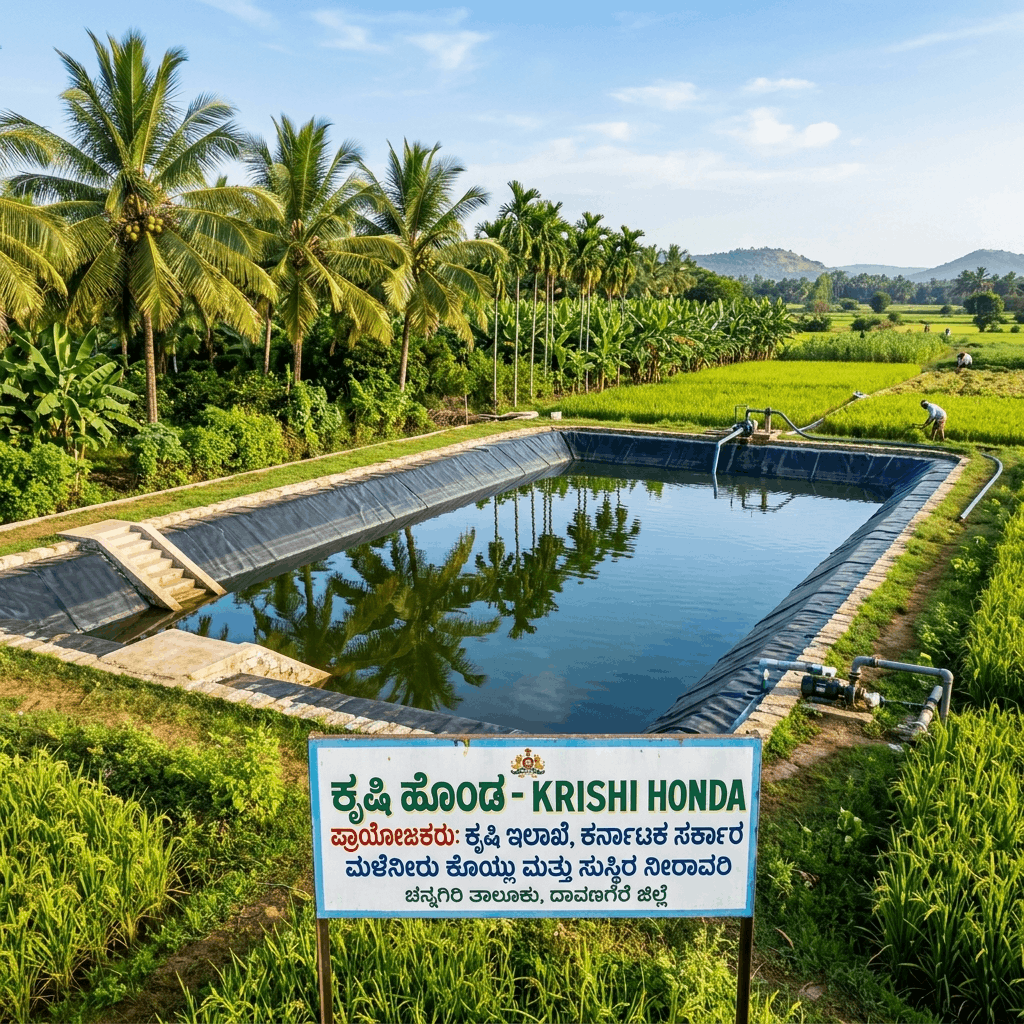
An agricultural officer will perform pre-verification. Once sanctioned, complete the excavation and line the pond using a certified HDPE liner.
Comparing Outcomes: Krishi Honda Lined Pond vs. Unlined Well Irrigation
- Assured Micro-Irrigation: Stored rainwater secures up to 3 round of life-saving drip irrigation for crops like groundnut, sugarcane, and maize during dry months.
- Recharging Groundwater: In non-sandy soil zones, unlined farm ponds help recharge regional borewells, raising the groundwater level.
- Eliminating Crop Failure: Access to a local water source prevents crop drying during critical flowering stages, securing farm investment.
Post-installation verification constitutes a critical step in the subsidy disbursement cycle. Once the infrastructure is set up, a formal request must be submitted via the government portal for physical inspection. A team of technical inspectors will visit the farm to verify the quality parameters, confirm that the serial numbers match the invoice, and capture geotagged, time-stamped photographs of the installation. This data is uploaded in real-time to the state database to prevent fraudulent claims. Additionally, random third-party audits may be conducted during the operational phase to ensure the system is properly maintained and has not been sold or leased to unauthorized parties.
Once verification is complete, the subsidy amount is transferred directly to the beneficiary's registered bank account through Aadhaar-enabled payment systems. The state portal updates the status to show that the subsidy has been successfully disbursed. Beneficiaries are required to keep the subsidized infrastructure in working condition for a minimum specified period, usually three to five years. During this time, agricultural department officials may conduct follow-up inspections to monitor the project's impact on crop yield and resource conservation.
Encouraging Biological Activity with Farm Ponds
Integrating micro-irrigation systems like drip and sprinkler lines with subsidized bio-fertilizers aligns farm practices with ecological standards. Government policies actively promote these methods to reduce groundwater extraction and prevent soil salinity caused by flood irrigation. Subsidized soil health cards help farmers analyze micronutrient deficiencies, allowing them to apply target-specific vermicompost dosage. This biological and resource-saving synergy improves soil carbon sequestration, protects micro-ecosystems in the root zone, and sustains local biodiversity, rendering farming financially viable and environmentally sustainable.
Furthermore, adopting these eco-friendly methods helps farming groups qualify for carbon credit programs. Improving soil carbon sequestration through vermicompost and reducing water extraction through drip lines allows farms to participate in environmental conservation initiatives. These environmental benefits are monitored by research institutions to measure how sustainable farming reduces agricultural carbon footprints. By participating in these initiatives, farmers help protect local water resources and support global climate goals.
Safety and Seepage Protection Standards
Securing the boundaries of agricultural fields is vital for preventing disease vector transmission and physical crop damage. Subsidized protective fencing systems, such as solar-powered fences, act as an effective barrier against stray animals and wild herbivores. By keeping these animals away from cash crops, farmers prevent mechanical bruising of plant tissue, which is a major entry point for soil-borne pathogens. These boundaries must comply with local government regulations regarding safety voltages to prevent accidental wildlife casualties while maintaining the farm's biosecurity.
In addition, installing protective barriers helps reduce conflict between farmers and local wildlife. Solar fencing systems provide a safe deterrence that keeps large herbivores away from crops without causing injury. This balance between farm security and wildlife conservation is supported by environmental policies. Properly maintained fences reduce crop damage and encourage cooperation between local farming communities and forest departments to manage boundary areas sustainably.
Horticulture Boom in Karnataka
From an economic perspective, integrating subsidy schemes with market channels accelerates farm-level profitability. When farmers adopt protected cultivation under subsidy, they transition from low-margin seasonal cereal farming to high-value cash crops and horticulture. This shift aligns with national crop diversification mandates, which seek to reduce soil exhaustion and conserve depleting water tables. High-tech infrastructure like modern post-harvest packing houses, solar dryers, and sorting centers—also heavily subsidized—allows farmers to minimize storage losses and clean their produce before sale. Furthermore, joining Farmer Producer Organizations (FPOs) enables small and marginal landholders to aggregate their harvest, gaining collective bargaining power. By bypassing traditional intermediaries, subsidized farmers can supply premium retail markets and agro-processors directly, securing stable margins and higher return on investment (ROI).
Additionally, setting up regional cold storage chains and solar drying facilities helps farmers store and sell their crops when prices are favorable. These post-harvest systems reduce spoilage and help farmers maintain quality standards required for export markets. Working together in cooperative groups allows small farmers to share transportation costs, improving their access to major retail networks. These resources help local farming communities build a more secure and profitable business.
📅 Official Application & Deadline Guide
💧 Karnataka Krishi Honda Subsidy Support
Secure your crops against dry spells. Apply for the Krishi Honda scheme via FRUITS portal today. WhatsApp: +91 95372 30173
Karnataka Krishi Honda FAQ
Subsidized installations are subject to periodic, randomized physical verification audits by district agricultural officials. These audits check the functional status and check that the equipment has not been sold or transferred. Beneficiaries must maintain detailed logs of operation and allow department personnel access to the site during inspections. Failure to comply with audit requirements or unauthorized modification of the subsidized setup can lead to blacklisting, immediate recovery of the subsidy amount through revenue recovery channels, and suspension of eligibility for future agrarian schemes for a period of up to five years.
To prepare for these verification visits, farmers should keep all purchase receipts and certificates organized. Subsidized installations must remain at the registered farm and cannot be moved without prior approval from the agricultural department. If inspection officers identify any discrepancies, the beneficiary is given a notice period to correct the issue. Cooperating fully with the verification team ensures that the subsidy remains valid and helps maintain the farmer's good standing for future government programs.
In addition, once the initial application is submitted, the digital portal automatically synchronizes with the state's centralized land records database to verify ownership details and crop registries in real-time. This digital integration significantly reduces the processing queue for manual verification by local block development and revenue officers, helping to prevent duplicate benefits and ensuring transparent allocation of state resources. If the validation engine detects any data discrepancies—such as a spelling mismatch between the applicant's Aadhaar card, bank passbook, or land revenue documents—the system automatically pauses the workflow and sends an instant SMS notification to the registered mobile number. Beneficiaries are then provided a dedicated notice window, typically fifteen days, to log in and upload the correct supporting documents or visit the nearest taluka digital service center for biometric correction. Resolving these minor administrative and technical mismatches at the local level prevents the application from being permanently rejected and guarantees that the subsidy disbursement or registration remains valid, supporting the farmer's standing for all subsequent agricultural schemes. Furthermore, modern updates to the portal allow farmers to track their application status live, from submission to final direct benefit transfer, which reduces the need for physical visits to government offices. This transparent system builds greater trust between the agrarian community and state departments, fostering smoother implementation of public policies.