📅 June 2026 | ✍️ Mitti Gold Organic | 🗂️ Farming
Raw Materials and Profitable Ratios
The global demand for "Green Incense" is booming as consumers move away from Charcoal-based Agarbattis that emit harmful toxins. Cow dung incense sticks are not only spiritually significant in India but are also scientifically proven to purify the air. For a small-scale startup, you would need approximately 50 kg of dried Cow Dung Powder to produce about 10,000 sticks. When mixed with herbal binders, the yield is consistent and highly profitable.
The cost per bigha isn't applicable here, but the "Resource Efficiency" is high. From a single desi cow, a farmer can generate enough raw material to produce incense worth ₹5,000 to ₹8,000 per month, adding a significant secondary income stream. The key is using Pure Cow Dung Powder that has been sun-dried and finely sieved to 100 microns.
Raw Material Ratio for 1 kg Mix
- Cow Dung Powder (Mitti Gold): 600 grams (Base material)
- Jigat / Guar Gum Powder: 150 grams (Natural Binder)
- Herbal Powder (Guggul, Jatamansi, Camphor): 200 grams (Fragrance)
- Water: As per consistency required for extrusion.
The Manufacturing and Drying Process
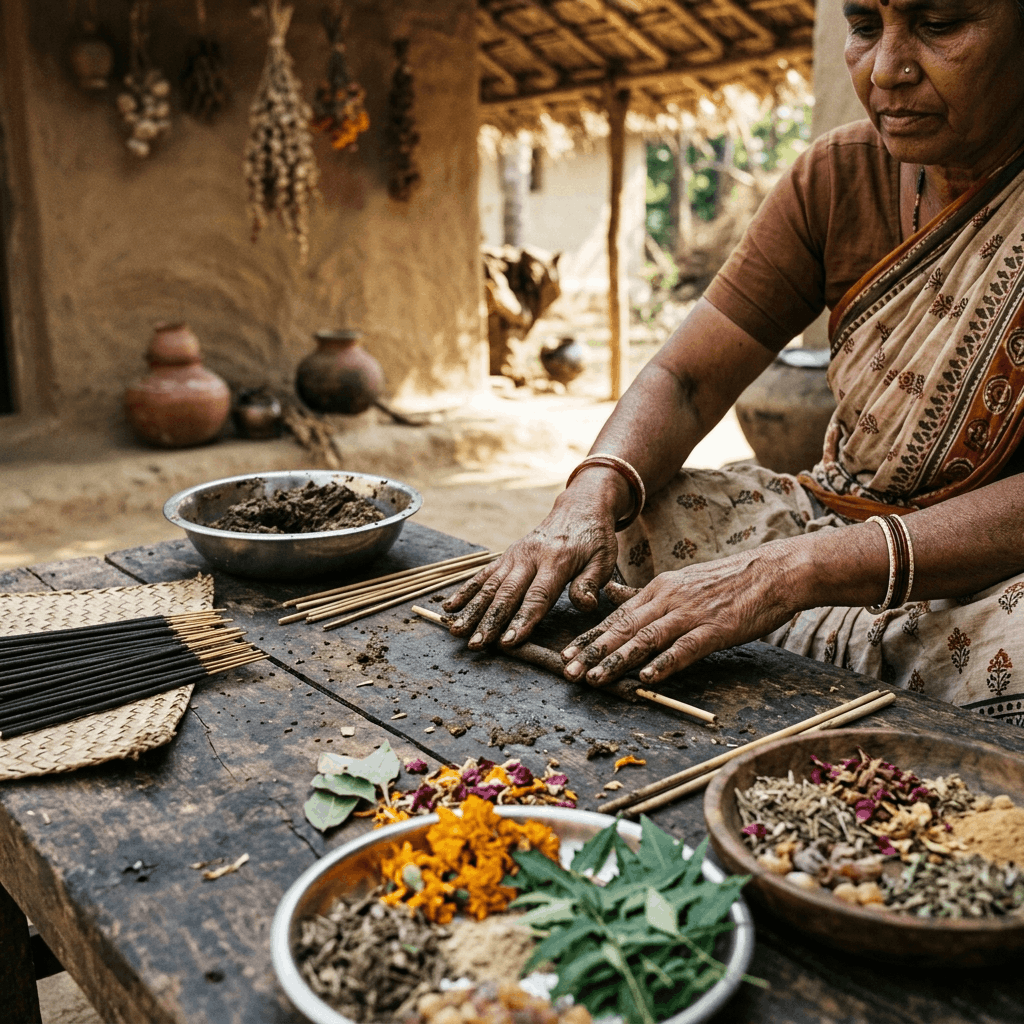
To use the raw material effectively, the mixing process must be thorough. Use a dough kneader or manual mixing until the texture is like soft clay. The sticks can be made manually using a simple wooden frame or via an automatic Agarbatti machine. The 2026 market favors "Bambooless" sticks (Dhoop sticks) as they are seen as more environmentally friendly.
Drying is the most critical phase. Incense sticks made from cow dung should be shade-dried for 48 to 72 hours. If dried in direct sun, they may crack due to rapid moisture loss. Once dried, they can be dipped in essential oils like Sandalwood, Rose, or Jasmine for enhanced fragrance.
Collection & Drying
Collect fresh desi cow dung and sun-dry it until the moisture is less than 5%.
Pulverization
Grind the dried dung into a fine powder (or use Mitti Gold ready-to-use powder).
Sieving
Pass the powder through an 80-100 mesh sieve to remove any fiber or grit.
Mixing Binders
Add natural binders like Jigat or wood powder to ensure the stick doesn't crumble.
Shaping/Extrusion
Roll the dough onto bamboo sticks or extrude them into cylindrical dhoop shapes.
Curing & Scenting
Shade-dry for 3 days and then dip in natural essential oils if desired.
Comparing Outcomes: Chemical vs. Cow Dung Incense
When you burn a chemical Agarbatti, it produces black smoke containing benzene and formaldehyde. In contrast, the outcome of burning Cow Dung Incense is a white, soothing smoke that acts as a natural disinfectant. It helps in reducing airborne bacteria and repels mosquitoes naturally. You can compare the result by checking the ash; natural cow dung incense leaves behind a fine, white ash that can be used as a fertilizer for your home plants.
Helping Local Ecology and Animals
This industry directly supports the "Gaushala" ecosystem. By creating a market for cow dung, we make it economically viable for farmers to keep non-milking cows, protecting them from slaughterhouses. It creates a circular economy where the cow provides fuel for the spirit (incense) and food for the soil (manure), fostering a deep respect for all living creatures.
Protection from Health Hazards
For the makers, cow dung incense production is a safe "cottage industry." Unlike chemical factories where workers inhale coal dust, here the primary ingredient is an organic antiseptic. For the end-user, it protects the respiratory system from the irritation typically caused by synthetic musk and Charcoal smoke, making it safe for children and the elderly.
Market Focus: Spiritual Centers and Exports
The market for cow dung incense is vast. In India, temples and yoga centers are the primary buyers. Internationally, there is a massive "Aromatherapy" market in Europe and the USA. Exporting these sticks requires "Phytosanitary Certificates," which are easily obtainable if you use high-quality, processed Cow Dung Powder from reliable sources like Mitti Gold.
⚙️ Professional Machinery & Setup
Planning to set up a professional organic fertilizer production unit (Vermicompost, Jeevamrut, or Cow Dung Processing)? We provide complete consultancy and high-capacity machinery for commercial projects. WhatsApp: +91 95372 30173