📅 June 2026 | ✍️ Mitti Gold Organic | 🗂️ Farming
Input Ratios and Economic Benefits
Natural farming is a method that works with nature rather than against it. In 2026, as chemical costs skyrocket and soil fertility declines, Natural Farming (also known as Prakrutik Kheti in Gujarat) has become a mainstream movement. The core philosophy is that the soil already has all the nutrients needed for plant growth; we just need to unlock them using microbial catalysts. For a 1-bigha plot, the "External Input Cost" in natural farming is almost Zero, compared to ₹4,000 in chemical farming.
The 2026 Natural Farming model is built on four pillars: Beejamrut (Seed treatment), Jeevamrut (Soil microbial culture), Acchadana (Mulching), and Whapasa (Soil moisture management). By using these, a farmer can maintain the same productivity as chemical farming within 3 years of transition, while significantly improving the market value of their produce.
Resource Requirements per 10 Bighas
- Desi Cow: One cow is enough for 30 acres (approx 120-150 bighas) in Natural Farming.
- Input Material: Cow dung, Cow urine, Jaggery, and Pulse flour (Besan).
- Labor: Slightly higher for manual weeding but offset by zero fertilizer costs.
Core Techniques and Application Guide
To use Natural Farming techniques, the most important "product" is Jeevamrut. In 2026, the standardized recipe for 200 liters of Jeevamrut is: 10kg fresh cow dung, 10 liters of cow urine, 2kg Jaggery, 2kg Pulse flour, and a handful of "uncontaminated" soil from the farm boundary. This mixture is fermented for 48-72 hours and applied with irrigation water or as a soil drench.
Application rates in 2026 are precise: 200 liters per bigha every 15 days. This regular dosing ensures a constant supply of beneficial microbes that fix atmospheric nitrogen and solubilize soil phosphorus and potash.
Transition Plan
Start by converting 10-20% of your land to natural farming to learn the nuances.
Beejamrut Treatment
Always treat seeds with Beejamrut before sowing to protect against soil-borne pathogens.
Jeevamrut Preparation
Maintain a 200-liter drum for constant fermentation of microbial culture.
Live Mulching
Grow inter-crops or cover crops to keep the soil covered and prevent moisture loss.
Observation
Spend time in the field to observe the return of birds and beneficial insects.
Documentation
Keep records of input dates and growth stages for organic certification.
Comparing Outcomes: Chemical vs. Natural Farming
The outcome of Natural Farming is "Nutritional Density." While chemical crops look bloated with water, natural crops are firm and have a longer shelf life. You can compare the outcome by a simple Taste Test; naturally grown grains and vegetables have a richer, more authentic flavor. Financially, the outcome is "Freedom from Debt," as the farmer no longer needs to borrow money to buy expensive urea and pesticides every season.
Restoring the Soil Ecosystem
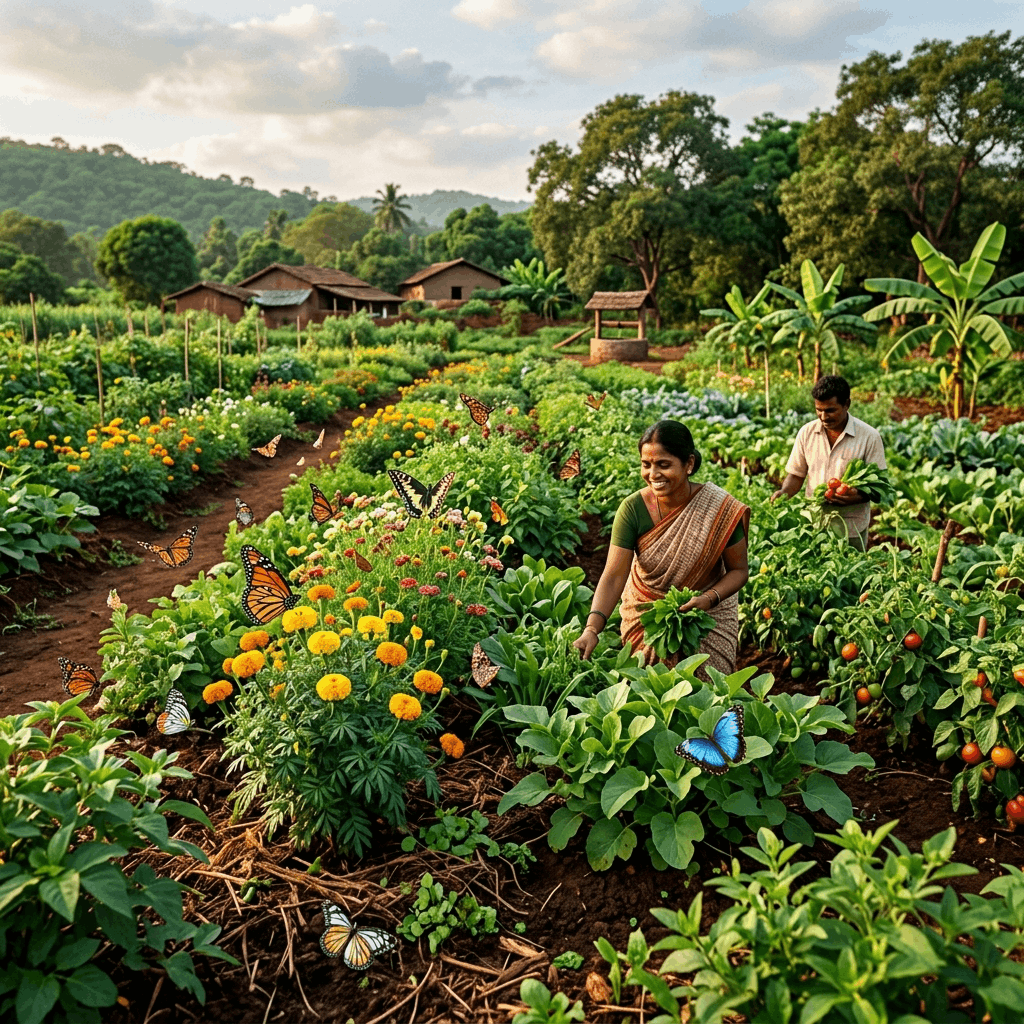
Natural farming is a celebration of life. Within the first year, you will notice the return of Earthworms (the natural plowers) to your field. In chemical farming, earthworms go deep into the soil to escape the salt (fertilizer), but in natural farming, they stay in the topsoil, creating tunnels that improve aeration and water infiltration. It also creates a safe haven for honeybees and butterflies, which are essential for pollination.
Natural Pest and Disease Resistance
In natural farming, we don't "kill" pests; we manage them. By using Neemastra or Agniastra (natural sprays), we repel harmful insects while keeping predators like ladybugs alive. The plants develop a thicker "cuticle" (outer layer), making them naturally resistant to fungal attacks. This results in a 100% pesticide-residue-free crop, which is the highest level of protection for the farmer's family and the consumer.
Market Focus: Health-Conscious Consumers and Exports
The market for Natural Farming produce is the fastest-growing segment in 2026. Direct-to-consumer apps and "Organic Farmers Markets" in cities like Ahmedabad, Mumbai, and Delhi allow natural farmers to sell their produce at 1.5x to 2x the regular market price. For exporters, "Chemical-Free" is the new global gold standard, especially for the Japanese and European markets.
📦 Bulk Orders & Export
Mitti Gold Organic: For bulk orders of all organic fertilizers — Farmers, Nurseries, and Export. WhatsApp: +91 95372 30173