?? June 2026 | ?? Mitti Gold Organic | ??? Govt Schemes
Construction Costs and Subsidy Limits
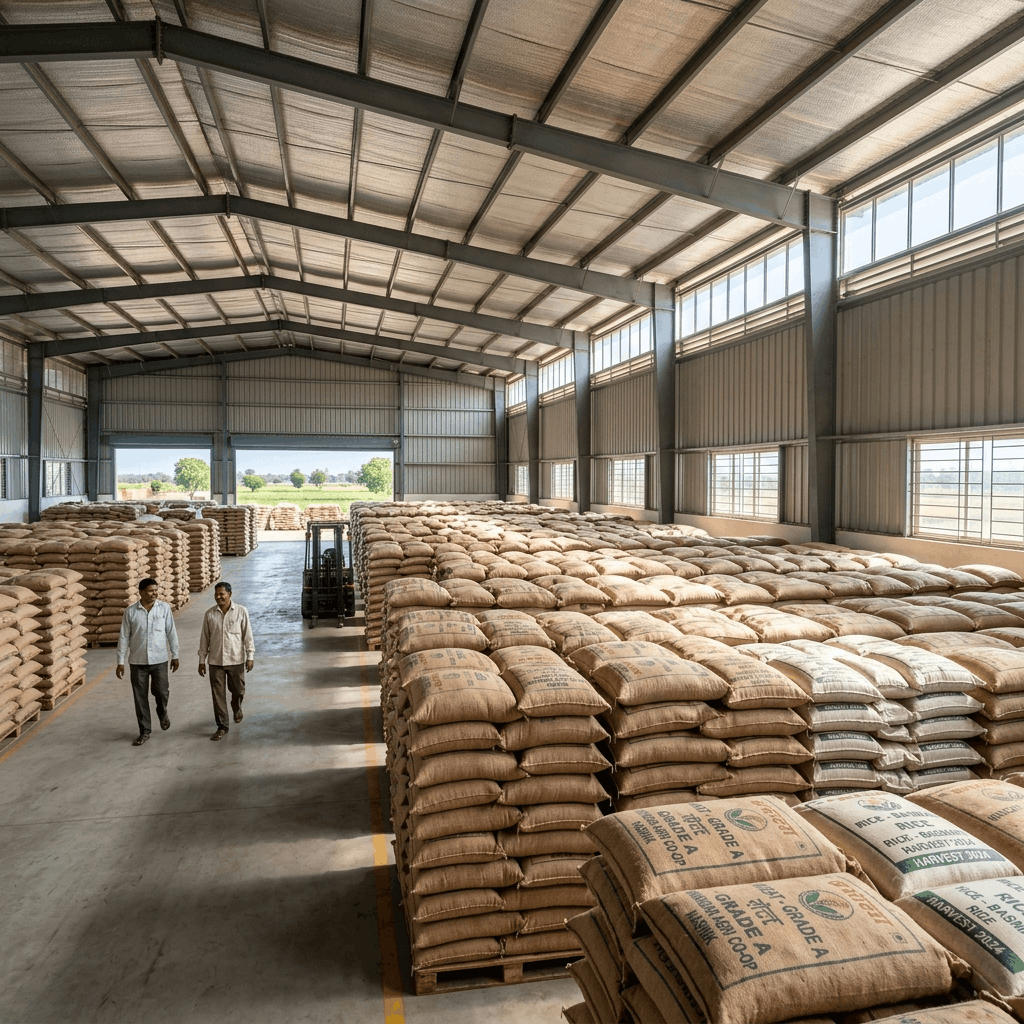
Post-harvest loss is a major drain on a farmer's income. In 2026, the Gujarat government has increased the budget for "On-Farm Storage Structures." Farmers can receive a subsidy of ₹50,000 to ₹75,000 for building a small godown (typically 200-500 sq. ft) directly on their land. This allows you to store your Groundnut, Cumin, or Onion crops until the market prices are favorable, rather than selling at low prices immediately after harvest.
A standard 300 sq. ft godown can store approximately 500 to 800 bags of grain. In 2026, the subsidy covers the cost of pre-fabricated steel structures or traditional brick-and-mortar buildings. For many farmers, having this storage capacity increases their net profit by ₹200-₹300 per bag simply by waiting for the off-season price hike.
Storage Capacity per Bigha Yield
- Groundnut: Needs approx 50 sq. ft of storage per bigha yield.
- Cumin: Compact storage; needs approx 10 sq. ft per bigha yield.
- Cotton: High volume; needs approx 100 sq. ft per bigha yield.
Best Practices for Safe Crop Storage
To use a farm godown effectively, it must be moisture-proof and rodent-proof. The 2026 specifications mandate a minimum plinth height of 2 feet to prevent ground moisture from entering. Proper ventilation is also required to prevent fungal growth (Aflatoxins) in crops like Groundnut. Farmers are encouraged to use "Pallets" to keep the bags off the floor, ensuring 360-degree air circulation.
In 2026, the scheme also supports the installation of small "Solar Dryers" near the godown, allowing farmers to reduce the moisture content of their produce to the ideal 8-10% level before sealing the bags.
Site Selection
Choose a high-ground area on your farm that is accessible by tractor.
i-Khedut Application
Apply under the "Post-Harvest Management" component on the portal.
Drawing Approval
Submit a simple layout plan to the Agriculture department for technical approval.
Construction
Build the structure as per the approved dimensions (e.g., 5m x 4m).
Geo-Tagging
An officer will visit to geo-tag the structure using a mobile app to verify its location.
Payment Disbursement
The subsidy is released based on the measurement book (MB) entries and photos.
Comparing Outcomes: Open Storage vs. Godown
The outcome of having a godown is the "preservation of quality." Open storage exposes the crop to rain, birds, and moisture, leading to weight loss and spoilage. In a 2026 subsidized godown, the moisture level remains stable. You can compare the outcome by the Market Grade; crops stored in a godown often fetch "Grade A" prices at the APMC (Mandi) because the color and luster of the seeds are preserved.
Protecting Crops from Pests and Rodents
A well-built godown protects the harvest from "Storage Pests" like the Pulse Beetle and Rice Weevil. By including natural repellent plants like dried Neem leaves or using organic "Storage Tablets," farmers can protect their hard-earned yield without toxic fumigants. This ensures that the grain remains safe for human consumption and maintains its nutritional value.
Fungal Protection and Ventilation
The 2026 godown designs include "Turbo Ventilators" or mesh windows that allow hot air to escape. This is the best protection against mold and mildew. By keeping the temperature inside the godown 5°C lower than the outside, the dormancy of pest eggs is maintained, significantly reducing the chance of a breakout during the 4-6 months of storage.
Market Focus: Value Addition and Direct Sales
With a farm godown, you are no longer just a farmer; you are a "Stockist." In 2026, this allows you to participate in e-NAM (Electronic National Agriculture Market) directly from your farm. You can upload photos of your stored stock, get a quality certificate, and sell to a buyer in another state without moving the goods until they are sold, saving on transport and middleman costs.
Infrastructure for Crop Storage
📅 Official Application & Deadline Guide
🏭 Godown & Cold Storage Solutions
Plan your commercial crop storage or cold storage unit with our expert design and construction consultation. WhatsApp: +91 95372 30173