📅 July 2026 | ✍️ Mitti Gold Organic | 🗂️ Farming
Introduction to Cow Dung Wood and Sustainable Energy
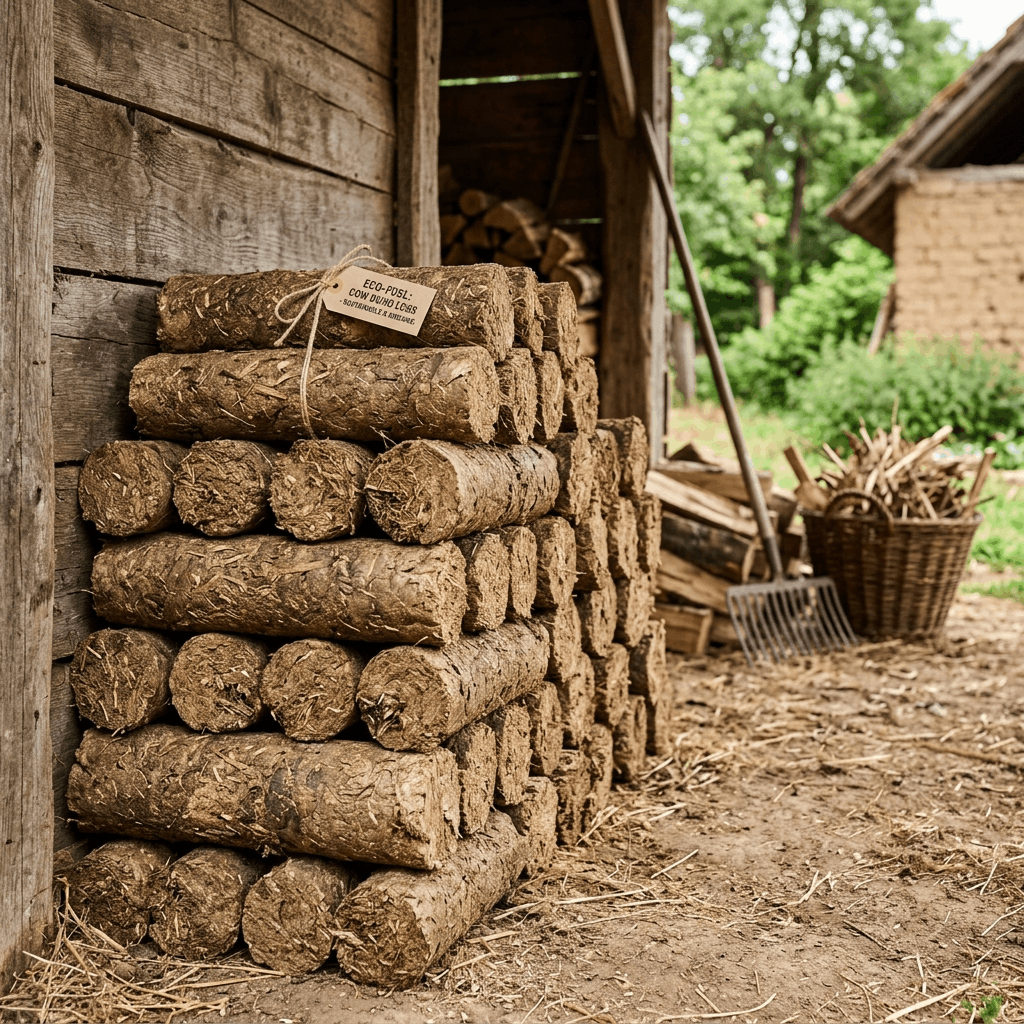
In an era where environmental conservation has become more critical than ever before, the global search for sustainable and renewable energy sources has led us back to our ancient roots. One such revolutionary yet deeply traditional product is Cow Dung Wood, popularly known as Gobar Lakdi in the Indian subcontinent. For centuries, cow dung has been utilized in various forms across rural landscapes for cooking, heating, and spiritual rituals. However, with the advent of modern technology and a pressing need to combat rapid deforestation, the traditional use of cow dung has evolved into a highly efficient, standardized, and commercially viable product: the Gobar Lakdi. This innovative eco-fuel is manufactured by compressing cow dung along with agricultural waste into dense, log-like structures that intricately mimic the combustion properties of natural firewood.
The transition from conventional wood to cow dung logs represents a monumental paradigm shift in how we approach rural waste management and bioenergy production. Every single year, millions of tons of agricultural residue are burned in open fields, contributing massively to air pollution, smog, and respiratory illnesses across large populations. Simultaneously, our precious forests are being systematically decimated to meet the insatiable demand for firewood in rural households, traditional crematoriums, and small-scale industries. By intelligently converting agricultural waste and abundant cow dung into high-calorific wood logs, we are simultaneously solving two monumental environmental crises. Furthermore, this practice deeply aligns with the core principles of a circular economy, where waste is transformed into wealth, providing rural communities—especially marginalized farmers and women self-help groups—with a robust, reliable supplementary source of income.
Moreover, the large-scale production of Gobar Lakdi is currently playing a pivotal role in ensuring the economic sustainability of Gaushalas (traditional cow shelters). As cows age and gracefully cease to produce milk, they often become an overwhelming economic burden on poor farmers, tragically leading to abandonment or illegal slaughter. By effectively monetizing cow dung, we create a highly sustainable financial model for these shelters, ensuring lifelong care, nourishment, and dignity for the bovine population. This comprehensive, meticulously detailed guide will take you through absolutely every aspect of making cow dung wood, exploring the exact raw materials required, the step-by-step mechanized manufacturing process, the profound environmental benefits, and the booming global market scope that eagerly awaits aspiring eco-entrepreneurs.
Raw Material Requirements and Daily Production Capacity
The formulation and manufacturing of high-quality Gobar Lakdi require a precise understanding of raw materials and their optimal blending ratios. The primary ingredient, quite naturally, is fresh cow dung, which generally constitutes about sixty to seventy percent of the total mixture. The cow dung acts not only as the primary combustible material but also provides the essential natural binding properties required to hold the log together without the need for toxic chemical adhesives. To enhance the combustibility, reduce the overall moisture content, and utilize local waste, the remaining thirty to forty percent of the mixture is composed of dry agricultural biomass. This biomass can include a wide variety of materials such as:
- Fine sawdust from timber mills
- Groundnut shells and dried corn stalks
- Dry crushed leaves and forest debris
- Wheat chaff and highly combustible rice husk
Moisture management is the most critical scientific aspect of preparing the raw material mixture. Fresh cow dung naturally contains a very high percentage of water, often exceeding eighty percent. For the extrusion machine to function flawlessly and produce dense logs, the overall moisture content of the blended mixture must be meticulously brought down to approximately twenty-five to thirty-five percent. If the mixture is too wet, the resulting logs will be fragile, take an exceptionally long time to dry, and may develop fungal growth. Conversely, if the mixture is excessively dry, it will cause immense friction within the machine, potentially damaging the motor and resulting in crumbly, poorly formed logs. Achieving the perfect consistency requires practice and a keen understanding of the local climate and material properties.
When we evaluate the production capacity, it largely depends on the scale of the machinery deployed. A standard commercial Gobar Lakdi making machine is equipped with a heavy-duty electric motor ranging from three to ten horsepower. A basic entry-level machine operated by two individuals can comfortably produce anywhere from five hundred kilograms to one metric ton of cow dung wood per single eight-hour shift. In contrast, advanced industrial-grade setups featuring conveyor belts, automated mixers, and high-capacity extruders can easily churn out three to five tons of eco-wood daily. Entrepreneurs must also carefully calculate the spatial requirements; while the machine itself occupies minimal space, extensive open, sunlit areas or specialized drying chambers are strictly necessary to lay out and cure the freshly extruded logs for several days before they are ready for market distribution.
Versatile Applications: How to Use Gobar Lakdi
The applications of Cow Dung Wood are incredibly diverse, spanning across spiritual, domestic, and industrial sectors. Key applications include:
- Spiritual Rituals: Havans, Yagnas, and Agnihotra.
- Eco-Friendly Cremations: The Mokshda system replacing heavy timber.
- Commercial Heating: Brick kilns, rural dhabas, and biomass boilers.
One of the most revolutionary and impactful uses of Gobar Lakdi is in the solemn process of traditional Hindu cremations. The Mokshda system, which promotes eco-friendly cremations, heavily advocates for the replacement of massive wooden timber with cow dung logs. A standard open-air cremation traditionally consumes between three hundred to four hundred kilograms of wood, effectively sacrificing two to three fully grown trees. By substituting this with Gobar Lakdi, society can prevent massive deforestation while honoring cultural sentiments, as cow products are already considered purifying for the departed soul. Many municipal corporations and non-governmental organizations are now actively subsidizing and promoting the use of dung logs in urban and rural crematoriums alike.
Beyond the spiritual realm, Gobar Lakdi is rapidly gaining immense popularity in commercial and industrial applications. Rural dhabas (highway eateries), traditional sweet shops making jaggery (gur), and large community kitchens (langars) are extensively adopting this fuel due to its cost-effectiveness and steady heat output. Furthermore, small-scale industries such as brick kilns, textile dyeing units, and factories utilizing biomass boilers are entirely replacing highly polluting fossil fuels like coal with Gobar Lakdi. In regions experiencing harsh winters, these logs are burned for domestic heating, providing long-lasting warmth without the overwhelming, suffocating smoke associated with damp firewood. Additionally, the smoke generated from pure cow dung logs acts as an excellent, natural mosquito and insect repellent, offering a non-toxic alternative to chemical-laden mosquito coils.
Comparing Outcomes: Natural Wood vs. Gobar Lakdi
When evaluating the efficacy of any alternative fuel, a rigorous comparison with traditional options is absolutely essential. The debate between Natural Forest Wood and Cow Dung Wood (Gobar Lakdi) unequivocally highlights the massive superiority of the latter in terms of ecological sustainability and practical utility. Firstly, let us analyze the calorific value and combustion efficiency. While premium hardwood possesses a slightly higher intrinsic calorific value, properly manufactured, densely compressed Gobar Lakdi offers an incredibly competitive heat output. Because the dung logs are manufactured with uniform density and minimal internal moisture, they burn much more consistently and predictably than random assortments of natural wood, which often contain sap, moisture pockets, and irregular shapes that cause erratic burning and excessive smoke.
The environmental outcome is where Gobar Lakdi establishes total dominance. Procuring natural wood necessitates the systematic logging of trees, a destructive process that takes decades to reverse. Trees are our primary carbon sinks, and their continuous removal exponentially accelerates global climate change and soil erosion. In stark contrast, Gobar Lakdi is manufactured entirely from daily regenerated waste—cow dung and agricultural residue. It utilizes resources that would otherwise decompose and release methane, a potent greenhouse gas, into the atmosphere. By capturing this waste and turning it into fuel, Gobar Lakdi production operates on a completely carbon-neutral cycle, representing a massive victory for environmental conservation efforts worldwide.
Furthermore, we must meticulously examine the post-combustion outcomes, specifically the residual ash. When natural wood is burned in large quantities, the resulting ash is often highly alkaline and offers limited utility, sometimes presenting a disposal challenge for large industries. Conversely, the ash generated from burning Gobar Lakdi is an incredibly potent, mineral-rich organic substance. This ash is packed with calcium, potassium, phosphorus, and essential micronutrients, making it a highly prized, natural fertilizer for organic farming. Farmers eagerly collect this ash to condition their soil, balance pH levels, and protect crops from specific pests. From a financial perspective, Gobar Lakdi is consistently priced thirty to fifty percent lower than commercial firewood, providing massive economic relief to rural households and industrial consumers alike, while ensuring that the money remains within the local village economy.
Saving Trees and Protecting Wildlife Habitats
The widespread adoption of Cow Dung Wood is not merely a matter of energy substitution; it is a profound act of ecological preservation that directly saves countless trees and protects vulnerable wildlife habitats. To truly grasp the magnitude of this impact, we must look at the staggering statistics of firewood consumption. In developing nations, millions of households still rely entirely on forest wood for their daily cooking and heating necessities. When this is compounded by the colossal demand from industries and traditional crematoriums, the resulting deforestation is catastrophic. By aggressively promoting and utilizing Gobar Lakdi, we are actively halting the axes and chainsaws. Every single ton of cow dung wood consumed directly translates to several mature, oxygen-producing trees being spared. These trees continue to stabilize the soil, purify the air, and fight the global climate crisis.
Protecting these trees inherently means protecting complex, fragile forest ecosystems and the countless creatures that call them home. Forests are not just collections of timber; they are vibrant, intricate webs of life harboring diverse species of birds, insects, reptiles, and mammals. When humans encroach upon these forests to harvest firewood, they destroy nesting sites, eliminate food sources, and severely disrupt the natural balance. This relentless habitat destruction is a primary driver of the escalating human-wildlife conflicts we witness today, as displaced animals are forced to wander into human settlements in desperate search of sustenance. By fulfilling our fuel requirements through locally produced Gobar Lakdi, we establish a secure buffer zone, allowing wildlife to thrive undisturbed in their natural sanctuaries, thereby preserving global biodiversity for future generations.
Equally important is the direct, life-saving impact this industry has on domestic bovines, specifically aging cows. In modern dairy economics, once a cow passes her prime milk-producing years, she sadly transforms from a financial asset into a severe liability for the average impoverished farmer. This tragic economic reality frequently leads to cows being abandoned on busy highways, where they consume toxic plastic waste and cause fatal traffic accidents, or worse, being illegally transported to slaughterhouses. The Gobar Lakdi industry radically alters this grim economic equation. By assigning significant commercial value to cow dung, non-milking cows suddenly remain economically viable and highly productive. Farmers and community Gaushalas are highly incentivized to feed, shelter, and lovingly care for these gentle creatures throughout their natural lifespan, ensuring their welfare and honoring their profound cultural significance.
Enhancing Air Quality and Protecting Human Health
One of the most immediate and tangible benefits of transitioning to Cow Dung Wood is the dramatic improvement in air quality and the vital protection it offers from highly toxic emissions. The conventional burning of raw forest wood, especially wood that is improperly dried or contains high moisture levels, is notorious for releasing massive clouds of dense, suffocating smoke. This smoke is heavily laden with dangerous pollutants, including fine particulate matter (PM2.5), carbon monoxide, volatile organic compounds (VOCs), and carcinogenic polycyclic aromatic hydrocarbons. When used in traditional, poorly ventilated rural kitchens, this toxic cocktail creates a deadly indoor environment. Millions of women and young children suffer daily from severe respiratory illnesses, chronic obstructive pulmonary disease (COPD), debilitating asthma, and severe eye infections simply due to the fuel they use to prepare their family meals.
Gobar Lakdi offers a transformative, life-saving solution to this pervasive health crisis. Because the manufacturing process involves meticulously drying the raw materials and subsequently extruding them under extreme high pressure, the resulting logs have an incredibly low moisture content and a highly uniform density. This structural perfection guarantees a significantly cleaner, more complete, and highly efficient combustion process. When Gobar Lakdi is ignited, it produces a steady, intense heat with a remarkably reduced volume of smoke compared to traditional firewood. The reduction in toxic particulate matter and deadly carbon monoxide emissions directly safeguards the lungs and overall health of the women laboring in rural kitchens, granting them a safer, more comfortable cooking experience and drastically lowering community healthcare burdens.
Furthermore, when comparing Gobar Lakdi to industrial fossil fuels like low-grade coal, the environmental and health protections become even more pronounced. Coal combustion releases massive quantities of sulfur dioxide and nitrogen oxides, which are the primary precursors to destructive acid rain and severe regional smog. Cow dung and agricultural biomass contain virtually negligible trace amounts of sulfur, ensuring that the emissions from burning Gobar Lakdi are fundamentally less toxic and drastically less corrosive to the atmosphere. By actively replacing industrial coal and damp firewood with cleanly manufactured cow dung logs, we are taking a monumental step toward purifying our immediate air quality, combating the deadly phenomenon of urban smog, and ensuring a healthier, more breathable environment for all living creatures.
Step-by-Step Manufacturing Guide for Gobar Lakdi
Step 1: Collection and Rigorous Sorting of Raw Materials
The foundational step in the profitable manufacturing of Gobar Lakdi is the systematic collection and rigorous sorting of the primary raw materials. Entrepreneurs must establish reliable, daily supply chains with local dairy farms, large gaushalas, and agricultural communities to source fresh cow dung and dry biomass. Once the cow dung is collected, it must be carefully inspected to remove large stones, plastic debris, metallic objects, or thick branches that could severely damage the extrusion machine. Simultaneously, the dry agricultural waste must be sieved and sorted to ensure a relatively fine, uniform texture. Proper sorting guarantees that the final mixture will be perfectly homogeneous, leading to structurally sound and aesthetically pleasing eco-logs.
Step 2: Meticulous Mixing and Moisture Conditioning
Following the sorting process, the raw materials must be thoroughly combined in the optimal ratios, typically sixty to seventy percent cow dung to thirty to forty percent dry biomass. This can be achieved manually using large shovels in a dedicated mixing yard, or for commercial-scale operations, utilizing heavy-duty motorized mixing machines. During this critical stage, moisture conditioning is strictly monitored. If the fresh dung is overly watery, more dry sawdust is incorporated to absorb the excess liquid. If the mixture is unusually dry, a precisely measured quantity of water may be sprinkled to activate the natural binding agents present in the dung. The ultimate goal is to achieve a slightly damp, clay-like consistency that holds its shape firmly when squeezed tightly in the palm of a hand.
Step 3: High-Pressure Extrusion and Log Shaping
The perfectly conditioned mixture is then continuously fed into the hopper of the Gobar Lakdi making machine. Inside the machine, a powerful motorized screw conveyor or hydraulic piston aggressively compresses the mixture, forcing it through a specially designed cylindrical or square die. The extreme pressure applied during this extrusion process squeezes out microscopic air pockets and tightly binds the fibers of the dung and biomass together. As the continuous log emerges from the die, it features a central hollow hole, which is a brilliant design element that allows oxygen to flow through the center of the log during burning, ensuring complete and highly efficient combustion. The emerging continuous log is then systematically cut into standardized lengths, typically ranging from one to three feet.
Step 4: Systematic Sun-Drying and Moisture Evaporation
The freshly extruded logs are structurally intact but still contain a significant amount of latent moisture, rendering them entirely unsuitable for immediate burning. The next crucial phase is the systematic sun-drying process. The heavy logs must be carefully transported and laid out flat in extensive, well-ventilated, sunlit drying yards. To ensure even, comprehensive drying and to prevent the logs from warping or developing deep cracks, they must be manually rotated every few days. Depending on the prevailing weather conditions, humidity levels, and intense sunlight, the complete curing process can take anywhere from five to fifteen days. The logs are considered fully cured and ready when they become significantly lighter in weight, hard to the touch, and produce a distinct hollow sound when gently struck together.
Step 5: Rigorous Quality Inspection, Packaging, and Distribution
The final stage of the manufacturing process involves a rigorous quality inspection to ensure only the best products reach the market. Workers carefully examine the dried logs, discarding or recycling any pieces that are severely cracked, excessively crumbly, or improperly shaped. The high-quality, approved logs are then neatly stacked and packaged based on the target market requirements. For bulk industrial consumers or massive crematoriums, the logs are often tied in heavy bundles or loaded directly onto large transport trucks. For retail distribution to urban households, temples, and e-commerce platforms, the logs are elegantly cut into smaller, convenient sizes and securely packaged in attractive, eco-friendly cardboard boxes. Proper packaging not only prevents transit damage but also vastly improves the premium marketability of the product.
Exploring the Immense Market Scope and Commercial Viability
The market scope for Cow Dung Wood is expanding at an unprecedented, exponential rate, presenting a highly lucrative and socially responsible business opportunity for modern entrepreneurs. At the grassroots level, this industry serves as a powerful engine for rural economic empowerment. Small-scale farmers and dedicated women empowerment groups can easily install affordable entry-level machines and immediately begin generating substantial supplementary income. By converting zero-value waste into a high-demand commercial fuel, they can drastically improve their living standards, achieve financial independence, and actively contribute to their local micro-economies. The government aggressively supports such initiatives through various MSME (Micro, Small and Medium Enterprises) loan schemes, specialized subsidies, and skill development programs aimed at fostering rural entrepreneurship.
In rapidly expanding urban centers, the demand for Gobar Lakdi is experiencing a massive surge. Millions of households require pure, authentic cow dung products for daily religious rituals, elaborate festive havans, and traditional ceremonies. Previously, urban dwellers struggled to find clean, odorless, and easily storable cow dung products. The introduction of neatly packaged, standardized Gobar Lakdi has completely revolutionized this space. Temples, spiritual organizations, and municipal crematoriums are signing massive bulk contracts with manufacturers to ensure a steady, reliable supply of this eco-fuel. Furthermore, the advent of ubiquitous e-commerce platforms has completely dismantled geographical barriers, allowing rural manufacturers to directly access and sell to premium urban consumers across the entire nation at highly profitable retail margins.
The commercial viability extends far beyond domestic borders, presenting a massive, largely untapped export potential. The massive global Indian diaspora scattered across North America, Europe, Australia, and the Middle East maintains a deep, unyielding connection to their cultural and religious roots. They consistently require authentic, high-quality cow dung products for their spiritual practices and cultural festivals. By meticulously ensuring premium quality, standardizing the packaging, and acquiring the necessary phytosanitary export certifications, ambitious manufacturers can successfully export Gobar Lakdi worldwide, earning valuable foreign exchange. In conclusion, the Gobar Lakdi industry is not just a fleeting trend; it is a permanent, scalable, and highly profitable sector that perfectly bridges the gap between ancient cultural traditions and pressing modern environmental imperatives.
📦 Bulk Orders & Export
Mitti Gold Organic: For bulk orders of all organic fertilizers — Farmers, Nurseries, and Export. WhatsApp: +91 95372 30173
Frequently Asked Questions About Cow Dung Wood
No, high-quality Gobar Lakdi does not emit any foul or unpleasant odor when burned. Because the logs are thoroughly sun-dried and precisely compressed, the combustion process is highly efficient. In fact, many people find the faint, natural, earthy aroma produced during burning to be quite pleasant, culturally nostalgic, and spiritually uplifting. It completely lacks the pungent, toxic smell associated with burning damp forest wood or chemical-laden industrial coal, making it perfectly suitable for both indoor religious rituals and outdoor heating applications.
Yes, it is absolutely safe and highly recommended to use Gobar Lakdi for cooking. For centuries, rural communities have safely cooked their daily meals over traditional cow dung fires. Gobar Lakdi burns with a very clean, consistent, and intense heat, making it an excellent and highly efficient fuel for traditional chulhas, massive community kitchens, and commercial dhabas. Furthermore, it produces significantly less harmful particulate matter compared to raw, unseasoned wood, thereby actively protecting the respiratory health of the individuals cooking the food.
The profit margins in the Gobar Lakdi business are highly attractive, often ranging between forty to sixty percent, depending heavily on the specific market segment you target. Because the primary raw materials—cow dung and agricultural waste—are locally abundant and incredibly cheap, the primary operational costs are strictly limited to electricity, basic labor, and initial machinery investment. Selling the finished logs in bulk to industrial kilns yields a steady, moderate profit, while beautifully packaging and selling them in retail via e-commerce platforms commands a significantly higher premium and larger profit margins.
The leftover ash from burned Gobar Lakdi is an incredibly valuable byproduct that should never be mindlessly discarded. It is a highly potent, mineral-rich organic fertilizer packed with essential nutrients like potassium, phosphorus, and calcium. Farmers and avid gardeners highly prize this ash for actively neutralizing acidic soils, boosting plant immunity, and promoting vigorous crop growth. Additionally, it can be safely used as a natural, chemical-free pesticide to deter insects, or traditionally utilized as a highly effective, eco-friendly cleaning agent for scrubbing metal utensils in rural households.
It strictly depends on the exact capacity and size of the machine you purchase. Smaller, entry-level Gobar Lakdi machines equipped with motors under three horsepower are specifically designed to run flawlessly on standard single-phase domestic electricity connections, making them perfect for small-scale household or gaushala setups. However, larger, high-capacity commercial and industrial extruders featuring five to ten horsepower motors absolutely require a heavy-duty three-phase electrical connection to handle the massive continuous load and prevent frequent motor burnouts.