📅 July 2026 | ✍️ Mitti Gold Organic | 🗂️ Farming
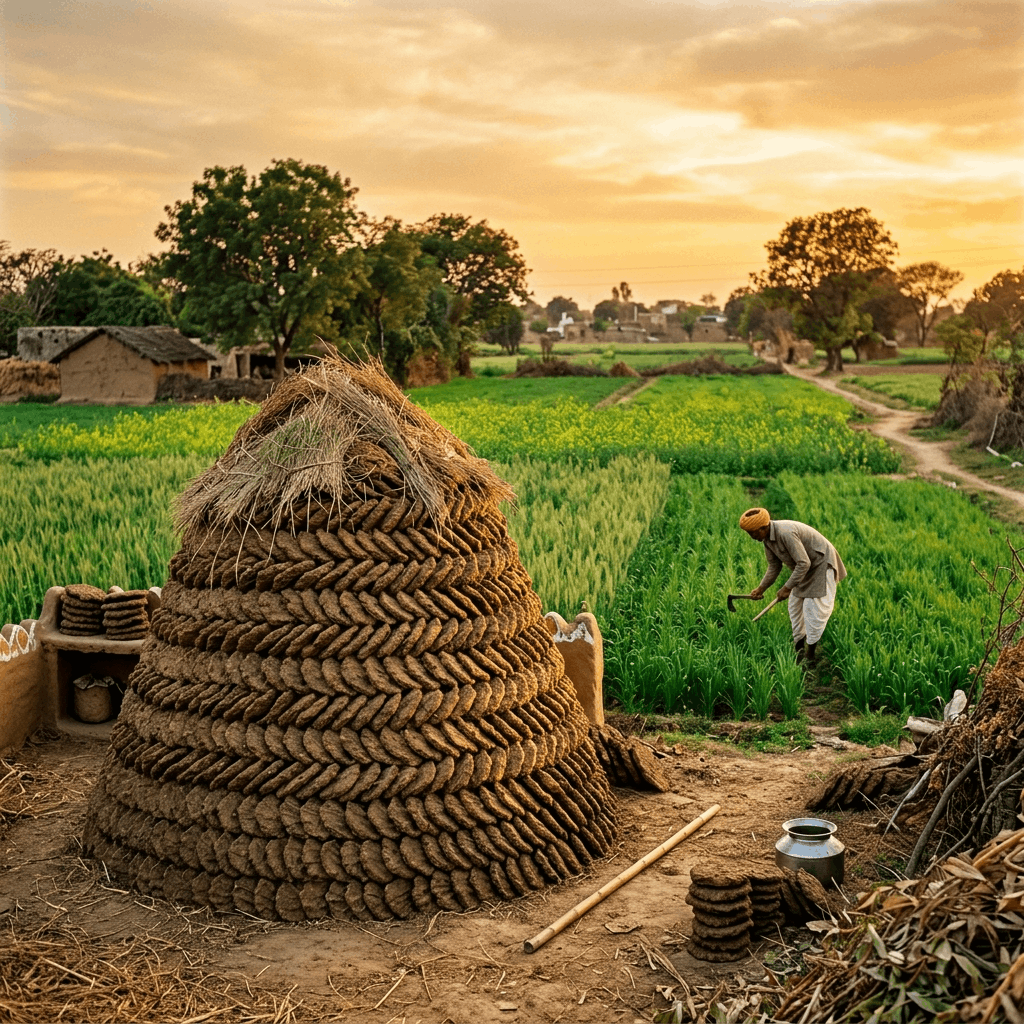
Embracing the Ancient Tradition of Cow Dung Cakes
Deep within the vibrant, culturally rich heartlands of the Indian subcontinent, the humble Cow Dung Cake—affectionately known locally as Upla, Kanda, or Goitha—has held a position of supreme practical and spiritual importance for thousands of years. Far from being merely agricultural waste, cow dung has been historically revered as a profoundly sacred, immensely versatile, and highly valuable natural resource. The intricate art of meticulously hand-crafting cow dung cakes has been lovingly passed down through countless generations, primarily championed by the hardworking women of rural households. These simple, sun-baked discs of biomass have historically powered the hearths of millions of homes, cooked innumerable traditional feasts, and facilitated the most sacred religious ceremonies known to Vedic culture. Today, as the modern world aggressively pivots toward organic, sustainable, and highly eco-friendly living practices, the ancient tradition of making and utilizing cow dung cakes is experiencing a massive, unprecedented resurgence in global popularity.
The fundamental essence of the Cow Dung Cake lies in its remarkable simplicity and its profound connection to the delicate rhythms of nature. It is the ultimate, pristine manifestation of a zero-waste, fully circular lifestyle. In a traditional agricultural setup, absolutely nothing is ever wasted. The cow graciously provides nourishing milk for sustenance, strong draught power for plowing the fertile fields, and highly nutrient-rich dung that serves both as a miraculous organic fertilizer and a highly reliable daily fuel source. Unlike modern, aggressively extracted fossil fuels that require immensely destructive mining operations and millions of years to slowly form deep within the earth, cow dung is a universally accessible, daily renewable resource. This brilliant accessibility ensures that even the most economically disadvantaged rural communities possess total energy independence, free from the volatile, crippling price fluctuations of the global commercial fuel markets.
Furthermore, the modern urban demand for completely pure, unadulterated cow dung cakes has skyrocketed remarkably. Driven by a deep, nostalgic yearning to fiercely reconnect with ancestral traditions, millions of urban dwellers are actively seeking out these traditional cakes for conducting their daily pujas, observing elaborate festive rituals like Holika Dahan, and authentically preparing specialized culinary delicacies. This massive, surging urban demand has successfully transformed the simple, localized act of making cow dung cakes into a highly organized, massively profitable micro-industry. This comprehensive, meticulously detailed guide is specifically designed to illuminate every single facet of cow dung cake production, exploring the daily raw material requirements, the highly therapeutic manual and mechanized manufacturing processes, the incredible environmental benefits, and the rapidly expanding global commercial market.
Raw Materials, Ingredients, and Daily Production Capabilities
The formulation of the perfect Cow Dung Cake is heavily reliant on sourcing the highest quality raw materials and understanding the nuanced art of traditional blending. The absolute primary ingredient is, undeniably, freshly collected dung exclusively from healthy, well-nourished indigenous cow breeds. Indigenous cows, heavily praised in Ayurvedic texts, produce dung that is naturally rich in highly beneficial microbes and specific organic compounds, granting the final cake superior burning qualities and highly sought-after spiritual purity. While some manufacturers prefer to use pure, unadulterated dung to cater strictly to religious markets, it is highly common and incredibly practical to blend the dung with a precise proportion of dry, locally available agricultural biomass. This carefully added biomass serves multiple critical functions in the manufacturing process.
Adding dry biomass dramatically improves the overall structural integrity of the cow dung cake. It acts precisely like reinforced steel rebar within concrete, intricately binding the wet dung fibers together and aggressively preventing the cake from heavily cracking, aggressively crumbling, or falling apart during the rigorous sun-drying process. Furthermore, the hollow, microscopic cellular structure of the dry straw naturally traps tiny pockets of air within the dense cake. This ingeniously trapped oxygen is absolutely vital because it actively promotes a much more consistent, steady, and highly oxygenated combustion process when the cake is eventually ignited, completely preventing it from smoldering uselessly and generating excessive, suffocating smoke. A minimal amount of clean water may sometimes be cautiously sprinkled over the mixture exclusively if the fresh dung is unusually dry, ensuring the entire blend reaches the perfect, highly pliable, dough-like consistency required for molding.
When analyzing the daily production capacity, one must heavily consider the chosen method of manufacturing. The traditional, deeply therapeutic manual method relies entirely on the skilled, rhythmic hand movements of rural artisans, predominantly women. A highly experienced artisan can effortlessly and systematically hand-mold between five hundred to one thousand perfectly symmetrical cow dung cakes in a single, dedicated day of labor. However, in response to the massive, surging commercial demand, many ambitious modern enterprises are rapidly adopting specialized manual or hydraulic pressing machines. These highly efficient machines utilize precisely engineered metal dies to forcefully compress the mixture into flawlessly uniform, tightly packed cakes. A well-organized facility equipped with these modern pressing machines can easily scale its daily production to an astonishing three thousand to five thousand cakes, provided they possess the massive, sunlit open spaces absolutely mandatory for the extensive drying process.
Traditional Rituals, Culinary Magic, and Organic Farming
The highly diverse applications of Cow Dung Cakes effortlessly transcend mere fuel, deeply embedding themselves into the spiritual, culinary, and agricultural fabric of society. Key applications include:
- Religious Ceremonies: Daily Agnihotra, Havans, and Holika Dahan.
- Traditional Cooking: Slow-cooking Litti Chokha and Dal Bati Churma.
- Organic Farming: Brewing liquid fertilizers like Jivamrut.
Beyond the sacred altars, Cow Dung Cakes hold a legendary, deeply cherished status in the traditional culinary world, particularly in the northern and western regions of the Indian subcontinent. Specific, highly iconic regional delicacies—most notably the beloved Litti Chokha of Bihar and the rich, decadent Dal Bati Churma of Rajasthan—strictly demand to be slow-cooked directly over the glowing, steady embers of high-quality cow dung cakes. The cakes burn with a remarkably gentle, highly consistent radiant heat that perfectly bakes the dense dough from the inside out without rapidly scorching the exterior. Furthermore, the completely natural, faintly earthy smoke emitted by the smoldering embers actively infuses the food with an incredibly distinct, highly sought-after rustic flavor profile that is absolutely impossible to artificially replicate using modern gas stoves, electric ovens, or commercial charcoal.
In the rapidly expanding domain of organic, sustainable agriculture, Cow Dung Cakes serve entirely alternative, highly beneficial purposes. Innovative farmers frequently utilize these dried cakes as a highly concentrated, easily transportable source of organic matter. The cakes can be heavily soaked and thoroughly fermented in massive vats of water for several days to expertly brew liquid organic fertilizers, commonly known as Jivamrut. This highly potent microbial soup is then systematically sprayed across parched fields to radically boost soil fertility, vastly improve soil structure, and strongly enhance crop yields without the use of toxic chemicals. Additionally, farmers deliberately burn slightly damp cow dung cakes strategically around the perimeters of their fields during the evening; the resulting thick, natural smoke acts as a highly effective, completely non-toxic repellent against massive swarms of crop-destroying insects and disease-carrying mosquitoes.
Comparing Outcomes: Polluting Coal vs. Renewable Dung Cake
To genuinely appreciate the massive ecological significance of Cow Dung Cakes, it is strictly necessary to objectively compare them against highly destructive, conventional fossil fuels, particularly industrial coal. The environmental outcomes of heavily utilizing coal are unequivocally catastrophic at every single stage of its lifecycle. Coal is a fundamentally non-renewable resource, taking hundreds of millions of years to form deep underground. The aggressive extraction process involves immensely destructive strip mining, which completely annihilates entire forest ecosystems, severely poisons local groundwater tables with toxic heavy metals, and permanently displaces vulnerable indigenous communities. In stark, brilliant contrast, Cow Dung Cakes are a one hundred percent daily renewable resource. They are effortlessly produced above ground, requiring absolutely zero destructive mining, zero heavy machinery for extraction, and actively utilizing a byproduct that would otherwise require intensive waste management.
When we meticulously analyze the exact combustion outcomes, the stark differences become even more profoundly alarming. Burning massive quantities of industrial coal relentlessly releases gargantuan volumes of highly toxic sulfur dioxide, nitrogen oxides, and incredibly dense particulate matter directly into the fragile atmosphere. These horrific pollutants are the absolute primary drivers of deadly acid rain, severe respiratory epidemics, and the suffocating urban smog that completely paralyzes modern megacities. Conversely, Cow Dung Cakes operate strictly within a short-term, highly balanced, and perfectly natural carbon cycle. The carbon dioxide gently released during the burning of a dung cake is the exact same carbon that the cow recently consumed via plant matter, which those plants had previously absorbed directly from the atmosphere. Therefore, burning dung cakes contributes absolutely zero net new carbon to the global ecosystem.
Furthermore, we must carefully consider the drastically different outcomes regarding the residual ash. The toxic fly ash generated by massive coal power plants is a highly hazardous, severely dangerous waste material. It is heavily loaded with concentrated heavy metals like arsenic, lead, and mercury, presenting a monumental, incredibly expensive, and highly dangerous disposal nightmare for municipalities. If this toxic ash leaks into rivers, it completely destroys aquatic life. On the complete opposite end of the spectrum, the highly pure ash left behind after burning a Cow Dung Cake is a miraculously beneficial, incredibly safe substance. It is a highly potent, exceptionally mineral-rich organic soil conditioner that farmers actively seek out to naturally raise the pH of highly acidic soils, brilliantly completing the flawless, zero-waste ecological loop designated by nature.
Empowering Bovine Life and Fostering Biodiversity
The massive, highly organized production and widespread commercial utilization of Cow Dung Cakes have a profoundly positive, direct, and immediate impact on the protection, welfare, and strict preservation of bovine life. In the ruthlessly calculated, highly profit-driven modern dairy industry, the intrinsic value of a cow is tragically and exclusively linked solely to her daily milk production. The heartbreaking reality is that once a cow naturally ages and inevitably stops producing high volumes of milk, she is coldly viewed as a severe financial drain on the impoverished farmer. This cruel economic desperation frequently forces farmers into the agonizing decision of abandoning these gentle creatures to starve on unforgiving city streets or covertly selling them into the horrific, highly illegal slaughterhouse networks. The Cow Dung Cake industry actively and aggressively combats this tragedy by totally redefining bovine economics.
By establishing a massive, highly lucrative commercial market for beautifully crafted, traditional cow dung products, we actively guarantee that every single cow—regardless of her age, gender, or milk-producing status—remains a highly valuable, actively contributing economic asset to the farmer. Gaushalas (traditional cow sanctuaries) that provide loving shelter to thousands of abandoned, sick, and elderly cows can achieve total financial independence and absolute self-sustainability simply by systematically harvesting, processing, and selling Cow Dung Cakes. This deeply compassionate economic model ensures that these highly revered animals are lovingly fed, meticulously medically treated, and allowed to live out their natural lifespans with absolute dignity, profound respect, and total safety, perfectly aligning with the deepest cultural and spiritual values of the region.
Beyond saving the majestic cows, the widespread use of Cow Dung Cakes actively fosters and aggressively protects highly vulnerable, microscopic biodiversity within our vital agricultural soils. When modern farmers are aggressively pushed to heavily utilize highly toxic chemical fertilizers—often manufactured using vast amounts of fossil fuels—these harsh, synthetic chemicals systematically annihilate the delicate, incredibly complex web of life thriving beneath the soil surface. Billions of highly beneficial earthworms, nitrogen-fixing bacteria, and vital mycorrhizal fungi are completely wiped out, leaving the soil completely barren, heavily compacted, and dangerously lifeless. By actively returning the pure, nutrient-dense ash of burned Cow Dung Cakes directly to the fields, we gently nourish, aggressively protect, and massively stimulate this highly critical microscopic biodiversity, ensuring the long-term, multi-generational fertility and absolute resilience of our precious agricultural lands.
Protecting Indoor Air Quality and Emitting Natural Purifiers
While the burning of any solid biomass naturally produces some level of smoke, the specific properties, chemical composition, and traditional application of Cow Dung Cake smoke offer unique protective benefits that distinguish it entirely from the highly toxic fumes emitted by modern fossil fuels or damp, rotting wood. Ancient Ayurvedic texts and centuries of deeply observed traditional knowledge heavily emphasize that the smoke gently rising from a pure, fully dried cow dung cake possesses remarkably potent, naturally occurring antibacterial, highly antiviral, and deeply purifying properties. When these cakes are systematically burned during sacred daily rituals, particularly when generously combined with pure, medicinal cow ghee and highly specific, fragrant Ayurvedic herbs, the resulting aromatic smoke is widely believed to radically cleanse the immediate indoor air, actively neutralizing massive concentrations of harmful, airborne microscopic pathogens.
This deeply traditional practice acts as a highly effective, completely natural, and beautifully aromatic room purifier, aggressively protecting the inhabitants of the household from a wide variety of common seasonal infections, annoying airborne allergies, and rapidly spreading viral illnesses. Furthermore, the completely natural, slightly pungent smoke generated by slowly smoldering cow dung acts as a tremendously powerful, totally non-toxic, and highly effective insect repellent. For countless centuries, rural families have strategically burned these cakes in their courtyards during the humid, mosquito-heavy evening hours to safely, effectively, and naturally drive away massive swarms of dangerous, malaria-carrying mosquitoes and highly destructive agricultural pests, completely bypassing the desperate need for highly toxic, chemical-laden commercial mosquito coils that severely damage human lungs.
From a strict environmental protection standpoint, utilizing Cow Dung Cakes actively shields our precious, highly vulnerable local water ecosystems from devastating chemical pollution. When highly aggressive, commercially synthesized chemical fertilizers and harsh industrial pesticides are heavily applied to massive agricultural fields, heavy seasonal monsoons inevitably wash these toxic, highly concentrated chemicals directly into our delicate rivers, fragile lakes, and vital underground aquifers. This toxic agricultural runoff causes catastrophic, massive algae blooms that completely suffocate all aquatic life and severely poison the drinking water supply for millions of people. By actively replacing these destructive, harsh synthetic chemicals with the incredibly safe, highly natural, and deeply nourishing ash generated from Cow Dung Cakes, we aggressively protect our vital groundwater resources and heavily ensure the pristine health of our interconnected aquatic ecosystems.
Step-by-Step Traditional and Modern Manufacturing Guide
Step 1: Systematic Harvesting of Pure Cow Dung
The meticulous process officially commences with the daily, systematic, and highly hygienic harvesting of fresh cow dung, ideally sourced early in the morning directly from healthy, freely grazing indigenous cows. The collection area must be kept impeccably clean to strictly avoid picking up unwanted, excessive dirt, sharp stones, or harmful plastic debris. The absolute freshness of the dung is paramount, as fresh dung possesses the exact perfect, highly pliable moisture content and the absolute maximum concentration of natural, incredibly sticky binding agents required to flawlessly form a highly durable, structurally robust cake that will not crumble during drying.
Step 2: Vigorous Kneading with Dry Biomass
Once the massive mounds of fresh dung are securely collected, the highly labor-intensive, deeply therapeutic process of vigorous kneading begins. Skilled artisans, or specialized mixing machines in modern setups, aggressively and thoroughly mix the wet dung with precisely measured, carefully controlled amounts of finely chopped dry agricultural biomass, such as golden wheat straw or dry rice husk. This vigorous, continuous kneading process behaves exactly like kneading heavy bread dough; it perfectly ensures that the dry, fibrous materials are absolutely evenly distributed throughout the dense mixture, creating a perfectly homogeneous, highly workable, and structurally reinforced heavy paste.
Step 3: Precision Molding and Symmetrical Shaping
In the highly revered traditional method, the artisan expertly takes a precise, hefty handful of the perfectly kneaded mixture and, using highly practiced, incredibly rhythmic hand movements, rapidly pats and fiercely shapes it into a perfectly flawless, beautifully symmetrical flat circular disc. For highly organized, large-scale commercial operations attempting to meet massive urban demand, the heavy mixture is systematically fed directly into specialized, highly efficient manual or hydraulic pressing machines. These powerful machines utilize heavy steel dies to rapidly, forcefully stamp out thousands of perfectly uniform, highly compressed cakes, ensuring absolute consistency in exact size, precise weight, and flawless density.
Step 4: Extensive Sun-Drying and Careful Flipping
The freshly molded, highly damp cakes are extremely fragile and must be immediately transported to massive, completely open, heavily sunlit drying yards. They are carefully laid out perfectly flat on the warm ground, or traditionally, forcefully slapped onto sun-facing brick walls to dry vertically. To guarantee absolutely even, highly comprehensive drying and to completely prevent the formation of destructive internal mold, the cakes must be meticulously, manually flipped over every single day. Depending entirely on the intense heat of the sun and the ambient wind conditions, this extensive, highly critical curing process naturally takes anywhere from five to twelve continuous days to completely finalize.
Step 5: Traditional Stacking (Bitauda) and Modern Packaging
Once the cakes are absolutely, totally bone-dry and remarkably light, they are ready for final storage or immediate commercial dispatch. In traditional, ancient village settings, the dried cakes are ingeniously, masterfully stacked into massive, highly architectural, beautiful dome-shaped structures locally known as Bitaudas. These incredible structures are then carefully plastered over with a thin, protective layer of wet dung to permanently protect the fuel from devastating monsoon rains. For the highly lucrative, booming modern commercial and urban e-commerce markets, the perfectly dried cakes are meticulously inspected for flaws, carefully sorted by exact size, and elegantly packed in highly protective, beautifully branded, eco-friendly shrink-wrap or premium cardboard boxes for safe, highly secure nationwide shipping.
The Booming Market Scope and Commercial Opportunities
The modern market scope for beautifully crafted, highly authentic Cow Dung Cakes has exploded into a massively lucrative, multi-million dollar commercial industry, completely defying its incredibly humble, entirely rural origins. In previous decades, the systematic production of Upla was strictly confined to purely localized, highly informal village micro-economies. However, the massive, unprecedented rise of digital internet connectivity and the total domination of ubiquitous e-commerce giants have completely, radically transformed this incredibly ancient product into a highly sought-after, premium-priced retail commodity perfectly accessible to millions of wealthy urban consumers nationwide.
This massive, incredibly rapid commercialization presents an absolutely phenomenal, highly profitable financial opportunity for rural farmers, dedicated women empowerment cooperatives, and highly ambitious eco-entrepreneurs. By establishing exceptionally strict quality control measures, absolutely ensuring the total purity of the raw cow dung, and heavily investing in highly attractive, highly protective, premium eco-packaging, manufacturers can easily command incredibly high, massively profitable retail prices in the booming urban markets. Furthermore, there is a massive, highly consistent, and extremely lucrative bulk wholesale demand originating directly from massive temple complexes, sprawling spiritual ashrams, and large-scale Ayurvedic pharmacies that strictly require a massive, uninterrupted, deeply reliable supply of pure cow dung cakes for their daily, highly elaborate institutional requirements.
Moreover, the highly lucrative commercial potential extends brilliantly far beyond the geographical borders of India. There is a massive, highly aggressive, and deeply passionate export demand originating directly from the gigantic, highly affluent Indian diaspora permanently settled in the United States, the United Kingdom, Canada, and Australia. These deeply nostalgic populations are highly desperate to procure absolutely authentic, traditional materials to properly celebrate major cultural festivals and meticulously perform their sacred religious duties. By successfully navigating complex international phytosanitary shipping regulations and securing the necessary agricultural export certifications, highly ambitious, forward-thinking manufacturers can successfully tap into this incredibly wealthy, highly premium global market, firmly establishing the humble Cow Dung Cake as a highly valuable, massively profitable global export commodity.
📦 Bulk Orders & Export
Mitti Gold Organic: For bulk orders of all organic fertilizers — Farmers, Nurseries, and Export. WhatsApp: +91 95372 30173
Frequently Asked Questions About Cow Dung Cakes (Upla)
In ancient Hindu traditions, the cow is universally revered as a profoundly sacred, deeply holy mother figure, and absolutely all products derived from her, most notably her dung, are considered inherently, exceptionally pure and fiercely auspicious. Burning pure Cow Dung Cakes during Havans and daily pujas is deeply believed to radically purify the immediate spiritual and physical atmosphere, actively ward off massive amounts of negative cosmic energy, and heavily please the invoked deities. The completely natural, highly aromatic smoke generated is deeply intertwined with ancient, highly sacred Vedic rituals.
Yes, you absolutely can, and it is a highly cherished, ancient culinary tradition. Cow Dung Cakes burn with a remarkably steady, highly consistent, and incredibly gentle radiant heat, making them absolutely perfect for slow-cooking traditional, highly iconic dishes like Litti Chokha or beautifully baking flatbreads. They naturally impart a highly distinct, deeply rustic, and incredibly delicious smoky flavor to the food that is highly prized by elite culinary enthusiasts. Ensure the cakes are absolutely bone-dry before cooking to avoid excessive smoke.
Proper storage is absolutely critical to heavily maintain the structural integrity and high combustibility of the cakes. They must always be meticulously stored in a highly elevated, absolutely dry, and incredibly well-ventilated indoor area, completely totally away from any direct moisture, heavy humidity, or unexpected rain. If they inadvertently absorb ambient moisture, they will become incredibly difficult to easily ignite, will produce massive amounts of suffocating smoke, and may rapidly develop highly destructive fungal mold. Keep them securely packed in highly breathable cardboard boxes or woven jute bags.
The total purity heavily depends entirely on the specific brand and the exact manufacturer you choose to purchase from. Highly reputable, deeply trusted brands and dedicated gaushalas take immense, profound pride in strictly using one hundred percent pure, totally unadulterated indigenous cow dung, mixing it only with completely natural, highly necessary agricultural binders like dry wheat straw. It is highly advisable to meticulously read the product reviews, carefully check for trusted organic certifications, and exclusively purchase from deeply reliable, highly transparent sources to guarantee absolute ritual purity.
Absolutely, yes. The residual ash left over after thoroughly burning Cow Dung Cakes is an incredibly valuable, highly potent, and exceptionally safe organic resource. It is heavily packed with vital, essential plant nutrients like potassium and phosphorus. You can safely, highly effectively sprinkle this pure ash directly around the base of your potted plants or vigorously mix it deep into your garden soil to naturally boost overall fertility, actively deter harmful garden pests, and safely raise the pH level of overly acidic soils.