📅
June 2026 | ✍️ Mitti Gold Organic | 🗂️
Farming
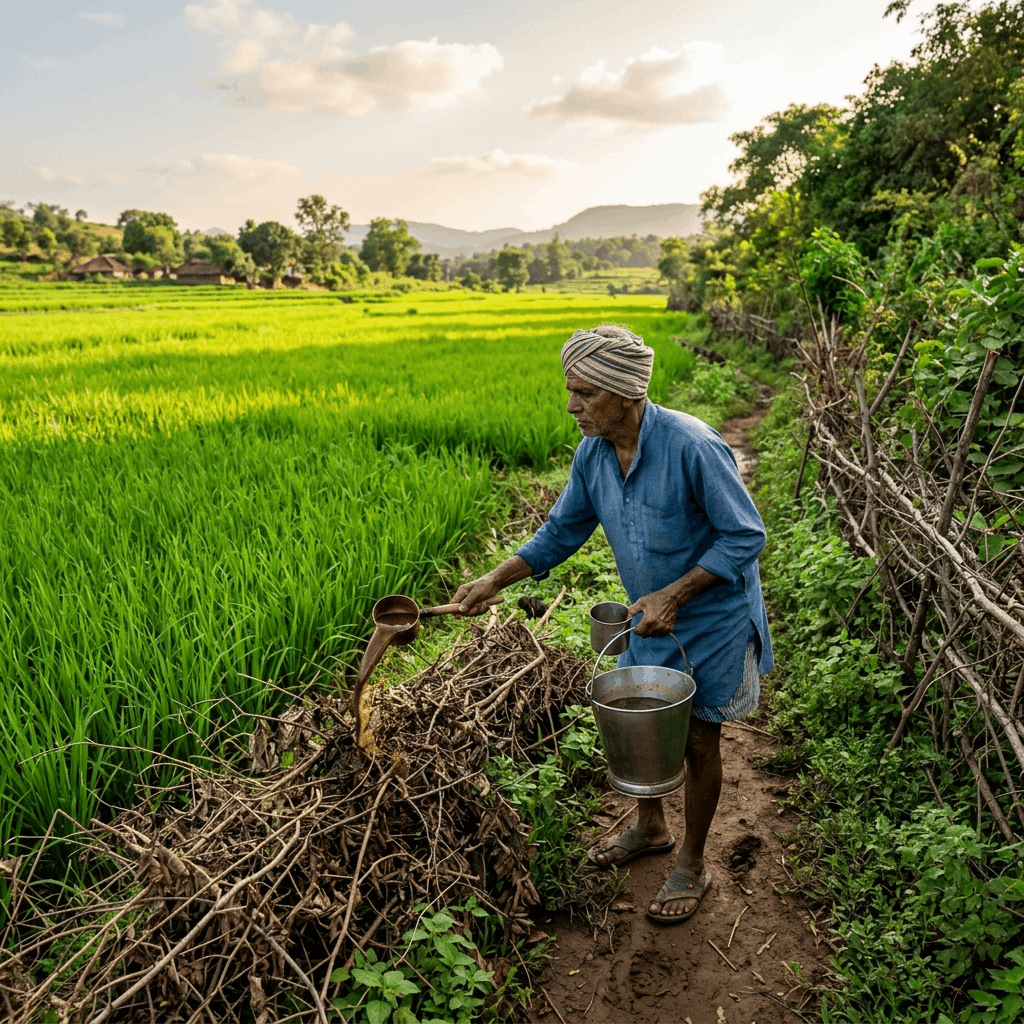
How Much Crop Damage Do Wild Boars Cause?
Wild boars (Sus scrofa) are among the most destructive agricultural pests in India, responsible for an estimated 5–25% annual crop loss across affected farming regions. States like Uttarakhand, Himachal Pradesh, Jharkhand, Karnataka, Kerala, and Odisha report severe wild boar attacks on farms adjacent to forest areas. A single sounder (group) of 5–20 boars can destroy an entire acre of standing crop — particularly wheat, maize, sugarcane, potato, sweet potato, groundnut, and paddy — in a single night. The animals use their powerful snouts to uproot root vegetables, and their hooves to trample standing crops. For small and marginal farmers, a single wild boar attack can wipe out their entire seasonal income. In addition to crop damage, wild boars are dangerous to humans — they are aggressive when protecting their young and can cause serious injuries with their tusks. Protecting your farm from wild boars is therefore both an economic and a safety priority.
Why Traditional (Desi) Methods Are Best
Chemical repellents and poisons are harmful to the environment, other wildlife, and humans. Electric fencing is effective but expensive — costing ₹1–₹3 lakh per acre — making it unaffordable for most small farmers. Trapping and culling requires government permission and is often slow and bureaucratically complex. Traditional desi remedies, on the other hand, use locally available, inexpensive, and safe materials that exploit the boar's highly sensitive sense of smell and sound. Wild boars have an olfactory system 2,000 times more powerful than humans, making strong scents one of the most effective deterrents available. Traditional Indian farmers have developed dozens of time-tested remedies over generations of coexisting with wildlife. These methods cost almost nothing, have no environmental side effects, and can be applied immediately without any government permission. When used in combination — what experts call an "integrated pest management" approach — they are highly effective at keeping boar populations away from your farm boundary.
1
Remedy 1: Human Hair & Urine Perimeter
Collect human hair from barber shops and stuff it into small cloth bags or old socks. Hang these bags at boar-nose height (50–70 cm from ground) along the farm boundary, spaced 5–8 meters apart. Human scent strongly repels wild boars. Pouring human urine diluted with water (1:3 ratio) along the farm boundary achieves the same effect and must be refreshed every 3–4 days.
2
Remedy 2: Chili & Garlic Spray
Grind 500g of red chilies and 250g of garlic together. Boil in 10 liters of water for 20 minutes. Strain and cool. Spray this solution along crop boundaries and entry points every 3–5 days, especially after rain. The intense capsaicin and allicin compounds irritate the boar's nasal passages and deter them from entering.
3
Remedy 3: Sound & Light Deterrents
Wild boars are nocturnal and avoid sudden loud sounds and bright lights. Hang empty tin cans tied with string at the farm boundary so the wind causes noise. Place solar-powered flashing lights or motion-sensor lights at entry points. Transistor radios placed in waterproof boxes near the field boundary — tuned to talk shows to simulate human presence — are also highly effective.
4
Remedy 4: Neem & Tobacco Barriers
Boil neem leaves, tobacco leaves, and onion peels together in water. Spray the cooled mixture along the boundary. Both neem and tobacco are natural repellents with bitter alkaloids that wild boars strongly dislike. Placing dried tobacco leaves or neem oil rags along the fence line also works as a passive deterrent that lasts several days.
5
Remedy 5: Physical Barrier with Thorn Bushes
Plant a thick hedge of thorny shrubs like karonda (Carissa carandas), babool (Acacia nilotica), or cactus along the farm perimeter. Wild boars avoid pushing through thorny barriers. This is a long-term, zero-maintenance solution. Combine with a simple bamboo fence for immediate protection while the plants grow.
Cost Comparison: Desi Remedies vs. Electric Fencing
Electric fencing costs ₹1–₹3 lakh per acre to install and requires regular maintenance. Desi remedies, by contrast, cost almost nothing. Human hair is free from barber shops. Chili, garlic, neem, and tobacco are available in every village at minimal cost. Tin cans and solar lights are one-time small investments. Planting thorn bushes has a one-time cost of ₹5,000–₹15,000 per acre and then provides free protection forever. When combined strategically, desi remedies can protect a 1-acre farm for under ₹2,000–₹5,000 per year — more than 95% cheaper than electric fencing. For small and marginal farmers who cannot afford commercial solutions, these traditional methods are not just the cheapest — they are often the only viable option.
Understanding Wild Boar Behavior
Understanding wild boar behavior is key to designing effective deterrents. Boars are creatures of habit — they follow the same paths and entry points night after night. Identifying and blocking these specific entry points with concentrated deterrents is far more effective than trying to protect the entire boundary uniformly. Boars are nocturnal — they venture out from forests between 10 PM and 4 AM. Maximizing the deterrent effect during these hours (bright lights, noise) is most important. Sows (female boars) with piglets are particularly aggressive and territorial — extra caution and stronger deterrents are needed when sows with young are in the area. Boars are also highly intelligent and quickly adapt to static deterrents — rotating and varying your methods every 2–3 weeks prevents them from habituating to any single deterrent.
Legal Protections & Government Schemes
Wild boars are classified as vermin under India's Wildlife Protection Act, 1972, which means state governments have the authority to permit their culling in declared areas. Farmers experiencing severe damage can approach their District Forest Officer (DFO) to report attacks and request formal crop damage compensation under state-specific relief schemes. Several states — including Uttarakhand, Himachal Pradesh, and Maharashtra — have "man-animal conflict" relief funds that provide monetary compensation to farmers for verified boar-related crop damage. Document all damage with photographs and submit a written complaint to the local Forest Department (Van Vibhag) and Gram Panchayat. This creates an official record that supports your compensation claim. In Uttarakhand, farmers can claim up to ₹30,000 per hectare for verified wild boar damage. In Himachal Pradesh, annual damage assessments provide cash compensation to registered farmers. Maharashtra's Forest Department operates a dedicated 'Vanvartul' scheme providing both compensation and subsidized electric fencing in wildlife-sensitive zones. Always keep your land records (khasra/khatauni) and crop insurance papers up to date, as these are required to process claims quickly. Farmers who are part of Farmer Producer Organizations (FPOs) or cooperatives often have dedicated extension workers who can assist with the filing process, saving individual small farmers significant time and paperwork.
Farming Crops Less Targeted by Wild Boars
One smart long-term strategy is to shift toward crops that wild boars avoid. Boars strongly dislike: (1) Strongly scented crops — mentha (peppermint), lemongrass, lavender, tulsi, and garlic, (2) Fibrous, inedible crops — cotton, jute, hemp, and bamboo, (3) Crops with bitter taste — bitter gourd (karela), neem, and moringa. By interspersing repellent crops like garlic, mentha, or lemongrass along your farm boundary while growing your main crop inside, you create a natural living barrier that repels boars without any additional effort or cost. Over time, converting some border land to mentha or garlic cultivation can actually generate additional income while providing continuous boar protection.
Protective Equipment & Tools for Farmers
Beyond desi remedies, a few affordable tools significantly improve farm protection: (1) Solar-powered electric fence charger (₹3,000–₹8,000) — for farmers who want an electric barrier without a grid connection, (2) Motion-sensor solar lights (₹800–₹2,000 per unit) — install 3–4 around a 1-acre farm, (3) Wildlife camera trap (₹3,000–₹8,000) — to identify entry points and monitor boar activity patterns, (4) Rope-and-tincan trip-wire alarms — simple DIY alarm system costing ₹200–₹500, (5) Fog machine (₹2,000–₹5,000) — intermittent fog bursts at night confuse and scare boars. These tools, used in combination with desi remedies, provide very robust and affordable farm protection.
🐗 Protect Your Farm from Wild Boars
For personalized advice on crop protection and natural farming solutions, contact Mitti Gold Organic: +91 95372 30173
Frequently Asked Questions about Wild Boar Protection
Which desi remedy works best against wild boars? +
No single remedy works 100% of the time, but the combination of human scent (hair bags + urine) + chili-garlic spray + sound deterrents has consistently proven to be the most effective low-cost approach. Human hair and urine are the strongest immediate deterrents because boars associate human scent with danger. When applied together every 3–4 days, this combination can reduce boar incursions by 70–90% in most cases.
Will boars return even after using these remedies? +
Yes, determined boars — especially those that have successfully raided a farm before — may return. This is why rotating and combining multiple deterrents is important. Boars are intelligent and adapt quickly to static deterrents. Change the position of tin cans, rotate the spray routes, and alternate between different scent deterrents every 2–3 weeks to prevent habituation.
Is it legal to kill wild boars in India? +
Wild boars are listed as "vermin" under Schedule V of the Wildlife Protection Act, 1972. Under this classification, state governments can issue formal permits allowing farmers to kill or cull wild boars in designated areas. Contact your District Forest Officer (DFO) with documented evidence of crop damage to apply for a culling permit. However, always follow the legal process and never cull wildlife without proper government authorization.
Can I get government compensation for wild boar crop damage? +
Yes. Most Indian states have man-animal conflict compensation schemes. The process involves: (1) Report the damage immediately to the local Forest Department (Van Vibhag) and Gram Panchayat, (2) Request an official damage assessment by a forest officer, (3) Submit the assessment report along with your land records (khasra, khatauni) to claim compensation. The compensation amount varies by state and crop type.
What crops are safe to grow in boar-prone areas? +
Crops that are naturally unattractive to wild boars include: mentha (peppermint), lemongrass, garlic, tulsi, turmeric, ginger, cotton, jute, bamboo, moringa (drumstick), and bitter gourd (karela). These crops have strong scents or unpleasant tastes that deter boars. Switching a portion of your farm to these crops — especially along the borders — creates a natural living barrier while generating income.