📅 June 2026 | ✍️ Mitti Gold Organic | 🗂️ Soil Health
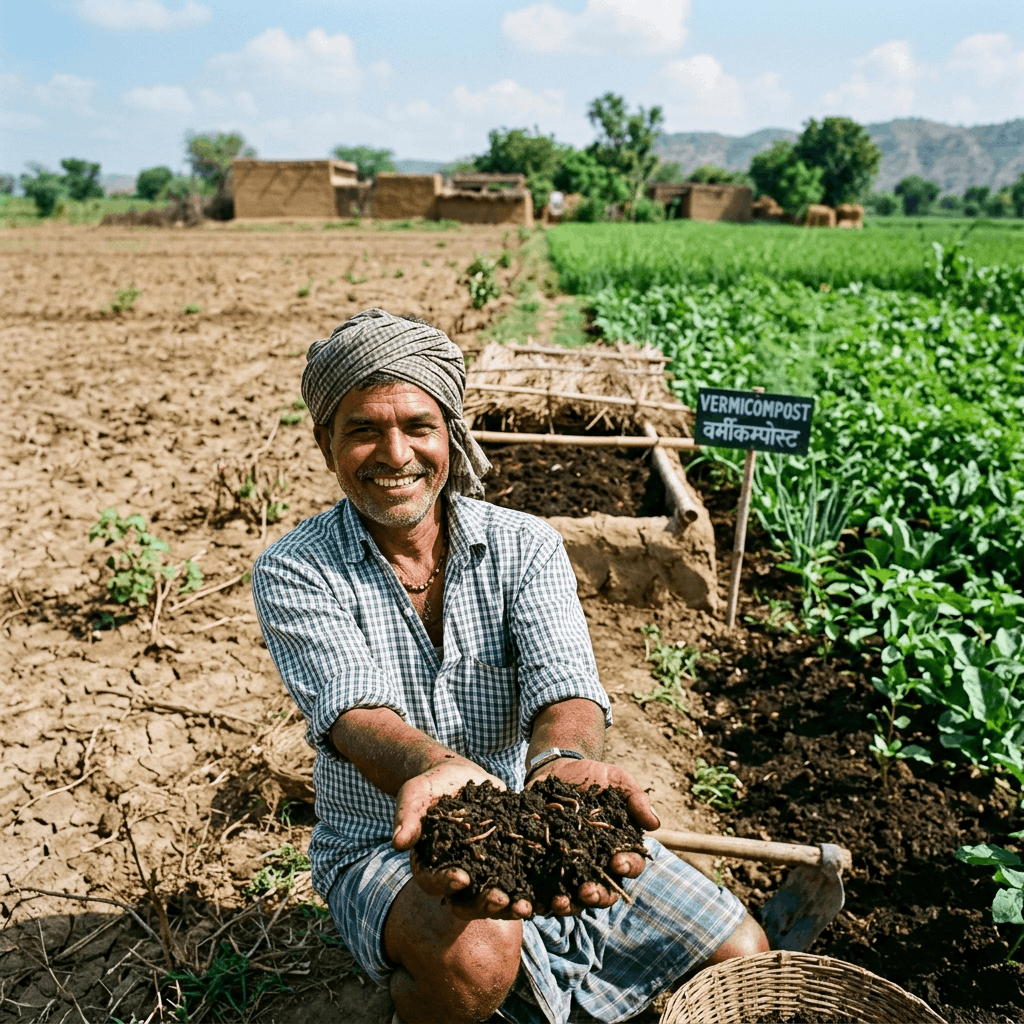
Application Rates per Bigha for Optimal Soil Restoration
Restoring barren soil is not an overnight process; it requires a systematic approach to reintroduce organic matter and beneficial microbiology. When dealing with highly degraded, compacted, or nutrient-depleted soil, the application rates of high-quality organic vermicompost must be carefully calibrated to jumpstart the biological engine of the soil.
For a standard bigha (approximately 0.62 acres, though this varies by region, commonly treated as roughly 2500 square meters for agricultural calculations), the initial remediation dose should be substantial. We recommend applying 1,500 to 2,000 kg (1.5 to 2 metric tons) of premium vermicompost per bigha during the first year of reclamation. This heavy initial dose is crucial because barren soil completely lacks the humus and organic carbon required to retain moisture and support microbial life. The vermicompost acts as a sponge and a biological inoculant simultaneously.
In the second year, as the soil structure begins to form aggregates and the natural earthworm population slowly returns, the dosage can be reduced to 1,000 to 1,200 kg per bigha. By the third year of continuous application, the soil will transition from a barren state to a recovering, fertile state, allowing maintenance doses of 500 to 800 kg per bigha depending on the crop cultivated. It is highly advised to broadcast the compost evenly and immediately incorporate it into the top 4-6 inches of soil using a shallow rotavator to prevent UV degradation of the live microbes.
For specific high-value crops grown in newly restored lands, such as orchards or cash crops, localized application (ring method around fruit trees or band placement along crop rows) can optimize the use of the compost. In these localized applications, use 2-5 kg per fruit tree sapling, mixed thoroughly with the backfill soil.
Step-by-Step Guide: How and When to Apply
Timing and methodology are just as critical as the quantity of vermicompost applied. Applying it at the wrong time or in the wrong manner can significantly reduce its efficacy. Below is a comprehensive, step-by-step methodology for rebuilding soil structure.
Soil Preparation and Moisture Assessment
Before applying vermicompost to barren land, the soil must be prepared to receive it. Deep ploughing (chisel ploughing) is recommended if there is a hardpan below the surface, which is common in degraded lands. Ensure the soil has adequate moisture (around 40-50% field capacity). Never apply vermicompost to bone-dry, dusty soil, as the microbes will immediately go into dormancy or die due to osmotic stress. Lightly irrigate the field 24 hours prior to application if necessary.
Timing the Application
The best time to apply vermicompost is during the pre-monsoon season or right before the main sowing period. Early morning or late afternoon applications are ideal to protect the sensitive beneficial bacteria and fungi from the harsh midday ultraviolet (UV) rays of the sun. If applying during peak summer, ensure immediate incorporation into the soil and immediate light watering.
Broadcasting and Incorporation
For open fields, broadcast the vermicompost evenly across the entire area. Immediately follow up with a shallow tilling or rotavating process, mixing the compost into the top 10-15 cm (4-6 inches) of the topsoil. This is the aerobic zone where most plant roots feed and where soil microbes thrive. Burying it too deep creates anaerobic conditions which are detrimental to the aerobic bacteria present in the compost.
Mulching for Microclimate Creation
Barren soils heat up quickly and lose moisture rapidly. After incorporating the vermicompost, applying a layer of organic mulch (straw, dried leaves, or crop residue) over the soil surface is highly beneficial. Mulch regulates soil temperature, dramatically reduces water evaporation, and provides a dark, moist habitat that encourages native earthworms to migrate upwards and feed on the decomposing matter, further accelerating soil restoration.
Post-Application Irrigation
Immediately after incorporation (and mulching, if done), provide a light but thorough irrigation. The water helps to distribute the water-soluble nutrients and humic acids from the vermicompost deeper into the soil profile. It also activates the dormant microbes in the compost, allowing them to rapidly multiply and begin the process of breaking down complex minerals into plant-available forms.
Comparing Product Outcomes: Vermicompost vs. Chemical Fertilizers
When attempting to reclaim barren land, the choice between organic inputs like vermicompost and synthetic chemical fertilizers dictates the long-term success of the project. Chemical fertilizers (like Urea, DAP, MOP) supply immediate, water-soluble macronutrients (N-P-K). However, they provide absolutely zero organic carbon. In barren soils, applying chemical fertilizers is akin to feeding sugar to a starving person—it provides a brief spike in energy but fundamentally fails to rebuild the body.
Chemicals do not improve soil structure; in fact, their high salt index often exacerbates soil compaction and destroys the delicate soil macro-aggregates. Over time, they acidify the soil and kill off the remaining native beneficial microbiology. In stark contrast, vermicompost is a soil conditioner. It contains a rich matrix of humus, humic acids, fulvic acids, and complex carbon structures. When vermicompost is applied to barren soil, the sticky glycoprotein called glomalin (produced by mycorrhizal fungi in the compost) binds microscopic sand, silt, and clay particles together into larger, stable aggregates. This creates pore space.
Pore space is the secret to fertile soil. It allows oxygen to penetrate the root zone and allows the soil to act like a giant sponge, absorbing and holding rainwater rather than letting it run off and cause erosion. Furthermore, vermicompost releases nutrients slowly over the entire crop cycle, ensuring plants have a steady diet, whereas chemical fertilizers are highly prone to leaching away with the first heavy rain, polluting local water tables and leaving the crop starved halfway through the season. The outcome is clear: chemicals mine the soil for short-term gain, while vermicompost invests in the soil bank for long-term, sustainable fertility.
Reviving Soil Biology: Earthworms and Microorganisms
Barren soil is biologically dead soil. It lacks the complex food web necessary for a healthy ecosystem. Vermicompost is essentially a biological probiotic for the earth. A single gram of high-quality vermicompost can contain billions of beneficial microorganisms, including nitrogen-fixing bacteria (like Azotobacter and Rhizobium), phosphate-solubilizing bacteria (PSB), actinomycetes, and beneficial fungi (like Trichoderma and Mycorrhizae).
When introduced into barren land, these microorganisms immediately get to work. They secrete enzymes that break down organic matter and unlock tightly bound minerals in the soil (such as locked phosphorus), converting them into ionic forms that plant roots can easily absorb. Furthermore, the application of vermicompost acts as an irresistible attractant to native, deep-burrowing earthworms (anecic species). The rich organic matter provides them with a food source.
As these native earthworms return to the field, their burrowing activity physically tills the soil, creating deep channels for water infiltration and root penetration. Their castings (excrement) continuously enrich the soil profile. This symbiotic relationship between the introduced microbes from the vermicompost and the returning native macrofauna transforms the lifeless dirt into a dynamic, living, breathing, and highly fertile biological matrix. Without this biological revival, sustainable agriculture is impossible.
Natural Protection From Pests and Diseases
Economic Viability for Farmers, Nurseries, and Export
Reclaiming barren land using organic vermicompost is not just an ecological necessity; it is a highly profitable economic strategy across various sectors. For the traditional farmer, barren land represents a zero-yield liability. By investing in soil restoration through vermicompost, the farmer converts a worthless asset into productive agricultural land. Although the initial cost of bulk vermicompost may seem higher than subsidized urea, the return on investment (ROI) over a 3-5 year period is massive. Water consumption drops by up to 40% due to improved soil moisture retention, chemical pesticide costs plummet due to enhanced plant immunity, and crop yields stabilize.
For commercial nurseries and horticulturists, vermicompost is an indispensable growing medium. Barren local soil cannot be used in potting mixes without heavy amendment. Nurseries mix vermicompost with cocopeat and local soil to create premium, lightweight, nutrient-dense potting mixes that ensure high germination rates, rapid root development in saplings, and vibrant foliage in ornamental plants. This allows nurseries to charge a premium for strong, healthy, organic-ready saplings.
In the global market, there is an exponential demand for certified organic produce. Produce grown on chemically sterilized land cannot meet these export standards. Rebuilding barren land with vermicompost allows farmers to transition to certified organic farming. Organic fruits, vegetables, and spices command significantly higher prices (often a 30-50% premium) in international markets, including the EU and North America. Furthermore, many countries are implementing strict Maximum Residue Limits (MRLs) for chemical pesticides; growing in biologically active, vermicompost-enriched soil ensures compliance with these stringent export regulations, opening up lucrative global trade avenues for rural communities.
📦 Bulk Orders & Export
Mitti Gold Organic: For bulk orders of all organic fertilizers — Farmers, Nurseries, and Export. WhatsApp: +91 95372 30173
Frequently Asked Questions on Rebuilding Soil
While you will see improvements in soil texture and water retention in the very first season, fully restoring the biological and chemical balance of heavily degraded, barren soil typically takes 2 to 3 years of continuous, heavy vermicompost application, combined with proper crop rotation and mulching practices.
Yes, vermicompost is excellent for reclaiming saline-alkaline soils. Its high organic carbon content and humic acids act as a natural buffer, helping to neutralize soil pH. It also improves soil porosity, which allows accumulated toxic salts to be leached below the root zone with heavy irrigation or rainfall.
Unlike raw cow dung or chemical fertilizers, high-quality, fully matured vermicompost will not "burn" plant roots, even if applied in excess. It is a stabilized organic material with a balanced C:N ratio and slow-release nutrients, making it incredibly safe for all types of crops and delicate saplings.
In the first year of transitioning completely barren land, a farmer might use a small amount of chemical fertilizer as a starter if the soil is profoundly depleted. However, the goal is to phase chemicals out completely by year 2 or 3 as the vermicompost restores the natural nutrient cycling of the soil microbiome, making farming 100% organic and sustainable.
Premium vermicompost should look and feel like dark, rich tea leaves or coffee grounds. It should be lightweight, crumbly, and have an earthy "forest floor" smell. It should never smell like ammonia, rot, or raw manure, and it should not contain un-decomposed material, plastic, or stones.