📅 June 2026 | ✍️ Mitti Gold Organic | 🗂️ Machinery & Markets
Nutrient Requirements and Organic Application Rates for Chhattisgarh Soils
Chhattisgarh, the "Rice Bowl of India," has soils ranging from red and yellow clayey loams (matasi soil) to heavy black clay (kanhar soil) in the fertile plains. Key crops like paddy, linseed, maize, gram, and pulses require high levels of organic matter to prevent soil compaction, increase aeration, and stop nutrient depletion. For open-field paddy and maize, the recommended basal application rate is 4 tons of Mitti Gold composted cow dung manure per acre, mixed into the soil during field preparation to build soil humus and improve structure. For oilseeds like linseed and pulses, farmers should apply 1.5 to 2 tons of Mitti Gold vermicompost per acre during soil preparation to provide direct, rich nutrition to seedling roots. Red and gravelly soils in the upland areas of Bastar and Surguja have poor water retention; incorporating 300 to 400 kg of Mitti Gold agricultural charcoal per acre improves moisture-holding capacity and holds key nutrients, preventing them from washing down during monsoon downpours. Top-dressing with 200 to 250 kg of Mitti Gold pure cow dung powder during the active vegetative stage provides essential slow-release nitrogen, improving grain weight and market value. Additionally, applying 10 liters of liquid vermiwash per acre through irrigation or drenching helps supply plant growth hormones and trace elements that promote root extension. This integrated organic feeding strategy improves soil texture, reduces dependence on synthetic chemical inputs, and ensures that grain sizes and oil content remain high, fetching premium bids at state mandis and satisfying the stringent quality checks of wholesale national buyers. Furthermore, to combat the structural issues of heavy clayey kanhar soils in the central plains, incorporating agricultural charcoal alongside composted cow dung manure during primary tillage is highly recommended. These heavy clay soils tend to compact and crack severely during dry winter spells, tearing crop roots and restricting air movement. The addition of agricultural charcoal creates permanent macro-pores that increase soil aeration, facilitate rapid root penetration, and promote nitrification. In contrast, for the gravelly bhata soils of the upland districts, applying a basal dose of 5 tons of composted cow dung manure per acre combined with 200 kg of pure cow dung powder is crucial to build up soil organic carbon from scratch. This layer prevents nutrient leaching and provides a stable matrix for plant roots to grow. For aromatic paddy varieties like Jeera Phool and Dubraj, which command premium market prices, applying Mitti Gold vermicompost during the tillering and boot-leaf stages ensures a balanced nitrogen-to-phosphorus ratio, preventing excessive vegetative growth and reducing susceptibility to blast disease. Additionally, weekly application of vermiwash through irrigation channels stimulates the plant's systemic acquired resistance, helping it ward off fungal diseases without chemical sprays. During the reproductive phase of linseed and pulses, foliar spraying with a 10% solution of vermiwash encourages flower retention, increases pod size, and enhances seed oil concentration. By incorporating these organic amendments systematically, farmers can reduce their dependency on chemical inputs, conserve soil moisture, and improve overall grain quality, yielding crops that have uniform sizes and rich textures. Exporters and millers at Raipur and Bilaspur APMCs bid highly on crops grown using this sustainable regime because they are entirely residue-free and meet international safety standards. Over multiple cropping seasons, this organic protocol transforms degraded fields into highly fertile, self-sustaining ecosystems, ensuring long-term rural prosperity and environmental health. Additionally, the porous structure of agricultural charcoal acts as a sponge, retaining the soluble nutrients present in vermiwash and slowly releasing them to the roots as needed. This prevents the rapid leaching of potassium and nitrogen that often occurs in sandy loam matasi soils during intense monsoonal rains. By maintaining this organic feeding schedule, Chhattisgarh's farmers can ensure that their paddy crops develop strong stems, preventing lodging during high winds and heavy monsoons. The resultant high-grade grains command premium bids and fetch top prices, helping local farming communities thrive while reclaiming their land's natural fertility.
How to Apply Organic Amendments in Chhattisgarh Agriculture
The application of organic amendments must be carefully timed and aligned with the crop cycles and soil conditions of Chhattisgarh. In paddy fields, apply Mitti Gold composted cow dung manure and agricultural charcoal during the final puddling stage before transplanting seedlings, ensuring the carbon is mixed into the wet root zone. For linseed, mustard, and pulses, broadcast composted manure and agricultural charcoal evenly during land preparation, allowing the soil to absorb these materials before seed drill operations. When to apply: Sowing and transplanting are typically done in July-August after the monsoon rains set in for Kharif crops, and in October-November for Rabi oilseeds. For vegetative crops, apply a split dose of Mitti Gold vermicompost near the root zone before the flowering stage, followed by light irrigation. Drenching the crop with liquid vermiwash diluted at 1:10 during dry spells helps prevent crop stress and improves nutrient uptake. For vegetables and pulses, top-dressing with pure cow dung powder before the flowering stage provides a steady nitrogen supply and encourages robust branching. Incorporating agricultural charcoal into the clayey kanhar soils prevents them from cracking and cracking-induced root damage during dry winter periods, while improving drainage in low-lying areas. By following these precise instructions, farmers can ensure that the applied organic fertilizers are fully utilized by the crops rather than lost to leaching or runoff under heavy rains, maximizing return on investment and securing high-grade grains.
1
Soil and Basal Preparation
Broadcast composted cow dung manure and agricultural charcoal during land preparation to improve the structure of clay soils.
2
Root Zone Fertilization
Apply vermicompost and cow dung powder in splits near the crop roots during transplanting and before flowering.
3
Crop Drying and Grading
Clean and dry grains or seeds thoroughly, packing them in dry bags with charcoal packets to prevent moisture absorption and mold before auction.
Outcome Comparison: Organic Paddy Farming vs. Chemical Cultivation in Chhattisgarh
Comparing agricultural yields and soil health under organic management using Mitti Gold vermicompost against chemical-intensive farming in Chhattisgarh shows clear agronomic and financial benefits. Chemical farming in Chhattisgarh has led to soil compaction, salinity, and high debt due to escalating input costs. Organic farming, conversely, reduces input costs and improves crop quality and soil structure. Organically grown paddy has higher grain weight, better aroma, and longer shelf life, commanding top bids at local mandis. Similarly, organic pulses show better size, texture, and nutrient content. Organic soils amended with Mitti Gold agricultural charcoal and composted cow dung manure retain moisture longer, protecting crops from sudden dry spells that often affect rain-fed farms in upland zones like Bastar and Surguja. Furthermore, applying pure cow dung powder and vermiwash results in residue-free crops, attracting premium organic exporters and rice mills who pay immediate cash bonuses. The economic comparison reveals that while chemical inputs degrade the soil and require higher quantities each year, organic methods build soil carbon, reducing the farmer's water and fertilizer bills by up to 35%. Rice varieties like Jeera Phool and Dubraj grown organically fetch double the market price of chemically grown paddy, transforming agriculture into a highly profitable enterprise. This long-term sustainability is crucial for ensuring food security and rural prosperity in the state, shielding farmers from weather fluctuations.
Revitalizing Soil Biology in Matasi and Kanhar Soils
The application of composted cow dung manure provides the organic carbon needed to feed beneficial soil microorganisms. Incorporating highly porous Mitti Gold agricultural charcoal creates a stable habitat for nitrogen-fixing bacteria and mycorrhizal fungi, protecting them from extreme soil temperatures and moisture fluctuations. These microbes break down organic matter and make phosphorus and potassium available to the plants, promoting healthy root development. This biological activity increases the population of native earthworms, which aerate the soil and improve its drainage capacity. The humic acids in Mitti Gold vermicompost and vermiwash trigger the multiplication of beneficial actinomycetes, which decompose crop residues like paddy straw and stubble, converting them into valuable humus. Earthworms, attracted to the organic carbon of pure cow dung powder, create vertical channels that help in deep root penetration and air circulation in clayey Kanhar soils. Mycorrhizal networks stimulated by the agricultural charcoal help plants absorb water from deeper soil layers, boosting drought tolerance and preventing crop failure during late monsoon arrivals. This biological revitalization is key to turning compacted clays into productive, living soils, reducing the reliance on synthetic inputs and ensuring long-term fertility. A living soil ensures that crops can withstand climate extremes, resulting in stable yields and high-quality produce that attracts premium price bids at Chhattisgarh's regional agricultural produce marketing committees.
Natural Pest Resistance and Blast Disease Prevention in Paddy
Paddy and grain crops in Chhattisgarh are highly vulnerable to pests like stem borer, gall midge, and blast disease, which can destroy entire fields under warm, humid conditions. Chemical pesticides leave toxic residues, leading to mandi rejections and environmental pollution. Organic farmers prevent these issues by mixing Trichoderma and Pseudomonas-enriched Mitti Gold vermicompost and composted cow dung manure into the soil. When to apply: Apply during land preparation or before transplanting. Spraying a diluted mixture of fermented cow urine, neem oil, and vermiwash on the foliage acts as a powerful natural insect repellent, keeping crops healthy and pesticide-free. The plant nutrients supplied by organic inputs help build thicker cell walls, making it difficult for pests to feed and pathogens to penetrate. Additionally, agricultural charcoal in the soil helps absorb harmful pathogens and soil toxins, preventing root rot and damping-off. Pure cow dung powder, when mixed with bio-pesticides like Bacillus thuringiensis, acts as a carrier that keeps the beneficial microbes active on the soil surface, providing long-lasting protection. This organic protection strategy ensures a completely residue-free harvest, qualifying the produce for export and premium domestic markets. By using these natural methods, farmers protect the local ecosystem, safeguard natural predators like spiders and ladybugs, and establish an ecological balance in the field, reducing crop losses without chemical dependency.
e-NAM Trading and Premium Organic Crop Sales at Chhattisgarh APMCs
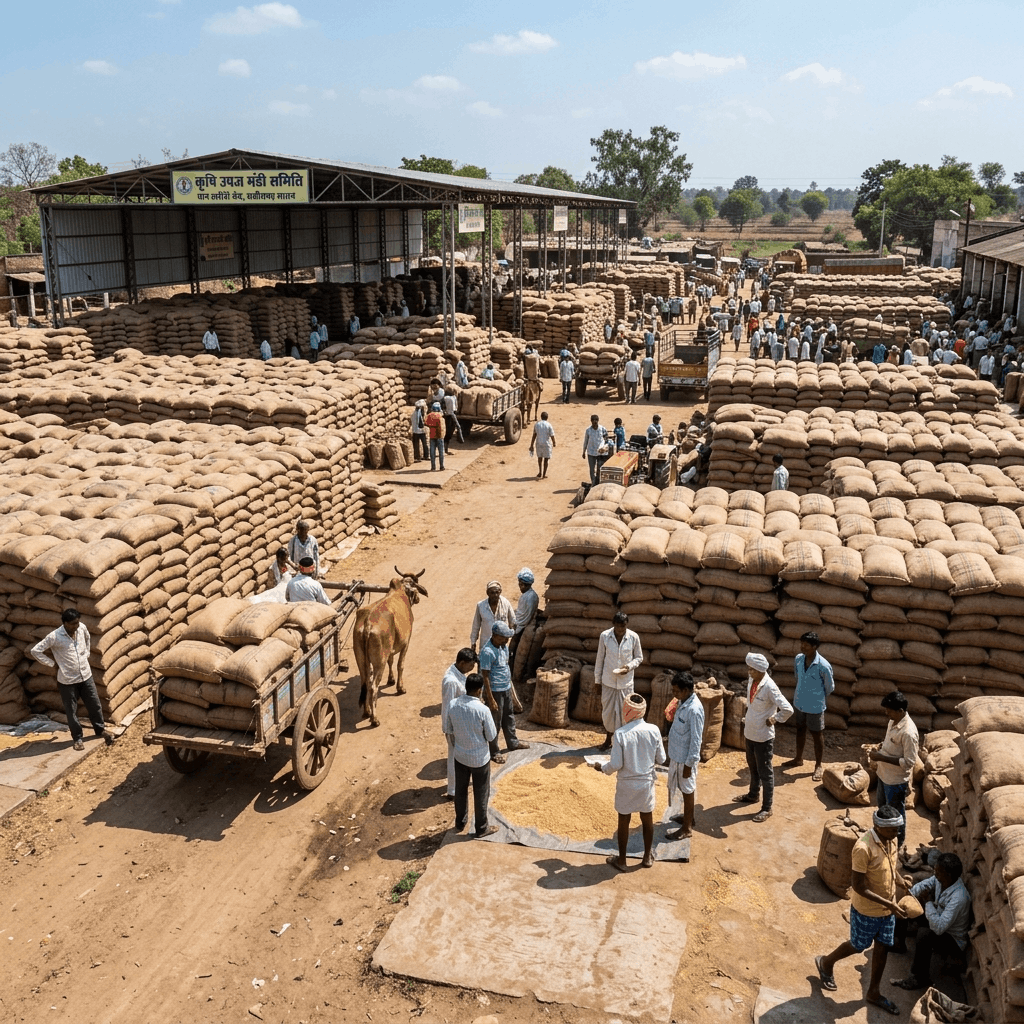
Raipur, Dhamtari, and Bilaspur APMCs are major trading hubs for paddy and grains in Chhattisgarh. The state's integration with the e-NAM platform enables digital auctions where buyers from across India bid on certified organic crops. Rice grown organically fetches a 30% to 50% price premium over conventional crops. Exporters and organic grain brands bid actively on crops cultivated with natural inputs like Mitti Gold vermicompost and composted cow dung manure, as they easily pass pesticide residue tests. The assaying process at these mandis evaluates quality parameters such as grain length, moisture content, and aroma. Incorporating Mitti Gold agricultural charcoal, pure cow dung powder, and vermiwash ensures a residue-free, high-grade harvest that consistently clears these tests. Direct trading via e-NAM ensures transparent auctions, eliminating local middlemen cartels and commission agents who reduce the farmer's profits. Furthermore, the digital bidding process ensures immediate electronic payment directly into the farmer's bank account within 24 hours. This financial security allows farmers to invest in sustainable farming and high-quality organic inputs for the next cropping season. By producing certified organic, high-grade commodities, Chhattisgarh's farmers can access international markets, secure premium prices, and build a sustainable livelihood, making organic agriculture a highly profitable choice.
📅 Official Application & Deadline Guide
⏳
Last Date of Application
Ongoing / Seasonal registration
🌐
Official Portal to Apply
Chhattisgarh State Agricultural Marketing Board
Apply Online Here ↗
📦 Bulk Orders & Export
Mitti Gold Organic: For bulk orders of all organic fertilizers — Farmers, Nurseries, and Export. WhatsApp: +91 95372 30173
Chhattisgarh APMC and Organic Farming FAQ
Which is the largest APMC for paddy in Chhattisgarh?
The Raipur and Dhamtari APMCs are the largest markets, famous for trading high-quality rice.
How can I control paddy blast disease organically?
Maintain good field sanitation, apply Trichoderma-enriched Mitti Gold vermicompost, and spray a preventive Pseudomonas fluorescens solution.
Is agricultural charcoal beneficial for upland soils?
Yes, it is highly recommended for sandy clay (matasi) soils as it improves water retention and prevents nutrient leaching.
What is the best organic fertilizer for linseed?
A combination of Mitti Gold composted cow dung manure and organic vermicompost fertilizer provides the balanced nutrients needed for high oilseed yield.
Can I trade organic pulses on e-NAM in Chhattisgarh?
Yes, registered farmers can auction certified organic pulses on the e-NAM platform, attracting premium national buyers.