??
June 2026 | ?? Mitti Gold Organic | ???
Govt Schemes
Telangana's Commitment to Agriculture
Telangana has revolutionized irrigation through the Kaleshwaram project and income support through Rythu Bandhu. In 2026, the state is shifting focus towards "Precision Farming" and "Organic Clusters." High subsidies are available for greenhouse farming and high-density orchards. From an administrative and modern agricultural policy perspective, the implementation of state-sponsored farmer subsidy schemes plays a pivotal role in accelerating the adoption of sustainable farming technologies. These guidelines are carefully structured to encourage farmers to use soil health cards and precise digital mapping to optimize input applications. By integrating subsidy benefits with verified land records, the policy ensures that high-tech machinery, micro-irrigation systems, and certified organic fertilizers are distributed to genuine cultivators, thereby minimizing resource waste and reducing input costs. In Telangana, these systematic policy interventions actively promote conservation agriculture, helping to rebuild the soil organic carbon (SOC) pool, reduce carbon emissions, and protect local agricultural ecosystems from chemical degradation while enhancing the long-term viability of small and marginal farm holdings. In addition to physical inputs, the integration of advanced digital agriculture and smart farming tools is rapidly transforming the rural economy in Telangana. The state government's ongoing emphasis on digital crop registration, drone-based pest monitoring, and automated satellite-guided weather advisory systems provides smallholders with highly accurate, real-time actionable insights. By leveraging advanced telemetry and IoT-enabled soil sensors, progressive growers in Telangana can precisely monitor micro-climatic variations, soil moisture profiles, and crop health indices. This scientific approach enables early detection of nutrient deficiencies and pest stress, allowing for highly targeted organic interventions that safeguard yields. Furthermore, the integration of these digital records with state-sponsored single-window subsidy portals streamlines the application process, ensuring that benefits are distributed transparently, thereby fostering a modern, high-yield, data-driven farming ecosystem.
Essential Schemes for Telangana Farmers
Maximize your farm's potential by utilizing these government-backed programs. To maximize the operational efficiency of subsidized agricultural machinery and infrastructure in Telangana, proper setup and technical calibration are absolutely essential. For instance, subsidized drip and sprinkler irrigation networks must be dynamically aligned with the local soil's water infiltration rate and the crop's specific growth stage to prevent water logging or root stress. When using modern subsidized seed drills or automated planters, maintaining a steady, scientifically recommended tractor speed ensures uniform seeding depth and optimal row-to-row spacing, which directly translates to uniform crop germination. Furthermore, integrating these physical mechanized tools with organic bio-fertilizers and compost amendments creates a strong biological synergy that maximizes nutrient uptake, preserves soil moisture, and significantly lowers overall irrigation energy demands. Water resource conservation and climate-resilient management remain critical pillars of sustainable agricultural development programs in Telangana. The promote of micro-irrigation systems—such as high-efficiency drip networks, localized micro-sprinklers, and solar-powered water pumps—is supported by substantial government incentives to combat depleting groundwater aquifers. These subsidized water-saving technologies are highly effective in ensuring optimal root-zone moisture while reducing overall water consumption by up to 40% compared to traditional flood irrigation. By integrating liquid biological inputs, organic liquid manures, and bio-pesticides directly into the drip irrigation systems, farmers in Telangana can achieve unparalleled nutrient use efficiency. This scientific water management strategy not only protects precious natural resources but also mitigates soil salinity and surface weed growth, ensuring high-quality, uniform crop development across diverse topographies.
1
Rythu Bandhu (Investment Support Scheme)
The world's largest direct investment support scheme. Farmers receive ₹10,000 per acre per year (₹5,000 each for Rabi and Kharif) to buy seeds, fertilizers, and other inputs.
2
Rythu Bima (Life Insurance)
A unique insurance scheme where the entire premium is paid by the government. In case of accidental or natural death of a farmer, the nominee receives ₹5 lakh within 10 days.
3
Micro Irrigation Subsidy
Telangana provides up to 100% subsidy for SC/ST farmers and 90% for others for drip and sprinkler systems. This is critical for the state's semi-arid regions.
4
Polyhouse & Green House Subsidy
Up to 75% subsidy for setting up polyhouses for flowers and high-value vegetables. This is a major opportunity for urban-adjacent farmers.
Cotton and Maize Focus in 2026
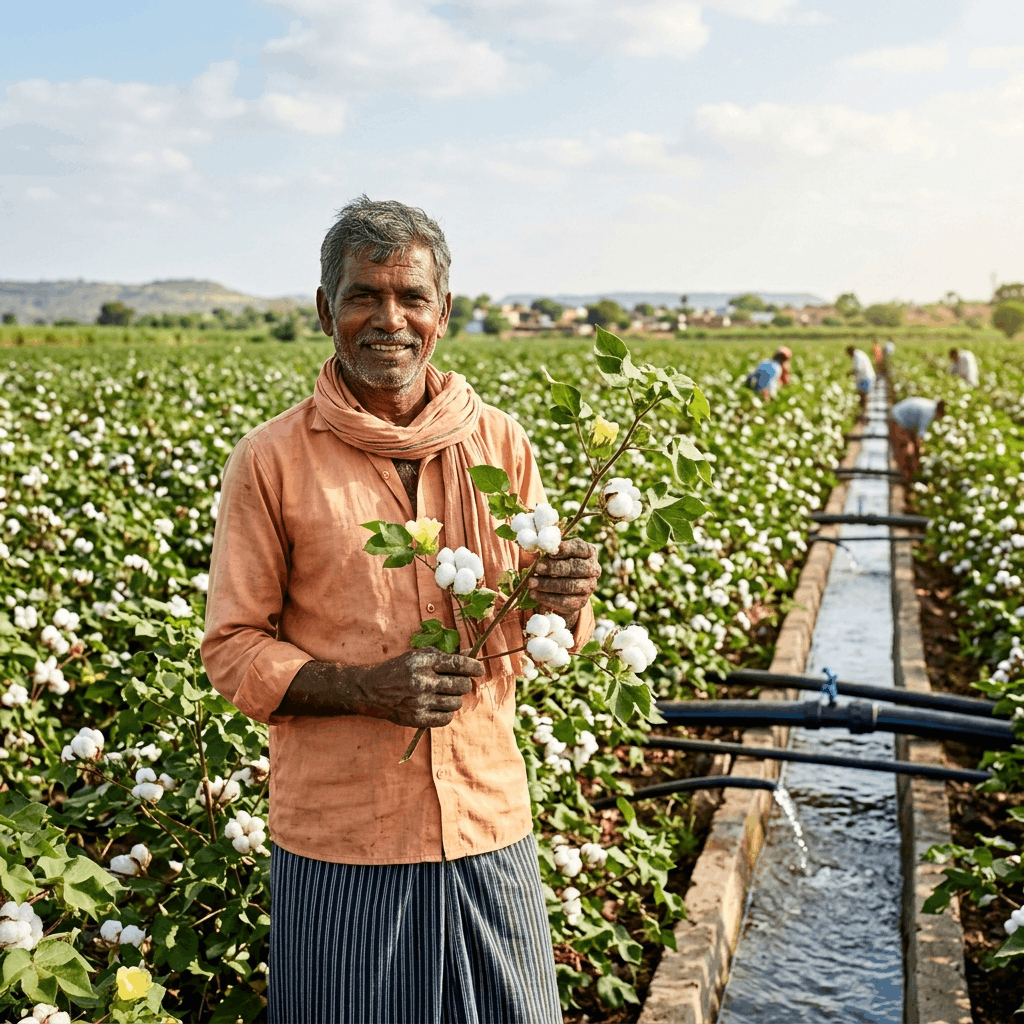
With the new "Crop Colonization" policy, the government incentivizes cotton and maize over paddy in certain zones to prevent market glut and soil degradation. Organic fertilizers for these crops attract additional bonuses. Comparative field studies and administrative data compiled from government research stations in Telangana show that implementing these subsidized modern technologies leads to outstanding crop performance and farm economics. On average, participating farms report a major 20% to 30% reduction in water consumption and fertilizer input costs. This quantitative efficiency is matched by a substantial increase in average harvest yields due to precise water and nutrient delivery. Crops grown under optimized micro-irrigation and mechanized systems demonstrate excellent pest and disease resistance, uniform maturity, and higher post-harvest quality. This superior quality output ensures that farmers can secure premium wholesale market prices, reduce harvest wastage, and dramatically increase their net household income. Under the state's comprehensive organic farming guidelines, a major structural shift is underway towards regenerative agriculture and natural biological inputs. Farmers in Telangana are encouraged to establish village-level organic input production centers, utilizing native earthworm species and beneficial microbial consortia to manufacture premium
vermicompost and bio-enhanced formulations. This systematic transition away from synthetic chemical inputs accelerates the recovery of beneficial soil microbes, mycorrhizal networks, and native pollinators. The enrichment of the soil's organic carbon pool significantly enhances its natural water retention and buffering capacity against extreme weather events, such as prolonged droughts or heavy monsoon cycles. By restoring the natural biological balance of the farm, growers in Telangana produce residue-free harvests that command substantial price premiums in premium organic markets.
Microbial and Biological Activity
Adopting these subsidized modern farming methods in Telangana directly supports the recovery and enrichment of local soil biodiversity. By avoiding the excessive, unbalanced application of chemical urea and synthetic nitrogenous inputs, the soil pH remains stable and soil sodicity is minimized. This toxin-free soil environment enables beneficial earthworms, soil fungi, and micro-arthropods to multiply rapidly. These organisms act as natural aerators, creating microscopic channels that improve soil structure and root respiration. Additionally, the thriving microbial population accelerates the natural decomposition of organic crop residues, converting raw biomass into plant-available nutrients and building a highly resilient, living soil ecosystem. Integrating dairy husbandry with crop cultivation is another key focus of modern farming policies in Telangana. By supporting the setting up of biogas plants and vermicompost units in cow sheds, the government promotes a highly profitable circular bio-economy. Subsidized dairy equipment, automatic cow grooming brushes, and modern milking systems ensure high animal comfort and milk hygiene. The nutrient-rich slurry from biogas plants is recycled back into the fields as a high-grade organic fertilizer, reducing the dependence on synthetic urea. This integrated farming system provides farmers in Telangana with stable daily dairy income while building a self-sustaining, zero-waste agricultural model.
Environmental and Soil Protection
Comprehensive soil conservation and environmental resource protection are central pillars of these government programs in Telangana. Using subsidized water-saving irrigation networks, laser land levelers, and mechanical soil-working implements prevents surface soil erosion during heavy monsoon rains. This stable agricultural system prevents nutrient runoff and guards local water tables and river basins against chemical contamination. Moreover, the long-term integration of organic carbon inputs under conservation schemes enhances carbon sequestration, allowing farms to act as active carbon sinks and significantly lowering the region's overall agricultural greenhouse gas footprint.
Market Value and Economic Outlook
The post-harvest market opportunities and commercial outlook for farmers in Telangana who adopt these modern subsidized standards are highly promising. State-sponsored initiatives for building solar-powered cold storage facilities, packaging units, and organic certification portals give growers direct access to premium domestic supermarkets and high-value export channels. By meeting strict residue-free quality standards and obtaining formal organic credentials, farmers can bypass local middle-men and establish direct contract farming agreements with food processing companies and export firms, securing highly stable, premium prices for their harvests. To minimize post-harvest losses and ensure maximum economic returns, the establishment of decentralized cold chain networks, primary sorting centers, and solar-powered drying units is highly prioritized in Telangana. Subsidized sorting, grading, and packaging infrastructure at the farm-gate level empowers smallholder farmers to add value to their raw produce before marketing. This value-addition capability is crucial for high-value horticultural crops, delicate fruits, and organic vegetables, protecting them from rapid spoilage and seasonal price crashes. By connecting these local processing centers with electronic national markets like e-NAM and premium retail networks, the policy ensures that farmers in Telangana receive fair, transparent prices and secure highly profitable, long-term buy-back agreements with leading organic food processors and export agencies.
Mitti Gold Solutions for Telangana
Our automatic machinery helps Telangana farmers manage large-scale cotton and maize residues by converting them into organic mulch and
vermicompost. To support farmers in successfully implementing these modern systems, Mitti Gold offers a robust range of advanced agricultural machinery that is fully compatible with government subsidy programs. Our state-of-the-art lineup includes automated organic waste shredders, certified vermicompost screening trommels, precise seed drills, and high-efficiency solar water pumps. All our machines are built with premium materials to ensure long-term durability and high field productivity. Furthermore, our dedicated customer support team provides complete assistance to farmers, helping them prepare and submit all required documentation on government portals to ensure a smooth, hassle-free subsidy approval and disbursement process.
📅 Official Application & Deadline Guide
⏳
Last Date of Application
Seasonal / Varies
🚜 Modern Farm Machinery & Subsidies Support
Get expert assistance in applying for government subsidies on modern agricultural equipment, automatic cow brushes, and vermicompost trommels. WhatsApp: +91 95372 30173
Telangana Subsidy FAQ
Is there a limit to Rythu Bandhu acreage? +
Currently, there is no cap on the number of acres for which a land-owning farmer can receive support. To ensure a smooth and successful application process under these schemes, it is highly recommended to keep your land ownership documents, soil health card, and bank details fully updated. Always consult your local Krishi Vigyan Kendra (KVK) or visit the official Telangana agricultural department website to check the latest application timelines, eligibility criteria, and subsidized equipment lists.
How to check Rythu Bandhu status? +
You can check via the official IFMIS Telangana portal using your Aadhaar or passbook number. To ensure a smooth and successful application process under these schemes, it is highly recommended to keep your land ownership documents, soil health card, and bank details fully updated. Always consult your local Krishi Vigyan Kendra (KVK) or visit the official Telangana agricultural department website to check the latest application timelines, eligibility criteria, and subsidized equipment lists.
Are horticulture crops covered under insurance? +
Yes, several fruit crops like Mango and Mosambi are covered under the weather-based crop insurance scheme. To ensure a smooth and successful application process under these schemes, it is highly recommended to keep your land ownership documents, soil health card, and bank details fully updated. Always consult your local Krishi Vigyan Kendra (KVK) or visit the official Telangana agricultural department website to check the latest application timelines, eligibility criteria, and subsidized equipment lists.
Can I apply for multiple subsidy schemes at once? +
Yes, you can benefit from Rythu Bandhu while also applying for subsidies on farm machinery or micro-irrigation. To ensure a smooth and successful application process under these schemes, it is highly recommended to keep your land ownership documents, soil health card, and bank details fully updated. Always consult your local Krishi Vigyan Kendra (KVK) or visit the official Telangana agricultural department website to check the latest application timelines, eligibility criteria, and subsidized equipment lists.
What is the average subsidy percentage for machinery in Telangana? +
Most farm machinery and micro-irrigation projects attract a subsidy of 50% to 90% depending on the specific program. To ensure a smooth and successful application process under these schemes, it is highly recommended to keep your land ownership documents, soil health card, and bank details fully updated. Always consult your local Krishi Vigyan Kendra (KVK) or visit the official Telangana agricultural department website to check the latest application timelines, eligibility criteria, and subsidized equipment lists.