📅 June 2026 | ✍️ Mitti Gold Organic | 🗂️ Soil Health
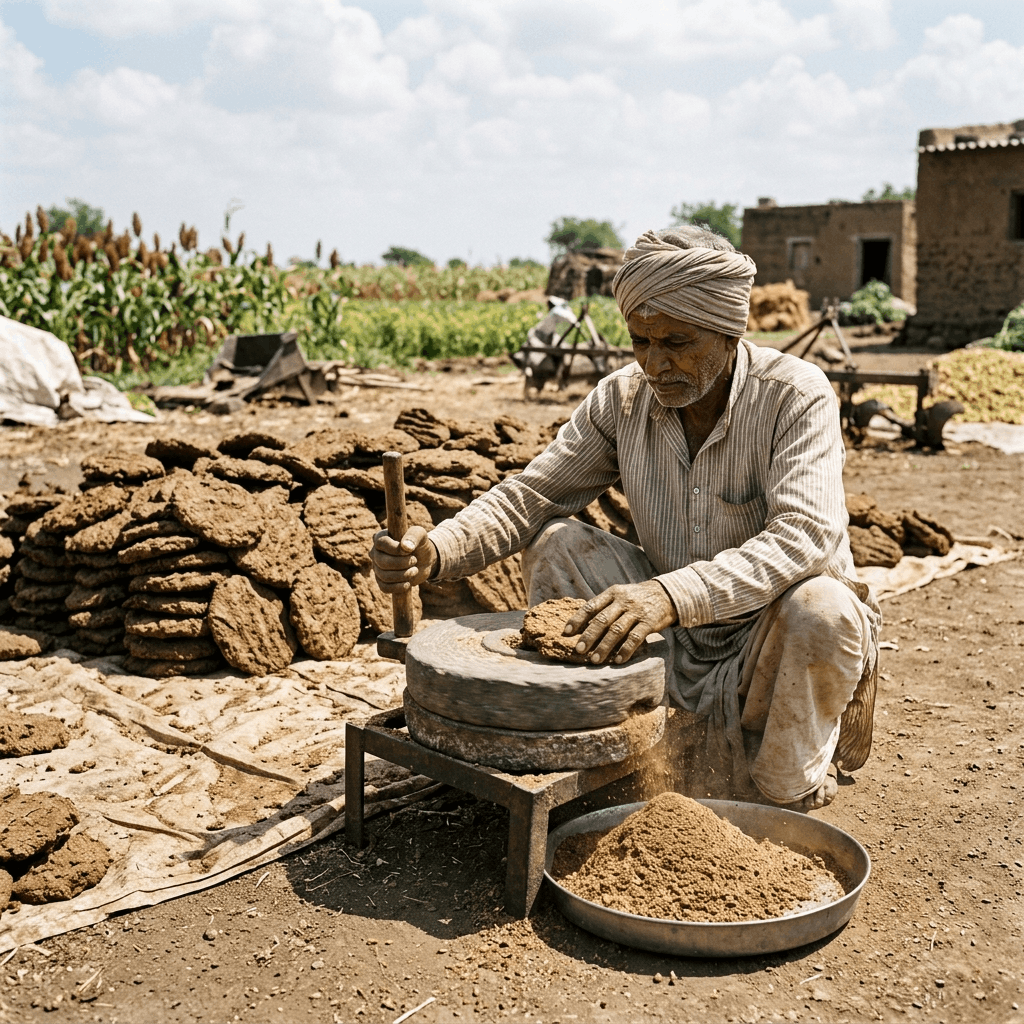
Production Economics and Application Rates
Cow dung powder is a versatile raw material used in organic farming, incense making, and even as a bio-fuel additive. In 2026, "Precision Processing" has replaced traditional sun-drying. To produce 1 ton of high-quality powder, you need approximately 4 tons of fresh cow dung. The process involves de-watering, mechanized drying, and multi-stage pulverization. For a farmer, producing this powder adds 3x the value compared to selling raw manure.
On a per-bigha basis, if you are using this powder for soil amendment, the recommended quantity is 500 kg to 800 kg per bigha. This is because the powder is concentrated; it has already lost its bulk water weight and the nutrients are more "Bio-Available" for the crop. For high-value crops like Onion or Garlic, the application rate might increase to 1,000 kg per bigha to ensure proper bulb development.
Efficiency Metrics (Per Batch)
- Raw Material: 4,000 kg Fresh Dung
- Output: 1,200 kg Fine Cow Dung Powder (15% Moisture)
- Processing Time: 48 Hours (Mechanized) vs 15 Days (Sun-drying)
- Nutrient Concentration: 2.5x higher than raw manure per unit weight.
Advanced Usage Methods and Industrial Standards
Using Cow Dung Powder requires different techniques depending on the end goal. For Soil Health, the powder should be spread uniformly before the final harrowing. For Drip Irrigation, it can be mixed with water to create a "Slurry Tea," which is then filtered and injected through the venturi. In 2026, the use of "Powder Applicators" attached to tractors is becoming common to ensure that every square inch of the bigha receives the same amount of nutrition.
In the incense industry, the powder is used as a base. It must be sieved to a 100-120 mesh size to ensure smooth extrusion. Any coarse particles will cause the incense stick to "sputter" or go out. For home gardeners, the powder can be top-dressed onto pots at a rate of 100 grams per 12-inch pot every month.
Step-by-Step Application Guide
Collection & Homogenization
Collect dung and mix it to ensure a uniform nutrient profile across the batch.
De-watering
Use a screw-press or centrifugal separator to reduce moisture from 80% to 50%.
Flash Drying
Pass the semi-dry solids through a rotary dryer at 60°C to kill pathogens while preserving microbes.
Pulverization
Grind the dried solids using a hammer mill to the desired particle size.
Vibratory Sieving
Separate the powder into various grades (Fine, Medium, Coarse) based on industrial requirements.
Moisture-Proof Packaging
Pack immediately into HDPE bags with liners to prevent the powder from absorbing humidity.
Feeding the Soil Microbiome
Cow dung powder is "Fast Food" for soil creatures. Because of its small particle size, it provides a massive surface area for Beneficial Bacteria and Fungi to colonize. It acts as a "Microbial Sponge," holding moisture and nutrients right where the earthworms can find them. This accelerated biological activity leads to a "Healthy Soil Smell" (Geosmin) within just a few days of application.
Disease Protection through Heat Treatment
The drying process used in making Cow Dung Powder (specifically at 60-70°C) is sufficient to kill the larvae of the White Grub and other soil-borne pests. This provides a "Sanitary Foundation" for your crops. Unlike raw dung which can attract termites, the stabilized powder is less attractive to wood-eating pests, protecting your crop roots from accidental damage.
Market Focus: Nursery Trade and Bio-Fuel Pellets
The primary market for Cow Dung Powder in 2026 is the Urban Gardening Sector. City dwellers prefer the clean, odorless powder over bulky manure bags. Another emerging market is "Bio-Fuel Pellets" for industrial boilers, where the powder is mixed with sawdust and pressed. Exporters also prefer powder because it is cheaper to ship due to lower volume and weight compared to compost.
Processing Machinery for Cow Dung Powder
🐄 Professional Pulverizers & Mills
Setup a high-capacity cow dung powder manufacturing unit. We supply industrial-grade pulverizers and grinders for agarbatti and export markets. WhatsApp: +91 95372 30173