?? June 2026 | ?? Mitti Gold Organic | ??? Govt Schemes
Subsidy Structure and Cost Breakdown
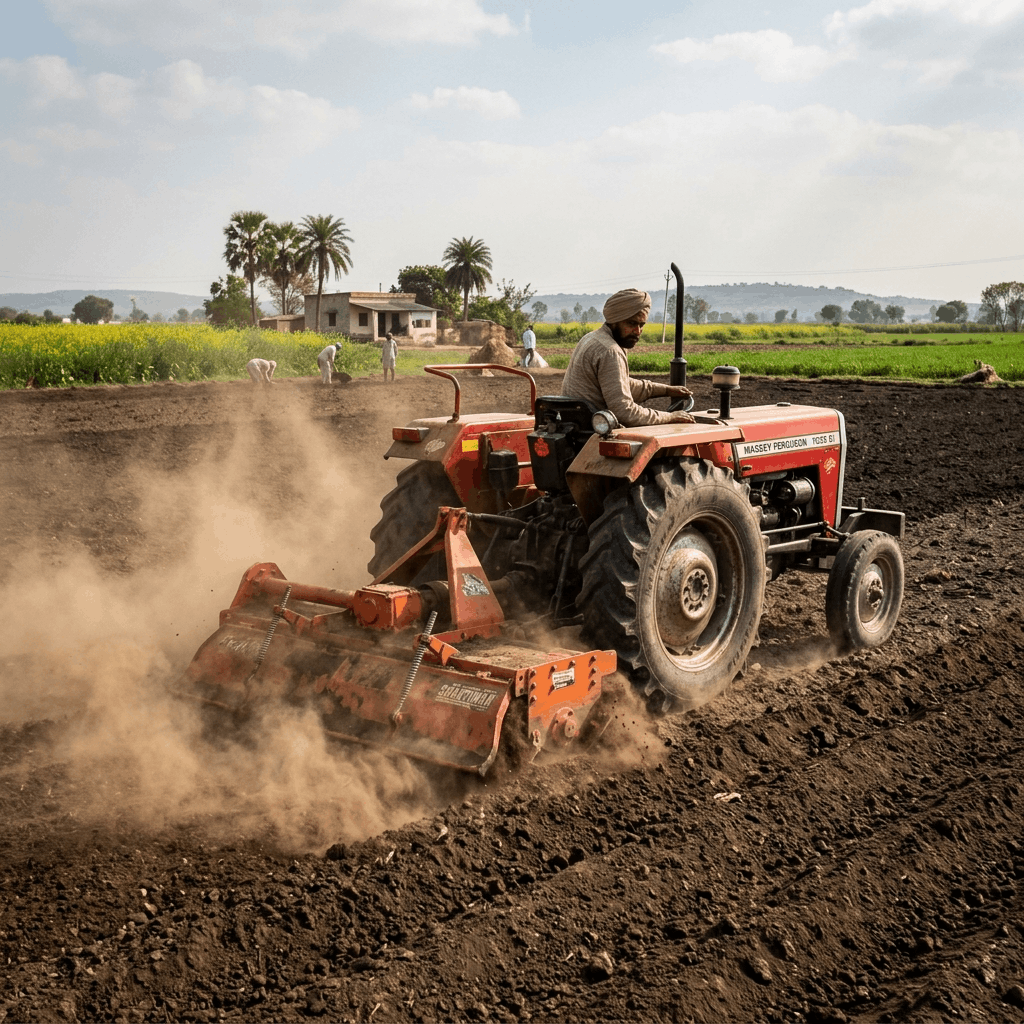
A Rotavator (Rotary Tiller) is the most versatile implement for a Gujarat farmer. It replaces the plow, harrow, and leveler in a single pass. For 2026, the Gujarat government is offering a subsidy of ₹35,000 to ₹45,000 (or 40-50% of the cost) for Rotavators. This is especially useful for farmers growing Sugarcane or Cotton, as it helps in "stubble management" by shredding the remains of the previous crop directly into the soil, acting as a natural green manure.
With the current labor shortage in rural areas, a Rotavator saves approximately ₹1,500 per bigha in land preparation costs. In 2026, the focus is on "Heavy Duty" models that can handle the hard, black cotton soil of the Saurashtra region. The subsidy is available for Rotavators of 5 feet, 6 feet, and 7 feet widths, matching the HP of your tractor.
Financial Benefits of a Subsidized Rotavator
- Purchase Cost: Approx ₹80,000 to ₹1,10,000.
- Subsidy: ₹42,000 (for marginal/small farmers).
- Effective Cost: ₹38,000 to ₹68,000.
Operational Efficiency and Maintenance Tips
To use a Rotavator correctly, it must be operated at the right RPM (usually 540 PTO RPM). The 2026 guidelines suggest that for organic farming, the rotavator should be used to mix Vermicompost at a depth of 4-6 inches. This ensures that the fertilizer is not just sitting on top but is integrated into the "active root zone" of the soil.
Safety is paramount. In 2026, all subsidized rotavators must come with a PTO safety guard. Farmers are also encouraged to use "multi-speed" gearboxes to adjust the blade speed according to the soil type—slower for stony soil and faster for loamy soil to get a fine tilth.
Check i-Khedut Portal
Ensure the "SMAM" (Sub-Mission on Agricultural Mechanization) window is open.
Application
Submit your application specifying the size and brand of the Rotavator.
Quota Approval
Wait for the district-wise quota allocation and your approval SMS.
Purchase & Invoice
Buy from a certified dealer and ensure the invoice mentions the GST number and chassis number.
Physical Inspection
The local Gram Sevak will visit to take a photo of the farmer with the implement and the tractor.
Subsidy Credit
The amount is transferred via RTGS/NEFT to the farmer's bank account.
Comparing Outcomes: Traditional Plowing vs. Rotavator
The difference in the outcome is the "soil texture." Traditional plows often leave large "clods" of earth that require a second pass. A Rotavator produces a fine "seed-bed" in one go. You can compare the outcome by measuring the seed germination rate; in rotavated soil, germination is usually 10-15% higher because the seeds have better contact with the fine soil particles. It also helps in leveling the field, which improves water distribution via drip or flood.
Soil Biology and Aeration Benefits
While some worry about the impact on earthworms, using a rotavator at the correct shallow depth (4-6 inches) actually improves the habitat for aerobic soil microbes. By mixing air into the soil, it accelerates the decomposition of organic matter, which provides food for the entire soil food web. In 2026, farmers are using rotavators to "mulch" crop residue, which protects soil creatures from extreme heat.
Disease Protection through Soil Hygiene
Rotavators are excellent for "Soil Solarization" prep. By creating a very fine soil surface, it allows plastic mulching to fit perfectly, trapping heat and killing harmful soil-borne pathogens and weed seeds. It also helps in the deep burial of pest-infested crop remains, breaking the life cycle of pests like the Whitefly and Aphids before the next season starts.
Market Focus: Vegetable Growers and Commercial Farms
For vegetable growers in Gujarat, a rotavator is essential for preparing raised beds. The fine tilth is perfect for crops like Carrots, Potatoes, and Onions, which need loose soil for bulb development. In 2026, having a rotavator also increases the resale value of your farm machinery package and makes you eligible for more advanced "Bed Maker" subsidies.
Selecting the Right Rotavator
📅 Official Application & Deadline Guide
⚙️ Subsidy-Approved Rotavators
Looking for high-durability, subsidy-approved Rotavators for your farm? We assist with technical specifications and purchase guidance. WhatsApp: +91 95372 30173