📅 June 2026 | ✍️ Mitti Gold Organic | 🗂️ Soil Health
Application Rates for Soil Restoration (Per Bigha)
Rehabilitating soil that has been subjected to prolonged chemical abuse requires a strategic and generous approach to organic amendments. The chemical fertilizers (like Urea and DAP) and synthetic pesticides severely deplete the organic carbon levels, leaving the soil compacted and lifeless. To counter this, an initial heavy application of premium vermicompost is highly recommended.
For severely damaged soil: We recommend applying 1,500 kg to 2,000 kg of pure, nutrient-rich vermicompost per bigha during the primary soil preparation phase. This heavy dose is essential to kickstart the biological recovery process. The vermicompost introduces a massive population of beneficial microorganisms, which are crucial for breaking down residual chemical toxins and rebuilding the soil structure.
For moderately damaged or transition soil: A baseline application of 800 kg to 1,200 kg per bigha can be utilized. This should ideally be combined with green manure crops or other organic matter to slowly build the organic carbon reserves. Consistent application over 2 to 3 years is necessary to completely neutralize the chemical residues and stabilize the soil's pH and electrical conductivity (EC).
It is important to understand that the quantity needed might vary depending on the specific crop intended for cultivation and the current baseline organic carbon of the soil. We strongly advise farmers to conduct a comprehensive soil test before beginning the restoration process to accurately gauge the required dosage.
Step-by-Step Application Guide for Soil Restoration
The process of applying vermicompost to restore damaged soil is slightly different from routine fertilization. It requires careful timing and thorough incorporation to maximize the survival and proliferation of the beneficial microbes introduced by the compost.
Deep Plowing and Aeration
Begin by deeply plowing the field. Chemically damaged soils are typically highly compacted (hardpan). Deep plowing breaks this compacted layer, allowing air and water to penetrate deeply. Leave the field exposed to the sun for a few days to naturally sterilize surface pathogens.
Even Distribution
Broadcast the calculated quantity of vermicompost evenly across the entire field. Do not leave large clumps. Even distribution ensures that the microbial innoculant and nutrients are available uniformly across the root zone.
Thorough Incorporation
Use a rotavator or a harrow to mix the vermicompost into the top 6 to 8 inches of the soil. This is the active root zone for most crops. The vermicompost must be integrated into the soil matrix rather than left on the surface, where UV rays can harm the beneficial microbes.
Adequate Irrigation
Immediately after incorporation, provide a light but thorough irrigation. Moisture is critical for the microbes in the vermicompost to activate and begin the process of breaking down residual chemicals and making locked-up nutrients available.
Rest Period
Allow the soil to rest for 7 to 10 days before sowing the next crop. This curing period allows the microbial ecosystem to establish itself and begin the physical and chemical restoration of the soil aggregates.
Evaluating the Outcome: Chemical vs. Biological Restoration
The transition from a chemically dependent system to a biologically active, vermicompost-restored soil yields profound differences in both the short and long term. When evaluating the success of the restoration, consider the following parameters:
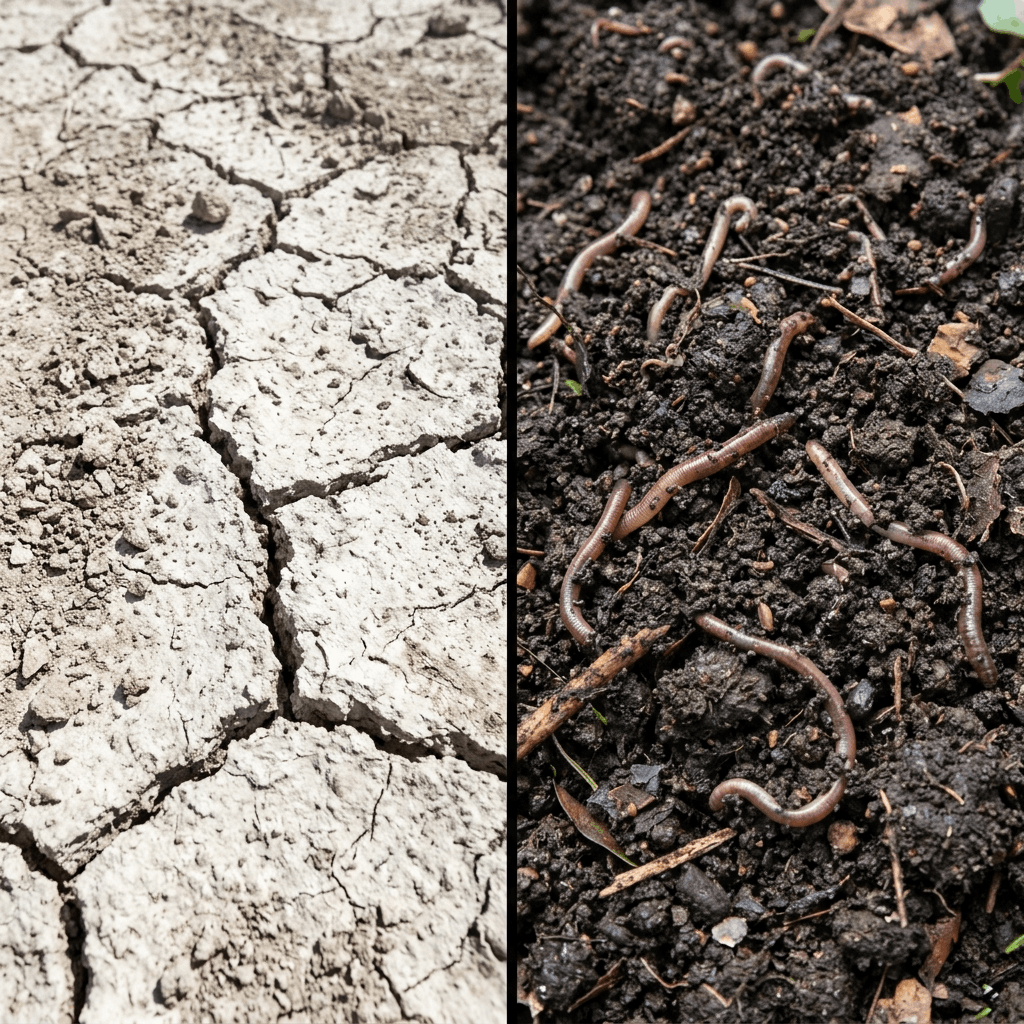
Physical Soil Structure: The most immediate and noticeable outcome is the change in soil tilth. Chemically farmed soil is often cloddy, hard, and prone to cracking or waterlogging. Restored soil becomes friable, crumbly, and highly porous. It absorbs water quickly and retains moisture far longer, significantly reducing irrigation requirements.
Nutrient Bioavailability: While chemical fertilizers provide a rapid, short-lived spike in available NPK, they often lock up micronutrients in the soil. Vermicompost provides a slow, sustained release of both macro and micronutrients. Furthermore, the humic and fulvic acids in vermicompost act as natural chelators, breaking the bonds of chemically locked nutrients and making them available to the plants.
Crop Resilience and Yield: In the first year of transition, yields might be slightly lower or on par with chemical farming. However, the quality, taste, and shelf-life of the produce are significantly superior. By the second and third years, as the soil biology reaches its peak, the yields often surpass those of chemically farmed lands, while input costs (for synthetic fertilizers and pesticides) drop to near zero.
Ultimately, restoring the soil with vermicompost is an investment in the land's future productivity, ensuring that it remains fertile and capable of supporting vigorous crops for generations to come.
Reviving Soil Microbes and Earthworms
The unseen damage of chemical farming is the mass extinction of soil biology. Synthetic fertilizers create a highly saline environment that is toxic to beneficial bacteria and fungi, while chemical pesticides kill off earthworms and other essential macrofauna. This biological void is the root cause of declining soil health.
Vermicompost is fundamentally a microbial inoculant. It introduces billions of beneficial bacteria (like Actinomycetes and Azotobacter), fungi (like Mycorrhizae), and enzymes into the dead soil. These microbes are the "digestive system" of the soil. They break down organic matter, solubilize minerals, and fix atmospheric nitrogen, essentially performing the work that farmers attempt to mimic with chemical fertilizers.
Furthermore, the application of vermicompost creates a hospitable environment for native earthworms to return. The rich organic matter provides them with food, and the improved soil structure allows them to tunnel freely. As native earthworm populations recover, they take over the ongoing maintenance of the soil, continuously aerating it and producing their own nutrient-rich castings.
Natural Protection Against Soil-Borne Diseases
Chemically damaged soils are highly susceptible to soil-borne pathogens (like Fusarium, Pythium, and Rhizoctonia) because the natural biological balance has been destroyed. In a healthy soil ecosystem, beneficial microbes outcompete pathogenic fungi and bacteria for resources and space, a process known as competitive exclusion.
When you restore soil with premium vermicompost, you are re-introducing this biological defense mechanism. The beneficial microbes introduced by the vermicompost colonize the root zone (rhizosphere) of the plants, forming a protective biological shield. They produce natural antibiotics and enzymes (like chitinase, which breaks down the cell walls of pathogenic fungi) that actively suppress disease.
This biological disease suppression is far more effective and sustainable than relying on synthetic fungicides, which not only kill the pathogens but also destroy the beneficial microbes, perpetuating the cycle of chemical dependency. Vermicompost restores the soil's immune system, leading to naturally healthier and more resilient crops.
The Market Impact: From Farmers to Exporters
The decision to restore chemically damaged soil with vermicompost has far-reaching positive economic implications across the agricultural value chain.
For the Farmer: The most significant benefit is the drastic reduction in input costs. Over a 2-3 year transition period, the need for expensive synthetic fertilizers and chemical pesticides is nearly eliminated. Furthermore, the improved soil structure significantly reduces water requirements and tillage costs. The resulting organic produce commands a premium price in the market, increasing the farmer's overall profitability and financial stability.
For Nurseries and Gardeners: Nurseries that utilize soil restored with vermicompost produce stronger, more resilient saplings with vigorously developed root systems. These plants have a much higher survival rate when transplanted. For home gardeners, it means cultivating safe, chemical-free food for their families while building healthy, living soil in their backyards.
For the Export Market: The global demand for certified organic produce is growing exponentially. Soil that has been successfully detoxified and restored using organic inputs like vermicompost is a prerequisite for organic certification. Restoring the soil opens up highly lucrative international markets for farmers and exporters, who can supply the premium quality, residue-free agricultural products demanded by health-conscious consumers worldwide.
📦 Bulk Orders & Export
Mitti Gold Organic: For bulk orders of all organic fertilizers — Farmers, Nurseries, and Export. WhatsApp: +91 95372 30173