📅 June 2026 | ✍️ Mitti Gold Organic | 🗂️ Farming
Production Rates and Scaling Up
Transitioning from a small backyard compost pit to a mass-scale cow dung fertilizer production facility requires a strategic approach to volume handling. On a commercial scale, facilities can process anywhere from 10 to 100 tons of raw cow dung daily. This exponential growth demands mechanization and streamlined workflows.
Scaling up involves investing in heavy-duty shredders, large-capacity windrow turners, and automated packaging lines. The yield of finished organic fertilizer is typically 40% to 50% of the raw weight, meaning 100 tons of raw dung can produce 40 to 50 tons of premium compost. Efficient moisture management and temperature control become critical as the volume increases, requiring robust monitoring systems to maintain the ideal composting environment.
Step-by-Step Scaling Guide for Commercial Production
Establishing a mass-scale production unit involves several structured phases. It requires meticulous planning, from sourcing raw materials to the final packaging.
Phase 1: Raw Material Sourcing and Storage
Establish contracts with large dairy farms to ensure a consistent supply of cow dung. Construct large, covered storage yards with concrete flooring and drainage systems to prevent nutrient leaching and manage runoff effectively.
Phase 2: Preparation and Windrow Formation
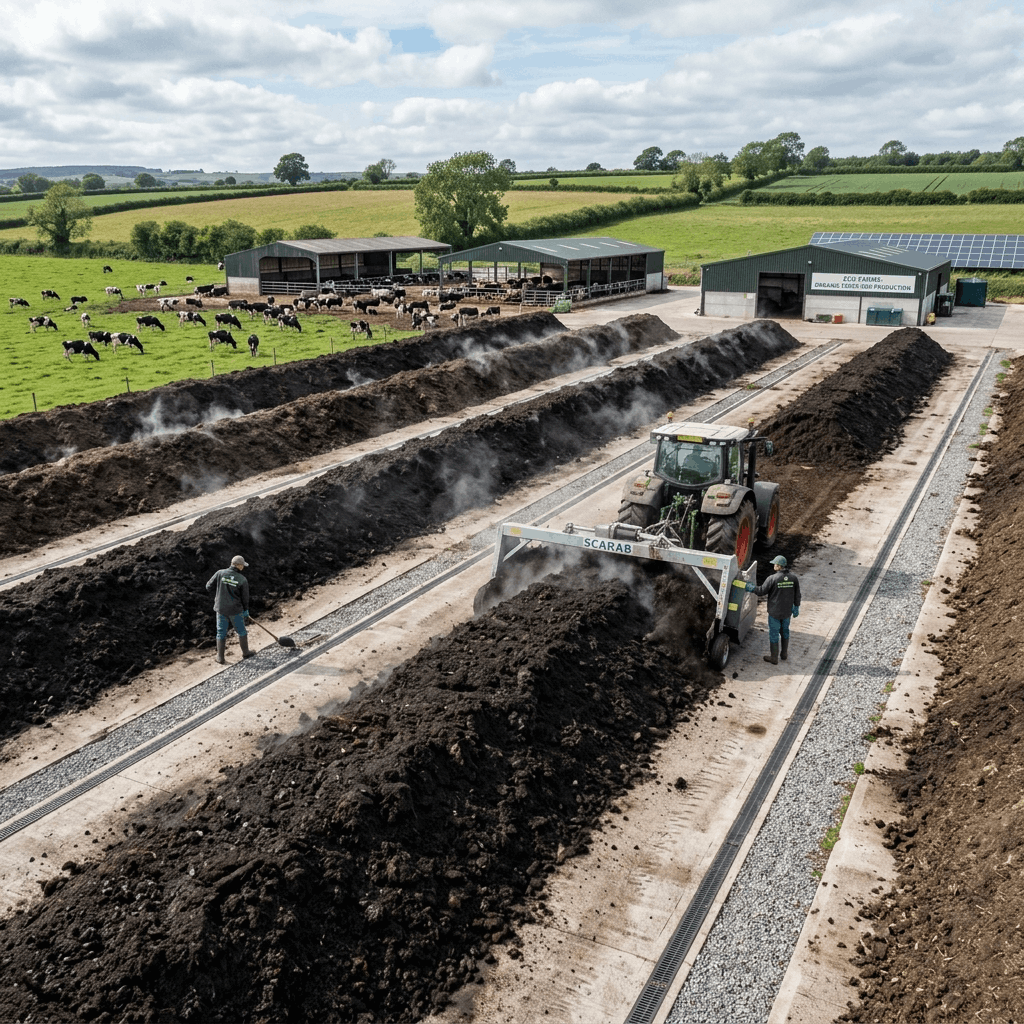
Use payloaders to move the raw dung into long, triangular piles known as windrows. At this stage, it is crucial to balance the Carbon-to-Nitrogen (C:N) ratio by adding carbon-rich materials like dry leaves, straw, or sawdust, ensuring optimal microbial activity.
Phase 3: Active Composting and Aeration
Utilize tractor-pulled windrow turners to regularly aerate the piles. This introduces oxygen, prevents anaerobic decomposition (which causes foul odors), and helps regulate the core temperature between 55°C and 65°C, essential for killing weed seeds and pathogens.
Phase 4: Curing and Screening
After 6 to 8 weeks of active composting, the material enters a curing phase for another 3 to 4 weeks. Once stabilized, the compost is passed through industrial rotary screens (trommels) to separate fine, premium fertilizer from oversized chunks.
Phase 5: Quality Enrichment and Packaging
The screened fertilizer can be enriched with beneficial microbes (like Trichoderma or Azotobacter) and natural minerals. Finally, automated packaging machines fill, weigh, and seal the fertilizer in standardized bags for distribution.
Comparing Mass Product Outcomes and Quality
When producing organic fertilizer on a mass scale, maintaining consistent quality across batches is the biggest challenge and differentiator. High-quality commercial cow dung compost should possess a rich, dark brown to black color, a crumbly, soil-like texture, and a pleasant, earthy odor.
Compared to uncomposted manure, the mass-produced finished product is stable, nutrient-dense, and free from harmful pathogens. It has a significantly higher humic acid content, which improves soil structure and water retention. By standardizing the production process, commercial facilities can guarantee specific N-P-K (Nitrogen, Phosphorus, Potassium) ratios, making their product highly reliable for large-scale agricultural use.
Sustainability and Environmental Impact
Mass-scale conversion of cow dung into organic fertilizer is a cornerstone of the circular economy. By diverting thousands of tons of animal waste from open dumping, this process significantly reduces greenhouse gas emissions, particularly methane and nitrous oxide.
Furthermore, the application of this organic fertilizer revitalizes depleted soils, encourages the proliferation of beneficial earthworms and soil microbes, and reduces the agricultural sector's dependency on synthetic chemical fertilizers. This holistic approach protects local water bodies from chemical runoff and fosters long-term ecological balance.
Quality Control and Safety Protocols
In mass production, stringent quality control is non-negotiable. Regular laboratory testing is required to monitor moisture levels, pH, electrical conductivity (EC), and organic carbon content.
Safety protocols mandate testing for heavy metals and ensuring complete pathogen eradication (such as E. coli and Salmonella) through sustained high-temperature composting. Workers must be equipped with appropriate personal protective equipment (PPE), including masks and gloves, and the facility must maintain excellent ventilation to manage dust and bioaerosols.
Target Markets: Large Scale Farmers, Factories, and Export
The demand for premium organic fertilizer is growing exponentially worldwide. Domestically, the primary consumers are large-scale commercial organic farms, orchards, and vineyards that require bulk supplies to maintain soil fertility.
There is also a growing B2B market, supplying other fertilizer factories that use cow dung compost as a base to create specialized blends. Furthermore, with global trends favoring organic agriculture, there is a lucrative export market. Certified organic, pathogen-free, and well-packaged cow dung fertilizer is highly sought after in international markets where organic farming standards are strictly enforced.
📦 Bulk Orders & Export
Mitti Gold Organic: For bulk orders of all organic fertilizers — Farmers, Nurseries, and Export. WhatsApp: +91 95372 30173
Frequently Asked Questions
For a commercial facility processing 50 tons daily, you would typically need 3 to 5 acres of land to accommodate raw material storage, windrow composting, curing, processing, and finished goods storage.
The ideal moisture content is between 50% and 60%. If it's too dry, microbial activity slows down; if it's too wet, the pile becomes anaerobic and produces foul odors.
Odor is managed by ensuring proper aeration (turning the windrows regularly), maintaining the correct Carbon-to-Nitrogen ratio, avoiding excess moisture, and occasionally using bio-filters or odor-neutralizing microbial sprays.
While cow dung naturally contains microbes, adding specialized composting cultures (bio-inoculants) accelerates the decomposition process and enhances the nutritional profile of the final fertilizer.
You generally need a fertilizer manufacturing license from the local agricultural department. For premium markets and export, organic certifications (like NPOP, USDA Organic, or equivalent) are highly recommended.