📅 July 2026 | ✍️ Mitti Gold Organic | 🗂️ Farming
Introduction to Organic Soil: Why Your Plants Deserve the Best
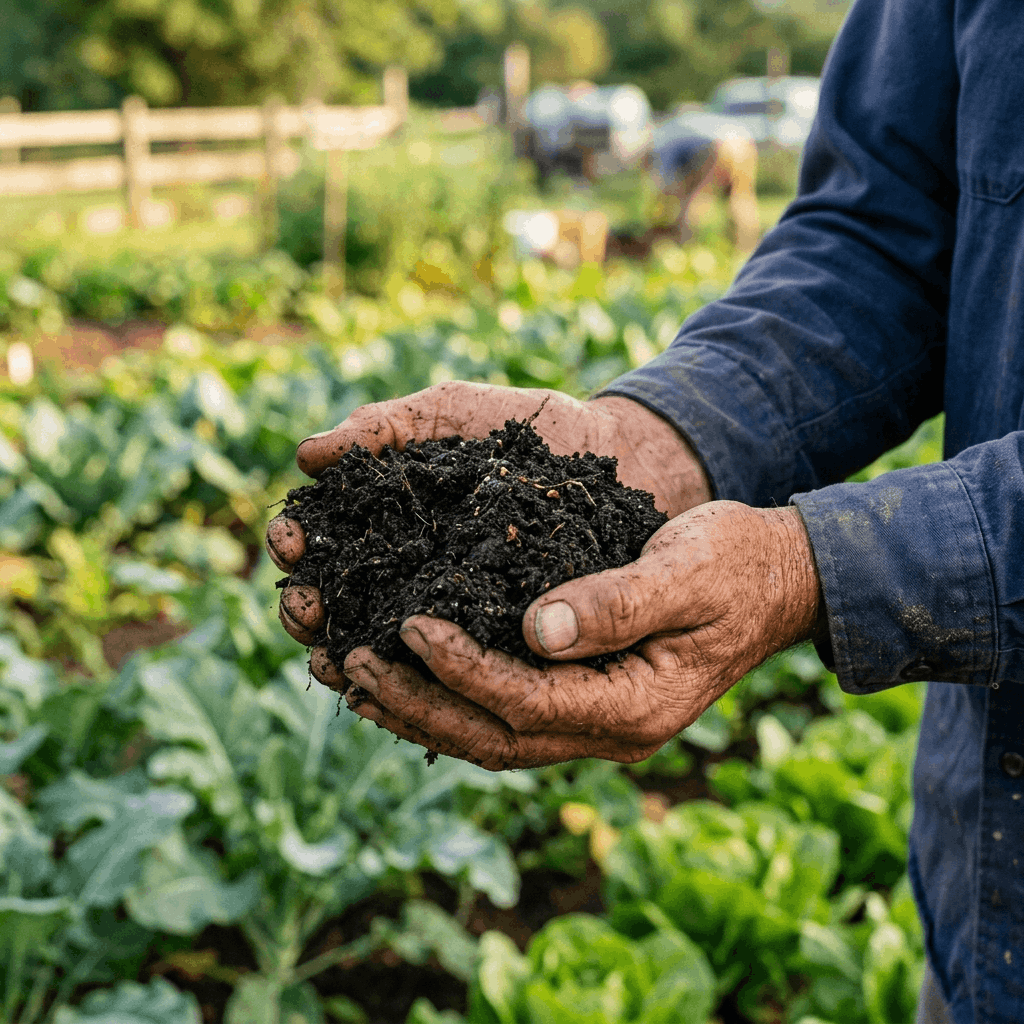
The foundation of every healthy, vibrant garden—whether it is a sprawling backyard farm, an intensive raised-bed system, or a modest collection of balcony pots—lies beneath the surface in the soil, commonly referred to as 'mitti' in South Asia. Organic mitti is not just a medium for holding plants upright; it is a complex, living ecosystem teeming with biological activity, minerals, and organic matter that work in synergy to sustain plant life. Unlike conventional potting mixes that rely heavily on synthetic fertilizers and sterile components, a true organic soil mix is designed to mimic the rich, fertile floor of a primeval forest. It provides a slow, steady release of essential macronutrients like nitrogen, phosphorus, and potassium, alongside a vast array of critical micronutrients. The creation of organic mitti involves blending various natural components such as aged compost, vermicompost, coco peat (coir), perlite, neem cake (neem khali), and garden soil in precise proportions. This meticulously crafted blend ensures optimal aeration, which is crucial for root respiration, as well as superior water retention properties that prevent both waterlogging and excessive drying. Furthermore, transitioning to organic soil is a sustainable choice that reduces your carbon footprint, minimizes chemical runoff into local waterways, and fosters a safe environment for pollinators, pets, and children. In this comprehensive guide, we will delve deep into the science and art of making organic mitti, exploring every ingredient, the underlying soil biology, and the exact techniques required to transform ordinary dirt into a powerhouse of plant nutrition.
When you take the time to prepare your own organic mitti, you are essentially investing in the long-term immunity and productivity of your plants. Commercial potting soils often come pre-loaded with synthetic, water-soluble fertilizers that provide a rapid, short-lived burst of growth, leaving the plants susceptible to stress and disease once the nutrients are rapidly depleted or washed away. In stark contrast, organic mitti builds a sustainable nutrient reservoir. The organic matter breaks down slowly over months and years, continuously feeding the soil web. This ongoing decomposition process generates humic and fulvic acids, which naturally chelate minerals, making them more bioavailable to plant roots. By understanding the unique requirements of your specific plants—be they heavy-feeding vegetables like tomatoes and peppers, delicate ornamentals, or drought-tolerant succulents—you can customize your organic mitti recipe to perfectly match their needs, unlocking their true genetic potential for flowering and fruiting.
Optimal Quantities and Proportions: Formulating Your Soil Mix
Creating the perfect organic mitti requires a meticulous understanding of the ratios and quantities of each ingredient, as this directly dictates the physical and chemical properties of the final mix. A universally acclaimed baseline recipe, often referred to as the 'Golden Ratio' among seasoned horticulturists, involves a balanced blend: 30% high-quality garden soil (loam is preferred for its balanced sand, silt, and clay content), 30% coco peat or peat moss (for moisture retention and structural lightness), 20% well-rotted organic compost (such as cow dung manure or leaf mold), 10% vermicompost (earthworm castings for a potent microbial and nutrient boost), and 10% aerating materials like perlite, pumice, or coarse river sand. For heavy-feeding fruiting plants or flowering shrubs planted in large 12-inch to 15-inch pots, you might need approximately 10 to 15 kilograms of this prepared mitti per container. If you are preparing soil for raised beds, calculating the volume is essential. A standard 4-foot by 8-foot raised bed with a depth of 12 inches will require roughly 32 cubic feet (about 900 liters) of organic mitti.
It is also crucial to incorporate organic amendments in specific quantities to address potential nutritional gaps and provide protective benefits. For every 10 kilograms of the base soil mix, it is highly recommended to add a handful (roughly 50 to 100 grams) of neem cake powder. Neem khali acts as an exceptional slow-release nitrogen source while simultaneously repelling soil-borne pests like nematodes and grubs. Similarly, adding a handful of bone meal or rock phosphate will supply the essential phosphorus required for robust root development and profuse blooming. Wood ash can be added sparingly (about a tablespoon per pot) to provide potassium and slightly raise the pH if your soil is overly acidic. Measuring your ingredients systematically using a standardized container, such as a 5-liter bucket, ensures consistency across batches. Remember, these quantities are not rigid rules but flexible guidelines; a seasoned gardener observes the texture—aiming for a crumbly, spongy consistency that holds its shape when squeezed but breaks apart easily when prodded—and adjusts the ratios accordingly.
Application and Cultivation: How to Use Your Organic Mitti
Once you have meticulously gathered and measured your ingredients, the process of mixing and utilizing your organic mitti is a critical phase that determines the success of your gardening endeavors. Begin the cultivation process by selecting a clean, flat surface or a large mixing tarp in a shaded area to prevent the sun from drying out the organic matter and harming the beneficial microbes. Layer the ingredients sequentially: start with the garden soil as the base, spread the expanded coco peat evenly over it, follow with the compost and vermicompost, and finally, sprinkle the perlite and organic amendments (neem cake, bone meal, etc.) on top. Using a garden fork or a shovel, turn the pile thoroughly, repeatedly scooping from the bottom and folding over the top until the mixture achieves a uniform color and texture, devoid of any large, unbroken clods. This thorough homogenization ensures that plant roots encounter a consistent environment as they expand, preventing isolated pockets of waterlogging or nutrient burn. After mixing, slightly moisten the soil pile using a watering can fitted with a fine rose. The moisture level should resemble a wrung-out sponge—damp but not dripping wet.
A critical, yet frequently overlooked, step in using newly mixed organic mitti is the 'curing' or resting phase. Instead of planting immediately, transfer the moist mix into breathable sacks or cover the pile with a tarp and let it rest for 7 to 10 days in a cool, shaded location. This curing period allows the ingredients to integrate chemically, the pH to stabilize, and the dormant microbial life to awaken and begin multiplying, establishing a robust biological network before the plants are introduced. When you are ready to use the mitti, prepare your pots by ensuring they have adequate drainage holes. Place a small piece of broken terracotta or a layer of pebbles at the bottom to prevent soil from washing out. Fill the container with the cured organic mitti, pressing it down gently to eliminate large air pockets but avoiding heavy compaction, which would restrict root growth and water flow. Transplant your seedlings or sow your seeds directly into this rich, life-giving matrix. Water gently to settle the soil around the roots, and mulch the surface with dry leaves or straw to conserve moisture and regulate soil temperature. By following these rigorous application steps, you maximize the efficiency of your organic soil, creating an ideal nursery for your plants.
Comparing Outcomes: Organic Mitti vs. Chemical Potting Soils
The distinction between plants cultivated in handcrafted organic mitti and those grown in conventional, chemically-laden soils is profound, manifesting in virtually every aspect of plant health, yield, and environmental impact. When you utilize high-quality organic mitti, the most immediate and striking outcome is the dramatic improvement in soil structure. Organic matter binds soil particles into aggregates, creating a porous, spongy architecture that allows for superior aeration and root penetration. This structural integrity prevents the soil from compacting over time or forming a hard, impermeable crust on the surface, which is a common issue with synthetic soils. Consequently, water infiltrates easily, and excess moisture drains away efficiently, drastically reducing the risk of root rot and fungal diseases. From a nutritional standpoint, organic mitti acts as a dynamic, slow-release bank. Nutrients are locked within organic compounds and are gradually mineralized by microbial action at a rate that parallels the plant's natural growth cycle. This prevents the rapid nutrient leaching and the dangerous 'fertilizer burn' associated with synthetic, water-soluble chemicals.
Furthermore, the long-term outcomes of using organic mitti extend beyond the immediate aesthetic appeal of the plants. Vegetables and herbs grown in organic, biologically active soil consistently exhibit superior flavor profiles, higher nutritional density, and an increased concentration of beneficial phytochemicals and antioxidants. This is because a diverse microbial population helps plants access a broader spectrum of trace minerals that are often entirely absent in sterile, chemical soils. In contrast, chemical agriculture operates on a deficit model; synthetic fertilizers provide only the most basic macronutrients (N-P-K), leading to rapid but structurally weak growth. Over time, chemical fertilizers degrade the natural soil structure, acidify the environment, and decimate beneficial soil organisms, leading to a sterile, dead medium that requires ever-increasing amounts of chemical inputs just to maintain baseline yields. By choosing organic mitti, you are fostering a regenerative system that actually improves year after year, building a resilient ecosystem that naturally suppresses pathogens and supports vibrant, vigorous, and profoundly healthy plant life.
The Living Soil: Earthworms, Microbes, and Biodiversity
To truly understand the efficacy of organic mitti, one must shift their perspective from viewing soil as merely 'dirt' to recognizing it as a vast, complex, and bustling metropolis of biological activity. The secret to organic gardening does not lie solely in the physical ingredients you mix, but in the intricate web of life that inhabits them. At the microscopic level, a single teaspoon of healthy organic mitti can contain billions of bacteria, millions of fungi, and thousands of protozoa and nematodes. These microorganisms are the tireless, invisible workforce of your garden. They perform the indispensable task of decomposition, breaking down complex organic matter—like the compost and neem cake you added—into simple, plant-available forms. For instance, specific groups of bacteria are responsible for fixing atmospheric nitrogen and converting it into nitrates, a form that plants can readily absorb. Without this microbial bridge, the nutrients locked in organic matter would remain completely inaccessible to your plants, regardless of how much compost you apply.
Beyond the microscopic realm, organic mitti thrives on the presence of macroscopic creatures, with earthworms being the most celebrated engineers of the soil ecosystem. Earthworms continuously tunnel through the mitti, creating vital channels that improve aeration and water infiltration. As they consume organic debris and soil particles, their digestive tracts act as biological bioreactors, grinding the material and mixing it with digestive enzymes. The resulting excrement, known as worm castings or vermicompost, is an incredibly potent, nutrient-dense fertilizer that is enriched with beneficial microbes and plant growth hormones. Furthermore, the presence of mycorrhizal fungi in organic mitti establishes a symbiotic relationship with plant roots. These fungal networks attach to the root system, effectively extending the plant's reach by hundreds of times, foraging for water and essential minerals like phosphorus in deep, microscopic soil crevices that roots could never access alone. In return, the plant provides the fungi with carbohydrates produced through photosynthesis. By fostering this incredible biodiversity within your organic mitti, you are not just feeding the plant; you are cultivating a resilient, self-sustaining ecosystem that continuously generates fertility and defends against disease.
Plant Immunity and Natural Protection from Disease
One of the most profound, yet frequently misunderstood, benefits of using perfectly formulated organic mitti is the massive boost it provides to a plant's inherent immune system and its ability to naturally fend off pests and diseases. In conventional gardening, plant protection is typically reactive, relying heavily on the application of synthetic pesticides and fungicides after an infestation has already occurred. Organic gardening, however, is fundamentally proactive. A biologically diverse organic soil acts as the first and most formidable line of defense against pathogens. The dense population of beneficial microbes in the mitti engages in intense competition with potential pathogens for space, nutrients, and resources, a phenomenon known as competitive exclusion. Beneficial fungi like Trichoderma, which can be explicitly introduced into your soil mix, are aggressive colonizers that actively hunt, parasitize, and destroy harmful soil-borne fungi responsible for devastating diseases like root rot, damping-off, and Fusarium wilt.
Furthermore, the organic components of the mitti themselves possess remarkable protective qualities. The inclusion of neem cake (neem khali) is a cornerstone of natural plant protection. Neem contains azadirachtin, a potent biochemical compound that disrupts the life cycle, feeding behavior, and reproduction of a vast array of detrimental soil pests, including root-knot nematodes, white grubs, and fungus gnats, without harming beneficial insects like earthworms or bees. Additionally, plants grown in nutrient-dense, microbially active organic mitti are structurally stronger. They develop thicker cell walls and a more robust root system, making it physically more difficult for sap-sucking insects like aphids or spider mites to penetrate the plant tissues. The symbiotic relationship with soil microbes also triggers a systemic response within the plant known as Induced Systemic Resistance (ISR). This is akin to a natural vaccination; the presence of beneficial microbes signals the plant to elevate its defensive chemical compounds, preparing it to rapidly and aggressively respond to any actual pathogenic attack. Ultimately, organic mitti cultivates an environment where plants are resilient, robust, and capable of defending themselves naturally.
Step-by-Step Guide to Crafting the Ultimate Organic Mitti
Step 1: Gathering and Sourcing High-Quality Ingredients
The quality of your final organic mitti is strictly dictated by the caliber of its constituent ingredients. Begin by sourcing a base of clean, uncontaminated garden soil, ideally a loamy texture that isn't excessively clay-heavy or sandy. Procure high-quality, well-aged compost—whether it's cow dung manure that has decomposed for at least six months to eliminate weed seeds and pathogens, or a premium leaf mold. Acquire pure coco peat blocks; ensure they have been thoroughly washed to remove accumulated salts, which can inhibit plant growth. Gather your aeration components, primarily horticultural-grade perlite or coarse river sand. Finally, assemble your organic amendments: neem cake powder for pest resistance, bone meal for phosphorus, and a small quantity of wood ash or mustard cake for trace minerals. Sourcing these components from reputable local nurseries or organic farm suppliers guarantees that your soil foundation is pure, potent, and free from synthetic contaminants.
Step 2: Processing and Sterilizing the Base Soil
Before mixing, it is vital to prepare the base garden soil to ensure it is free from detrimental pests, weed seeds, and fungal spores. If you are using soil sourced directly from the ground, sift it through a large mesh screen to remove rocks, roots, and large debris, creating a fine, workable texture. To eliminate potential pathogens, utilize the natural process of soil solarization. Spread the sifted soil in a thin layer on a dark plastic sheet under direct, intense sunlight for several days. Cover it with a clear plastic sheet to trap the solar heat, effectively pasteurizing the soil without completely eradicating the beneficial, heat-resistant microbes. If you are hydrating compressed coco peat blocks, soak them in a large tub of clean water, allowing them to expand fully. Fluff the expanded coco peat to break apart any dense chunks, ensuring it integrates smoothly into the final mix.
Step 3: Executing the Golden Ratio Mix
With all ingredients prepared, proceed to the mixing phase, strictly adhering to the proportional 'Golden Ratio' for optimal balance. On a clean, flat surface or mixing tarp, establish a broad, even layer of your sterilized garden soil (approximately 30% of the total volume). Overlay this with an equal volume of the fluffed coco peat (30%). Next, distribute the nutrient-dense layers: add the well-rotted organic compost (20%) and the premium vermicompost (10%). Finally, scatter the aerating perlite or coarse sand (10%) uniformly across the top. Sprinkle your specialized organic amendments, such as neem cake and bone meal, at the recommended rates over the pile. Using a sturdy garden fork, systematically turn and fold the pile from the outside in, ensuring that the diverse components blend into a single, homogenous, and uniform matrix, free of any isolated ingredient pockets.
Step 4: Moisture Regulation and Biological Inoculation
The physical mixing is only half the battle; establishing the correct moisture level and biological baseline is crucial for activating the soil. Using a watering can with a fine sprinkler attachment, gradually apply water to the homogenous soil pile while continuously turning it. The objective is to achieve a uniform dampness throughout the mix. Perform the 'squeeze test': take a handful of the mitti and squeeze it firmly; it should hold its shape like a fragile ball, but easily crumble apart when tapped. It must not drip excess water. To supercharge the biological activity, consider dissolving a microbial inoculant, such as Trichoderma viride or Pseudomonas fluorescens, into the watering can. This proactive inoculation introduces massive populations of highly beneficial, disease-suppressing organisms directly into the fresh soil matrix, accelerating the establishment of a healthy soil food web.
Step 5: The Curing Process and Final Application
The final, indispensable step is allowing the newly prepared organic mitti to cure. Shovel the moistened, inoculated mix into breathable jute sacks, or gather it into a neat pile covered by a breathable tarp, and place it in a shaded, ambiently warm location. Allow the soil to rest and mature for 7 to 10 days. During this critical curing period, the pH levels stabilize, the dry organic amendments begin to break down, and the microbial populations multiply exponentially, weaving their mycelial networks throughout the mix. After the curing phase, the organic mitti is biologically active and perfectly primed for planting. Fill your well-draining pots, containers, or raised beds, ensuring you do not over-compact the soil. Transplant your delicate seedlings or sow your seeds directly, confident that you have provided them with the ultimate, nutrient-rich environment for explosive, sustained growth.
Market Scope: Commercializing Organic Mitti
The shift towards sustainable living and the exponential rise in urban gardening, terrace farming, and organic agriculture have created a massive, highly lucrative market for premium, ready-to-use organic mitti. Recognizing this trend opens up significant commercial opportunities for astute entrepreneurs, farmers, and nursery owners. The target demographic is vast and rapidly expanding, encompassing environmentally conscious home gardeners who lack the time, space, or expertise to source and mix their own soil components. These consumers are actively seeking high-quality, pre-packaged organic potting mixes that guarantee exceptional results without the use of synthetic chemicals. Additionally, commercial organic farmers and large-scale nurseries require massive volumes of standardized, biologically active soil mediums for seedling propagation and greenhouse cultivation, presenting an opportunity for bulk supply contracts.
Entering the organic mitti market requires a focus on quality control, standardized formulations, and transparent marketing. By creating specialized blends—such as a moisture-retaining mix for indoor houseplants, a highly porous mix for succulents, or a nutrient-dense, compost-heavy mix for fruiting vegetables—you can cater to niche market segments at premium price points. Packaging plays a vital role; utilizing eco-friendly, breathable bags that prominently display the organic ingredients, the microbial benefits, and detailed usage instructions builds consumer trust. Furthermore, establishing partnerships with local garden centers, landscaping companies, and leveraging online e-commerce platforms can rapidly expand your distribution network. The production of organic mitti is inherently scalable; it utilizes readily available organic waste streams (like agricultural residues for compost) and transforms them into a high-value product, making it an environmentally regenerative and highly profitable business venture with immense local and export potential.
📦 Bulk Orders & Export
Mitti Gold Organic: For bulk orders of all organic fertilizers — Farmers, Nurseries, and Export. WhatsApp: +91 95372 30173
Frequently Asked Questions About Organic Mitti
Yes, absolutely. However, old mitti will have depleted nutrients and may harbor pests. To revitalize it, first remove old roots and debris. Expose it to bright sunlight for a few days to sterilize it (solarization). Then, reinvigorate the soil by mixing in 30-40% fresh vermicompost or well-aged compost, and a handful of neem cake powder. This replenishes the nutrients and re-establishes the microbial life, making it perfect for a new planting season.
Do not panic; this is usually a good sign. The white, web-like substance is often saprophytic mycelium (beneficial fungi) breaking down the organic matter in your soil. It indicates a highly active, healthy biological environment. However, if the soil is excessively wet and the mold is accompanied by a foul, rotting odor, it may indicate waterlogging and poor aeration. Ensure your pots have adequate drainage and allow the top inch of soil to dry out between waterings.
A high-quality organic mix is designed for longevity. Its structural components, like perlite and coco peat, will maintain soil aeration for several years. The nutritional components will typically sustain rigorous plant growth for 6 to 8 months. After this period, you do not need to replace the soil; you simply need to 'top dress' it by adding a one-inch layer of fresh compost or vermicompost to the surface every few months, allowing watering to carry the nutrients down to the roots.
No, it is highly discouraged. Adding chemical fertilizers to a living organic mitti can be disastrous. The concentrated salts in synthetic fertilizers are highly toxic to the delicate microorganisms and earthworms that make organic soil function. Chemical additions will disrupt the natural soil food web, kill the beneficial bacteria, and ultimately degrade the soil structure. Trust the organic matter to provide a slow, steady, and complete nutritional profile.
Using straight garden soil in pots is not recommended. Natural ground soil is often heavy, dense, and prone to severe compaction when confined in a container. It lacks the necessary aeration and drainage, leading to waterlogged roots and poor plant health. Garden soil must be amended with lightening agents like coco peat and perlite, and enriched with organic matter, to create a viable, porous mitti suitable for container gardening.