📅
June 2026 | ✍️ Mitti Gold Organic | 🗂️
General Guides
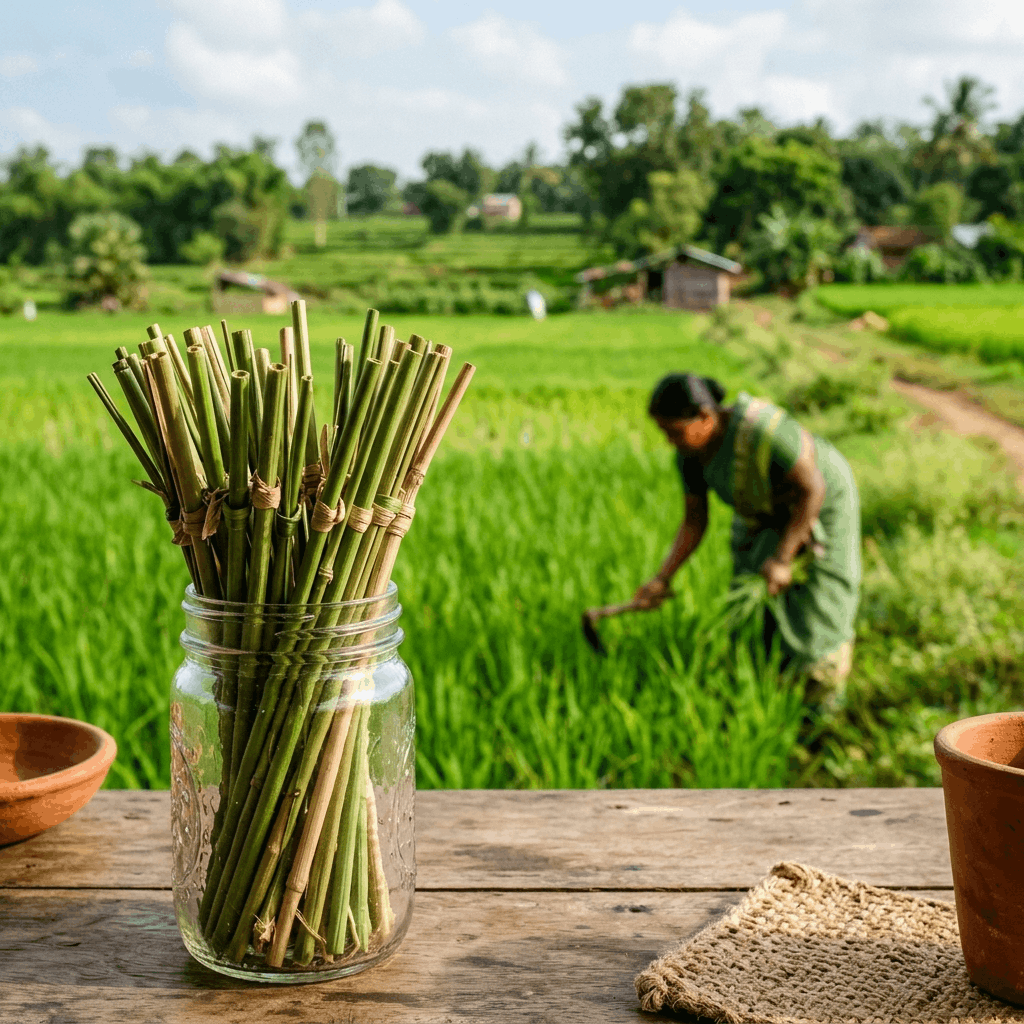
Types of Eco-Friendly Straws & Production Volume
There are several types of eco-friendly straws you can manufacture, each using different raw materials and processes. The most popular types are: (1) Wheat stem straws — made from harvested wheat stalks after the grain is collected; (2) Bamboo straws — cut from naturally hollow bamboo canes; (3) Paper straws — made by rolling and gluing layers of food-grade paper; (4) Sugarcane juice straws — made from sugarcane stalks; (5) Grass straws — made from lepironia articulata (a type of grass). A small paper straw production unit can produce 50,000–1,00,000 straws per day with 2–3 workers. Wheat stem straw production can yield 5,000–10,000 straws per worker per day, as it involves more manual cleaning and sorting. The unit sale price ranges from ₹0.50 to ₹3 per straw depending on type and quality. Hotels, restaurants, cafes, juice shops, and airlines are the primary buyers. With the complete ban on plastic straws now in effect across India, this business has enormous untapped potential in both domestic and export markets. Setting up a basic wheat straw unit requires only simple tools — a cutting board, a sharp knife, a pot for boiling, and a clean drying area. Even a farmer's family working part-time can generate ₹5,000–₹15,000 per month from this side business during the wheat harvest season. The global eco-straw market was valued at USD 1.2 billion in 2023 and is projected to reach USD 4.5 billion by 2030, growing at over 16% annually. Farmers in Punjab and Haryana who previously burnt their wheat stubble — causing massive seasonal pollution — can now sell those very stalks as raw material, turning an environmental problem into an income opportunity.
Where Are Eco-Friendly Straws Used?
Eco-friendly straws are used wherever beverages are served. The primary markets include restaurants and cafes, juice corners, sugarcane juice stalls, hotels and resorts, airlines and railways, packaged juice and beverage companies, and events and parties. After the global plastic straw ban, international demand from countries like the USA, UK, Australia, and Germany has exploded. Many multinational food chains like McDonald's, Starbucks, and Domino's have publicly committed to replacing plastic straws with paper or bamboo alternatives. This creates massive institutional demand that small Indian manufacturers can tap into through export agents. Wheat stem straws in particular are gaining popularity as a completely natural, chemical-free alternative with a pleasant earthy texture. They can withstand cold and warm drinks for 30–60 minutes without becoming soggy. Bamboo straws are reusable and washable, making them popular in the premium segment. Paper straws are the most affordable and are ideal for high-volume disposable use in food service.
1
Step 1: Harvest & Select Raw Material
For wheat straws: collect dry wheat stalks after harvest. Select hollow, straight, uniform sections (8–20 cm length). For bamboo: cut young bamboo canes into 20 cm sections and clean the natural hollow. For paper: procure food-grade kraft paper rolls.
2
Step 2: Cleaning & Sterilization
Wash wheat and bamboo sections thoroughly with clean water. Boil in hot water for 10–15 minutes to sterilize and remove bacteria. Sun-dry completely before processing. For paper straws, the paper is already food-safe — no sterilization needed.
3
Step 3: Cutting to Uniform Length
Cut all straws to a uniform length (typically 19–21 cm for standard drinking straws). Use a cutting jig or machine cutter to ensure consistency. Uniform size is critical for customer acceptance and packaging.
4
Step 4: Quality Inspection & Sorting
Inspect each straw for cracks, bends, blockages, or rough edges. Test hollow straws by blowing air through them to confirm the passage is clear. Sort by size and grade. Reject and compost damaged pieces.
5
Step 5: Packaging & Branding
Pack straws in bundles of 100 or 500 using paper wrapping or biodegradable packaging. Add a label with your brand name, quantity, and biodegradable certification. Premium packaging significantly increases the sale price — especially for export.
Revenue & Profitability of the Straw Business
A small paper straw unit producing 50,000 straws/day at ₹0.75 per straw generates ₹37,500 per day in revenue. After raw material and labor costs of approximately ₹15,000/day, the net profit is around ₹22,500/day — or nearly ₹6 lakh per month for a 25-day working month. Wheat stem straws have even better margins since the raw material (wheat stalks) is agricultural residue that is often burnt or discarded by farmers — you can source it for virtually free or at minimal cost. Bamboo straws command the highest price (₹3–₹10 per straw) but have longer production times. The export market offers 3–5x higher prices compared to domestic rates. For example, a bundle of 100 wheat straws sold domestically at ₹50 can be sold internationally for ₹150–₹250.
Environmental Impact: Saving Oceans from Plastic Straws
Plastic straws are among the top 10 most found items in ocean clean-ups worldwide. A single plastic straw takes 200 years to decompose, during which time it breaks into microplastics that enter the food chain. Sea turtles, fish, and seabirds frequently ingest plastic straws with fatal consequences. By switching to biodegradable straws, every café, restaurant, and hotel actively contributes to reducing ocean pollution. Wheat stem straws decompose completely within 60–90 days in soil or water. Bamboo straws are reusable for 6–12 months and then biodegrade naturally. Paper straws disintegrate within 30 days. Producing and promoting eco-friendly straws is therefore not just a business decision — it is a direct contribution to saving marine biodiversity and reducing global plastic pollution.
Government Regulations & Market Opportunity
The Government of India banned plastic straws under its Single Use Plastic (SUP) ban effective July 2022. Similar bans are now in place in the EU, UK, USA (several states), Canada, and Australia. This legislative push has made eco-friendly straws a legally mandated requirement for food businesses, creating an instant and enormous market. Indian manufacturers have a significant cost advantage in producing wheat stem and paper straws compared to manufacturers in developed countries. With proper quality certifications like FSSAI (for food contact), ISO 9001, and international certifications like FDA (USA) or CE (Europe), Indian producers can access global markets at premium prices. The government also provides export incentives, GST refunds on exports, and MSME registration benefits to straw manufacturers.
Where to Sell Eco-Friendly Straws
Sell eco-friendly straws to: (1) Juice shops, sugarcane stalls, and tea stalls in your city, (2) Hotels, restaurants, cafes, and cloud kitchens, (3) Packaged juice and beverage brands (direct supply), (4) Supermarkets and departmental stores, (5) Online via Amazon, Flipkart, and Meesho, (6) Export agents and international importers (biggest opportunity), (7) Airlines, railways, and institutional canteens via the GeM portal. Build a strong social media presence on Instagram and YouTube showing the natural production process — eco-conscious consumers and businesses actively seek authentic, transparent suppliers.
Machinery & Infrastructure for Straw Production
For paper straws: the key machine is a paper straw rolling machine (₹1,50,000–₹5,00,000), a paper cutting machine, a gluing station, and a UV sterilizer. For wheat/bamboo straws: you need a cleaning tank, a boiling vessel (stainless steel), a uniform-cut saw or cutting jig, a drying rack, and a packaging sealer. Total investment for a small wheat straw unit is ₹50,000–₹2,00,000. For a paper straw unit: ₹3,00,000–₹10,00,000. Most machines are available from manufacturers in Delhi, Ludhiana, and Pune. Power requirement is modest — 1–5 kW total. The production area required is as small as 300–500 sq ft for a starter unit.
🌿 Launch Your Eco Straw Business
Get guidance on machinery, raw material sourcing, and market connections. Contact us on WhatsApp: +91 95372 30173
Frequently Asked Questions about Eco-Friendly Straws
Which type of eco-friendly straw is most profitable? +
Wheat stem straws have the highest profit margin because the raw material cost is nearly zero — wheat stalks are agricultural waste. Paper straws have the highest production volume but moderate margins. Bamboo straws command the highest per-unit price (₹3–₹10) but have longer production time. For beginners, wheat stem straws are the best starting point due to minimal investment and immediate profitability.
How long do wheat straws stay usable in a drink? +
A properly dried and cleaned wheat stem straw can withstand cold drinks for up to 2 hours and hot drinks for 30–45 minutes without becoming soft or soggy. This is significantly better than paper straws, which typically last 20–40 minutes in cold drinks. The natural silica content in wheat stems gives them structural strength in liquids.
What certifications are needed to sell eco straws? +
For domestic sales: FSSAI registration (for food contact products) and MSME/Udyam registration are essential. For export: you need a BIS certification (or equivalent international certification), Export-Import (EXIM) code, and potentially FDA (USA) or EFSA (EU) certification depending on your target market. APEDA (Agricultural and Processed Food Products Export Development Authority) also provides support for agricultural product exports.
Can wheat straw production be done without machines? +
Yes! Wheat stem straw production is one of the most machine-free cottage industries. Harvesting, cleaning, boiling, sun-drying, and cutting to length can all be done manually with basic kitchen utensils. A family of 4–5 people working together can produce 3,000–5,000 straws per day without any machinery. This makes it ideal for Self-Help Groups (SHGs) and rural women's cooperatives with zero or minimal startup capital.
How do I find export buyers for eco-friendly straws? +
The best channels to find export buyers are: (1) Alibaba and Global Sources — list your products with clear photos and certifications, (2) APEDA export portal (apeda.gov.in) — register and connect with verified international importers, (3) Trade fairs — Participate in India International Trade Fair (IITF) and Eco-Pack exhibitions, (4) Import brokers in target countries — connect via LinkedIn or trade directories, (5) Join the FIEO (Federation of Indian Export Organizations) for mentorship and buyer matchmaking.