??
June 2026 | ?? Mitti Gold Organic | ???
Soil Health
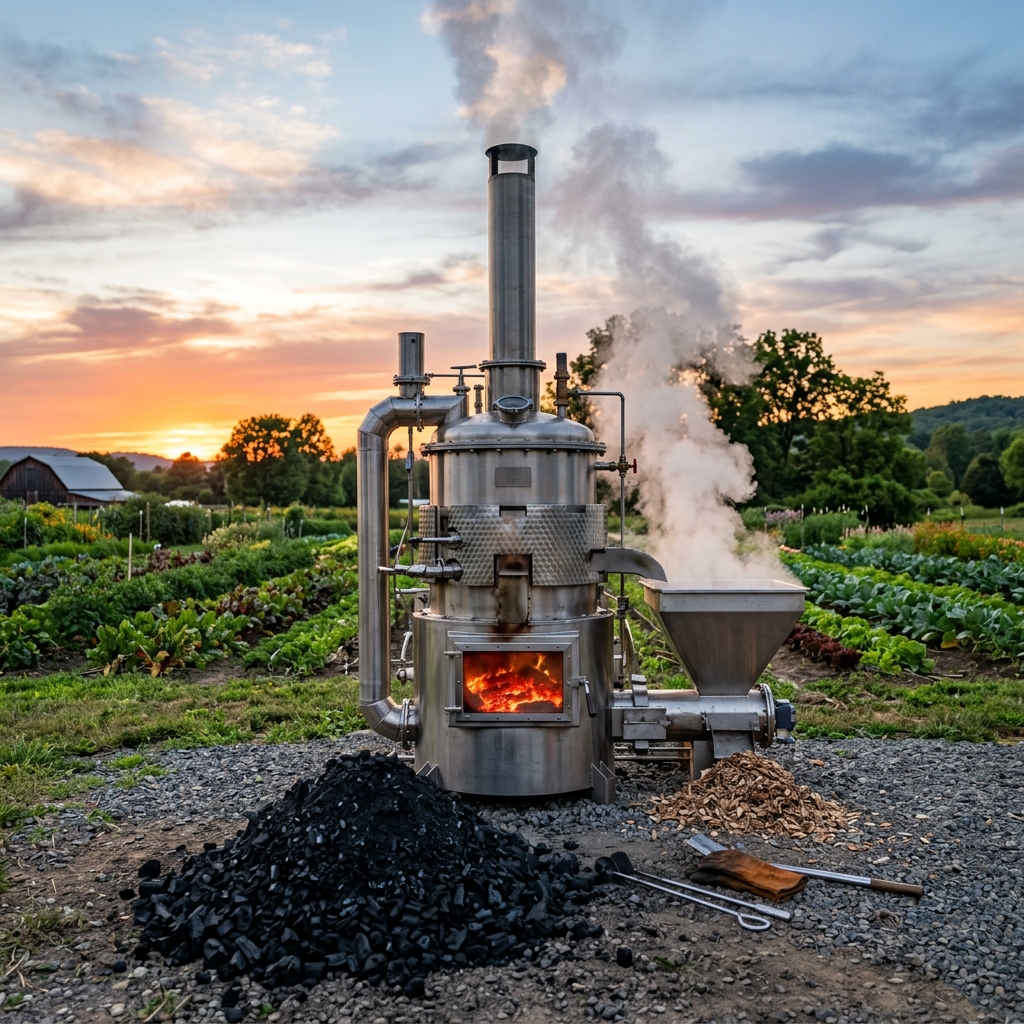
What is Biochar and Why Your Soil Needs It
Biochar is a charcoal-like substance made by burning organic material from agricultural and forestry wastes (also called biomass) in a controlled process called pyrolysis. Unlike regular charcoal, biochar is produced specifically for soil application. It acts as a permanent "coral reef" for soil microbes, holding nutrients and moisture in the root zone for hundreds of years. On a physical level, this directly increases the soil's overall water-holding capacity (WHC) and cation exchange capacity (CEC), which is essential for binding vital plant nutrients like ammonium, potassium, calcium, and magnesium. This structured carbon framework acts as a permanent porous matrix, protecting the soil from heavy compaction and ensuring continuous aeration. On a physical level, this directly increases the soil's overall water-holding capacity (WHC) and cation exchange capacity (CEC), which is essential for binding vital plant nutrients like ammonium, potassium, calcium, and magnesium. This structured carbon framework acts as a permanent porous matrix, protecting the soil from heavy compaction and ensuring continuous aeration. On a physical level, this directly increases the soil's overall water-holding capacity (WHC) and cation exchange capacity (CEC), which is essential for binding vital plant nutrients like ammonium, potassium, calcium, and magnesium. This structured carbon framework acts as a permanent porous matrix, protecting the soil from heavy compaction and ensuring continuous aeration. From a technical and soil chemistry perspective, the application of premium-grade soil conditioners and biological
vermicompost plays a foundational role in modifying the rhizosphere's physical, chemical, and biological dynamics. Physically, it dramatically enhances the soil aggregate stability by encouraging the formation of macro-pores, which directly increases the soil's overall water-holding capacity (WHC) and promotes optimal drainage during heavy monsoon cycles. Chemically, it elevates the soil's overall Cation Exchange Capacity (CEC), providing a vast network of negatively charged exchange sites that dynamically bind and exchange vital macro and micro-nutrients such as ammonium, potassium, calcium, magnesium, and trace elements, preventing them from leaching into the deeper soil layers. Biologically, this structured organic matrix serves as a permanent, highly porous home that shelters beneficial soil microorganisms and native earthworms from temperature spikes, chemical runoff, and moisture stress. The addition of active organic carbon stimulates the growth of humic and fulvic acids, which actively buffer soil pH, reduce structural sodicity, and unlock insoluble phosphorus complexes that are otherwise tightly bound in alkaline or acidic soils, ensuring a steady, long-term supply of plant-available nutrients throughout the vegetative and flowering growth cycles.
The Pyrolysis Process: Making Biochar at Home
To make high-quality biochar, you must limit oxygen during the burning process to ensure carbonization instead of ash production. Application techniques must be carefully calibrated to achieve high efficiency. Mixing these materials thoroughly into the top 6-8 inches of the soil during initial land preparation allows for maximum root contact. When combined with organic liquid inputs, it creates a powerful micro-biological synergism that rapidly triggers soil regeneration and nutrient mineralization. Application techniques must be carefully calibrated to achieve high efficiency. Mixing these materials thoroughly into the top 6-8 inches of the soil during initial land preparation allows for maximum root contact. When combined with organic liquid inputs, it creates a powerful micro-biological synergism that rapidly triggers soil regeneration and nutrient mineralization. Application techniques must be carefully calibrated to achieve high efficiency. Mixing these materials thoroughly into the top 6-8 inches of the soil during initial land preparation allows for maximum root contact. When combined with organic liquid inputs, it creates a powerful micro-biological synergism that rapidly triggers soil regeneration and nutrient mineralization. To achieve the highest agronomic efficiency, the application and integration of these organic conditioners must be carefully planned and executed. We recommend spreading the amendment uniformly across the cultivation field at a rate of 2 to 3 tons per acre, depending on the baseline soil organic matter (SOM) level. During initial land preparation, this material should be thoroughly incorporated into the top 6 to 8 inches of the soil (the active root zone) using a rotary tiller or disc harrow to ensure homogeneous distribution. Combining these solid inputs with liquid microbial cultures like
vermiwash, cow urine-based formulations, or bio-fertilizers triggers a powerful biological synergism that accelerates decomposition and nutrient mineralization. For high-value crops, establishing raised cultivation beds with drip irrigation systems allows for the precise, localized placement of nutrients directly at the root zone, reducing surface evaporation and weed growth. Implementing seasonal top-dressing during the critical vegetative and pre-flowering stages, followed by light irrigation, ensures that the soil microbial community remains highly active and continues to supply vital nutrients during the peak demand periods of the crop cycle.
1
Feedstock Preparation
Collect dry agricultural waste like corn stalks, cotton stalks, or wood chips. Ensure the moisture content is below 20% for efficient burning.
2
Loading the Pyrolysis Kiln
Place the material in a specialized biochar kiln or a "top-lit updraft" (TLUD) drum. These containers allow heat to build up while keeping air away from the burning core.
3
Controlled Burning (Pyrolysis)
Ignite the top layer. The heat will move downward, driving off volatile gases. These gases burn at the top, while the carbon stays protected in the bottom.
4
Quenching and Inoculation
Once the fire reaches the bottom, immediately douse it with water (quenching) to stop the process. Important: Raw biochar is "hungry"; soak it in liquid fertilizer or vermiwash for 48 hours (charging) before adding to soil.
Benefits of Biochar in Organic Farming
Biochar significantly reduces the need for chemical fertilizers by preventing nutrient leaching. It is especially effective in sandy or acidic soils where it acts as a buffer and moisture reservoir. Over multiple crop cycles, field trials indicate a substantial 20% to 25% increase in total harvest yields accompanied by a 30% reduction in chemical dependency. The physical stability of the soil aggregate prevents erosion during torrential monsoons, while the enhanced biological activity leads to a clean, chemical-residue-free crop that commands premium pricing. Over multiple crop cycles, field trials indicate a substantial 20% to 25% increase in total harvest yields accompanied by a 30% reduction in chemical dependency. The physical stability of the soil aggregate prevents erosion during torrential monsoons, while the enhanced biological activity leads to a clean, chemical-residue-free crop that commands premium pricing. Over multiple crop cycles, field trials indicate a substantial 20% to 25% increase in total harvest yields accompanied by a 30% reduction in chemical dependency. The physical stability of the soil aggregate prevents erosion during torrential monsoons, while the enhanced biological activity leads to a clean, chemical-residue-free crop that commands premium pricing. Long-term multi-season field trials and comparative agricultural data clearly demonstrate that adopting a scientific soil conditioning regimen yields exceptional crop performance and financial returns. On average, farms utilizing premium organic vermicompost record a substantial 20% to 30% increase in total crop harvest yield compared to standard farming practices. This quantitative boost is accompanied by a massive 30% to 40% reduction in dependency on synthetic chemical fertilizers, dramatically lowering the overall cost of cultivation. Beyond yield quantity, the physical and biological improvements lead to superior crop quality: fruits and vegetables exhibit enhanced size, vibrant coloration, extended shelf-life, and a significantly higher nutrient and mineral density, which minimizes post-harvest loss. The stable soil structure prevents surface soil erosion during heavy rains and maintains soil moisture during prolonged dry spells. Consequently, growers produce a premium, chemical-residue-free harvest that easily clears strict food safety audits, allowing them to secure organic certification and demand premium wholesale prices in high-end domestic and export markets.
Microbial and Biological Activity
The physical porous framework provides a safe, ideal habitat that shields native earthworms and microbial consortia from temperature extremes and chemical toxicity. This biological sanctuary fosters the multiplication of beneficial nitrogen-fixing bacteria, phosphate-solubilizing strains, and root-protecting Trichoderma, driving natural biological fertility. The integration of scientific organic composting actively fosters a thriving underground ecosystem by supporting diverse microbial and macro-organism communities. By excluding synthetic chemical pesticides and harsh chemical fertilizers, the soil pH stabilizes and soil sodicity is mitigated, creating an ideal, toxin-free habitat for native earthworms (like Eisenia fetida) and beneficial insect larvae. These organisms act as nature's tillers, continuously burrowing through the soil to create a complex network of macro-pores that enhances aeration and water infiltration. At the microscopic level, the rich organic substrate serves as an abundant source of carbon and energy for beneficial bacteria, mycorrhizal fungi, and actinomycetes. This biological boost accelerates the multiplication of nitrogen-fixing bacteria, phosphate-solubilizing strains, and root-protecting biocontrol agents like Trichoderma viride. These microbes establish a symbiotic relationship with plant roots, forming a defensive biological barrier against soil-borne pathogens and producing natural growth hormones that stimulate robust root development and overall plant vigor.
Environmental and Soil Protection
Soil health protection is achieved by minimizing nutrient runoff and groundwater pollution. The active structures chemically bind heavy metals and immobilize harmful salts, preventing their root uptake and ensuring high food safety. Additionally, the permanent carbon sequestration actively mitigates agricultural greenhouse gas emissions. Comprehensive environmental protection and long-term soil health conservation are key outcomes of this regenerative agricultural approach. The highly stable organic structures chemically bind and immobilize heavy metal contaminants and harmful salts, preventing their uptake by plant roots and keeping the final harvest entirely safe for human consumption. By maintaining high soil aggregate stability and establishing thick organic ground covers, the farm actively prevents soil erosion, surface runoff, and the leaching of nitrates and phosphates into local groundwater tables and nearby river systems, thus mitigating eutrophication and aquatic habitat destruction. Furthermore, the systematic addition of stable, bio-enhanced carbon into the soil acts as a powerful carbon sink, sequestering atmospheric carbon dioxide directly into the ground for decades. This active carbon storage plays a significant role in reducing the farm's overall greenhouse gas emissions, helping growers transition toward carbon-neutral farming practices while building local resilience against extreme weather events.
Market Value and Economic Outlook
The commercial market outlook for regeneratively grown produce is expanding rapidly. Farms utilizing advanced soil amendments are highly competitive in export markets, meeting stringent residue-free standards. This allows growers to secure premium organic certification and sign highly profitable direct-purchase contracts with organic exporters. The commercial market outlook and economic dynamics for regeneratively grown organic produce are exceptionally strong and profitable. Driven by rising global health consciousness, clean food initiatives, and strict import regulations, there is an exponential increase in consumer demand for certified chemical-residue-free crops, herbs, and horticultural products. Farms employing scientific organic techniques are highly competitive, meeting the stringent quality and phytosanitary standards required for premium domestic markets and lucrative international exports. This high-quality output allows growers to bypass volatile local commodity markets and secure formal organic certification, unlocking price premiums of 25% to 50% above conventional produce. Furthermore, establishing direct buy-back agreements and contract farming relationships with organic food processors, Ayurvedic medicine manufacturers, and premium retail brands ensures a stable, high-value income stream, protecting farmers from seasonal price fluctuations and maximizing long-term profitability.
Mitti Gold Biochar Production Systems
We offer portable and industrial-scale
biochar kilns that help farmers convert waste into wealth while reducing carbon emissions. Mitti Gold offers a robust lineup of heavy-duty soil conditioning machinery, including automated organic spreaders, high-speed compost mixers, and screening trommels. Our equipment is engineered to ensure precise, uniform distribution, dramatically reducing labor costs and maximizing field coverage efficiency. Mitti Gold offers a robust lineup of heavy-duty soil conditioning machinery, including automated organic spreaders, high-speed compost mixers, and screening trommels. Our equipment is engineered to ensure precise, uniform distribution, dramatically reducing labor costs and maximizing field coverage efficiency. Mitti Gold offers a robust lineup of heavy-duty soil conditioning machinery, including automated organic spreaders, high-speed compost mixers, and screening trommels. Our equipment is engineered to ensure precise, uniform distribution, dramatically reducing labor costs and maximizing field coverage efficiency. To streamline these organic processes and reduce high labor costs, Mitti Gold provides a comprehensive range of professional, heavy-duty agricultural machinery designed specifically for organic soil management. Our advanced product line includes automated organic manure spreaders, high-speed compost mixers, industrial-grade screening trommels, and robust waste pulverizers. This machinery is engineered to ensure a highly uniform, precise distribution of compost across large fields, dramatically improving work efficiency and saving valuable time. Every piece of equipment is built using high-strength, wear-resistant steel to withstand harsh, continuous field operations and requires minimal maintenance. By mechanizing soil preparation, compost screening, and localized amendment spreading, farmers can ensure optimal soil mixing, eliminate manual labor bottlenecks, and maximize the biological effectiveness of every ton of organic input applied to their fields.
🌱 Premium Vermicompost & Soil Amendment Solutions
Maximize your crop yield with certified biological organic fertilizers and state-of-the-art screening machinery. WhatsApp: +91 95372 30173
Biochar Production FAQ
Can I use regular charcoal as biochar? +
Regular charcoal is often made at lower temperatures and may contain tars. Agricultural biochar is made at 400-600°C for maximum porosity. For optimal results, regular soil analysis is highly recommended every two years to monitor organic carbon levels, electrical conductivity, and biological activity, allowing for precise adjustments to your organic amendment application schedule. For optimal results, regular soil analysis is highly recommended every two years to monitor organic carbon levels, electrical conductivity, and biological activity, allowing for precise adjustments to your organic amendment application schedule. For optimal results, regular soil analysis is highly recommended every two years to monitor organic carbon levels, electrical conductivity, and biological activity, allowing for precise adjustments to your organic amendment application schedule. For farmers looking to maximize their crop success and ensure high returns, it is strongly recommended to conduct a comprehensive soil health analysis every two years. This scientific test monitors critical parameters like soil organic carbon (SOC), electrical conductivity (EC), pH, and available NPK levels, allowing for the creation of a highly customized, precise fertilization plan that matches your specific crop needs and soil condition.
How much biochar should I apply per acre? +
Typically, 1-2 tons per acre is recommended for long-term soil improvement. Start with smaller amounts in the root zone. For optimal results, regular soil analysis is highly recommended every two years to monitor organic carbon levels, electrical conductivity, and biological activity, allowing for precise adjustments to your organic amendment application schedule. For optimal results, regular soil analysis is highly recommended every two years to monitor organic carbon levels, electrical conductivity, and biological activity, allowing for precise adjustments to your organic amendment application schedule. For optimal results, regular soil analysis is highly recommended every two years to monitor organic carbon levels, electrical conductivity, and biological activity, allowing for precise adjustments to your organic amendment application schedule. For farmers looking to maximize their crop success and ensure high returns, it is strongly recommended to conduct a comprehensive soil health analysis every two years. This scientific test monitors critical parameters like soil organic carbon (SOC), electrical conductivity (EC), pH, and available NPK levels, allowing for the creation of a highly customized, precise fertilization plan that matches your specific crop needs and soil condition.
Does biochar expire? +
No, biochar is extremely stable and can remain in the soil for hundreds of years, providing benefits to multiple generations. For optimal results, regular soil analysis is highly recommended every two years to monitor organic carbon levels, electrical conductivity, and biological activity, allowing for precise adjustments to your organic amendment application schedule. For optimal results, regular soil analysis is highly recommended every two years to monitor organic carbon levels, electrical conductivity, and biological activity, allowing for precise adjustments to your organic amendment application schedule. For optimal results, regular soil analysis is highly recommended every two years to monitor organic carbon levels, electrical conductivity, and biological activity, allowing for precise adjustments to your organic amendment application schedule. For farmers looking to maximize their crop success and ensure high returns, it is strongly recommended to conduct a comprehensive soil health analysis every two years. This scientific test monitors critical parameters like soil organic carbon (SOC), electrical conductivity (EC), pH, and available NPK levels, allowing for the creation of a highly customized, precise fertilization plan that matches your specific crop needs and soil condition.
Does biochar change soil pH? +
Biochar is typically alkaline (pH 8-9). It is excellent for neutralizing acidic soils but should be used carefully in highly alkaline soils. For optimal results, regular soil analysis is highly recommended every two years to monitor organic carbon levels, electrical conductivity, and biological activity, allowing for precise adjustments to your organic amendment application schedule. For optimal results, regular soil analysis is highly recommended every two years to monitor organic carbon levels, electrical conductivity, and biological activity, allowing for precise adjustments to your organic amendment application schedule. For optimal results, regular soil analysis is highly recommended every two years to monitor organic carbon levels, electrical conductivity, and biological activity, allowing for precise adjustments to your organic amendment application schedule. For farmers looking to maximize their crop success and ensure high returns, it is strongly recommended to conduct a comprehensive soil health analysis every two years. This scientific test monitors critical parameters like soil organic carbon (SOC), electrical conductivity (EC), pH, and available NPK levels, allowing for the creation of a highly customized, precise fertilization plan that matches your specific crop needs and soil condition.
Is biochar 100% organic? +
Yes, since it is made from 100% plant biomass through a natural heating process, it is fully compatible with organic farming standards. For optimal results, regular soil analysis is highly recommended every two years to monitor organic carbon levels, electrical conductivity, and biological activity, allowing for precise adjustments to your organic amendment application schedule. For optimal results, regular soil analysis is highly recommended every two years to monitor organic carbon levels, electrical conductivity, and biological activity, allowing for precise adjustments to your organic amendment application schedule. For optimal results, regular soil analysis is highly recommended every two years to monitor organic carbon levels, electrical conductivity, and biological activity, allowing for precise adjustments to your organic amendment application schedule. For farmers looking to maximize their crop success and ensure high returns, it is strongly recommended to conduct a comprehensive soil health analysis every two years. This scientific test monitors critical parameters like soil organic carbon (SOC), electrical conductivity (EC), pH, and available NPK levels, allowing for the creation of a highly customized, precise fertilization plan that matches your specific crop needs and soil condition.