📅 June 2026 | ✍️ Mitti Gold Organic | 🗂️ Legal
📥 Download Sample Format
Get the sample document format in English, Hindi, Gujarati, or Urdu.
Introduction to Agricultural Land Inheritance
When an agricultural landowner passes away, the immediate priority for the surviving family members is often emotional healing, but a critical legal step inevitably follows: applying for the heirship of agricultural land. The process of legally transferring the ownership of agricultural land from a deceased individual to their rightful heirs is known as mutation of property or heirship registration. This transition is not merely a bureaucratic formality; it is a fundamental requirement to establish legal ownership, which in turn secures the family's financial future and agricultural livelihood. Without a formally recognized heirship certificate and updated land records, the surviving members cannot legally sell, lease, or mortgage the property. Furthermore, they will be entirely ineligible for government agricultural subsidies, crop insurance policies, or agricultural loans that strictly require proof of ownership. Navigating the legalities of land inheritance can seem daunting due to the complex web of revenue laws, personal succession laws, and local administrative procedures. However, understanding the foundational concepts of heirship is the first and most crucial step toward ensuring a smooth and dispute-free transfer of agricultural assets.
Understanding the Legal Framework and Succession Laws
The inheritance of agricultural land is primarily governed by a combination of personal succession laws and state-specific agricultural tenancy or land revenue acts. In many jurisdictions, such as India, personal laws (like the Hindu Succession Act, 1956, or the Indian Succession Act, 1925) dictate who the rightful heirs are and what share of the property they are entitled to receive. However, when it comes to agricultural land, state laws often supersede or heavily influence these personal laws to prevent the fragmentation of arable land into unviable, tiny plots. For instance, some states have specific provisions that restrict the inheritance of agricultural land to non-agriculturists to preserve the farming ecosystem. It is essential for applicants to consult their local land revenue codes to understand the precise legal landscape governing their specific plot of land. Being aware of these dual legal frameworks helps heirs anticipate potential legal roadblocks and ensures that their application aligns with both personal succession rights and regional agricultural regulations, thereby preventing unnecessary legal disputes in the future.
Identifying the Rightful Legal Heirs
Before initiating the formal application process, it is absolutely critical to accurately identify all the rightful legal heirs of the deceased landowner. According to most succession laws, Class I heirs typically include the surviving spouse, children (both sons and daughters), and the mother of the deceased. The inclusion of daughters as equal coparceners in agricultural land has been a significant legal evolution in many regions, emphasizing gender equality in inheritance rights. Ignoring or omitting any legitimate heir from the application, whether intentionally or accidentally, can lead to severe legal complications, including the cancellation of the mutation process or lengthy civil litigation. In cases where there are no Class I heirs, the property may devolve to Class II heirs, such as siblings or grandparents. Families must sit down and map out the family tree to ensure complete transparency. If there are disputes among family members regarding who qualifies as an heir or what their respective share should be, it is highly advisable to resolve these issues amicably or seek legal mediation before approaching the revenue authorities.
The Importance of a Will (Testate) vs. Intestate Succession
The presence or absence of a registered Will significantly alters the trajectory of the heirship application process. If the deceased landowner left a valid Will (known as testate succession), the property is distributed exactly according to the wishes outlined in that document, provided it does not violate any statutory laws regarding agricultural land transfer. In such cases, the executor or the beneficiaries must submit the Will, and sometimes a probate from a civil court, to the revenue authorities. Conversely, if the landowner died without a Will (known as intestate succession), the property is distributed strictly according to the applicable personal succession laws. Intestate succession often involves more extensive documentation, as the applicants must prove their relationship to the deceased through various certificates. A registered Will drastically reduces the potential for familial disputes and streamlines the administrative process. However, if a Will is unregistered or contested by other family members under claims of coercion or fraud, the revenue authorities will halt the mutation process until a competent civil court resolves the validity of the Will.
Essential Documents Required for the Application
Compiling the correct and complete set of documents is the bedrock of a successful heirship application. The primary document required is the original death certificate of the deceased landowner, issued by the municipal corporation or local village panchayat. Following this, a Legal Heir Certificate or a Family Member Certificate must be obtained from the Tehsildar or sub-divisional magistrate, which formally lists all surviving legal heirs. Applicants must also provide the current land records, such as the 7/12 extract, Khatauni, or RTC (Record of Rights, Tenancy, and Crops), which serve as proof of the deceased's ownership. Additionally, identity and address proofs of all the legal heirs (like Aadhar cards, voter IDs, or passports) are mandatory. If a Will exists, a certified copy of it must be included. Some states also require a sworn affidavit from all the heirs declaring their mutual consent for the property transfer or relinquishing their rights in favor of one specific heir. Ensuring that all documents are up-to-date and notarized where necessary will prevent frustrating delays and rejections at the revenue office.
Understanding the Role of the Revenue Department
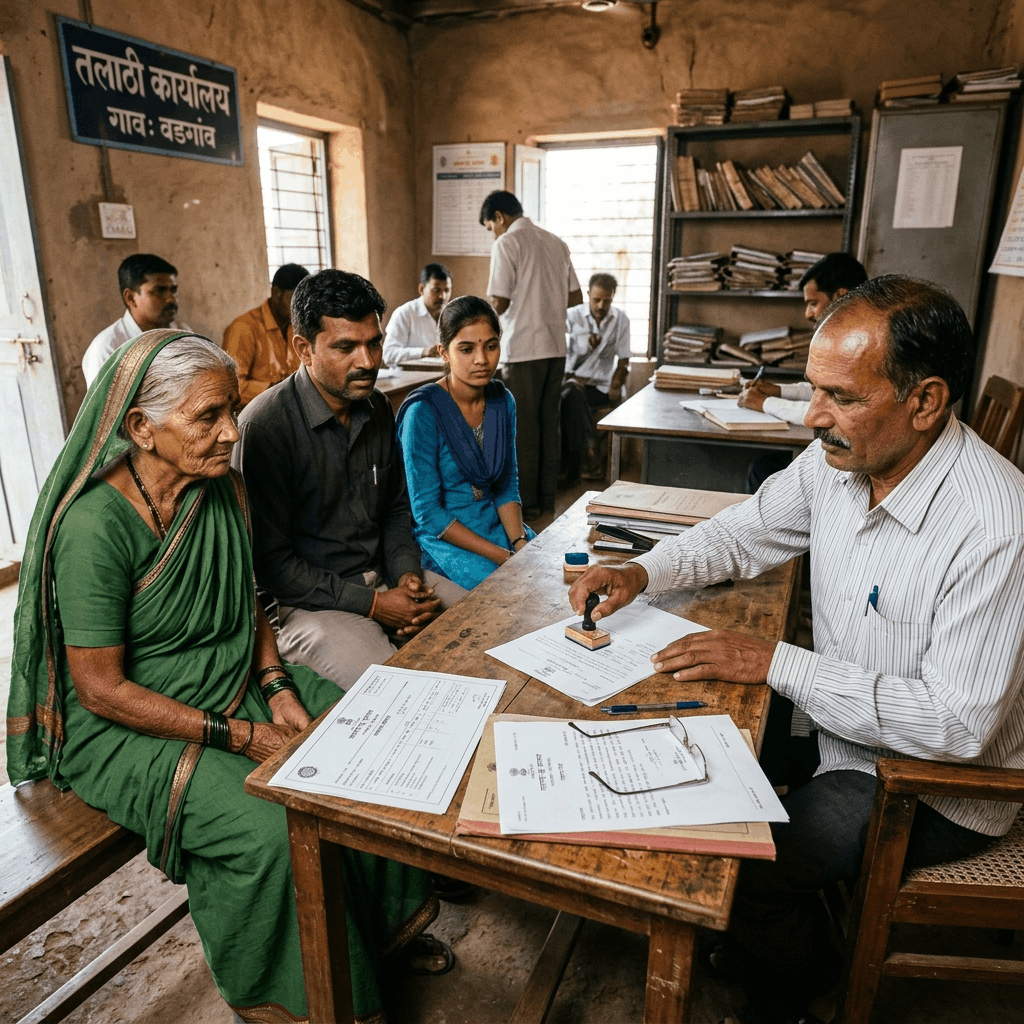
The Revenue Department acts as the principal governing body responsible for maintaining land records and executing the transfer of agricultural land ownership. The hierarchy typically involves local officials such as the Patwari, Talathi, or Village Accountant at the grassroots level, followed by the Revenue Inspector, Tehsildar (or Mandal Revenue Officer), and the Sub-Divisional Magistrate. When an application for heirship is submitted, it first enters the domain of the Tehsildar's office, which initiates a formal case file. The Tehsildar then directs the village-level officer (Patwari) to conduct a thorough field inquiry. The revenue officials are not judicial authorities; their primary role is administrative—to ensure that the land records reflect the factual and legal reality of ownership. They cannot decide on complex questions of legal title or resolve bitter family disputes over succession; such matters must be referred to a civil court. Understanding this distinction is vital for applicants; the revenue department only updates records based on clear legal evidence or undisputed family consent.
The Step-by-Step Offline Application Process
For those opting for the traditional offline route, the application process begins with drafting a formal application addressed to the Tehsildar or the designated revenue officer of the jurisdiction where the agricultural land is situated. This application must explicitly state the details of the deceased, the description of the property (survey numbers, area, and village), and the names of all legal heirs. Once the application is drafted and the aforementioned essential documents are attached, it is submitted to the inward section of the Tehsildar's office, where an acknowledgment receipt is provided. The Tehsildar will review the preliminary documents and issue an order to the village accountant (Patwari) to verify the claims. The Patwari visits the village, cross-checks the death certificate, verifies the family tree with local residents or the Gram Panchayat, and prepares a detailed report. Following this report, the Tehsildar issues a public notice inviting objections. If no objections are received within the stipulated timeframe, the mutation is sanctioned, and the land records are officially updated in the names of the heirs.
Navigating Online Application Portals
In recent years, many state governments have digitized their land records and introduced comprehensive online portals to streamline the mutation and heirship application processes, aiming to reduce corruption and increase transparency. Platforms like Bhoomi (Karnataka), Bhulekh (UP), Mahabhulekh (Maharashtra), and e-District portals allow citizens to apply for heirship from the comfort of their homes. To apply online, applicants must first register on the respective state's land record portal using their mobile number and email ID. After logging in, they must select the specific service for \"Mutation\" or \"Change of Title due to Inheritance.\" The portal will prompt the user to enter the deceased's details, land survey numbers, and the particulars of all legal heirs. Scanned copies of the death certificate, legal heir certificate, and affidavits must be uploaded in the prescribed format. Once submitted, an application reference number is generated, allowing applicants to track the real-time status of their file. While the online process is faster, the physical verification and public notice phases remain mandatory and are conducted offline by the revenue officials.
The Crucial Phase of Field Verification and Inquiry
Once an application is successfully submitted either online or offline, it enters the critical phase of field verification, a process predominantly handled by the village-level revenue officer, known as the Patwari or Talathi. This step is designed to prevent fraudulent claims and ensure that the documented information aligns with the ground reality. The Patwari will physically visit the village and conduct an inquiry regarding the demise of the landowner and the authenticity of the listed legal heirs. They will often consult with the village Sarpanch, Gram Panchayat members, and neighboring landowners to corroborate the family tree. The Patwari also checks if the land is currently embroiled in any tenancy disputes, government acquisition plans, or existing legal stays from civil courts. If the Patwari discovers that an heir has been deliberately excluded or that the property is under a legal embargo, they will note these discrepancies in their report (Panchnama) submitted to the Tehsildar. Applicants should ensure they are cooperative and transparent during this inquiry to expedite the process.
Publication of Notice and Inviting Objections
Transparency is a cornerstone of the land revenue system, which is why the publication of a public notice is a mandatory statutory requirement before any heirship mutation can be finalized. After receiving a satisfactory report from the Patwari, the Tehsildar's office issues a formal proclamation or notice. This notice is prominently displayed on the notice boards of the Gram Panchayat office, the local Chavadi (village meeting place), and the Tehsildar's office. In some states or for high-value properties, the notice may also be published in a widely circulated local newspaper. The purpose of this notice is to inform the general public and any interested parties about the proposed change in land ownership. It provides a specific window of time—typically 15 to 30 days—for anyone to file a formal objection against the heirship application. Objections might come from omitted family members, creditors to whom the deceased owed money, or individuals claiming a prior agreement to purchase the land. If no one comes forward during this period, the application proceeds to the final approval stage.
Handling Disputes and Objections Effectively
If an objection is filed during the notice period, the mutation process is immediately paused, and the case becomes a \"disputed mutation.\" The Tehsildar will issue summons to both the applicants and the objectors, scheduling a formal hearing to listen to both sides. It is crucial to understand that the Tehsildar has limited jurisdiction in these matters; they can only adjudicate based on clear documentary evidence of possession and prima facie rights. For example, if a sibling objects based on an unregistered Will while the applicants hold a registered one, the Tehsildar may rule in favor of the registered document. However, if the dispute involves complex interpretations of succession laws or allegations of fraud and forgery, the Tehsildar will refuse to pass a mutation order and will direct the parties to approach a competent civil court for a definitive declaration of title. During this time, the land records remain in the name of the deceased, and applicants must prepare themselves for potentially lengthy litigation, often requiring the services of specialized property lawyers.
The Concept of Relinquishment Deeds
In many families, agricultural land is deemed unviable if divided into multiple small fragments among all legal heirs. To prevent this, or if some heirs have migrated to urban areas and no longer wish to engage in farming, they may choose to voluntarily give up their share of the property in favor of one or more co-heirs. This legal process is formalized through a \"Relinquishment Deed\" or \"Release Deed.\" For this deed to be legally binding, it must be drafted carefully, clearly stating that the heir is surrendering their rights out of their own free will and without any coercion. Crucially, a Relinquishment Deed must be registered at the local Sub-Registrar's office; an unregistered deed holds no legal weight and will be rejected by the revenue authorities during the mutation process. Depending on the state laws, registering a relinquishment deed between blood relatives often attracts lower stamp duty compared to a standard sale deed. Submitting this registered document alongside the heirship application ensures a smooth transfer of the entire property to the designated family members.
Final Approval and the Mutation Order
Assuming the field inquiry is positive and the public notice period expires without any valid objections—or if objections have been successfully resolved—the application reaches the desk of the Tehsildar or Circle Officer for final approval. The officer will meticulously review the entire case file, ensuring all statutory procedures have been followed and all required documents are intact. Satisfied with the application's legitimacy, the officer will pass a formal \"Mutation Order.\" This legal document is the official government sanction authorizing the change of ownership in the revenue records. The order explicitly details the names of the old owner (the deceased), the names of the new owners (the legal heirs), and their respective shares in the property as determined by law or mutual agreement. A copy of this mutation order is provided to the applicants and is simultaneously forwarded to the village accountant. This order is a highly vital document and must be preserved carefully, as it serves as primary proof that the government has recognized the heirs' legal rights over the agricultural land.
Updating the Record of Rights (RoR)
The passing of the mutation order is not the absolute end of the process; the final and most crucial step is the actual updating of the Record of Rights (RoR), commonly known as the 7/12 extract, Khatauni, or Pahani, depending on the state. The Patwari, acting upon the Tehsildar's mutation order, strikes through the name of the deceased landowner in the property registers and inscribes the names of the approved legal heirs. The date of the mutation order and its corresponding reference number are also recorded in the remarks column for future reference. Once this update is complete, the heirs must obtain a newly certified copy of the RoR from the village office or download it from the state's digital land records portal. This newly issued document is the ultimate, undisputed proof of ownership. With the RoR updated in their names, the heirs are now legally empowered to apply for agricultural loans, benefit from government farming schemes, enter into crop-sharing agreements, or even sell the land if they so desire, completing their transition to recognized landowners.
Conclusion and the Value of Legal Counsel
Applying for the heirship of agricultural land is undeniably a multi-layered legal and administrative journey that requires patience, diligence, and meticulous attention to detail. From correctly identifying all legal heirs and gathering extensive documentation to navigating the bureaucratic procedures of the revenue department and handling potential objections, each step carries significant legal weight. While straightforward cases involving a clear Will and undisputed family dynamics can often be handled directly by the heirs, the reality is that land inheritance is frequently complicated by outdated records, missing documents, or underlying family tensions. Therefore, seeking the counsel of an experienced agricultural property lawyer is highly recommended. A legal expert can help preemptively identify potential pitfalls, ensure all documentation is legally sound, draft precise relinquishment deeds, and provide crucial representation if the matter escalates to a civil dispute. Ultimately, treating the heirship process with the seriousness it deserves ensures that the agricultural land remains a secure and productive asset for generations to come.
📦 Bulk Orders & Export
Mitti Gold Organic: For bulk orders of all organic fertilizers — Farmers, Nurseries, and Export. WhatsApp: +91 95372 30173
Frequently Asked Questions on Agricultural Land Heirship
What is the first step I should take after the landowner's death to claim heirship?
The very first step is to obtain multiple official copies of the deceased landowner's death certificate from the local municipal body or Gram Panchayat. Following this, you must apply for a Legal Heir Certificate or Family Member Certificate from the Tehsildar's office, which officially establishes the surviving heirs.
Do daughters have an equal right to agricultural land inheritance?
Yes. Following amendments to the Hindu Succession Act in 2005, daughters are recognized as equal coparceners in ancestral property, which includes agricultural land, and have the exact same rights and liabilities as sons. However, always verify if specific state agricultural tenancy laws have any overriding stipulations.
Can the revenue department decide who gets the land if there is a family dispute?
No. Revenue authorities like the Tehsildar only have administrative powers to update records based on clear, undisputed evidence. If there is a complex legal dispute regarding the interpretation of a Will or succession rights, they will direct the parties to file a suit in a civil court and will update the records based on the court's final decree.
What is a Relinquishment Deed, and is it necessary?
A Relinquishment Deed is a legal document used when one or more legal heirs voluntarily give up their share of the inherited property in favor of other co-heirs. It is necessary if the family wishes to consolidate ownership to avoid fragmenting the agricultural land. It must be registered at the Sub-Registrar's office to be valid.
How long does the heirship mutation process usually take?
In a straightforward, undisputed case, the mutation process generally takes between 30 to 60 days from the date of application. This includes the mandatory public notice period (usually 15-30 days). Disputed cases or cases requiring civil court intervention can take months or even years to resolve.