📅 July 2026 | ✍️ Mitti Gold Organic | 🗂️ Farming
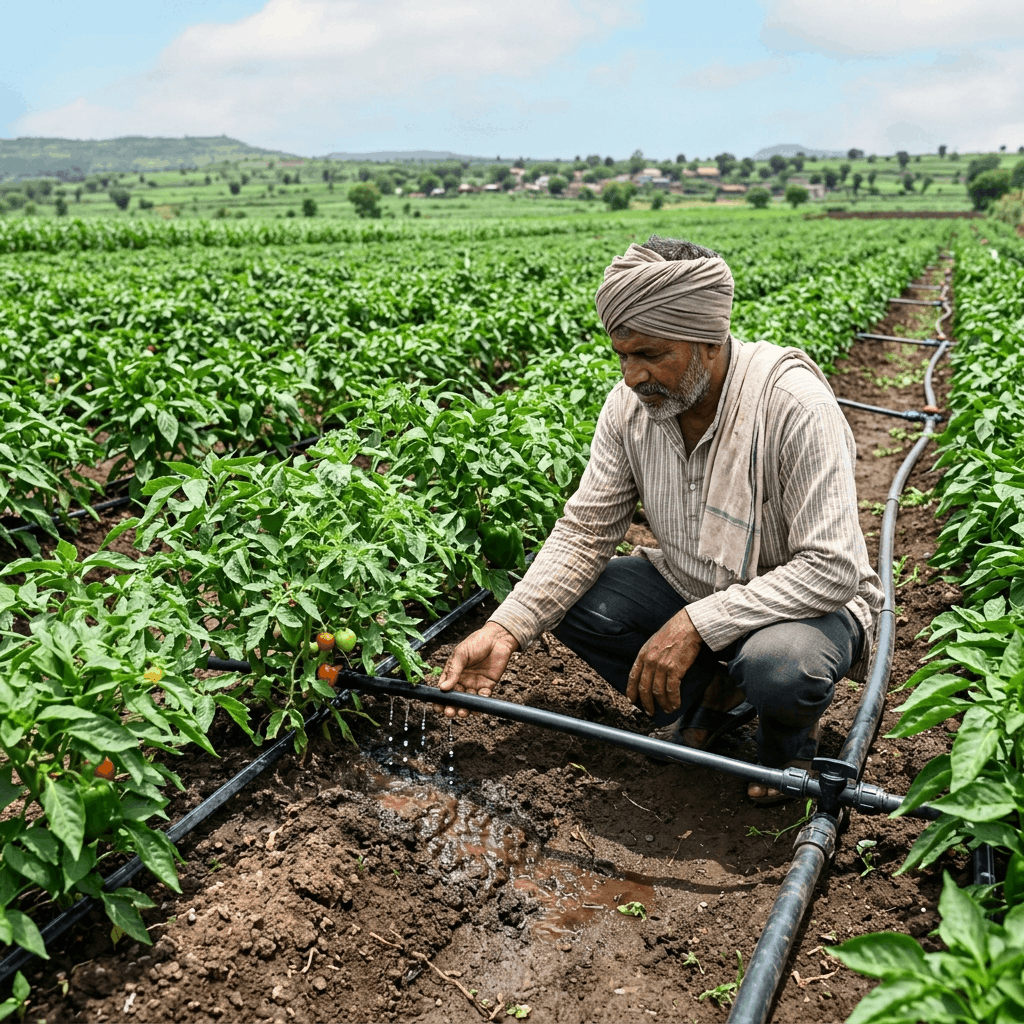
Why Drip Irrigation is the Undeniable Future of Farming
Drip irrigation, often referred to as trickle irrigation, is without a doubt the most highly efficient water and nutrient delivery system ever developed for growing crops. Unlike traditional flood irrigation—where water is indiscriminately poured over the entire field, leading to massive evaporation and runoff—drip systems deliver water directly into the plant's active root zone. It provides the exact right amount of water, precisely at the right time, ensuring that every single plant receives exactly what it needs to grow optimally without any stress.
This sophisticated, yet accessible, method can easily achieve water-use efficiencies exceeding 90%, compared to traditional flood irrigation which barely scrapes by at 40% to 50% efficiency. In agricultural regions grappling with severe water scarcity, unpredictable monsoons, and rapidly declining groundwater tables, drip irrigation is no longer just an optional technological upgrade; it has become an absolute necessity for survival and sustained profitability. By adopting drip irrigation, a farmer transitions from wasting water to managing a highly controlled, precise liquid asset, opening up possibilities to cultivate larger areas of land with a fraction of the traditional water volume.
Water and Fertilizer Requirements Per Bigha
The most immediate and profound impact of installing a drip irrigation system is the sheer volume of resources saved. When transitioning from traditional flooding, water consumption per bigha plummets dramatically, typically by 40% to 60%. This water savings alone can allow a farmer to double their cultivated acreage using the exact same water source. However, the benefits extend far beyond just water conservation. The system allows for \"fertigation\"—the process of injecting liquid fertilizers directly through the drip lines.
Through fertigation, nutrient absorption efficiency skyrockets. In traditional farming, a farmer might broadcast 50 kilograms of solid granular fertilizer per bigha. The vast majority of this expensive fertilizer is wasted—consumed by aggressive weeds growing between crop rows, washed away by runoff, or evaporated into the atmosphere. With a drip system, that requirement drops drastically. A farmer might only need 20 to 25 kilograms of high-quality, water-soluble fertilizer per bigha. Because this liquid nutrient mix is delivered slowly and directly into the active root zone, the plant absorbs it almost immediately. This targeted approach maximizes plant growth, completely eliminates nutrient waste, and significantly reduces the farmer's seasonal fertilizer expenditure.
Operating and Maintaining the Drip System
Successfully operating a drip system requires a shift in mindset from occasional flooding to precise daily management. The system is operated via a series of main valves, and water slowly trickles from specialized emitters built into the lateral pipes. To use the system effectively, a farmer must understand the specific daily water requirements of their crop at different growth stages, adjusting the duration of the water flow accordingly to avoid both under-watering and over-watering.
While operation is simple, diligent maintenance is absolutely critical for the longevity of the system. The most common cause of drip system failure is clogged emitters. To prevent this, the primary screen or disc filters installed at the water source must be opened and manually cleaned on a weekly basis to remove trapped sand, algae, and physical debris. Furthermore, a chemical treatment is required every few months. Flushing the lateral lines with a mild acid solution (acid washing) removes built-up calcium and mineral deposits, while a chlorine flush effectively kills any internal algae growth. Adhering to this maintenance schedule guarantees that the emitters remain clear and the system functions perfectly for 5 to 7 years.
Yield Comparison: Flood Irrigation vs. Drip Irrigation
When comparing the final harvest of a field under flood irrigation to one utilizing a drip system, the results are almost always dramatically different. Crops grown under drip irrigation experience zero water stress because moisture levels in the root zone are kept constantly optimal. As a result, plants grow significantly faster, flower more profusely, and reach harvest maturity earlier than their flood-irrigated counterparts. Overall yield increases of 20% to 50% are consistently reported across a wide variety of crops.
Equally important is the improvement in harvest quality. Because water and nutrients are distributed perfectly evenly across the entire field, every single plant produces fruit or vegetables of uniform size, weight, and color. Additionally, because the leaves and stems of the plants remain completely dry (unlike overhead sprinkler or flood irrigation), fungal diseases like powdery mildew or blight are virtually eliminated. This flawless, premium-quality produce is highly sought after in the market, allowing farmers to command significantly higher prices from buyers and export agents.
Weed Reduction and Soil Health Improvement
A major, often unexpected benefit of drip irrigation is its profound impact on weed management. Because water is delivered exclusively to the immediate root zone of the crop, the wide spaces between the rows remain completely bone dry. Without water, weed seeds cannot germinate and grow. This targeted watering strategy drastically reduces weed populations across the field, saving the farmer thousands of rupees previously spent on manual weeding labor or chemical herbicides.
Furthermore, the localized moisture provided by drip irrigation creates an ideal, thriving micro-environment for beneficial soil biology in the root zone. Traditional flood irrigation often waterlogs the entire field, displacing vital oxygen in the soil and literally drowning beneficial soil microbes and earthworms. Drip irrigation, however, maintains a perfect balance of moisture and oxygen in the soil, encouraging earthworms to aerate the root zone and allowing beneficial bacteria to rapidly break down organic matter into usable plant nutrients.
Strategic Protection Against Diseases
The method of water delivery plays a massive role in crop health. Flood irrigation and overhead sprinklers invariably leave the foliage, stems, and fruits of the plant soaking wet for extended periods. This prolonged dampness creates the perfect breeding ground for a host of devastating fungal and bacterial diseases, including blight, mildew, rust, and various rots.
Drip irrigation acts as the ultimate preventative measure against these diseases by keeping the above-ground parts of the plant entirely dry. In crops that are notoriously susceptible to fungal infections—such as tomatoes, potatoes, grapes, and cotton—switching to drip irrigation is often more effective than applying expensive chemical fungicides. Moreover, because water does not flow across the surface of the field from one plant to another, drip irrigation actively prevents the spread of soil-borne pathogens, isolating any potential infections and protecting the broader crop.
Step-by-Step Installation Guide
Step 1: Field Mapping, Design, and Layout
The process begins with precise measurement. Map out your field dimensions and finalize the exact row spacing required for your specific crop. Lay out the thick, rigid PVC main pipe directly from your water source (borewell or pump) along the edge of the field. From the main pipe, lay out the sub-main PVC pipes horizontally across the width of the field. This forms the backbone of your system.
Step 2: Installing Filters and Lateral Lines
Immediately after the water pump, install a high-quality screen or disc filter. This is non-negotiable, as it prevents sand and debris from entering the delicate drip tubes. Next, unroll the flexible lateral drip tapes (the thin pipes with built-in emitters) down the length of every single crop row. Connect these lateral lines to the sub-main pipes using specialized rubber grommets and take-off valves. Ensure the emitters align perfectly with where the plants will be situated.
Step 3: System Testing, Flushing, and Sealing
Before sealing the ends of the lateral pipes, turn on the main water pump. Allow water to flow freely out of the open ends of the laterals for several minutes. This crucial \"flushing\" step forces out any dirt, mud, or plastic shavings that may have entered the pipes during installation. Once the water runs completely clear, crimp and seal the ends of the laterals using end-caps. Finally, pressurize the system and walk the entire field to check for leaks and ensure every single emitter is dripping uniformly.
Best Suitable Crops and Market Value
While drip irrigation can technically be used for almost any crop, it provides the absolute highest Return on Investment (ROI) when paired with high-value cash crops, horticulture, and expansive fruit orchards. Row crops like cotton, sugarcane, bananas, tomatoes, onions, chilies, and grapes thrive spectacularly under drip systems. Commercial nurseries heavily rely on micro-drip setups to ensure the survival and rapid growth of delicate, expensive saplings.
Because drip irrigation eliminates water-stress and prevents foliage diseases, the resulting produce is visually stunning. Fruits and vegetables grow to a highly uniform size, possess vibrant coloration, and are completely free from unsightly water stains or soil splashing. This blemish-free, premium-quality produce is exactly what lucrative export markets, high-end supermarkets, and discerning urban buyers demand, allowing the farmer to secure top-tier market prices.
📦 Bulk Orders & Export
Mitti Gold Organic: For bulk orders of all organic fertilizers — Farmers, Nurseries, and Export. WhatsApp: +91 95372 30173