📅 June 2026 | ✍️ Mitti Gold Organic | 🗂️ Machinery & Markets
Bulk Order Quantities, Packaging, and Wholesale Rates
When sourcing export-quality cow dung powder from India, understanding the dynamics of bulk order quantities, specialized packaging, and wholesale pricing is the first crucial step for international buyers. India, home to the largest cattle population globally and a deep-rooted tradition of utilizing cow-derived products, offers a highly competitive market for premium grade organic cow dung powder. For industrial buyers, organic fertilizer distributors, and manufacturers of religious or eco-friendly goods, ordering in bulk is not just a matter of scale, but of economic viability and consistent supply chain management.
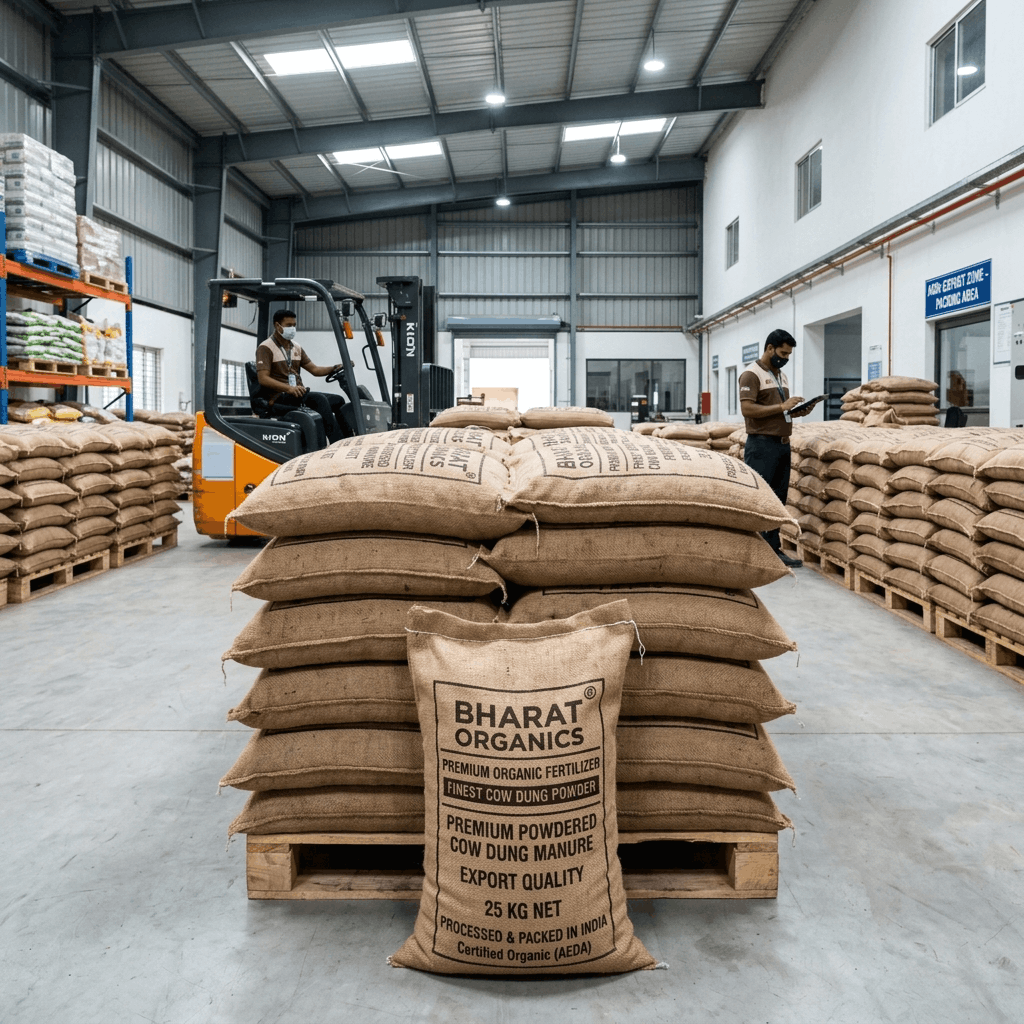
Standard export orders typically revolve around Minimum Order Quantities (MOQs) starting from 1 metric ton for air freight or LCL (Less than Container Load) shipments, going up to 18 to 24 metric tons for a standard 20-foot or 40-foot full container load (FCL). Pricing is highly dependent on the volume ordered, the specific mesh size of the powder, moisture content, and the origin of the dung (with pure indigenous breeds like Gir or Sahiwal commanding a premium). Furthermore, packaging plays a pivotal role in international logistics. Export-grade cow dung powder is meticulously packed in 25kg, 40kg, or 50kg laminated HDPE (High-Density Polyethylene) or PP (Polypropylene) woven bags featuring an inner waterproof liner. This double-layered protection ensures that the powder remains completely dry, safeguarding it against ambient humidity and potential fungal growth during prolonged sea voyages. For massive industrial applications, 1-ton jumbo bags (FIBCs) can also be arranged by top-tier suppliers.
Wholesale rates in India are incredibly competitive due to the abundance of raw material and established processing infrastructure in states like Gujarat, Rajasthan, and Uttar Pradesh. However, buyers should be wary of prices that seem too good to be true, as they often indicate adulteration with soil, sand, or inadequate sterilization. A reliable supplier will provide a transparent pricing structure that includes the cost of processing, sterilization, packing, and necessary export documentation, ensuring you receive a product that meets international quality parameters.
Applications and Step-by-Step Guide to Ordering
The versatility of finely ground, sterilized cow dung powder is remarkable. In the agricultural sector, it serves as a potent base for organic fertilizers, vermicompost, and soil conditioners, rich in essential macro and micronutrients. In the spiritual and wellness markets, it is a primary raw material for manufacturing Havan Samagri (sacred fire offerings), dhoop (incense cones), agarbatti (incense sticks), and natural mosquito repellent coils. Recently, it has even found innovative applications in eco-friendly construction materials, biodegradable pots, and bio-gas generation boosters.
Navigating the export market requires a systematic approach to ensure you partner with the right manufacturer and receive exactly what your industry demands. Below is a comprehensive guide on how to successfully order bulk cow dung powder from India.
Identify Specific Requirements
Begin by precisely defining your technical specifications. Determine the required mesh size (e.g., 80 mesh for fine incense, coarser for fertilizers), maximum acceptable moisture content (strictly under 10% for export), and any specific breed requirements (like Desi cow dung). Clearly outlining these parameters helps suppliers provide accurate quotations.
Request Trial Samples and Lab Reports
Never place a bulk order without first evaluating a physical sample. Reputable Indian exporters will gladly ship a 1kg to 5kg sample via international courier. Alongside the sample, request a recent Certificate of Analysis (COA) from an independent, accredited laboratory detailing the NPK values, carbon-to-nitrogen ratio, and absence of heavy metals.
Verify Export Compliance and Documentation
International trade of agricultural and animal by-products is heavily regulated. Ensure the supplier can provide a Phytosanitary Certificate, a Certificate of Origin, and a Fumigation Certificate. These documents are absolutely non-negotiable for smooth customs clearance in destination countries like the USA, EU, or Australia.
Finalize Logistics and Payment Terms
Work closely with the supplier and a reliable freight forwarder to decide on FOB (Free On Board) or CIF (Cost, Insurance, and Freight) terms. Discuss the packing layout in the container to maximize space. Standard payment terms usually involve a partial advance via Wire Transfer or a Letter of Credit (LC) for large container loads.
How to Compare Supplier Quality in India
The Indian market is flooded with suppliers claiming to offer "export quality" products, but quality can vary drastically. To ensure you are securing premium cow dung powder, you must know how to critically evaluate and compare potential manufacturing partners. The first indicator of superior quality is the texture and consistency of the powder. High-grade powder should be uniformly milled, feeling soft to the touch without any hard lumps, which indicates proper sun-drying and mechanical pulverization.
Secondly, inspect for impurities. Inferior products often contain traces of sand, small stones, plastic debris, or undigested fodder, which adds dead weight and ruins the product for specialized applications like incense manufacturing. A simple water dissolution test can sometimes reveal heavy sand particles settling at the bottom. Odor is another critical factor; properly processed, aged, and dried cow dung powder emits a mild, earthy scent rather than a strong, pungent ammonia smell, which is a sign of fresh, improperly composted dung.
Finally, assess the supplier's infrastructure. The best manufacturers operate dedicated processing facilities with industrial drying yards, heavy-duty pulverizers, magnetic separators to remove metal contaminants, and mechanized sieves. They should also demonstrate a transparent sourcing network, preferably tied directly to local rural Gaushalas (cow shelters) rather than commercial dairies, ensuring the dung is pure and naturally processed.
The Sustainability and Ethical Aspect
Purchasing cow dung powder from India is not just a commercial transaction; it is an investment in a highly sustainable, circular economy that carries profound environmental and social benefits. By replacing synthetic chemical fertilizers with organic cow dung powder, agricultural industries worldwide can significantly lower their carbon footprint, prevent soil degradation, and protect groundwater from toxic chemical runoffs. It embodies the essence of zero-waste agriculture, where what is traditionally considered a waste product is transformed into a valuable, life-giving resource.
Ethically, sourcing this material from India often supports a deeply rooted cultural reverence for cattle. Many premium suppliers source exclusively from Gaushalas—traditional sanctuaries dedicated to the protection and care of aging, non-milking, or rescued cows. By creating a commercial market for the dung of these animals, buyers directly contribute to the financial sustainability of these shelters, ensuring the cows are fed, medically treated, and allowed to live out their natural lives in peace. This cruelty-free, community-supporting supply chain is a powerful narrative that eco-conscious brands can proudly share with their end consumers.
Quality Assurance and International Safety Standards
When dealing with an animal by-product destined for international borders, stringent quality assurance and safety protocols are paramount. The foremost concern for any importing nation is biosecurity—preventing the introduction of foreign pathogens, weed seeds, or pests. Therefore, export-quality cow dung powder must undergo a rigorous sterilization process. Leading Indian exporters utilize advanced thermal treatment, passing the raw powder through industrial rotary dryers at high temperatures. This heat treatment effectively eradicates harmful bacteria such as E. coli and Salmonella, neutralizes active weed seeds, and eliminates any insect larvae.
Furthermore, maintaining an ultra-low moisture content (typically between 5% to 8%) is critical. High moisture not only compromises the powder’s shelf life but also creates a breeding ground for mold and fungi during transit. Quality-centric suppliers conduct mandatory moisture tests using digital analyzers before sealing the bags. Finally, the pre-shipment fumigation of containers by government-approved agencies is the last line of defense, ensuring that the cargo meets the strict phytosanitary regulations mandated by global agricultural and customs authorities.
The Growing Global Market for Cow Dung Powder
The global paradigm shift towards organic farming, sustainable living, and natural wellness has triggered an unprecedented surge in the demand for Indian cow dung powder. In North America and Europe, organic farmers and home gardening enthusiasts are increasingly favoring natural soil amendments over chemical alternatives to rejuvenate soil microbiology. Consequently, wholesalers and agricultural supply companies in these regions are importing massive volumes of sterilized powder to blend into premium potting mixes and organic composts.
Simultaneously, the Middle East and Southeast Asia have emerged as massive importers, driven largely by massive reforestation projects, organic date farming, and a growing expatriate population demanding traditional religious products. The incense and spiritual wellness industry relies heavily on this powder as a slow-burning, natural binding agent that purifies the air. As global consumers continue to demand eco-friendly, ethically sourced products, the market for high-grade cow dung powder is projected to expand exponentially, solidifying India’s position as the undisputed global supplier of this organic green gold.
📦 Bulk Orders & Export
Mitti Gold Organic: For bulk orders of all organic fertilizers — Farmers, Nurseries, and Export. WhatsApp: +91 95372 30173
Frequently Asked Questions (FAQs)
For export purposes, the moisture content must be strictly maintained below 10% (ideally between 5% and 8%). This is crucial to prevent the growth of mold, fungi, and harmful bacteria during long sea voyages, ensuring the product arrives in perfect, usable condition.
Yes, any legitimate and experienced exporter will provide a Phytosanitary Certificate issued by the local government agricultural department. This certificate guarantees that the shipment has been inspected, treated, and is free from quarantine pests and plant diseases.
Absolutely. Professional manufacturers use industrial pulverizers and mechanized sieves and can customize the particle size. For incense sticks (agarbatti) and dhoop cones, a very fine mesh (such as 80 to 100 mesh) is typically requested to ensure a smooth texture and consistent burning.
The MOQ generally starts at 1 metric ton for air freight or combined LCL (Less than Container Load) shipments. However, to make shipping costs economically viable, most industrial buyers opt for a 20-foot container, which holds approximately 18 to 20 metric tons depending on the packaging.
Export-grade powder is packed in highly durable, laminated HDPE or PP woven bags (usually 25kg or 50kg) that feature an inner, sealed plastic liner. This double-layer design makes the bags virtually moisture-proof, protecting the powder from oceanic humidity and physical tearing during transit.