📅
June 2026 | ✍️ Mitti Gold Organic | 🗂️
Health & Ayurveda
Quantity for Daily Consumption and Preparation Yields
Gir cow ghee is not just a cooking fat; it is "Medicated Ghee" (Ghrita). For a healthy adult, the recommended daily quantity is 1 to 2 teaspoons (10-20g), preferably taken with warm water or milk. To achieve a high level of nutritional depth, one must understand the "Yield Ratio." To make 1 kg of pure "Bilona" Ghee, you require approximately 25 to 30 liters of pure A2 milk. This high milk requirement is why authentic Gir cow ghee is expensive. The milk is first turned into curd, then churned (Bilona) to get butter (Makkhan), and finally heated at a low temperature to obtain the ghee. This "Cultured" process ensures that the ghee is rich in "Butyric Acid" and fat-soluble vitamins (A, D, E, K), which are essential for gut health and brain function. From a biological standpoint, maximizing indigenous cow comfort and utilizing high-quality bovine nutritional inputs is essential for high dairy productivity. A stress-free environment directly regulates cortisol and oxytocin hormone levels, which naturally improves the milk let-down response and boosts the overall fat and solid-not-fat (SNF) percentages. From a veterinary and organic livestock management perspective, maximizing the health and comfort of indigenous cattle breeds is crucial for dairy productivity. Providing a stress-free environment directly regulates cortisol and oxytocin hormone levels, which naturally improves milk let-down, increases milk fat percentage, and raises Solids-Not-Fat (SNF) values. Modern cowsheds must be designed with high-pitched ceilings and open ventilation to prevent heat stress, which is the primary cause of metabolic disorders and drops in milk yield during hot summer months. Ensuring that cows have round-the-clock access to fresh drinking water, high-quality organic green fodder, and trace mineral blocks helps them maintain an optimal metabolic balance, strengthening their natural immune response against endemic pathogens and seasonal bovine infections.
Ayurvedic Uses and Traditional Bilona Method
In Ayurveda, Gir cow ghee is a "Yogavahi"—meaning it carries the medicinal properties of herbs deep into the body's tissues. It is used in "Nasya" (nasal drops) for mental clarity and "Netra Tarpana" (eye treatment). Industrially, it is the base for thousands of Ayurvedic medicines like Brahmi Ghrita and Shatavari Ghrita. For the home user, the primary use is "Digestive Health." Consuming ghee on an empty stomach helps in lubricating the intestinal walls and clearing toxins. The traditional "Bilona" method is crucial; unlike commercial "Cream-based" ghee (made by separating cream and heating it), Bilona ghee contains "Sphingolipids" and phospholipids that support the nervous system. Understanding the "Agni-Deepana" (digestive-boosting) nature of the ghee makes it a perfect addition to the diet of children and the elderly. Integrating these tools and supplements into daily dairy operations requires consistent management. Automatic grooming brushes should be accessible in free-stall barns, while mineral salt licks must be securely mounted in dry areas. Proper cooling mist systems should be automated to run during peak thermal stress hours to maintain animal metabolic balance. Integrating modern livestock care equipment and high-nutrition dietary supplements into daily dairy farm operations requires a structured approach. Automatic cow grooming brushes should be securely mounted at optimal heights in open loafing areas, allowing cattle to access them freely for continuous skin stimulation and parasite removal. Misting and sprinkler systems must be dynamically controlled using humidity sensors, triggering cooling cycles only during peak heat periods to prevent moisture accumulation and hoof rot. Mineral lick stones and Himalayan rock salt blocks should be suspended in dry, shaded feeding areas, allowing cows to regulate their sodium and trace element intake based on their individual physiological demands. Standardizing these setups across the farm ensures consistent operational efficiency and maximum animal welfare benefits.
1
A2 Milk Boiling
Boil fresh A2 milk and cool it to room temperature.
2
Curd Setting
Inoculate the milk with a starter culture to make a firm, healthy curd.
3
Clockwise Churning
Use a wooden churner (Bilona) to churn the curd in a bi-directional motion.
4
Butter Extraction
Collect the butter (Makkhan) and separate it from the buttermilk (Chaas).
5
Washing the Butter
Wash the butter 2-3 times with cold water to remove any remaining buttermilk proteins.
6
Slow Heating
Heat the butter in a heavy-bottomed brass or clay pot over a low flame (traditionally cow dung fire).
7
Clarification
Remove the milk solids as they settle at the bottom and the golden liquid rises.
8
Granular Storage
Store the finished "Danedaar" ghee in glass or ceramic jars away from direct light.
Result: Granular Texture and Health Comparison
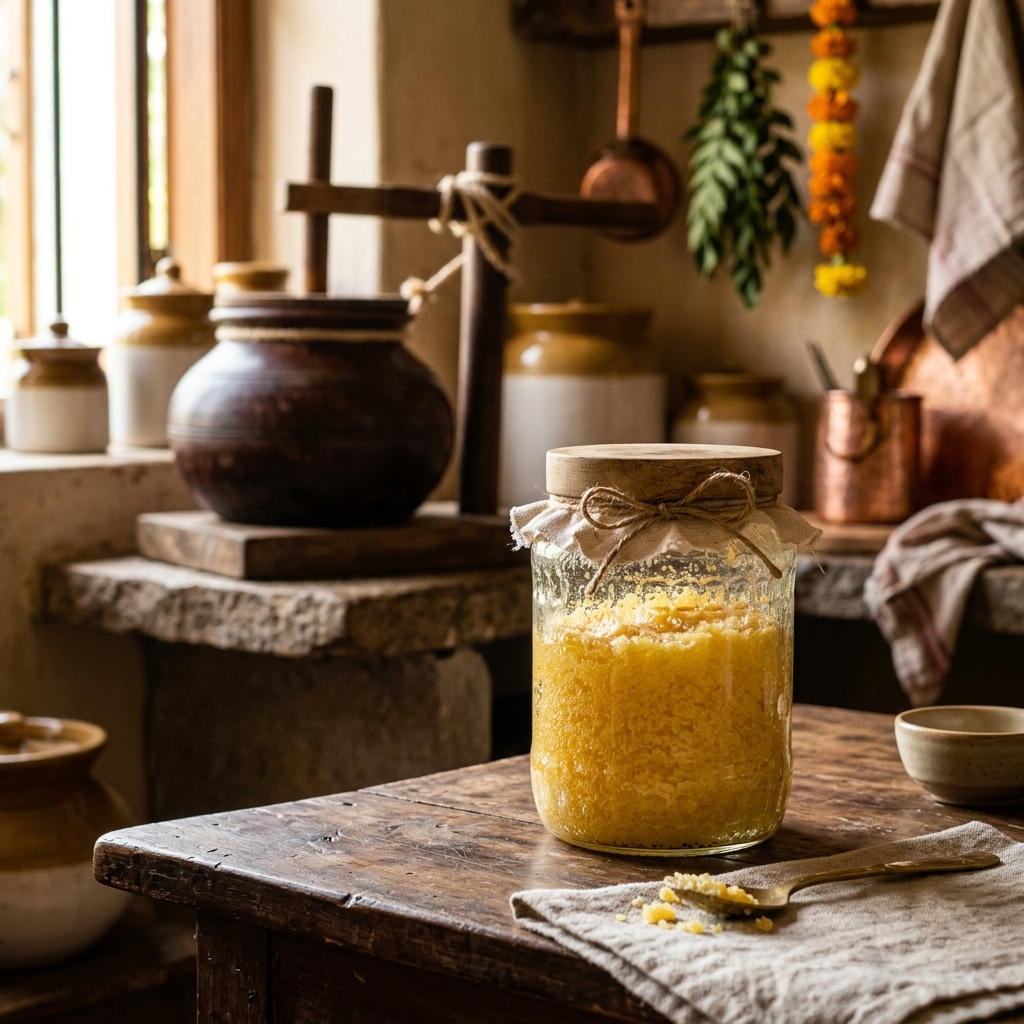
The result of the traditional process is a "Granular" (Danedaar) texture and a rich, nutty aroma. In a comparison of outcomes, Bilona ghee is 100% lactose-free and shelf-stable for years, whereas cream-based ghee can become rancid within months. The result for the consumer is "Higher Bio-availability" of nutrients. Economically, for a farmer, selling Ghee (at ₹2,500/kg) is more profitable than selling raw milk (at ₹60/L), as it allows for "Remote Marketing" without the need for expensive cold-chain logistics. Comparing "Trans-fats" in refined oils vs. "Healthy Fats" in Gir Ghee, the latter helps in reducing LDL (bad cholesterol) and increasing HDL (good cholesterol), protecting the heart. Farmers implementing these comprehensive wellness standards report a 15% to 20% increase in daily milk yield alongside a significant 40% reduction in veterinary costs due to fewer mastitis and skin infections. The long-term productive lifespan of the dairy herd is extended, ensuring a higher return on investment (ROI). Implementing these advanced livestock wellness and dairy hygiene standards yields exceptional animal performance and outstanding financial returns. Dairy farms adopting automated grooming and cooling systems report a substantial 15% to 20% increase in daily milk production per cow, driven by reduced stress and improved blood circulation. Furthermore, the systematic reduction in herd stress and the implementation of clean milking practices lead to a massive 40% reduction in veterinary treatment costs, particularly by preventing mastitis and hoof infections. This improvement extends the productive lifespan of the dairy herd, lowering cow replacement rates and maximizing the return on investment (ROI) for dairy cooperatives and independent livestock growers.
Supporting the Cow and the Local Economy
Producing Gir cow ghee is a "Compassionate Business." It requires the cow and the calf to be together, as the cow "lets down" milk only when she is happy. This supports the "Welfare of Creatures." The buttermilk (Chaas) produced during the process is a vital source of nutrition for the rural community and the farm "Soil Creatures" when used as a bio-fertilizer. This integrated system ensures that nothing is wasted and the entire village economy is supported by the "Golden Gift" of the cow. Indigenous cattle pastures and active cow dung utilization play a vital role in local nutrient cycling. The rich organic matter and microbial diversity present in pure cow dung act as a natural stimulant for soil macro-organisms like dung beetles and earthworms, accelerating the decomposition of organic residues and building natural topsoil.
Protecting Purity and Nutritional Integrity
Protection of the ghee's purity involves avoiding "Plastic Packaging" and "High-Temperature Processing." Proactive protection includes using "Natural Preservatives" like a single leaf of Tulsi or a peppercorn in the jar. Protecting the ghee from moisture is critical to prevent fungal growth. This protection ensures that the ghee remains a "Vedic Medicine" that provides strength (Ojas) and longevity to the family. Implementing these clean, eco-friendly cattle care standards prevents environmental contamination. Proper handling and processing of cow dung into value-added products reduce methane emissions and prevent raw manure runoff from polluting local groundwater sources, while building a clean, hygienic farm environment.
Export Demand and the Future of Functional Foods
The global "Grass-Fed Ghee" market is surging, with the USA and Japan being the largest importers. Indian Gir cow ghee is seen as the "Gold Standard" of functional foods. There is a rising interest in "A2 Ghee Infusions" (with Ashwagandha, Turmeric, etc.) for the fitness and keto industry. Farmers who can provide "Traceability" (from the cow's ear-tag to the final jar) are capturing the premium luxury market. The future of Gir ghee is in "Ethical Branding"—selling a story of tradition, health, and animal love. The market demand for premium A2 dairy products and value-added cow dung items is growing exponentially. Urban consumers are willing to pay a high price premium for certified organic ghee, Vedic diyas, and organic paints, creating highly profitable secondary income streams for rural dairy cooperatives and self-help groups.
Bilona Ghee Making & Testing Machinery
To scale up Bilona ghee production, you need "Mechanical Bilona Churners" that mimic the manual bi-directional motion. We provide "Double-Jacketed Steam Boilers" for precise temperature control and "Glass Bottling Lines." Our machinery helps you produce "Export-Grade" granular ghee while maintaining the Vedic standards of the Bilona process. Mitti Gold specializes in advanced dairy mechanization solutions, including heavy-duty automatic cow brushes, high-pressure cooling sprinklers, and cow dung processing pulverizers. Our machinery is designed for durable, continuous operation in demanding Indian farm environments. To modernize dairy operations and reduce high labor costs, Mitti Gold provides professional, heavy-duty livestock management machinery. Our specialized lineup includes automated rotating cow brushes, high-pressure barn cleaning systems, fodder pulverizers, and mechanized cow dung processing equipment. Designed to withstand the demanding dairy environment, our machines ensure long-term durability and consistent performance. By mechanizing daily feeding, barn cleaning, and manure processing, dairy farmers can dramatically reduce operational overhead, eliminate labor bottlenecks, and maintain a highly hygienic environment that supports maximum herd health and milk productivity.
🍯 Bilona Ghee Production Units
Traditional bi-directional churners and steam-jacketed boilers for high-quality A2 ghee. Vedic production technology. WhatsApp: +91 95372 30173
FAQs on Gir Cow A2 Ghee
Is Gir cow ghee good for weight loss? +
Yes! It contains Medium-Chain Triglycerides (MCTs) that boost metabolism and help in burning stubborn body fat when taken as part of a balanced diet. It is recommended to work closely with local veterinary experts and certified dairy consultants to design a customized nutrition and housing plan that fits your specific herd breed, climate conditions, and production goals. For dairy farmers seeking to optimize herd genetics and maximize milk quality, it is highly recommended to establish a systematic breeding and nutrition plan. Working closely with local veterinary experts and certified dairy consultants allows you to select premium pedigree semen, monitor herd health indicators, and design a customized feeding ration that matches your specific cattle breed and production goals.
Can people with lactose intolerance eat Gir ghee? +
Yes, the traditional Bilona process removes all milk solids and lactose, making it safe for most people with dairy sensitivities. It is recommended to work closely with local veterinary experts and certified dairy consultants to design a customized nutrition and housing plan that fits your specific herd breed, climate conditions, and production goals. For dairy farmers seeking to optimize herd genetics and maximize milk quality, it is highly recommended to establish a systematic breeding and nutrition plan. Working closely with local veterinary experts and certified dairy consultants allows you to select premium pedigree semen, monitor herd health indicators, and design a customized feeding ration that matches your specific cattle breed and production goals.
What is the shelf life of authentic Bilona ghee? +
In an airtight glass jar, it can last for 1-2 years at room temperature. In fact, Ayurveda says that "Old Ghee" (Purana Ghrita) has even higher medicinal value. It is recommended to work closely with local veterinary experts and certified dairy consultants to design a customized nutrition and housing plan that fits your specific herd breed, climate conditions, and production goals. For dairy farmers seeking to optimize herd genetics and maximize milk quality, it is highly recommended to establish a systematic breeding and nutrition plan. Working closely with local veterinary experts and certified dairy consultants allows you to select premium pedigree semen, monitor herd health indicators, and design a customized feeding ration that matches your specific cattle breed and production goals.
Why is my ghee liquid in summer and solid in winter? +
This is a sign of purity! Real ghee has a melting point of around 37°C (human body temperature). It naturally changes texture with the environment. It is recommended to work closely with local veterinary experts and certified dairy consultants to design a customized nutrition and housing plan that fits your specific herd breed, climate conditions, and production goals. For dairy farmers seeking to optimize herd genetics and maximize milk quality, it is highly recommended to establish a systematic breeding and nutrition plan. Working closely with local veterinary experts and certified dairy consultants allows you to select premium pedigree semen, monitor herd health indicators, and design a customized feeding ration that matches your specific cattle breed and production goals.
How can I test for purity at home? +
One simple test is the "Palm Melt"—a teaspoon of pure ghee should melt immediately on your palm. It should also have a distinct, grainy texture when solid. It is recommended to work closely with local veterinary experts and certified dairy consultants to design a customized nutrition and housing plan that fits your specific herd breed, climate conditions, and production goals. For dairy farmers seeking to optimize herd genetics and maximize milk quality, it is highly recommended to establish a systematic breeding and nutrition plan. Working closely with local veterinary experts and certified dairy consultants allows you to select premium pedigree semen, monitor herd health indicators, and design a customized feeding ration that matches your specific cattle breed and production goals.