📅 June 2026 | ✍️ Mitti Gold Organic | 🗂️ Vermicompost
The NPK Breakdown: Quality vs. Quantity Analysis
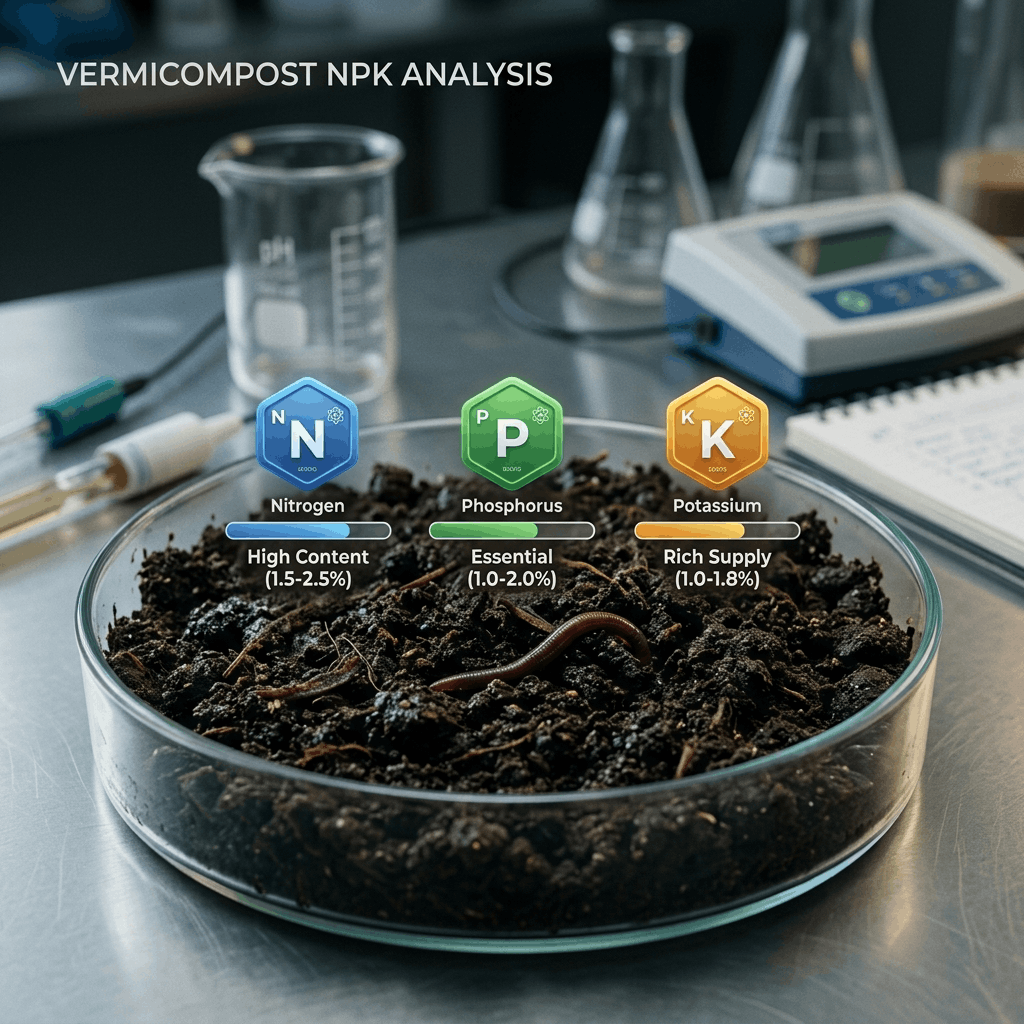
The most common question from farmers transitioning to organic is: "What is the NPK value?" In the chemical world, we are used to high numbers like 19-19-19 or 46-0-0. When farmers see that Vermicompost has an NPK of roughly 2-1-2, they often worry it won't be enough. This is a misunderstanding of how plants eat. This 2026 guide explains the "Quality over Quantity" science of organic NPK.
Biological Nitrogen (N): The Steady Builder
Chemical Nitrogen (Urea) is like a "sugar rush"—it causes a massive growth spike, but the plant becomes weak and watery. Mitti Gold Nitrogen is held in organic molecules that are released slowly by soil bacteria. This creates a "Steady-Growth" pattern, resulting in strong stems and high resistance to lodging (falling over). Per bigha, 1 Tonne of Mitti Gold provides the equivalent of 45kg of Urea in terms of *actual uptake* by the plant.
Bio-Available Phosphorus (P): Unlocking the Soil's Hidden Wealth
Most Indian soils have plenty of Phosphorus, but it is "locked" in chemical bonds that plants can't break. Mitti Gold contains PSB (Phosphorus Solubilizing Bacteria). These bacteria produce organic acids that "melt" these bonds, making both the Vermicompost Phosphorus and your soil's hidden Phosphorus available to the plant.
Organic Potassium (K): The Quality and Color Driver
The Potassium in Mitti Gold is essential for water regulation and fruit quality. It is released in a form that is immediately recognized by the plant cells, leading to better fruit size, shine, and weight compared to the harsh potassium chloride (MOP) used in chemical farming.
Nutrient Management: Maximizing Bioavailability
To maximize the NPK efficiency of Mitti Gold, we recommend a "Biological Synergy" approach.
The Biochar Synergy
Mixing Mitti Gold with 10% Biochar (Agricultural Charcoal) creates a "Nutrient Battery." The Biochar has millions of tiny pores that hold the NPK ions, preventing them from leaching away and keeping them available for the plant roots for an entire season.
Timing the Release
For seasonal crops, apply Mitti Gold during the vegetative and pre-flowering stages. This ensures the NPK is at its peak concentration exactly when the plant is building its "yield-capacity."
The Yield Results: Sustained Nutrition vs. Chemical Spikes
The "Mitti Gold Result" is sustained nutrition. Chemical fertilizers are 70% gone within 15 days of application. Mitti Gold continues to feed the crop for up to 90 days. This results in:
- Uniform Fruit Size: No "small" fruits at the end of the season.
- Higher Brix Levels: Superior taste and sweetness.
- Soil Organic Carbon (SOC) Increase: Your land becomes more fertile every year, not less.
The Role of Microbes in Nutrient Cycling
NPK is only half the story. The other half is the "Workers." Mitti Gold is a living culture of Azotobacter (Nitrogen fixers), PSB (Phosphorus solubilizers), and KSB (Potash mobilizing bacteria). These microbes work 24/7 to turn the air and soil into food for your plants. A chemical bag can never do this.
The "Balanced Diet" Defense
Excessive chemical Nitrogen makes plants attractive to pests. The balanced NPK and 16 trace minerals in Mitti Gold create a "Tough-Plant." The cell walls are reinforced with silica and calcium (naturally present in Vermicompost), making it physically difficult for insects to bite or fungi to penetrate.
Economic ROI of Organic NPK
In 2026, the "Price per kg of Nitrogen" is higher than ever. Mitti Gold provides the best Return on Investment (ROI) because it reduces "Nutrient Waste." Every rupee you spend on Mitti Gold stays in your soil, whereas every rupee spent on chemical NPK is a gamble with the weather.
🌿 Bulk Vermicompost Orders
Mitti Gold Organic: For bulk supply of premium Vermicompost Fertilizer — Ideal for Farmers, Nurseries, and Export. WhatsApp: +91 95372 30173