📅 July 2026 | ✍️ Mitti Gold Organic | 🗂️ Farming
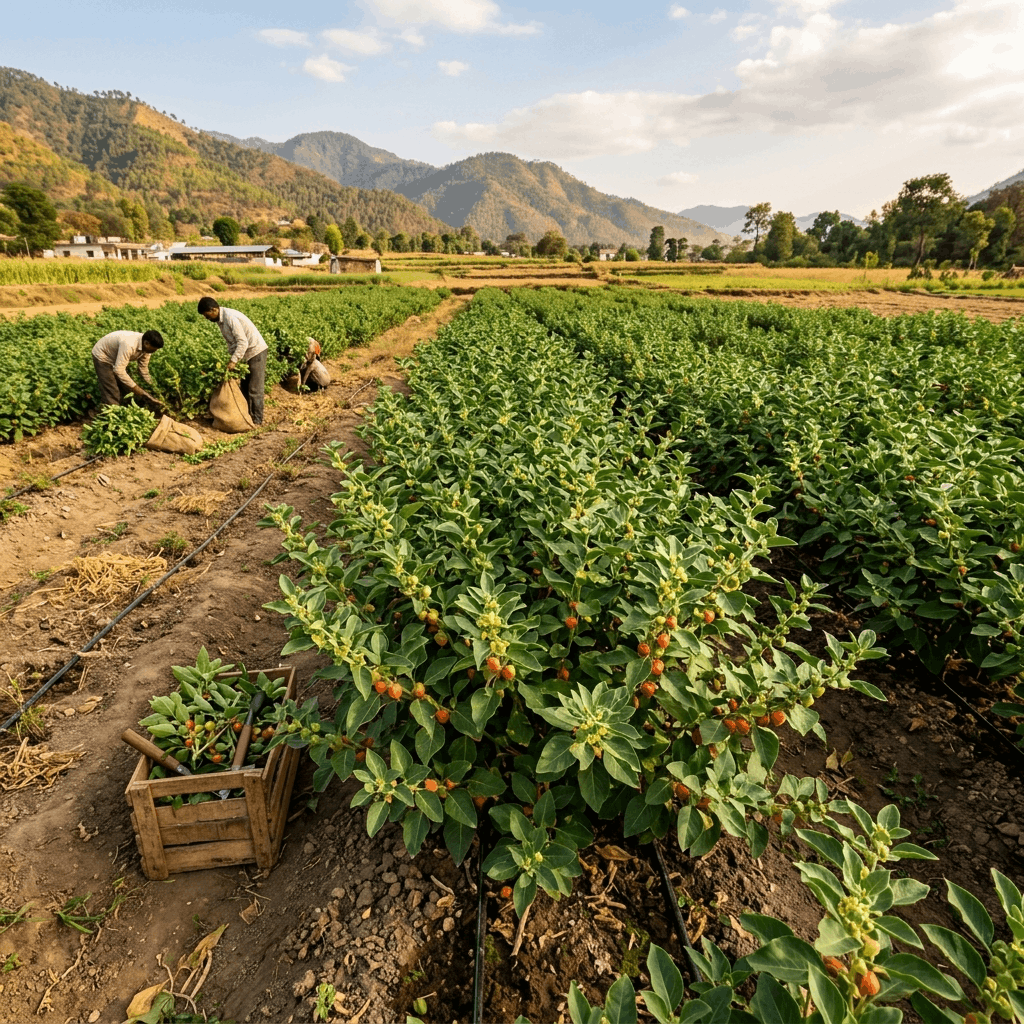
Introduction to Ashwagandha: The King of Ayurvedic Herbs
Ashwagandha, scientifically classified as Withania somnifera and colloquially known as Indian Ginseng or Winter Cherry, stands as one of the most revered and economically significant botanical crops in the world of traditional and modern alternative medicine. For millennia, this resilient, drought-tolerant shrub has been the cornerstone of the ancient Indian healing system of Ayurveda. The name 'Ashwagandha' translates from Sanskrit to 'smell of the horse,' which uniquely references both the distinct earthy odor of its freshly harvested roots and the legendary strength, vitality, and virility it is purported to bestow upon those who consume it. Botanically, it belongs to the Solanaceae (nightshade) family, sharing lineage with tomatoes and eggplants, yet it possesses a profoundly different biochemical profile. The plant is globally celebrated for its powerful adaptogenic properties, meaning it fundamentally assists the human body in managing physiological and psychological stress, balancing hormones, and enhancing overall cellular immunity.
In recent years, the global paradigm shift towards natural wellness, holistic health, and plant-based supplements has catapulted the demand for high-quality Ashwagandha to unprecedented levels. This surge is not limited to the domestic Indian market; international pharmaceutical companies, nutraceutical brands, and dietary supplement manufacturers across North America, Europe, and Asia are aggressively sourcing pure, organically grown Ashwagandha roots and extracts. The primary bioactive compounds responsible for its therapeutic efficacy are a group of steroidal lactones known as withanolides, concentrated heavily in the plant's roots and, to a lesser extent, in its leaves. For agricultural practitioners, Ashwagandha presents a phenomenally attractive proposition. It is a hardy, late-Kharif (monsoon) crop that requires minimal irrigation, thrives in marginal, sandy, or semi-arid soils where traditional cash crops might fail, and demands relatively low initial capital investment. By mastering the nuanced cultivation techniques, particularly through organic farming practices that maximize the withanolide content, farmers can tap into a highly lucrative, rapidly expanding global supply chain, transforming barren tracts of land into immensely profitable agricultural enterprises.
Seed Requirements and Sowing Density
The foundation of a successful and high-yielding Ashwagandha crop lies in the precise calculation of seed quantities and the strategic implementation of optimal plant spacing. To cultivate one hectare of land, a farmer typically requires between 10 to 12 kilograms of high-quality, certified seeds. If calculating by the traditional bigha (which varies regionally but is often a fraction of a hectare), you will need approximately 2 to 3 kilograms of seeds per bigha. It is absolutely imperative to procure seeds from highly reputable agricultural universities, certified seed banks, or established, successful growers to ensure high germination rates, genetic purity, and resistance to endemic diseases. Varieties such as Jawahar Asgandh-20 and Jawahar Asgandh-134 are renowned for their high root yields and superior alkaloid concentrations. Before sowing, seeds must be treated; in organic farming, this involves soaking the seeds in a natural biopesticide solution, such as cow urine (Gomutra) or a Trichoderma viride slurry, for several hours. This critical pre-treatment protects the vulnerable seeds from soil-borne fungal pathogens and significantly boosts the overall germination percentage.
Ashwagandha can be sown using two primary methods: broadcasting (scattering seeds evenly over the field) or line sowing. Line sowing is overwhelmingly recommended for commercial cultivation. Establishing rows with a spacing of 20 to 25 centimeters between lines, and maintaining a plant-to-plant distance of approximately 10 centimeters within the row, is ideal. This specific geometric arrangement is not arbitrary; it ensures a dense plant population of roughly 400,000 to 500,000 plants per hectare. This density forces the plants to compete slightly, which encourages the roots to grow straight, deep, and thick—traits highly desired in the market—rather than branching excessively. Furthermore, line sowing facilitates efficient mechanical or manual weeding, proper aeration around the plant canopy to reduce fungal issues, and easier, more systematic harvesting. While broadcasting is less labor-intensive initially, it results in an uneven plant stand, making crop management exceedingly difficult and ultimately leading to lower quality roots and reduced profitability.
Cultivation Process: Sowing, Climate, and Irrigation
The cultivation of Ashwagandha is uniquely suited to sub-tropical regions characterized by distinct dry seasons and moderate rainfall. It is classified as a late Kharif crop, meaning the optimal time for sowing aligns with the tail end of the monsoon season, typically spanning from late July to the end of August. Sowing during this precise window allows the seeds to germinate utilizing the residual soil moisture from the heavy rains, while ensuring the critical root development phase occurs during the subsequent dry, cooler months, which is essential for maximizing the accumulation of secondary metabolites (withanolides). The soil requirements for Ashwagandha are remarkably forgiving; it eschews heavy, water-retentive clay soils in favor of well-drained, sandy loam or light red soils with a slightly alkaline pH ranging from 7.5 to 8.0. Exceptional drainage is non-negotiable, as the crop is highly susceptible to root rot and damping-off if water stagnates in the field for even a short duration. Deep ploughing of the field to a depth of at least 20-25 centimeters, followed by harrowing to achieve a fine tilth, is necessary to facilitate deep root penetration.
One of the most appealing agronomic traits of Ashwagandha is its extreme drought tolerance. It is fundamentally a rainfed crop. If the monsoon is adequate and distributed evenly during the initial growth stages, supplementary irrigation may be entirely unnecessary. However, if a prolonged dry spell occurs immediately after sowing or during the crucial vegetative growth phase, one or two light, life-saving irrigations can be applied to ensure crop survival and uniformity. Excessive watering is actively detrimental; it encourages massive, lush vegetative (leaf) growth at the direct expense of root development and drastically lowers the concentration of medicinal alkaloids in the roots. The entire crop cycle spans approximately 150 to 170 days. By late December to early February, as the winter deepens, the plant will naturally begin to senesce—the leaves will dry out, turn yellow, and eventually drop, and the small, bright red berries will fully ripen. This physiological change is the definitive indicator that the plant has channeled its energy into the roots, signaling that the crop is fully mature and ready for the intensive harvesting process.
Comparing Outcomes: Organic vs. Chemical Ashwagandha Farming
In the commercial cultivation of medicinal herbs, the methodology employed—specifically the choice between organic and chemical farming—has a profound and measurable impact not just on the raw yield, but critically on the biochemical quality and market value of the final product. When Ashwagandha is cultivated using conventional chemical methods, farmers rely on synthetic urea and DAP (Diammonium Phosphate) to force rapid growth. This approach frequently results in a superficially impressive, heavy harvest of roots. However, these chemically forced roots are often structurally weak, brittle, and possess a high moisture content. More importantly, scientific analyses consistently reveal that chemically grown Ashwagandha has a significantly diluted concentration of withanolides. The plant, experiencing no environmental stress and having direct, easy access to synthetic nutrients, fails to trigger the aggressive secondary metabolic pathways that produce its valuable medicinal compounds. Consequently, while the bulk weight may be high, the actual therapeutic value—and thus the export and premium market price—is substantially degraded.
Conversely, organic Ashwagandha farming focuses on nurturing the soil ecosystem to feed the plant naturally. Utilizing well-decomposed Farm Yard Manure (FYM), vermicompost, and bio-fertilizers like Azotobacter and Phosphorus Solubilizing Bacteria (PSB) ensures a slow, balanced release of nutrients. Organic farming subjects the plant to a degree of natural, managed stress, which acts as a powerful catalyst, forcing the plant to synthesize high concentrations of alkaloids and withanolides as a defense mechanism. The resulting organic roots are denser, highly fibrous, possess a much stronger characteristic aroma, and command a massive premium in the global market. Buyers, especially in the nutraceutical and export sectors, rigorously test for pesticide residues, heavy metals, and active compound percentages. Chemically grown crops frequently face rejection in these lucrative markets due to toxic residues, whereas certified organic Ashwagandha, boasting superior phytochemical profiles and zero chemical contamination, guarantees access to top-tier buyers, ensuring that the farmer achieves the highest possible return on investment despite potentially slightly lower raw bulk yields.
Soil Biodiversity: The Role of Microbes in Root Development
The hidden driver of a successful organic Ashwagandha crop is the thriving, invisible ecosystem beneath the soil surface. Because the economic value of Ashwagandha resides entirely in its root system, the interaction between those roots and soil microorganisms is of paramount importance. In a healthy, organic farming system, the soil is heavily inoculated with beneficial microbes that actively facilitate vigorous root expansion. Key among these are mycorrhizal fungi (VAM - Vesicular Arbuscular Mycorrhizae). These remarkable fungi form a symbiotic, physical connection with the Ashwagandha roots. The fungal hyphae extend far beyond the physical reach of the plant's own root hairs, effectively acting as a massive secondary root system. They secrete powerful organic acids and enzymes that dissolve firmly bound nutrients in the soil—particularly phosphorus, which is notoriously immobile but absolutely critical for strong, deep root development—and transport them directly into the plant. In exchange, the Ashwagandha plant supplies the fungi with essential carbon-rich sugars produced through photosynthesis.
Beyond mycorrhizae, the organic Ashwagandha field relies heavily on nitrogen-fixing bacteria like Azotobacter and Azospirillum. Since chemical nitrogen (urea) is strictly prohibited in organic systems, these free-living bacteria pull atmospheric nitrogen and convert it into a bioavailable form, providing a steady, natural supply that supports healthy foliage growth without compromising root development. Furthermore, maintaining a robust population of earthworms in the soil profile acts as a natural aeration system. As earthworms tunnel, they prevent the sandy loam soil from compacting, ensuring that the Ashwagandha taproots can penetrate deeply and straight down without obstruction. This optimal aeration also prevents the accumulation of anaerobic zones that could lead to root rot. By prioritizing soil biodiversity through the continuous addition of organic matter and bio-inoculants, the farmer creates a dynamic, living medium that dramatically enhances the physical size, density, and medicinal potency of the Ashwagandha roots, proving that true agricultural wealth is generated in the microscopic world.
Plant Protection: Natural Immunity and Pest Management
While Ashwagandha is naturally a hardy and resilient plant, it is not entirely immune to agricultural pests and diseases, particularly during its vulnerable early growth stages or under adverse weather conditions. The most significant threats to the crop include fungal diseases such as seedling blight, damping-off, and leaf spot (caused by Alternaria species), as well as insect pests like aphids, spider mites, and the epilachna beetle, which can rapidly defoliate the crop. In a conventional system, these threats are addressed with highly toxic chemical sprays. However, in organic Ashwagandha farming, protection relies on a holistic strategy centered on prevention, biological control, and enhancing the plant's innate immune system. The cornerstone of this defense is maintaining impeccable field sanitation and ensuring perfect soil drainage, as fungal pathogens thrive in waterlogged, anaerobic conditions. Crop rotation is also critical; planting Ashwagandha in the same field year after year guarantees the buildup of specific soil-borne pathogens, so it should be rotated with leguminous crops to break disease cycles.
When intervention becomes necessary, organic farmers utilize a potent arsenal of botanical and biological biopesticides. Neem oil (azadirachtin) is exceptionally effective; when sprayed as a 5% aqueous solution, it acts as a powerful antifeedant, insect growth regulator, and repellent, effectively controlling aphids and beetles without harming beneficial predatory insects. For fungal infections, proactive soil and foliar treatments using Trichoderma viride and Pseudomonas fluorescens are highly recommended. These beneficial microorganisms actively hunt and destroy pathogenic fungi in the soil and on the leaf surface, creating a biological shield around the plant. Additionally, applying natural concoctions like Panchagavya (a traditional blend of five cow products) or Jeevamrutha acts as both a foliar nutrient boost and a natural disease suppressant, stimulating the plant's internal defense mechanisms (Induced Systemic Resistance). By relying on these organic protective measures, the farmer ensures the crop remains healthy and productive while guaranteeing the final medicinal root is completely free from toxic chemical residues.
Step-by-Step Guide to Commercial Ashwagandha Cultivation
Step 1: Land Preparation and Seed Selection
Success begins with meticulous field preparation. Select a well-drained field with sandy loam soil. Plough the land deeply 2-3 times during the pre-monsoon showers to expose and eliminate soil-borne pests and deeply rooted weeds. Incorporate 10-15 tons of well-rotted Farm Yard Manure (FYM) or compost per hectare into the soil during the final ploughing to establish a rich organic base. Simultaneously, procure high-yielding, certified seeds from a reputable source. Treat the seeds organically by soaking them in a Trichoderma slurry or Gomutra (cow urine) for a few hours before sowing to protect against seedling diseases and boost germination rates.
Step 2: Sowing Techniques and Timings
Time your sowing perfectly for the late Kharif season, usually between late July and mid-August, when the heaviest monsoon rains have subsided but the soil retains excellent moisture. For commercial operations, strictly utilize the line sowing method. Establish rows 20-25 cm apart and sow seeds at a depth of 1-2 cm, aiming for a plant-to-plant spacing of about 10 cm. This precise geometry ensures an optimal plant population (around 4-5 lakh plants/hectare), which is critical for encouraging deep, straight root growth rather than excessive lateral branching. Lightly cover the seeds with soil.
Step 3: Weed Management and Thinning
Weed control during the first 30 to 45 days is absolutely critical, as young Ashwagandha seedlings are slow growers and cannot compete with aggressive weeds for nutrients and light. Perform the first manual weeding 25-30 days after sowing. Concurrently, perform 'thinning'—remove excess or weak seedlings to maintain the strict 10 cm plant-to-plant spacing. Perform a second manual weeding at 50-60 days. In organic farming, chemical herbicides are banned, making these manual interventions essential. Apply a top dressing of vermicompost or spray bio-enhancers like Panchagavya after weeding to boost growth.
Step 4: Careful Harvesting of Roots and Berries
The crop matures in 150-170 days, usually around January or February. Maturity is visually signaled when the leaves dry, turn yellow, and fall off, and the berries turn a vibrant reddish-orange. Harvesting must be done with extreme care to avoid damaging the valuable roots. Lightly irrigate the field a day before harvest to soften the soil. Manually uproot the plants or use a specialized mechanical digger. Cut the aerial stem 1-2 cm above the crown. Collect the red berries separately, as the seeds within can be processed and sold or used for the next planting season.
Step 5: Processing, Drying, and Grading
Post-harvest processing dictates the final market value. Wash the harvested roots thoroughly but gently with clean water to remove all soil and debris. Cut the main taproots into smaller pieces, typically 7 to 10 cm in length. Spread these root pieces on clean tarps or raised drying racks in a well-ventilated, shaded area. Direct, harsh sunlight can degrade the sensitive medicinal alkaloids. Once completely dry (snapping crisply when bent), grade the roots. 'A-grade' roots are thick, solid, bright white internally, and highly prized, fetching the highest premium in Ayurvedic markets.
Market Scope: Where and How to Sell Your Ashwagandha
The market scope for high-quality, organically cultivated Ashwagandha is vast, highly lucrative, and expanding rapidly on a global scale. As a farmer, understanding this supply chain is critical to maximizing your profits. The primary domestic buyers are large-scale, established Ayurvedic and herbal pharmaceutical companies (such as Dabur, Patanjali, Himalaya, and Baidyanath), who require massive, continuous tonnages of dried roots to manufacture chawanprash, capsules, powders, and liquid extracts. These companies often operate through established agricultural mandis (markets) specifically dedicated to medicinal plants, such as the famous Neemuch mandi in Madhya Pradesh, India, which is recognized as a global hub for Ashwagandha trading. Selling directly at these specialized mandis allows farmers to interact with major aggregators and negotiate prices based directly on the quality, thickness, and grade of their root harvest. Beyond raw roots, there is also a secondary market for Ashwagandha seeds, leaves, and even the fine root powder, ensuring almost zero agricultural waste.
However, the most significant profit margins exist in the export and premium nutraceutical markets. Western countries are experiencing an explosion in demand for adaptogenic supplements, and buyers in the USA, Europe, and Australia are aggressively seeking out certified organic Ashwagandha. To access these premium international markets, farmers must adhere to strict organic certification standards (like USDA Organic or India Organic) and ensure their crop is completely free of pesticide residues and heavy metals. Forming or joining a Farmer Producer Organization (FPO) is a highly strategic move; it allows individual farmers to pool their harvests, afford the costs of organic certification, and negotiate bulk supply contracts directly with international exporters or large nutraceutical brands, bypassing exploitative middlemen. By focusing on organic quality and leveraging cooperative marketing, Ashwagandha farming transitions from a simple cash crop to a highly sophisticated, deeply profitable agribusiness venture.
📦 Bulk Orders & Export
Mitti Gold Organic: For bulk orders of all organic fertilizers — Farmers, Nurseries, and Export. WhatsApp: +91 95372 30173
Frequently Asked Questions About Ashwagandha Farming
Sub-tropical, semi-arid regions are ideal. Ashwagandha thrives in dry, warm climates with moderate rainfall (500-750 mm annually). In India, states like Madhya Pradesh, Rajasthan, Gujarat, and parts of Andhra Pradesh are major cultivation hubs due to their favorable sandy loam soils and distinct dry winter seasons, which promote high-quality root development.
Yields vary based on management, but are generally highly profitable. Under good organic management, a farmer can expect an average yield of 600 to 800 kilograms of dried roots per hectare. Additionally, the crop yields approximately 50 kilograms of seeds, which also hold significant market value. Exceptional farming practices can push dried root yields closer to 1000 kilograms per hectare.
No, it is generally safe from grazing. One of the major advantages of farming Ashwagandha, especially in open, unfenced areas, is that stray cattle, goats, and wild herbivores actively avoid eating it. The leaves contain specific chemical compounds that make them unpalatable to animals, significantly reducing the need for expensive fencing or constant field guarding.
It is highly discouraged. Ashwagandha roots require excellent aeration to grow properly and accumulate medicinal compounds. Heavy clay soils retain too much water, which quickly leads to root rot and fungal diseases. If grown in clay, the roots will be stunted, branched, and of very poor commercial quality. Always opt for sandy or light loamy soils.
Watch the leaves and the berries. The crop is ready for harvest at around 150-170 days. The definitive signs of maturity are when the green leaves begin to dry out, turn yellow, and naturally fall from the stems, and simultaneously, the small berry-like fruits turn a bright, deep red or orange color. Harvesting before these signs will result in underdeveloped roots with low alkaloid content.